Photo by Denys Nevozhai on Unsplash
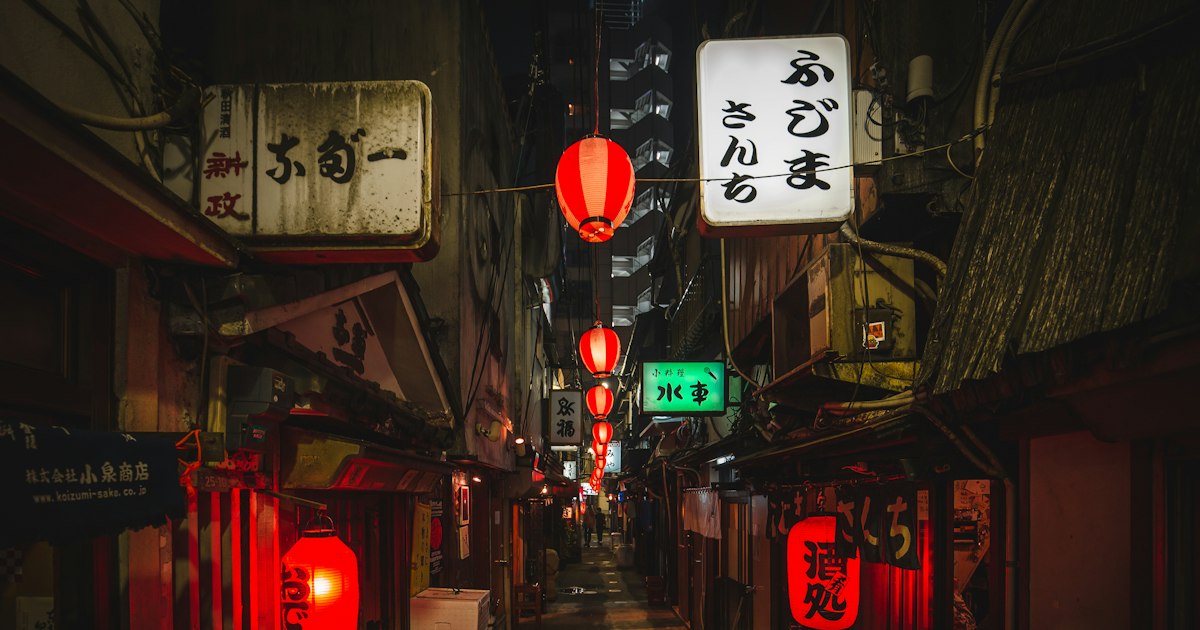
Walk through almost any Japanese festival, shrine approach, or old ryokan entrance and you’ll see them glowing: cylindrical paper lanterns stretched over a coiled bamboo frame, collapsible flat when not in use. These are chochin, and while you can find mass-produced versions in any souvenir shop, two towns have been making them by hand for centuries — Gifu City in central Japan and Odawara at the gateway to Hakone. Each developed a distinct style, and both still have places where you can buy a real one rather than a printed imitation.
A Craft With Two Hometowns: Gifu and Odawara
Chochin spread across Japan from the 16th century onward as candle-lit replacements for open torches, but Gifu and Odawara became the two biggest production centers because of local materials and location. Gifu sits beside the Nagara River, which supplied high-quality washi paper from nearby Mino, and the surrounding hills provided fine bamboo for the ribs. Odawara, on the old Tokaido highway between Edo (Tokyo) and Kyoto, became a natural stop for travelers who needed a durable, packable light source — so its lantern makers optimized for collapsibility and toughness rather than decoration.
Gifu Chochin: Washi, Bamboo, and the Noguchi Connection
Gifu chochin are known for their egg-shaped (maruke) silhouette, fine bamboo coiling, and painted or dyed washi decorated with seasonal motifs like autumn grasses, irises, or family crests. Production here dates back to the early 1700s under the Owari domain’s patronage, and Gifu remains Japan’s largest chochin-producing city today.
The craft got an unexpected second life in the 20th century: sculptor Isamu Noguchi partnered with the Gifu maker Ozeki & Co. in 1951 to produce his Akari light sculptures, using the same washi-over-bamboo technique in modern, minimalist forms. Those lamps are now in museum collections worldwide, and Ozeki still manufactures them in Gifu alongside traditional festival and Obon lanterns. If you only know one “chochin brand,” it’s probably this one, even if you didn’t realize the connection.
Prices for traditional Gifu chochin run roughly: small battery-LED versions or keychain-size souvenirs, ¥500–¥1,500; a mid-size decorative hanging lantern (25–35 cm), ¥8,000–¥20,000; a genuine Akari-style table or floor lamp, ¥15,000–¥60,000 depending on size and shade shape; large festival or Obon lanterns with hand-painted crests can exceed ¥50,000.
Odawara Chochin: The Traveler’s Folding Lantern
Odawara’s version is less decorative and more ingenious. Developed in the early Edo period, the classic Odawara chochin folds completely flat into a shallow drum (tsuzumi) shape that fits in a kimono sleeve or saddle bag, then pops open into a full cylindrical lantern with a built-in candle holder. It was the pocket flashlight of its day for travelers on the Tokaido, and Odawara’s position as a post town and castle town made it the natural manufacturing hub.
Today, Odawara’s lantern makers produce both historically faithful folding lanterns and smaller decorative versions. A compact folding replica typically costs ¥3,000–¥8,000; larger hand-painted versions with lacquered wood fittings run higher. Because the design is explicitly built for packing flat, these make more travel-friendly souvenirs than Gifu’s rounder, bulkier shapes if luggage space is tight.
Where to Buy a Chochin in Gifu
Gifu City is about 20 minutes by local train from Nagoya Station (JR Tokaido Line to Gifu Station, or the Meitetsu line to Meitetsu-Gifu Station), making it an easy half-day trip if you’re based in Nagoya or passing through on the Tokaido Shinkansen corridor.
- Ozeki & Co. — the maker behind the Noguchi Akari lamps and a long-running source for traditional Gifu chochin. It’s a working manufacturer rather than a tourist shop, so call or check ahead before visiting, and expect weekday business hours rather than weekend access.
- Kawaramachi old town street, near Gifu Park and Gifu Castle’s base, has several craft and lantern shops in restored Edo- and Meiji-era storefronts — a pleasant walk that combines shopping with sightseeing.
- Department stores in Nagoya (Takashimaya, Matsuzakaya) occasionally stock Gifu chochin and Akari-style lamps in their craft or interior sections if you don’t have time to detour to Gifu itself.
Where to Buy a Chochin Near Odawara and Tokyo
Odawara is roughly 35 minutes from Tokyo by Tokaido Shinkansen, or about 80 minutes via the Odakyu line — and it’s the standard rail gateway if you’re continuing on to the Hakone region, including Hakone Yunessun’s hot spring park.
- Small craft and gift shops around Odawara Castle and the station’s shopping arcade carry folding Odawara chochin alongside other local crafts; stock varies by shop, so it’s worth comparing a couple before buying.
- In Tokyo, well-stocked lifestyle stores such as Tokyu Hands or Loft occasionally carry mini decorative chochin (mostly machine-made, not Odawara originals) if you want something lightweight and cheap as a quick souvenir rather than a hand-crafted piece.
Best Time to Visit and See Chochin in Use
Gifu’s Nagara River hosts traditional cormorant fishing (ukai) from May 11 to October 15 each year, with fishing boats lit by chochin-style lanterns after dark — one of the best ways to see the craft doing its original job rather than sitting on a shelf. Mid-August (the Obon period) is also when chochin appear everywhere in Japan for ancestor-welcoming rituals, so craft shops tend to stock their widest selection in the weeks before. The Gifu Festival in early April is another good window, when the city is dressed with lanterns for its shrine processions.
Common Mistakes to Avoid
- Buying a printed-paper lantern thinking it’s handmade washi. Genuine Gifu and Odawara chochin use washi paper and hand-split bamboo ribs; cheap souvenir versions are often machine-printed vinyl or synthetic paper. Ask directly if you want the real thing — price is usually the giveaway, since authentic pieces rarely sell for under ¥3,000.
- Assuming all chochin fold the same way. Gifu’s rounder, decorative lanterns generally don’t collapse flat the way Odawara’s travel design does — check this before packing if luggage space matters.
- Planning to use a real candle. Most lanterns sold to tourists now come with battery LED inserts for safety and because open flames inside paper lanterns are a genuine fire risk; if you want candle compatibility, ask specifically.
- Not measuring before buying a large hanging lantern. Festival-size pieces can be 40 cm or more across — fine for a shop display, awkward in a carry-on.
Chochin shopping pairs naturally with a broader interest in Japanese traditional crafts — if lantern-making appeals to you, the same curiosity is worth bringing to tansu chests, incense burners, or even a hands-on woodblock printing workshop while you’re in the region.