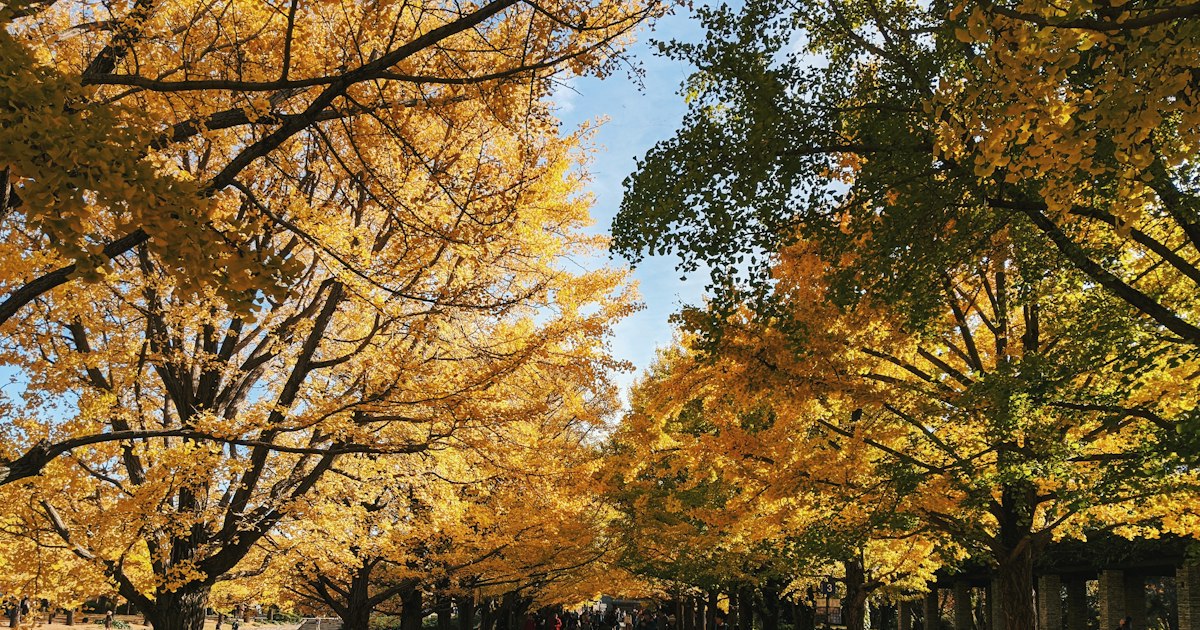
Photo by note thanun on Unsplash
If you’ve already done Shinjuku Gyoen or Yoyogi Park and want to see what a Japanese park looks like when it’s given 180 hectares and a real budget, Showa Kinen Park (昭和記念公園) in Tachikawa is the answer. It’s one of the largest national government parks in the country, built in 1983 to mark Emperor Showa’s 50th year on the throne, and it’s big enough that first-time visitors are routinely surprised they can’t “do” it in an hour. Give it a half-day and it earns a spot alongside Tokyo’s better-known day trips without the crowds of somewhere like Odaiba or Kamakura.
Why Showa Kinen Park Is Worth the Trip
Most central Tokyo parks are gardens you walk through. Showa Kinen Park is closer to a landscape you spend an afternoon inside of: wide-open lawns for picnicking, a proper Japanese strolling garden with a teahouse, a long ginkgo avenue that turns gold in late autumn, seasonal flower fields, a cycling course with rental bikes, and a children’s play area with slides and net structures large enough that adults end up using them too. It’s also genuinely uncrowded compared to Tokyo’s central parks, even on weekends in peak sakura or ginkgo season, simply because most tourists don’t know it exists.
Getting There from Central Tokyo
This is the main reason to bother: it’s an easy, direct trip, not a full-day excursion.
- From Shinjuku or Tokyo Station: Take the JR Chuo Line (rapid service, “Chuo Tokaido” or “Chuo Line Rapid”) to Tachikawa Station — about 30–40 minutes depending on the train, no transfers. From Tachikawa Station’s north or south exit, it’s roughly a 10–15 minute walk to the nearest gates, or a few minutes on the Tama Monorail to Tachikita or Takamatsu Station, which puts you right at the park’s north side.
- Nishi-Tachikawa approach: One stop further on the JR Ome Line, Nishi-Tachikawa Station’s exit opens almost directly onto the Nishitachikawa Gate — the most convenient entrance if you don’t want to walk.
- IC card works fine the whole way (Suica/PASMO), and there’s no special ticket needed — it’s a standard JR commuter route, just further out than most sightseeing itineraries go.
If you’re mapping out other easy half-day escapes from the city center, this sits in the same category as a trip out to Kawasaki Warehouse — somewhere just far enough to feel like a change of scenery, close enough to be back in Shinjuku for dinner.
Entrance Fees, Hours, and Gates
Showa Kinen Park is a paid park, which surprises some visitors used to free municipal parks in Japan.
- Admission: ¥450 for adults (15 and older), ¥210 for seniors (65+), free for junior-high age and younger. A family/group ticket and an annual pass are also sold at gate ticket machines if you think you’ll return.
- Hours: Generally 9:30 to 17:00, extended to 18:00 during summer months, and shortened to around 16:30 in the depths of winter — hours shift by season, so check the current month’s hours before you go rather than assuming a fixed closing time.
- Closed days: The park closes for the New Year holiday period (around Dec 31–Jan 1) and occasionally for maintenance; it’s otherwise open daily, including most national holidays.
- Gates: There are several entrances — Tachikawa Gate (south, closest to Tachikawa Station), Nishitachikawa Gate (west, closest to Nishi-Tachikawa Station), Akebono Gate, and Hana-no-Mori Gate among others. Pick the gate nearest your train station rather than walking the perimeter, since the park is large enough that walking to the “wrong” gate costs real time.
What to Do Inside the Park
The park is zoned, so it helps to pick two or three areas rather than trying to cover everything.
- Minna no Hiroba (Everyone’s Plaza): The big open lawn near the center, popular for picnics, frisbee, and kids running around. This is the easiest spot to just sit down with a bento and enjoy the space.
- Nihon Teien (Japanese Garden): A proper traditional strolling garden with ponds, a waterfall, and a teahouse serving matcha and sweets for a few hundred yen — a quieter, more contemplative contrast to the open lawns.
- The ginkgo avenue (Icho Namiki): A long double row of ginkgo trees that’s one of the Tokyo area’s best-known autumn foliage spots, usually at peak color in late November to early December.
- Seasonal flower fields: Tulips in spring, poppies (gubijinso) in late spring, and cosmos in autumn are planted in rotating fields — worth checking a seasonal flower calendar before visiting if that’s your main draw.
- Rainbow Pool: A large outdoor water play area open in summer (roughly mid-July through early September) for an extra entry fee — a good option if you’re visiting with kids on a hot day.
- Cycling course and rentals: A dedicated bike path loops through the park, with rental bicycles (including tandem and kids’ bikes) available by the hour for a few hundred yen — a relaxed way to cover more ground than walking allows.
Best Season to Visit
Budget timing: Any weekday outside peak flower season — you’ll have the lawns almost to yourself and admission is the same ¥450 year-round. Mid-range timing: Early April for cherry blossoms or late November for the ginkgo avenue — busier on weekends, but the scenery is worth the extra foot traffic. Splurge option: None, really — this is one of the rare Tokyo-area attractions where more money doesn’t buy a better experience. The park itself is the whole point, and the admission fee is modest regardless of season.
Common Mistakes to Avoid
- Underestimating the size. At 180 hectares, this is not a stroll-it-in-twenty-minutes park. Budget at least two to three hours, more if you want to see the Japanese garden and a flower field in the same visit.
- Entering from the wrong gate. Check which gate is closest to your intended destination inside the park before you arrive — walking from one end to the other along the perimeter eats up time you’d rather spend inside.
- Visiting without checking the flower schedule. Tulips, poppies, and cosmos each bloom for only a few weeks a year. If a specific flower field is your reason for coming, confirm the current bloom status online first — arriving two weeks early or late means bare fields.
- Not bringing cash or a full IC card. Ticket machines and the teahouse accept cash and IC cards, but having small bills on hand speeds things up at the gate.
Food, Picnics, and Nearby Options
There are a handful of restaurants and snack stands inside the park, but the lawns are built for picnicking, and plenty of visitors bring their own food from a convenience store or department store near Tachikawa Station before heading in. If you want something nicer than a conbini onigiri to bring along, it’s worth detouring into central Tokyo beforehand for a box of bean-to-bar chocolate as a park-bench treat or a gift for whoever you’re visiting with. Tachikawa itself has a large shopping and dining area right around the station if you’d rather eat before or after rather than mid-visit — useful if you’re pairing the park with other Tokyo-area stops like a ride on the Yurikamome out to Odaiba on the same trip, since both make for a full but manageable day out of the city center.