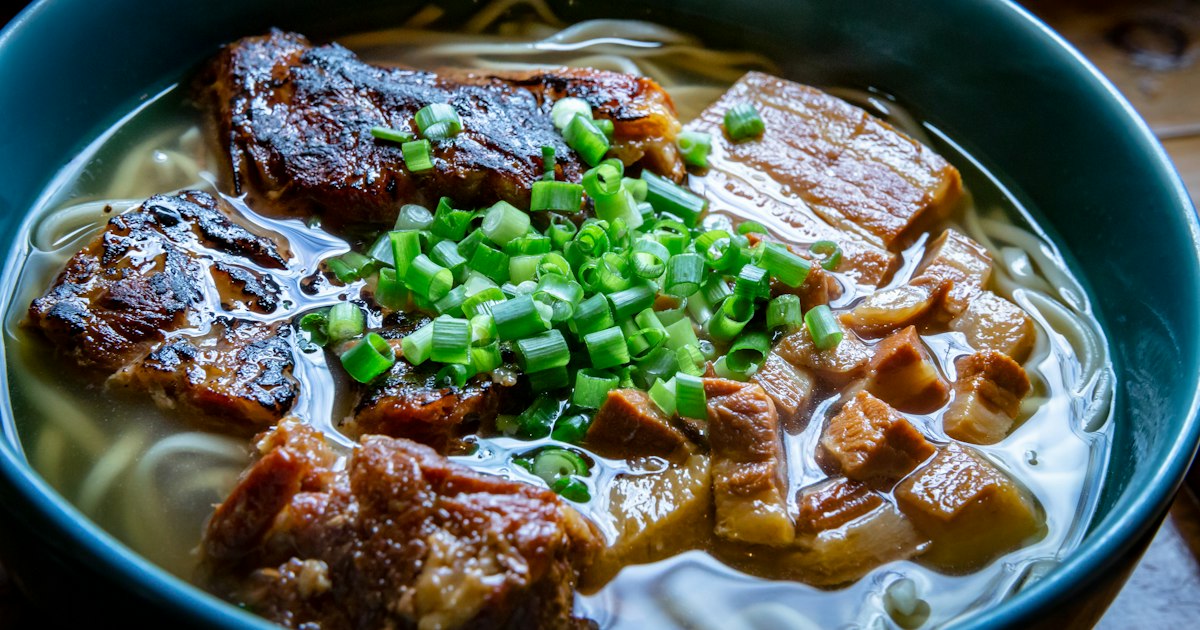
Photo by 8-Low Ural on Unsplash
Okinawa’s food culture doesn’t look like the rest of Japan’s, and nothing proves that faster than rafute (ラフテー). This slow-braised pork belly — soft enough to cut with a spoon, glazed dark with soy sauce, brown sugar, and the local rice liquor awamori — is the dish most Okinawans point to when asked what makes their island’s cooking different. If you’re flying into Naha expecting sushi and ramen, rafute is your reset button.
What Exactly Is Rafute?
Rafute is a block of pork belly, skin often left on, simmered for hours until the fat turns translucent and the meat falls apart at the touch of chopsticks. The flavor base is soy sauce, kokuto (Okinawan brown sugar), and awamori, Okinawa’s distilled rice spirit, which gives the dish a faint sweetness and depth that mainland Japan’s similar braised pork, buta no kakuni, doesn’t have. The dish traces back to Ryukyu Kingdom-era court cuisine, which borrowed heavily from Chinese cooking — the lineage shows in the technique, which resembles Chinese red-braised pork more than anything typically found in Tokyo or Osaka.
It’s usually served as a small side dish, two or three thick squares per plate, rather than a full entrée. That surprises first-timers who order it expecting a main-course-sized portion.
How It’s Made (and Why It Takes So Long)
Good rafute starts with par-boiling the pork belly plain for 30-60 minutes to render out excess fat and soften the skin, then braising it again — sometimes a third time — in the soy-sugar-awamori mixture over low heat for another hour or two. Some cooks add dashi or a splash of miso for extra savoriness. The result is pork that holds its shape on the plate but dissolves almost immediately once you bite into it. Because of the multiple cooking stages, restaurants braise it in advance; very few places make it to order, so don’t expect it fast at a packed lunch counter — it’s usually ready and waiting.
Where to Try Rafute in Okinawa
You’ll find rafute almost anywhere Okinawan home cooking is served, but a few categories of spots are worth knowing:
- Okinawan izakaya in Naha — Restaurants along and just off Kokusai-dori specializing in “Okinawa ryori” (Okinawan cuisine) almost always have rafute on the menu alongside other local staples like mimiga (pickled pig’s ear) and umi budou (sea grapes). These are sit-down, order-several-small-plates places, so rafute arrives as one dish among many.
- Makishi Public Market — Naha’s covered market has a second-floor food court above the meat and fish stalls downstairs. It’s touristy but convenient, and several stalls serve rafute donburi (rafute over rice) for a quick, cheap lunch.
- Okinawa soba shops — Many soba shops add a slice of rafute as a topping option on top of the usual pork rib or pork belly soba, which is a good way to try it without committing to a full dish.
- Hotel breakfast buffets — Larger resort hotels in Naha and along the west coast frequently include rafute in their breakfast spread, which is a low-pressure way to taste it before seeking out a dedicated restaurant.
Budget, Mid-Range, and Splurge Options
Rafute scales well across budgets, which makes it an easy dish to work into a trip regardless of spending style.
- Budget (~700-900 yen): Rafute donburi or a rafute soba at a market food court or casual soba shop. Expect counter seating, fast turnover, and no English menu, though picture menus are common.
- Mid-range (~1,200-1,800 yen): An Okinawan teishoku (set meal) at a sit-down izakaya, which pairs rafute with rice, soup, and a small side or two. This is the most common way locals eat it and gives you the best sense of how it fits into a full Okinawan meal.
- Splurge (5,000-8,000+ yen): A multi-course Okinawan kaiseki dinner at a traditional restaurant, often in a converted old house with tatami seating, where rafute appears as one course among many — alongside Ishigaki beef, Ryukyu-style tempura, and awamori tastings. These dinners usually require a reservation and run longer, closer to 90 minutes to two hours.
Best Time to Go and How to Get There
Rafute isn’t seasonal — it’s served year-round — but it’s a particularly welcome, warming dish during Okinawa’s cooler months (December to February), when the humidity drops and a rich, slow-braised dish feels more appealing than it does in August’s heat. Lunch sets are consistently better value than dinner at the same restaurants, so if you’re trying to sample a lot of Okinawan dishes on a budget, aim for lunch.
Naha doesn’t have the dense train network of mainland cities — the Okinawa Urban Monorail (Yui Rail) covers the main tourist corridor from the airport through Kokusai-dori to Shuri Castle, but reaching restaurants off that line usually means a local bus. If this is your first time riding one in Japan, it’s worth reading up on how flat-fare and rear-door boarding actually works before you go, since Okinawa’s bus system follows the same general rules as the rest of the country. If you’re combining Okinawa with a wider trip through southern Japan, the Ibusuki sand baths in Kagoshima make a logical pairing — both are classic “southern Japan does things differently” experiences.
Common Mistakes to Avoid
The biggest mistake is ordering rafute expecting a generously portioned main dish — it’s a rich side, so pair it with rice, soba, or other small plates rather than planning a meal around it alone. The second is confusing it with char siu or standard kakuni; the awamori and kokuto give it a distinct sweetness that’s worth tasting on its own terms rather than comparing it to pork dishes you already know, like the steamed buns at 551 Horai in Osaka. And because it’s fatty, pace yourself if you’re also working through a full Okinawan tasting menu — a little goes a long way. If you’re more interested in Japan’s regional rice bowl specialties generally, it’s also worth comparing rafute donburi against something like kaisendon to see how differently Japan’s regions build a bowl around local ingredients.
Bringing Rafute Home
Vacuum-packed, shelf-stable rafute is a common souvenir at Naha Airport’s gift shops and at Okinawan specialty stores on the mainland, including Tokyo locations that stock Okinawan products. It’s precooked and just needs reheating, so it travels well in checked luggage and makes a far more distinctive gift than the usual box of sweets — just double-check your home country’s rules on importing cooked pork products before you pack it.