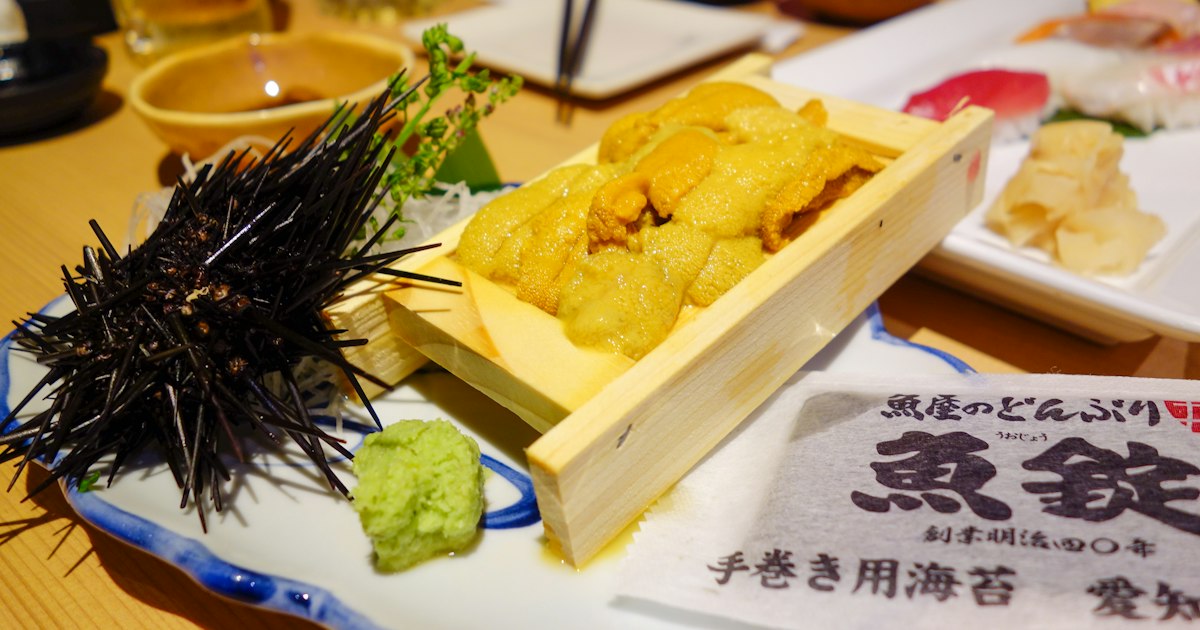
Ankimo doesn’t announce itself on a menu the way sashimi or tempura does, but ask any izakaya regular in Japan what the best winter appetizer is and this is often the answer. Steamed monkfish liver, pressed into a dense, pale cylinder and sliced into coins, it has a rich, custardy texture that’s earned it the nickname “foie gras of the sea.” If you’re the kind of traveler who orders the unfamiliar thing on the menu, ankimo is one of the most rewarding bites in Japan — and it’s far easier to find than most guidebooks suggest.
What Ankimo Actually Is
Ankimo (あん肝) is the liver of the monkfish (anko), cleaned of veins and bile, rolled tightly in cloth or plastic film, and steamed slowly until it sets into a firm pâté-like block. It’s then chilled and sliced into half-inch rounds. The texture sits somewhere between foie gras and a very dense custard — fatty, slightly mineral, and smooth enough to melt on the tongue. It’s almost always served cold or at room temperature with ponzu (citrus soy sauce), a small mound of momiji-oroshi (grated daikon mixed with chili), and finely chopped scallion. Some restaurants finish it with a few drops of yuzu or a dab of karashi mustard instead.
It’s rich, but not heavy — a proper serving is only two or three slices, meant as a shared starter or a sake pairing rather than a main course.
Timing It Right: Why Season Matters
This is the detail most visitors miss. Monkfish liver is only genuinely good in winter. Anko fatten up before spawning, and their livers swell with fat from roughly December through February, peaking around the New Year. Order ankimo in July and you’ll likely get a thinner, less flavorful version (if it’s even on the menu at all) — many izakaya simply pull the dish once the season ends. If ankimo is the reason you’re planning a stop, build your trip around late December to late February, when both the quality and the availability are at their best. This is also peak season for anko nabe (monkfish hot pot), which many restaurants serve as a full course built around the same fish.
Where to Try It in Tokyo
You don’t need to leave the city to find good ankimo — it’s a staple at traditional izakaya and at sushi counters that serve a broader seasonal menu, not just nigiri.
- Budget (¥500–¥900): Standing-bar izakaya chains and neighborhood joints in areas like Shimbashi, Yurakucho, or Ebisu often list “ankimo ponzu” as a small plate for around ¥580–¥880. Quality varies, but it’s a low-risk way to try it for the first time.
- Mid-range (¥1,000–¥2,500): Sushi-ya and izakaya with a seasonal focus — the kind of place with a handwritten specials board — tend to source better, fattier liver and serve larger, more carefully sliced portions. Worth asking staff “ankimo arimasu ka?” (do you have ankimo?) since it’s a seasonal item that doesn’t always make the printed menu.
- Splurge (¥3,000 and up): Kappo and ryotei-style restaurants specializing in seasonal Japanese cuisine sometimes serve ankimo as one course within a multi-dish kaiseki set, often dressed more elaborately with yuzu zest, uni, or a dashi jelly.
Since ankimo is typically a shared starter rather than a whole meal, it pairs naturally with an evening of ordering several small plates — which also means you’ll want to know how bill-splitting actually works at izakaya if you’re going with a group, since the check often comes as one lump sum to be divided at the table.
Oarai, Ibaraki: The Anko Pilgrimage Town
If you want to go deeper than a single appetizer, the town most associated with anko in Japan is Oarai, a small fishing port on the Ibaraki coast northeast of Tokyo. Oarai and nearby Hitachinaka land a large share of Japan’s monkfish catch, and in winter the town’s harbor-side restaurants build entire meals around it — anko nabe, ankimo, deep-fried anko skin, and anko served seven traditional ways in a “nanakuten” set at some specialty restaurants.
To get there from Tokyo, take the JR Joban Line (or the Tsukuba Express plus a transfer) to Mito, then switch to the Oarai Kashima Line for the short ride to Oarai Station — roughly 90 minutes to two hours total, depending on connections. Restaurants near the port generally run lunch service from around 11:00 or 11:30 to 14:00 and dinner from 17:00, with many closing one weekday (often Wednesday) and some reducing hours outside the winter season — call ahead or check in advance if you’re making a dedicated day trip, since a few close entirely once monkfish season ends in spring. A full anko course here, including ankimo as a starter, typically runs ¥6,000–¥12,000 per person depending on the restaurant and whether you order the hot pot for two.
Common Mistakes to Avoid
- Ordering it off-season. As above — if it’s not winter, ask before assuming it’s available, and don’t be surprised if the texture disappoints outside December–February.
- Treating it like foie gras and eating a large portion. It’s rich; two or three slices is a normal serving, not a starter-sized block.
- Skipping the ponzu and daikon. The acidity and heat cut through the fat — eating it plain makes it taste heavier and more one-note than it should.
- Assuming it’s raw. Ankimo is always cooked (steamed); there’s no raw-liver version being served to diners, so there’s less food-safety concern here than with some raw seafood dishes.
Buying Ankimo to Take Home
Ankimo doesn’t travel as fresh product easily, but it’s sold in shelf-stable and vacuum-packed forms that make reasonable souvenirs or trial bites before committing to a restaurant order. Depachika (department store basement food halls) in Tokyo, such as those at Isetan Shinjuku or Mitsukoshi Nihombashi, often stock vacuum-sealed, ready-to-slice ankimo in the prepared seafood section for roughly ¥800–¥1,500 per 100–150g pack, usually in the colder months. Canned ankimo, seasoned and ready to eat straight from the tin, is also sold at larger supermarkets and specialty canned-goods shops for about ¥500–¥900 a can and keeps far longer, making it the easier option to pack in a suitcase.
If you’re exploring other distinctive seafood while you’re at it, dishes built around lesser-known white fish are worth the same curiosity — see our guide to hirame and kanpachi sashimi pairings beyond tuna and salmon for other options that reward ordering off the beaten path. And if coastal fishing towns are your thing, Choshi’s fishing port and lighthouse day trip makes a good comparison stop to Oarai, with its own seasonal catch and harbor-side restaurants.