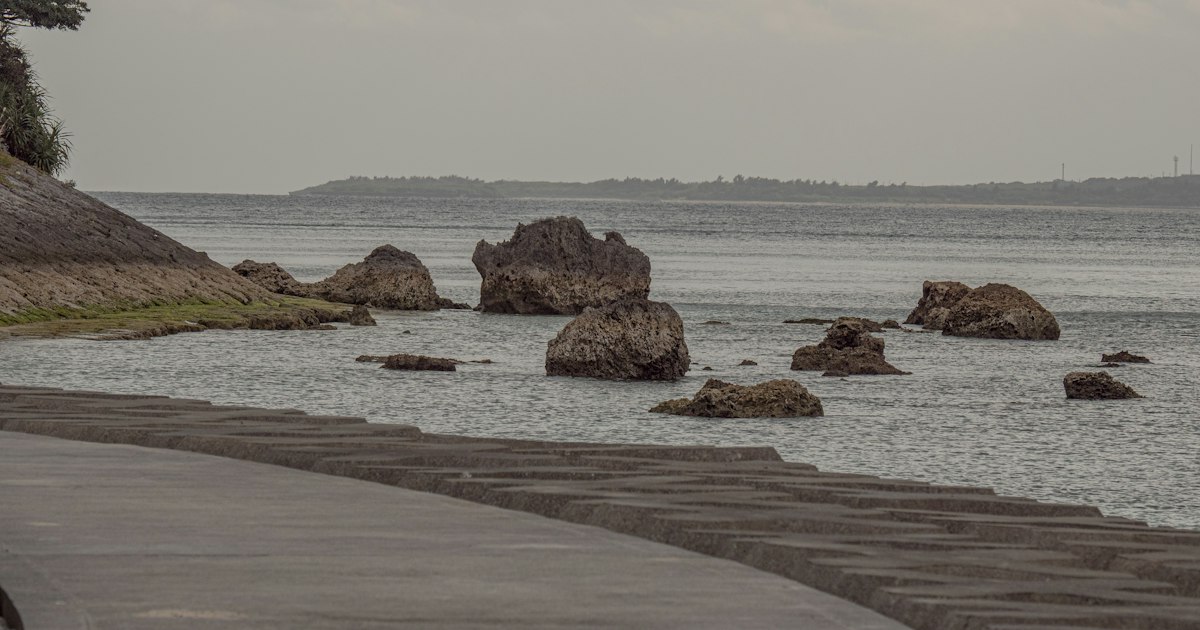
Photo by Michael Bai on Unsplash
North of Okinawa’s main island, past the resorts of the Motobu Peninsula, a short ferry ride takes you to two islands most visitors never hear about. Izena and Iheya see a trickle of tourists compared to Okinawa’s famous diving spots, yet they offer exactly what a lot of travelers quietly want after a few days of Naha and Chatan: empty white beaches, a royal history you can walk through in an afternoon, and almost no other foreign tourists. This guide covers how to actually get there, what each island is worth your time for, and the mistakes that strand first-timers overnight.
Getting There: The Ferry from Unten Port
Both islands are reached from Unten Port (運天港) in Nakijin Village, on the Motobu Peninsula in northern Okinawa. There is no train to this part of Okinawa, so you’ll need a rental car or taxi — it’s roughly 90 km and about 1.5 to 2 hours from Naha Airport, mostly via the Okinawa Expressway and then local roads toward Nakijin. Parking at Unten Port is free and informal; just leave the car and walk to the ticket window.
From Unten Port, separate ferries run to each island:
- Izena: the ferry to Izena Island takes roughly 55–75 minutes depending on the boat, with a handful of sailings a day. One-way adult fares are in the ¥1,500–1,600 range, with discounts for children.
- Iheya: the high-speed ferry to Iheya takes about 60–80 minutes, with a similar number of daily departures. One-way adult fares run roughly ¥2,500.
There’s no direct boat between Izena and Iheya — to visit both, you return to Unten Port and board the other island’s ferry, and the schedules rarely line up for a same-day double-header. If you want to see both, plan for two or three days with an overnight stay on at least one island. Ferries here are genuinely weather-dependent: both routes get cancelled or delayed in rough seas, especially during typhoon season, so build a buffer day into your itinerary if you have a flight to catch and don’t book a tight connection the same evening you plan to return.
Izena Island: Royal History and Quiet Beaches
Izena’s claim to fame is that it’s the birthplace of Sho En, the farmer-turned-king who founded the Second Sho Dynasty that ruled the Ryukyu Kingdom for centuries. The island takes this seriously: Izena Tamaudun, the royal mausoleum, sits above the port area, and the restored Nakayama House nearby shows what a well-off Ryukyu-era farming family’s home looked like, thatched roof and all. Both can be seen in an hour or two on foot or by rental bike.
For beaches, Giza Beach (伊是名ビーチ, often romanized Giza or Ijiza Beach) on the island’s west side is the main swimming spot, with calm, shallow water and a small changing facility open roughly April through October. There’s no real nightlife here — bring cash, since there’s no bank with foreign-card ATM access and only a couple of small general stores.
Iheya Island: Ancient Forest and Turtle Beaches
Iheya feels a touch wilder than Izena. Its signature site is Kuba Forest, a national-designated natural monument of old-growth Livistona palm (kuba) trees considered sacred in local belief — it’s a short, easy walk through dense, shaded forest that feels nothing like the rest of coastal Okinawa. The island’s north end has Nishihama Beach, a long stretch of pale sand that’s popular with sea turtles nesting in early summer; if you’re there around May to July, ask locally about nesting activity rather than wandering the dunes at night uninvited.
Iheya also has a small lighthouse and viewpoint at its northern tip and several limestone cave sites inland, though some require a local guide to access safely. As with Izena, plan on cash only and limited dining — a few home-style restaurants near the port serve Okinawa soba and fresh seafood, typically open for lunch and closing by early evening.
Getting Around, Staying, and Eating
Neither island has taxis or public buses worth relying on, and there’s no car rental desk at the ferry terminal on either side the way there is on Okinawa’s main island — reserve a rental car or scooter through your minshuku (guesthouse) or a local shop in advance. Budget travelers can rent a bicycle for around ¥1,000–1,500 a day and cover most sights that way, since both islands are compact (Izena is about 15 km around, Iheya a bit larger). A rental kei-car or scooter typically runs ¥3,500–6,000 a day.
Accommodation is almost entirely minshuku-style guesthouses with shared or simple private bathrooms, from roughly ¥6,000–9,000 per person with two meals included — book these directly by phone or through a Japanese booking site, as English-language options are scarce. There’s no splurge-resort option on either island; the “splurge” here is really just paying extra for a private bath or a room with a sea view. Food is simple and good: Okinawa soba, grilled or raw fresh fish, and seasonal vegetables, with almost nothing catering specifically to foreign palates, so a few words of Japanese or a translation app helps.
Best Time to Visit
Late April through early June is the sweet spot — seas are calmer, humidity hasn’t peaked, and ferries are less likely to be cancelled. July and August are hot and can get crowded with domestic travelers on summer break, while the peak typhoon window from roughly August through October brings the highest risk of cancelled sailings and should be avoided if your schedule is tight. Winter (December–February) is quiet and mild by most standards, though swimming is out and some guesthouses reduce hours.
Common Mistakes to Avoid
- Not checking ferry status the morning of travel. Both routes post cancellations on the operator’s site or by phone due to wind and swell — don’t assume the schedule you saw online days earlier still holds.
- Assuming you can rent a car on arrival. There’s no guaranteed walk-up rental counter at either port; arrange wheels before you board the ferry.
- Carrying only a credit card. ATMs and card acceptance are limited to nonexistent outside the local post office in the main village — withdraw cash on the main island first.
- Treating it as a quick side trip from a resort. Factor in the drive to Unten Port, the ferry crossing, and the return trip; a rushed single afternoon leaves barely any time on the island itself.
- Skipping travel insurance. Medical care on these islands is minimal, and a serious injury means transfer back to the main island — if you’re traveling without coverage, it’s worth understanding what an uninsured hospital visit in Japan can actually cost before you go, as outlined in this guide to being hospitalized in Japan with no travel insurance.
If this kind of low-key, history-and-nature detour appeals to you, it’s worth pairing with Okinawa trips in the same spirit elsewhere in Japan — the approach to Cape Ashizuri on Shikoku rewards the same kind of patience, and travelers who enjoy quiet, lesser-known towns tend to also like Omihachiman’s canal district near Lake Biwa. None of these places are hard to reach once you know the logistics — they just reward travelers willing to build in an extra day.