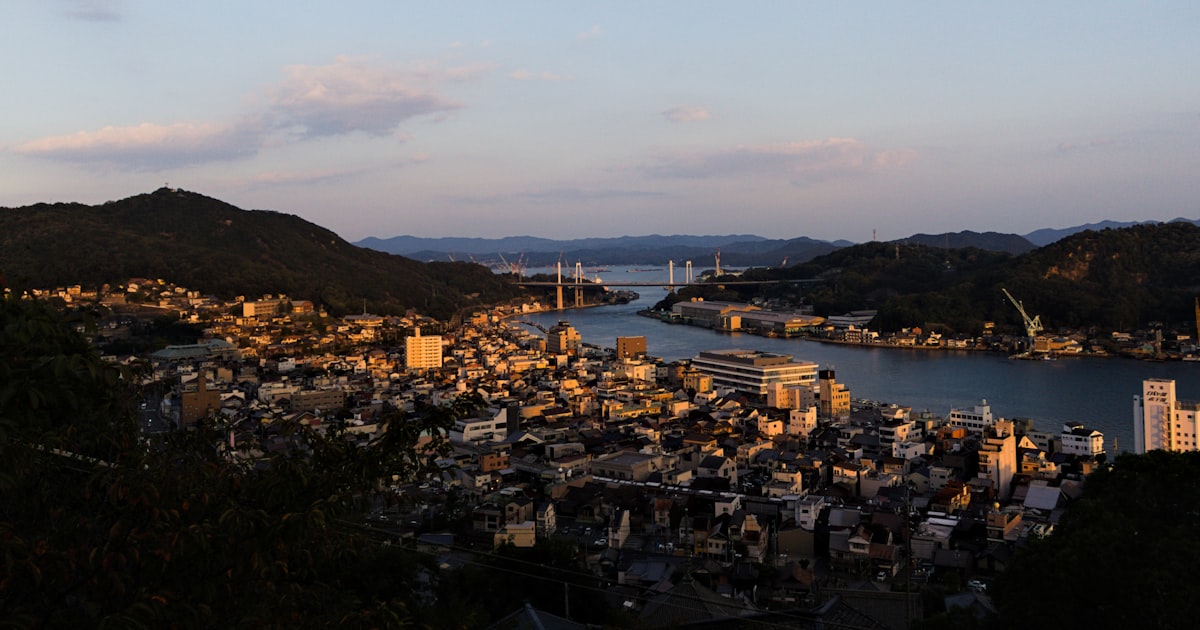
Photo by Ashton Christiansen on Unsplash
Wedged between a hillside of temples and the calm waters of the Seto Inland Sea, Onomichi doesn’t try very hard to impress you — and that’s exactly why it works. Narrow stone paths wind past wooden houses, stray cats doze on sun-warmed steps, and the smell of soy-sauce ramen drifts out of shopfronts that have been serving the same recipe for decades. It’s a half-day or full-day stop, easy to reach from Hiroshima or Okayama, and a natural jumping-off point for the Shimanami Kaido cycling route to Shikoku.
Getting to Onomichi
Onomichi sits on the Sanyo Main Line in Hiroshima Prefecture. The most reliable route is Shinkansen to Fukuyama Station, then a local JR Sanyo Line train to Onomichi Station (about 15–20 minutes, roughly ¥330). From Osaka, that’s about 90 minutes total; from Hiroshima city, about 70 minutes with the same transfer at Fukuyama.
There’s also a Shinkansen station called Shin-Onomichi, but only the slower Kodama trains stop there, and it’s inland — you’ll still need a 10-minute bus or taxi ride to reach the old town and waterfront, so most travelers find the Fukuyama transfer simpler. If you’re covering the wider Sanyo corridor (Hiroshima, Okayama, Kobe) by rail, check whether a regional JR West rail pass covers your route before buying individual tickets — it often pencils out cheaper for multi-stop itineraries.
Onomichi Station itself sits right on the waterfront, a two-minute walk from the ferry terminal and the start of Cat Alley — there’s no need for local buses once you arrive.
Neko no Hosomichi (Cat Alley) and the Cat Art Gallery
The hillside behind Onomichi Station is laced with a maze of stepped alleys collectively nicknamed Neko no Hosomichi, or “Cat Alley.” Locals have long fed the neighborhood’s stray cats, and over the years the path has filled up with cat-shaped stones, hand-painted signs, and small shrines to feline visitors — plus, if you’re lucky and visit in the cooler morning or late-afternoon hours, actual cats napping on warm stone steps.
Partway up the hill is the tiny Onomichi Neko no Bijutsukan (Cat Art Gallery), a converted storage building covered in painted “fuku-ishi” stones by local artist Yoshiaki Uchida — free to peek into, with a donation box inside. Don’t expect a den of cats sitting in wait for photos; they move around depending on the sun and the time of day, so if the alley looks quiet, try again an hour later rather than assuming they’ve vanished.
Wear shoes with grip — the paths are a mix of stone stairs, steep concrete slopes, and gravel, and they get slippery after rain.
Senkoji Temple, the Ropeway, and the Temple Walk
Cat Alley threads directly into Onomichi’s “Temple Walk,” a roughly 2.5 km course connecting 25 temples scattered across the hillside. You don’t need to visit all of them — Senkoji Temple, with its vivid vermillion pagoda overlooking the harbor, is the highlight and the natural turnaround point.
You can walk up (15–20 minutes of stairs from the base) or take the Onomichi Ropeway, which climbs to Senkoji Park in about 3 minutes. As of recent fares, a round trip runs roughly ¥700 for adults and ¥350 for children, with the ropeway typically running from around 9:00 to 17:15 (last ascent slightly earlier) — hours shift seasonally, so it’s worth confirming at the base station on arrival rather than assuming a fixed schedule. From the observation deck at the top, the view over Onomichi’s rooftops, the strait, and the Shimanami Kaido’s first bridge is the best photo op in town.
Onomichi Ramen: What to Order and Where
Onomichi is one of Japan’s recognized regional ramen styles, distinct for its soy-sauce (shoyu) base built on pork and seafood stock, topped with chunks of pork back fat (seabura) that melt slowly into the broth as you eat — richer than a typical shoyu bowl but not greasy in the tonkotsu sense. Flat, slightly chewy noodles are standard.
A basic bowl runs about ¥700–900, making this one of the cheapest genuinely memorable meals in the region. Shukaen and Tacchan are two long-running shops near the station frequently named by locals as reference points for the style, though queues form at lunch on weekends — arriving right at opening (usually 11:00) or after 2pm avoids the worst of it. Most shops are cash-only or IC-card only, so carry some yen.
If you want a change of pace after ramen, Onomichi’s covered shopping arcade (Onomichi Hondori) has old-school kissaten-style coffee shops tucked between the noodle counters — a useful contrast if you’ve already read our guide to Japan’s retro kissaten and want to spot the style here too.
Best Time to Visit
Spring (late March–April) brings cherry blossoms to Senkoji Park and comfortable walking weather for the hillside stairs. Autumn (late October–November) is equally pleasant and less crowded. Summer is hot and humid with strong sun on the exposed stone paths — bring water and a hat if you’re doing the full temple walk. Winter is mild by Japanese standards but the sea wind off the strait can be sharp, especially at the ropeway’s upper station.
Onomichi also makes sense as a stopover for anyone tackling the Shimanami Kaido cycling route, since the town is the official Honshu-side starting point — spring and autumn are the best seasons for that ride too, avoiding both summer heat and winter headwinds.
Budget, Mid-Range, and Splurge
- Budget: A day of ramen (¥800), ropeway round trip (¥700), and wandering Cat Alley (free) comes in well under ¥3,000. Guesthouses near the station run roughly ¥3,500–5,000 per night for a dorm bed.
- Mid-range: Business hotels near Onomichi Station run about ¥8,000–13,000 per night for a double room, putting you within walking distance of everything above.
- Splurge: Onomichi U2, a converted waterfront warehouse with a hotel, bakery, and cycling-focused shop, runs closer to ¥20,000+ per night and is popular with Shimanami Kaido riders wanting a comfortable base before or after the ride.
Common Mistakes and Nearby Pairings
The most common misstep is treating Onomichi as a quick two-hour photo stop — the temple walk and ropeway alone take half a day if you’re not rushing, and trying to cram in Cat Alley, Senkoji, and a proper ramen sit-down in under two hours means missing most of it. Second, don’t count on cats being visible on demand; they’re strays, not a managed attraction, and midday heat sends most of them into hiding. Third, if you’re combining this with a Shikoku crossing, check ferry and last-bicycle-rental return times before you commit to the full ropeway-and-temple loop, since the two don’t always fit in one afternoon.
Onomichi pairs naturally with a day in Kurashiki’s Bikan Historical Quarter, about an hour away by train through Okayama Prefecture — both are compact, walkable old towns that reward a slow pace rather than a checklist. If you pick up local citrus sweets, ramen kits, or ceramics along the way, our guide to shipping souvenirs home from Japan covers the cheapest way to send them on rather than hauling them for the rest of your trip.