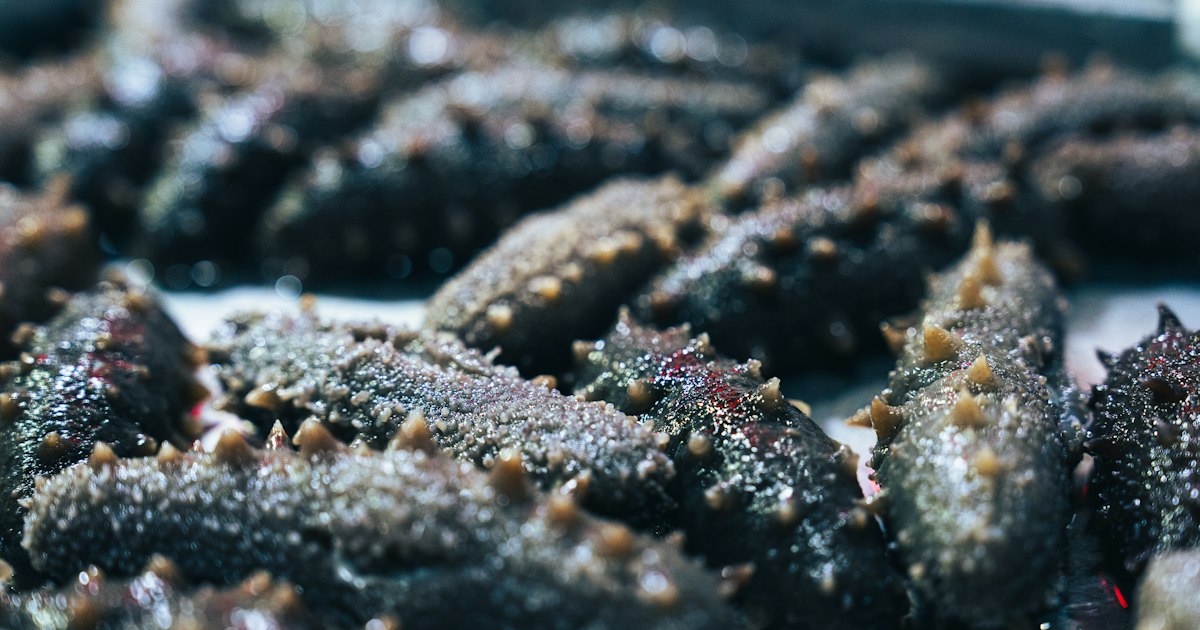
If you’ve worked your way through uni and seared wagyu and are looking for the dish that actually makes Japanese chefs raise an eyebrow, it’s probably this one. Konowata (このわた) is the salted, lightly fermented intestines of the sea cucumber — translucent, briny, and so labor-intensive to produce that a spoonful can cost more than a steak dinner. It’s not on most tourist menus, which is exactly why it’s worth knowing about before you go looking for it.
What Exactly Is Konowata?
Konowata is made from the entrails of the sea cucumber (namako), cleaned, salted, and left to cure for a few days until the texture turns silky and the flavor deepens into something close to a cross between oyster liquor and good soy sauce. The name literally means “the guts of namako.” It’s traditionally grouped with uni (sea urchin) and karasumi (dried mullet roe) as one of Japan’s “three great delicacies” (珍味, chinmi) — the trio Edo-period connoisseurs prized above almost anything else that came out of the sea.
Texture is the thing people either love or can’t get past: it’s slick, slightly chewy, and intensely savory rather than fishy. A tiny amount goes a long way, which is just as well given the price.
Why It’s So Rare and Expensive
Each sea cucumber yields only a few grams of usable intestine, and the cleaning process — removing sand, rinsing repeatedly, salting by hand — can’t really be automated. Producers in the top-tier regions still make it the way their grandparents did. As a rough guide, a small glass jar (around 80–100g) of good-quality konowata typically runs ¥3,000–6,000 at a department store delicacy counter, and the finest grade, called ao-wata (prized for its faint blue-green tinge from the sea cucumber’s intact digestive contents), can go well beyond that. By weight, it’s one of the most expensive foods Japan produces that isn’t seafood roe or fugu.
The most historically famous production areas are Mie Prefecture — particularly the Toba and Shima coast around Ise Bay, which supplied konowata to the Ise Grand Shrine and the Edo shogunate as tribute — and the Noto Peninsula in Ishikawa, which is also known for kuchiko, the dried ovaries of the same sea cucumber (an even rarer, more expensive cousin). Okayama’s Hinase area, near the Seto Inland Sea, is another long-standing producer.
Best Season to Try It
Sea cucumbers are harvested in the cold months, roughly November through February, when the water is cold and the animals are fattest and most flavorful. Fresh, just-made konowata is at its best in midwinter — if you’re traveling to Mie, Ishikawa, or the Seto Inland Sea coast between December and February, that’s the window to ask specifically for freshly salted (shin-wata, “new wata”) rather than the aged, saltier jarred version sold year-round. The jarred product keeps for months and is sold all year, but it’s noticeably saltier and less delicate than fresh winter batches.
Where to Try It
Budget (¥0–1,500): You generally won’t find konowata on a casual izakaya menu, but some Tokyo and Osaka izakaya that specialize in chinmi (rare delicacies) and sake pairings will offer a small dish of it as an appetizer, usually ¥800–1,500 for a few grams served over rice or alone with a shot of good sake. Ask staff for “chinmi” or “konowata” by name — it’s rarely printed on an English menu.
Mid-range (¥1,500–5,000): Department store basement food halls (depachika) in Tokyo and Osaka — Mitsukoshi, Takashimaya, and Isetan all have chinmi counters — stock jarred konowata from named producers in Mie or Noto, generally open during normal store hours (around 10am–8pm). Buying a jar here to eat with drinks back at your hotel is the easiest way for most visitors to try it without hunting down a specialist restaurant. A traditional ryokan kaiseki dinner in Toba or along the Noto coast will sometimes include a small konowata course as one of the appetizers (zensai), effectively letting you taste it “for free” within the price of your stay.
Splurge (¥5,000+): High-end kaiseki restaurants and sushi omakase counters in Tokyo occasionally feature ao-wata or other premium grades as a seasonal delicacy course, priced individually or folded into a multi-course menu that can run ¥20,000–40,000 per person. This is where you’ll taste the best version of the dish, served ice-cold in a tiny dish with nothing to distract from it.
Where to Buy It to Take Home
Jarred, vacuum-sealed konowata travels reasonably well in checked luggage (it’s shelf-stable, salted, and sold in small glass or plastic jars) and makes an interesting, if polarizing, gift for someone who already loves Japanese food. Depachika chinmi counters are the most reliable place to buy it in Tokyo or Osaka without a special trip; producers in Toba (Mie) and the Noto Peninsula also sell directly from shops near the harbor if you’re visiting those regions. Check your destination country’s customs rules on seafood products before packing it — most Western countries allow small amounts of sealed, commercially packaged salted seafood for personal use, but it’s worth a quick check if you’re unsure.
How to Eat It (and Common Mistakes)
Konowata is meant to be eaten in tiny amounts, cold, usually with a small cup of chilled sake or over a few bites of plain steamed rice. The most common mistake first-timers make is treating it like a regular side dish and taking a large spoonful — the saltiness and intensity build fast, and a little truly is enough. It’s also often confused with konoko or kuchiko (the dried ovary version), which looks similar in some presentations but has a firmer, almost jerky-like texture and a sweeter flavor; if you’re not sure which you’re being served, just ask — the words are close enough that mixing them up is an easy mistake even for some menus.
If raw sea cucumber itself (namako) shows up on the same menu, it’s a different, crunchier dish usually served with a vinegar dressing — worth trying as a milder way into the same ingredient before committing to the fermented intestines.
Pairing It With Japan’s Other Rare Delicacies
If konowata turns out to be your kind of thing, it’s worth building a small “rare delicacies” tasting around it. Karasumi and ankimo (monkfish liver) are the other two members of Japan’s traditional “three great delicacies,” and both are considerably easier to find on English-language menus than konowata is. For a gentler contrast on the same table, good sashimi like hirame and kanpachi gives you something clean and mild to reset your palate between bites of the stronger stuff.