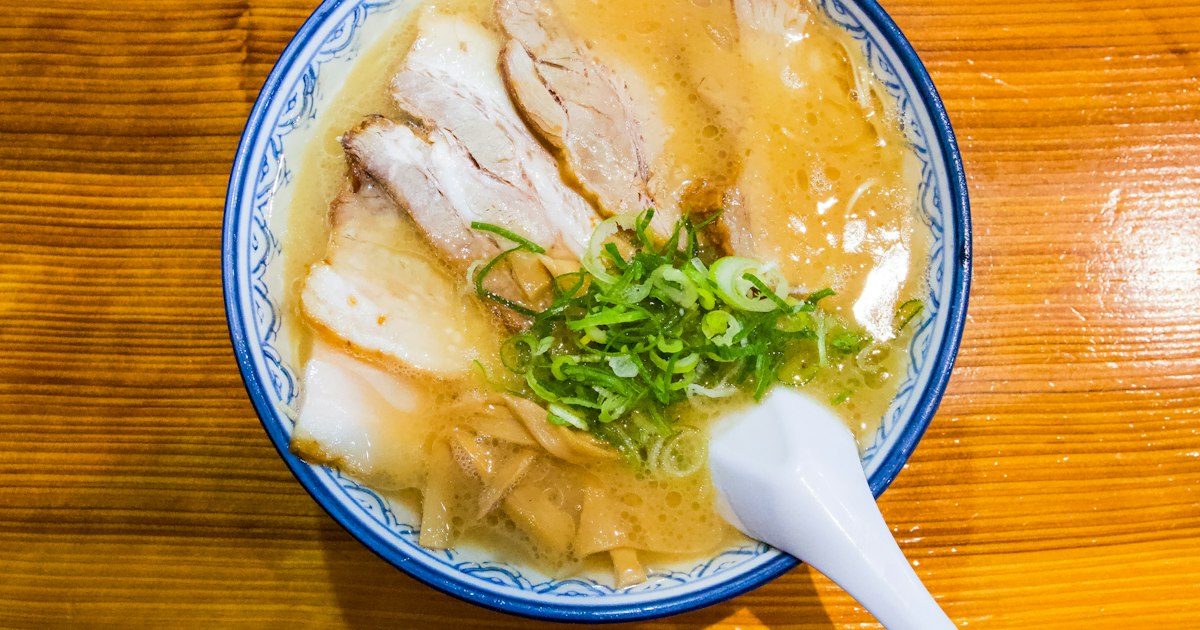
Photo by Frank from 5 AM Ramen on Unsplash
Every ramen shop you fall in love with in Japan seems to sell a version of itself in a bag near the register, and almost every one of those bags tastes like a pale imitation once you get it home. That’s not entirely your fault — tonkotsu broth is a boiled-for-12-hours pork bone reduction, and shrinking that into something shelf-stable or freezer-safe is a genuinely hard engineering problem. Some brands have solved it convincingly. Others haven’t. This guide covers what’s actually worth packing in your suitcase, what to skip, and how to cook what you buy so it resembles the bowl you had in Fukuoka or Kurume rather than instant-noodle soup with extra steps.
Bagged vs. frozen: what you’re actually buying
Room-temperature “bagged” kits are retort-pouch products — the broth is cooked, sealed, and sterilized at high heat, which is what lets them sit on a shelf for 6–12 months. The tradeoff is that the sterilization process flattens aroma and can make the broth taste slightly cooked-twice. Frozen kits skip that heat-sterilization step, so the broth tastes much closer to fresh, but you need a freezer the whole trip and a way to get it home cold, which rules out most tourists unless you’re flying straight back or shipping it (see below).
For visitors, this basically means: bagged kits are the realistic souvenir, and frozen kits are worth it only if you’re near the end of your trip with direct access to a freezer-equipped cooler bag and a short flight home, or if you’re willing to pay for cold takuhaibin (courier) shipping from the shop itself to your hotel or home address in Japan before you even think about the airport.
The bagged kits that punch above their weight
Quality varies enormously by brand, and price is a decent but imperfect signal. A few that consistently taste like real tonkotsu rather than salty pork-flavored water:
- Hakata Ikkousha / Ippudo retail bags (¥600–¥900 for a 2-serving set at supermarkets, slightly more at the brand’s own shop counters) — these use a higher ratio of actual bone extract and come with a separate thin soy-tare packet you mix in yourself, which preserves more flavor control than kits where everything is pre-blended.
- Marutai Hakata Tonkotsu (around ¥300–¥450 for 2 servings at supermarkets like Life or Seijo Ishii) — the budget benchmark. Thinner and saltier than shop broth, but a genuinely solid base if you doctor it (see mistakes section below).
- Kyushu Jangara and regional shop-brand sets sold at Tokyo Station’s Gransta or Hakata Station’s Hakata Dontaku Kaikan — station-exclusive kits are often made in smaller batches with less dilution than the national supermarket versions, and they make a good last-minute buy if you’re transferring trains before a flight.
Avoid the generic no-name bags at convenience stores (Lawson, FamilyMart house brands) — they’re fine in a pinch at 2am but are built for speed, not depth of flavor, and taste noticeably thinner than supermarket versions at a similar price.
Where to actually buy them
Don Quijote and large supermarkets (Life, Ito-Yokado, Seijo Ishii) carry the widest range and are usually cheaper than souvenir shops in train stations or airports. If you’re near the end of your trip and want a quick, reliable stop without hunting for a supermarket, standard 100-yen-style shops are hit or miss for ramen kits specifically — if you want to compare which chains stock food items worth checking, Can Do & Watts: Japan’s Other 100-Yen Shop Chains Worth a Visit is a useful reference, though for broth kits themselves a proper supermarket will have better options.
Narita and Haneda airport shops (the “Japan souvenir” floors past security) mark kits up 20–40% over supermarket price, so buy before you head to the airport if you can. Fukuoka Airport is the exception — because it’s the spiritual home of tonkotsu, the domestic terminal sells several Hakata-specific brands you won’t easily find in Tokyo, often at prices close to what you’d pay at a Fukuoka supermarket.
Common mistakes that ruin the broth at home
- Boiling the pouch too hard. Retort broth separates and turns gritty if you boil it aggressively. Warm the sealed pouch in a pot of simmering (not boiling) water, or decant and reheat gently on low.
- Using the noodles that come in the kit. Bundled dried noodles are almost always the weakest part of these sets. If you can get fresh or frozen ramen noodles from a Japanese grocery store back home, swap them in — it makes a bigger difference than upgrading the broth.
- Skipping the fat. Many kits separate out a small packet of pork fat (mayu or chili oil) — don’t skip it thinking it’s optional garnish. It’s often half of what makes the broth taste rich rather than thin.
- Forgetting toppings entirely. A bag of broth with nothing on top will always taste like a bag of broth. Thin-sliced chashu (even store-bought from a Japanese grocer), a soft-boiled egg, scallions, and a slice of narutomaki or kamaboko fish cake go a long way — if you want to understand what that fish cake topping actually is and how it’s made, see Kamaboko-Making Workshops in Odawara.
- Diluting with too much water. Tonkotsu concentrate pouches are meant to be thinned, but most people over-dilute to “stretch” a kit across more bowls, which is the single fastest way to make it taste like nothing. Follow the package ratio exactly the first time before adjusting.
Shipping frozen broth home instead of carrying it
If you fall for a specific shop’s broth and it’s only sold frozen, many ramen-ya and specialty shops (particularly in Fukuoka, Kurume, and Kumamoto) offer cold takuhaibin shipping overseas through services like Yamato’s international cool-courier option, though this is pricier than it sounds — often ¥8,000–¥15,000 for international shipping depending on destination and weight, on top of the product cost. It’s only worth it if you’re buying in bulk or it’s genuinely a bucket-list broth. For most travelers, a well-chosen bagged kit from a supermarket is the better value.
Best time to buy, and what to pack it with
Buy bagged kits in your last 2–3 days in Japan rather than at the start of the trip — they’re not heavy, but suitcase space is always tighter on the way home, and buying early means carrying them through multiple hotel stops. Wrap retort pouches in a layer of clothing in checked luggage; they’re sealed and won’t leak under normal handling, but a torn outer box looks bad at customs even when the contents are fine. Declare food items honestly on your customs form — most sealed, commercially packaged broth is permitted entry into the US, EU, UK, Canada, and Australia, but fresh or frozen meat-containing kits can run into restrictions depending on destination, so check your home country’s specific rules before buying frozen options in volume.
If regional noodle specialties are your thing beyond ramen, it’s worth comparing tonkotsu against other noodle traditions while you’re traveling — Nagoya’s flat kishimen is a good detour if you’re passing through the Chubu region and want a different noodle experience entirely before you commit suitcase space to broth.