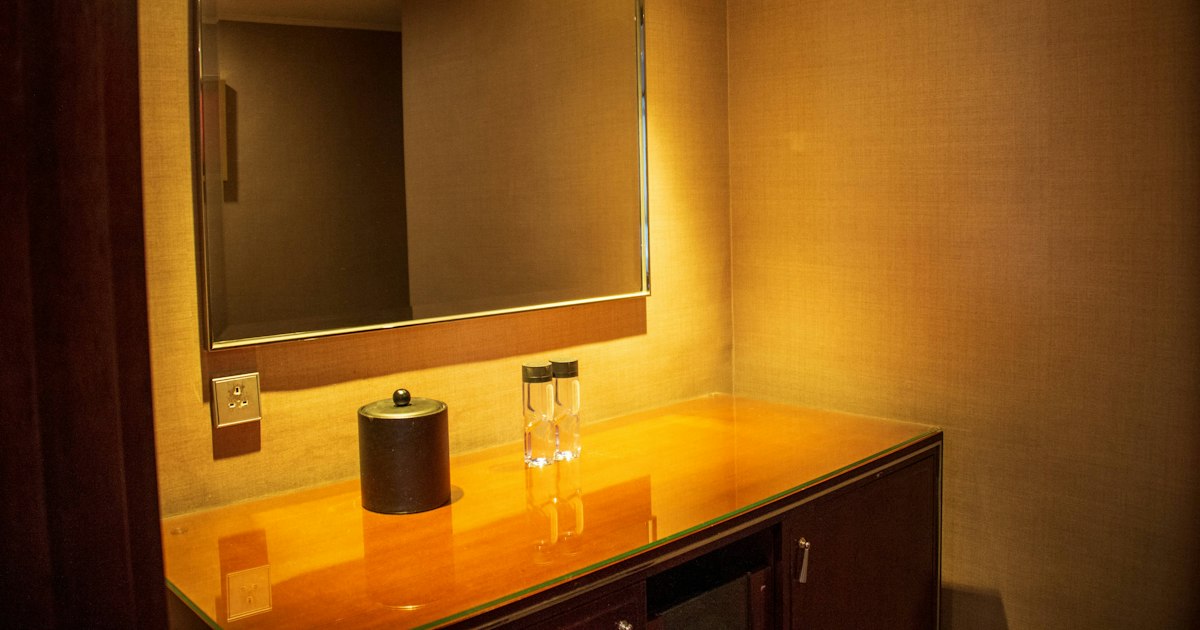
Photo by Kin Shing Lai on Unsplash
You get back to your room after a long day, open the little fridge or cabinet, and there it is: a miniature bottle of Suntory Royal, or maybe Kakubin, sitting next to the beer and the overpriced can of mixed nuts. Before you twist the cap, it helps to know what you’re actually paying for — because Japanese hotel minibar whisky pricing follows some pretty consistent patterns once you know what to look for, and in almost every case there’s a cheaper way to drink the exact same bottle ten minutes away.
Why Hotel Minibar Whisky Costs What It Does
Minibar pricing in Japan isn’t random gouging — it reflects a few fixed costs that hotels pass on. Restocking a minibar requires daily staff checks, inventory tracking, and often a dedicated line item in housekeeping budgets. Business hotels and ryokan also tend to price minibar alcohol as a convenience premium rather than a retail price: you’re paying for the ability to drink in your room, at midnight, in a bathrobe, without putting on shoes. A 50ml miniature of Suntory Royal that retails for around ¥500–700 at a liquor shop or airport duty-free shop commonly appears in a hotel minibar for ¥900–1,500, and in high-end city hotels or resort properties it can run ¥1,800–2,500 for the same tiny bottle. Beer and highball cans in the same fridge usually carry a smaller markup — often only 1.5x to 2x street price — because they’re bought in bulk and turn over faster.
Suntory Royal, Kakubin, and the Brands You’ll Actually Find
Suntory dominates hotel minibars because Suntory Royal is positioned as a slightly premium, gift-worthy blend with a recognizable gold-tinted bottle and a relatively long shelf life — ideal for something that might sit in a minibar for months. Kakubin (the “square bottle” whisky) shows up almost as often, especially in business hotels, because it’s cheaper to source and is the default whisky in Japanese izakayas, so it reads as familiar rather than fancy. Nikka’s Black Nikka Clear or Nikka Whisky appears in some chains, particularly in Hokkaido and Tohoku where Nikka has stronger regional ties. You’ll rarely see Yamazaki or Hibiki miniatures in a minibar — those single malts are priced and allocated too tightly for hotels to stock reliably, and when a hotel does offer one, it’s usually through in-room dining or a lobby bar menu rather than the minibar fridge itself.
Typical Minibar Pricing by Hotel Tier
Pricing scales fairly predictably with hotel category:
- Budget business hotels (Toyoko Inn-style, APA, Super Hotel tier): often skip whisky minibars entirely, or offer only beer and soft drinks. When whisky miniatures do appear, expect ¥700–1,000 for a 50ml Kakubin.
- Mid-range city hotels (3–4 star international and domestic chains): ¥1,000–1,500 for Suntory Royal or Kakubin miniatures is typical.
- Upscale and resort hotels, onsen ryokan: ¥1,800–3,000, sometimes paired with a small snack set or crystal glass as a package. Ryokan in particular often price the minibar as part of an “extras” menu printed on card stock rather than a sticker on the fridge, so check that card before assuming the price.
A useful rule of thumb: if the price isn’t clearly posted inside the room, call the front desk before opening anything. Many hotels bill minibar items automatically to your room folio based on a weight-sensor shelf or a daily visual check, and disputing a charge after checkout is far more annoying than asking upfront.
Cheaper Ways to Drink the Same Whisky
If you actually want Suntory Royal or Kakubin rather than just a convenient nightcap, konbini (convenience stores) sell the same miniatures — and full-size bottles — for close to retail price, usually ¥500–700 for a 50ml Royal and ¥1,000–1,300 for a 700ml Kakubin. Supermarkets and drugstores like Don Quijote are even cheaper. If you’re staying somewhere with a kitchenette or just want ice, most konbini sell bagged ice for under ¥200. For the social version of the same drink, a standard izakaya highball (whisky and soda) typically costs ¥400–600, which is often less than the minibar miniature and comes with far more liquid and actual ice. This is the same logic that makes chain coffee shops a better value than hotel lobby cafés — the room-service version of any drink in Japan almost always carries a steep convenience tax compared to stepping outside.
Common Mistakes Travelers Make With Minibars
The most expensive mistake is opening a bottle to see what it is and then deciding you don’t want it — many Japanese hotels use tamper or weight sensors that register a charge the moment the seal breaks or the bottle leaves its slot, regardless of whether you drink it. Second is assuming minibar prices include tax and service charge; some upscale hotels add a 10–15% service charge on top of the posted price, which only shows up on the final bill. Third is confusing the minibar with a “welcome” bottle — some ryokan and boutique hotels place a complimentary miniature whisky or sake as part of a welcome amenity, separate from the paid minibar stock, and the two can sit side by side with no visible labeling. When in doubt, ask staff to point out exactly which items are free.
When the Splurge Is Worth It
There are legitimate reasons to pay minibar prices rather than walking to a konbini: you’ve just landed after a long flight and don’t want to go back outside, you’re in a rural ryokan where the nearest shop is a 20-minute walk, or you’re drinking in a nice robe on your own balcony and the extra ¥500–1,000 buys you exactly that. Minibar whisky also pairs well with room-service or delivered food if you want an adventurous late-night snack — something like konowata or a rich grilled chicken dish like Hinai-jidori if your hotel’s restaurant is still serving. The rule that works best in practice: treat the minibar as a convenience option for the first night when you’re jet-lagged and disoriented, and use the konbini or a nearby izakaya for every night after that once you know the neighborhood.