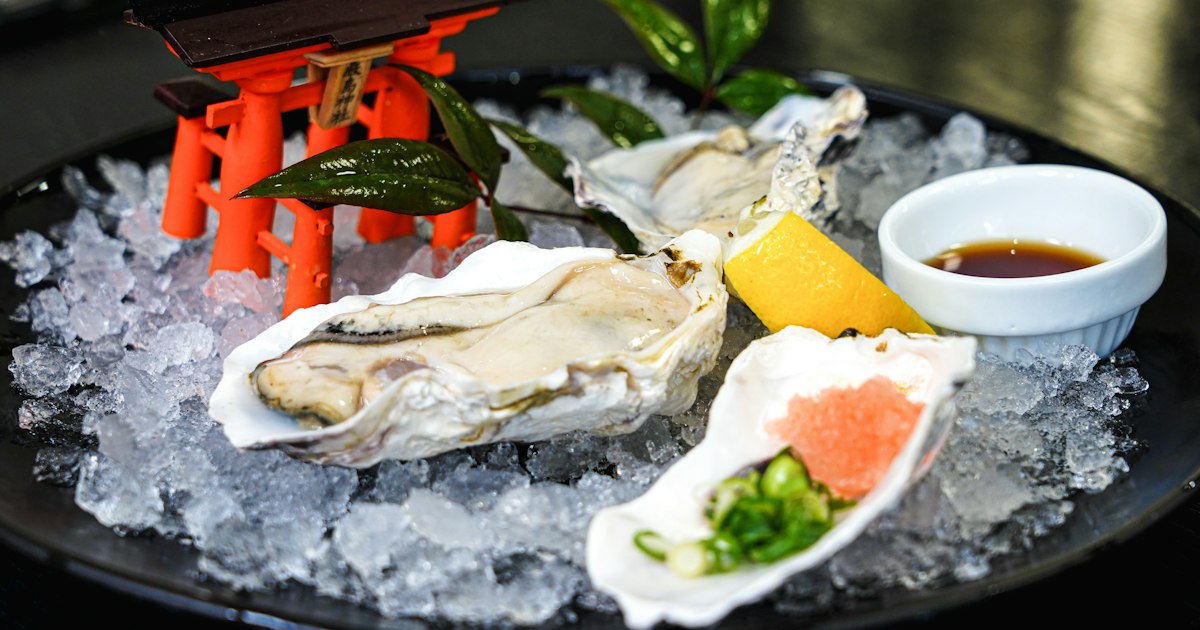
If you’re in Hiroshima between November and March, skip the raw oysters for one meal and order dotenabe (土手鍋) instead — a bubbling earthenware pot of miso broth, plump local oysters, tofu, and vegetables that locals consider the definitive way to eat the prefecture’s most famous seafood. It’s warming, inexpensive by Japanese hot pot standards, and almost impossible to find well-made outside this corner of the country. Here’s what it is, when to go, and which restaurants actually do it right.
What Is Dote-nabe, Exactly?
Dotenabe gets its name from “dote,” meaning a bank or levee. Instead of mixing miso directly into the broth, cooks spread a thick ring of miso paste around the inner rim of the pot — like an embankment holding back a river — and let it slowly melt into the simmering dashi as the oysters, tofu, enoki mushrooms, napa cabbage, and leek cook. You stir the miso in gradually with your chopsticks rather than all at once, which keeps the broth from turning salty too fast and lets you control the flavor through the meal.
The oysters themselves are the star: large, briny, and far more tender than the smaller oysters found elsewhere in Japan, because Hiroshima’s calm, nutrient-rich inland sea waters are ideal for farming them. The dish is typically served in a clay donabe pot over a tabletop burner, so it keeps cooking — and the broth keeps changing — for as long as you sit there.
Why Hiroshima Does Oysters Best
Hiroshima Prefecture produces roughly 60% of all farmed oysters in Japan, a dominance that goes back over 400 years to early Edo-period raft cultivation techniques developed in the bay. The sheltered waters of the Seto Inland Sea, fed by nutrients from several rivers, create ideal conditions for fast, flavorful growth. That scale is why oysters show up here in every form — grilled on the street, fried as kaki-furai, smoked in cans as souvenirs, and simmered in dotenabe — at prices that would be considered a splurge in Tokyo.
When to Go: Oyster Season in Hiroshima
Hiroshima oysters are farmed essentially year-round, but the eating season for dotenabe runs from November through March, with the sweetest, plumpest oysters generally agreed to peak in January and February when the water is coldest. Many restaurants simply don’t offer dotenabe outside this window, or swap it for lighter oyster dishes in warmer months, so if dotenabe specifically is the goal, plan a winter trip.
If your visit lands in February, look out for the Hiroshima Oyster Festival (広島かきまつり), usually held at Ujina Port, where local producers sell grilled and simmered oysters at stalls for a few hundred yen each — a good low-cost way to taste the product before committing to a sit-down dotenabe meal. Dates shift each year, so confirm with the city tourism site close to your travel dates. Winter in Hiroshima also means cold evenings, so if you’re staying in budget accommodation without great heating, it’s worth knowing about Japan’s electric blankets and under-futon heating pads, which many guesthouses rely on instead of central heating.
Where to Try Dote-nabe: Hiroshima City
The most memorable setting is Kanawa, a restaurant built on a boat permanently moored on the Kyobashi River near Heiwa-dori, a short walk from Hiroshima Peace Memorial Park. Kanawa has served oyster cuisine for decades and runs full oyster kaiseki courses that include dotenabe alongside grilled and fried preparations; full courses run roughly ¥6,000–10,000 per person, while a simpler oyster set with dotenabe can be closer to ¥3,500–5,000. It’s popular with both locals and tour groups in winter, so reserve ahead, especially for dinner.
For something more casual, look around the Hondori shopping arcade and the streets near Hiroshima Station, where several izakayas add a seasonal dotenabe to their winter menu as a shareable hot pot for two, typically ¥2,500–4,000 total. These spots don’t always keep English menus, so pointing at “土手鍋” (dotenabe) or “かき” (kaki, oyster) on the menu is a reliable way to order.
Where to Try Dote-nabe: Miyajima Island
Miyajima, the island famous for the floating torii gate of Itsukushima Shrine, is also one of the easiest places to eat excellent oysters, since many are farmed in the surrounding waters. On the Omotesando shopping street leading from the ferry pier to the shrine, Kakiya (牡蠣屋) specializes almost entirely in oysters — raw, grilled, fried, and in a seasonal dotenabe — with set meals generally in the ¥2,000–4,000 range. Several smaller stalls nearby sell grilled oysters by the piece for roughly ¥200–400 each if you just want a quick bite between temple visits.
To reach Miyajima, take the JR Sanyo Line from Hiroshima Station to Miyajimaguchi (about 25 minutes), then the JR ferry across to the island (about 10 minutes, roughly ¥200–360 one-way; free with a JR Pass). Restaurants cluster near the pier and along Omotesando, so you don’t need to walk far after a cold crossing. Aim to arrive by early afternoon if you also want time at the shrine before dinner, since the last ferries back to the mainland stop running relatively early in winter.
Budget, Mid-Range, and Splurge Picks
- Budget (~¥200–1,500): Grilled oyster stalls on Miyajima’s Omotesando or at seasonal festivals like the Hiroshima Oyster Festival — not a full dotenabe, but a cheap way to sample the raw ingredient.
- Mid-range (~¥2,500–5,000): A dotenabe set at Kakiya on Miyajima or at a Hondori-area izakaya in Hiroshima city, usually enough for one or shared between two with rice and a side dish.
- Splurge (~¥6,000–10,000+): A full oyster kaiseki course at Kanawa, which includes dotenabe as one course among several oyster preparations plus sashimi and tempura.
Common Mistakes to Avoid
The biggest one is timing: travelers who visit Hiroshima in summer are often disappointed to find dotenabe missing from menus, since it’s a cold-weather dish built around winter oysters. Don’t assume every seafood restaurant serves it just because Hiroshima is known for oysters — call ahead or check a restaurant’s seasonal menu first, particularly for a boat restaurant like Kanawa where seating is limited.
Another mistake is stirring all the miso into the broth at once. Let it melt gradually from the rim as the pot simmers; the gradual change in flavor, from light dashi to rich miso, is the point of the dish. Finally, don’t skip the rice — many restaurants offer a small bowl of rice or noodles to add to the leftover broth at the end, which is considered the proper way to finish the meal rather than wasting the simmered oyster liquid.
If you’re building out a broader food itinerary around regional hot pots, Hiroshima’s dotenabe pairs well conceptually with Ibaraki’s anko nabe monkfish hot pot in the north, and for grilled skewers to try alongside your oyster meal, Japan’s tsukune chicken meatball skewers make a solid non-seafood counterpoint on the same izakaya menu.