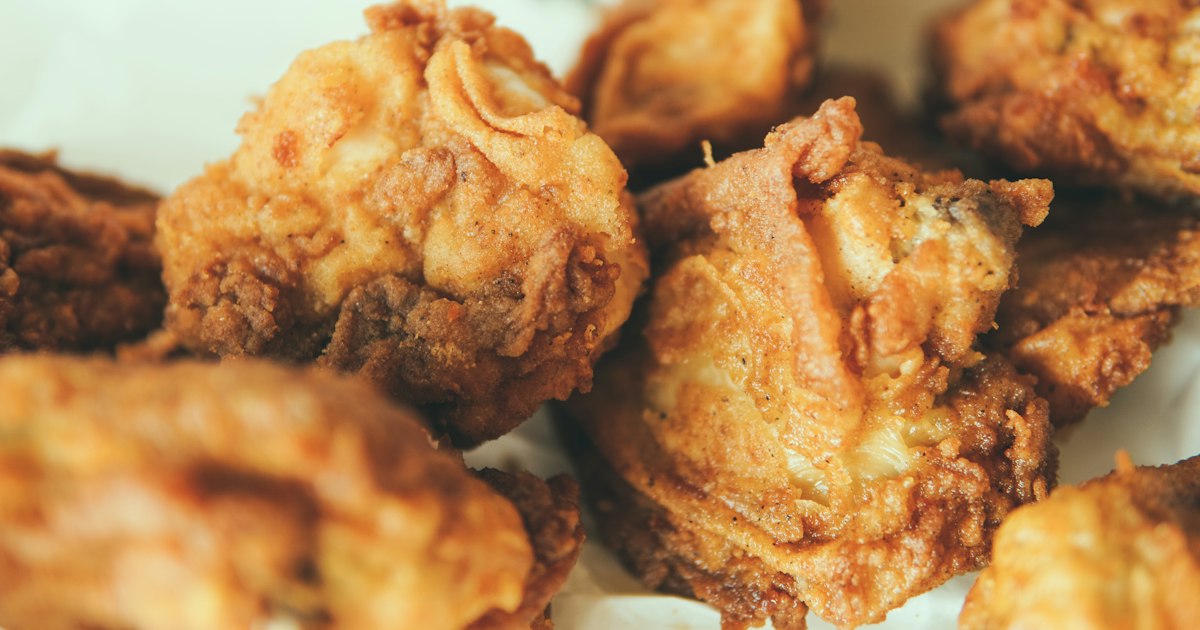
Photo by HONG FENG on Unsplash
Chicken nanban looks like simple fried chicken until the first bite tells you otherwise: a hot, crisp-battered thigh piece doused in a sharp-sweet vinegar sauce, then buried under a cold, eggy tartar sauce. It’s the signature dish of Miyazaki Prefecture on Kyushu’s southeast coast, and it has quietly spread to lunch counters and convenience store bento boxes across Japan — but the original, made with a specific amazu (sweet vinegar) and a tartar sauce built on hard-boiled egg and onion, is still worth traveling for. Here’s what it is, where it started, and how to eat it properly.
What makes chicken nanban different from karaage
Japanese fried chicken usually means karaage — bite-sized pieces marinated in soy and garlic, dusted in potato starch, fried, and eaten plain or with a squeeze of lemon. Chicken nanban starts from a different base: larger, flattened pieces of thigh (sometimes breast) are dredged in flour and egg, deep-fried until the coating is almost tempura-like, then dunked immediately in a vinegar-based sauce while still hot so it soaks in. The tartar sauce goes on last, at the table or in the kitchen depending on the restaurant, and it’s not a garnish — it’s roughly a third of what you’re eating. Expect the sauce to be sweeter and more custardy than Western tartar, built from mayonnaise, finely chopped boiled egg, onion, and sometimes pickle or carrot.
The common mistake visitors make is ordering it expecting karaage and being thrown by the vinegar hit, or scraping off the tartar sauce because it looks like an afterthought. Eat it as intended — sauce and all, while the chicken is still warm — and the contrast of hot-sour-sweet-creamy makes sense.
Where it actually started
The dish was invented in Nobeoka, a city about an hour north of Miyazaki City by train, not in the prefectural capital itself — a detail locals will correct you on. Two restaurants claim the invention in the late 1950s/early 1960s: Naoichi and Ogura, both still operating in Nobeoka with slightly different versions (Naoichi’s tartar sauce is more savory and onion-forward; Ogura’s leans sweeter). If you’re passing through Nobeoka, both are worth comparing side by side — a plate at either runs roughly ¥900–1,200.
In Miyazaki City itself, the dish is everywhere, from department store basements to izakaya to the airport. The most famous Miyazaki City spot is Komeya, known for an exceptionally thick, almost custard-like tartar sauce; expect to queue at lunch. Ogura also has a Miyazaki City branch if you can’t make it to Nobeoka.
Where and how to order it
- Budget (¥700–1,000): Convenience stores (7-Eleven, FamilyMart, Lawson) and supermarket delis across Japan sell a packaged version, and it’s genuinely decent for what it is — a good way to try the concept before committing to a sit-down meal. Chain lunch counters in Miyazaki also do a set with rice, miso soup, and cabbage for around this price.
- Mid-range (¥1,000–1,800): A dedicated chicken nanban set at a specialty shop like Komeya, Naoichi, or Ogura, usually with rice, soup, and pickles included. This is the sweet spot — you get the full version of the sauce and generous chicken portions.
- Splurge (¥2,500+): Izakaya and ryokan dinner courses in Miyazaki sometimes serve chicken nanban alongside other prefecture specialties like jidori (free-range chicken) sashimi or charcoal-grilled chicken, as part of a multi-dish set. Worth it if you want to taste Miyazaki’s chicken culture broadly in one sitting, since the prefecture takes its poultry seriously beyond just this one dish.
Most specialty shops are open for lunch from around 11:00 to 14:00 and dinner from 17:00 or 18:00; many close one day a week (often Monday or Wednesday — check ahead, as hours shift seasonally and some shops close between lunch and dinner service entirely). Lunch queues at the well-known spots in Miyazaki City can run 20–30 minutes on weekends.
Getting to Miyazaki
Miyazaki is one of the less-visited parts of Kyushu, which is part of its appeal. From Tokyo, flights from Haneda to Miyazaki Airport take about 1 hour 45 minutes and are often cheaper booked through Japanese domestic sites than through the usual international booking engines. From Fukuoka, it’s a roughly 3.5-hour direct bus or a longer train journey changing at Kokura or via the JR Nippo Line; there’s no shinkansen into Miyazaki, so bus or flight is usually faster than rail. If you’re combining Miyazaki with other parts of Kyushu — Kagoshima for black pork, or the coast for sashimi styles like kibinago — a rental car makes sense, since Miyazaki’s coastline and Nobeoka are spread out and public transit between smaller towns is infrequent. If you do rent, understand the excess waiver terms before you sign, since how Japanese rental insurance actually covers damage catches a lot of visitors off guard.
Best time to go
Miyazaki has a mild, almost subtropical climate, so chicken nanban is a year-round dish with no real seasonal peak — unlike produce-driven Japanese food. That said, spring (March–May) and autumn (October–November) are the most comfortable times to be walking around Nobeoka or Miyazaki City, since summer brings heavy humidity and occasional typhoon activity in August and September. If you’re planning outdoor time around the meal — Miyazaki’s coastline has decent surf breaks and scenic drives — shoulder season avoids both the heat and typhoon risk.
Bringing the flavor home
You won’t find great chicken nanban in a bag, since the dish depends on fresh frying and sauce applied hot, but some Miyazaki gift shops and the airport sell bottled amazu sauce and tartar sauce mixes meant for home use — look for ones from Ogura or Komeya with a cold-chain or shelf-stable label appropriate for your trip home. If you want a more packable Japanese regional food souvenir instead, pair the trip with something shelf-stable like kaki no tane, which travels far better in a suitcase than a sauce bottle does.
If chicken nanban gets you curious about Japan’s other distinct regional soul foods, it’s worth noting how differently the same basic ingredients turn out from one prefecture to the next — compare it mentally to something like Hokkaido’s lard-topped Asahikawa ramen, a dish built around a completely different climate and history but with the same local pride behind it.