Photo by Mateo Krossler on Unsplash
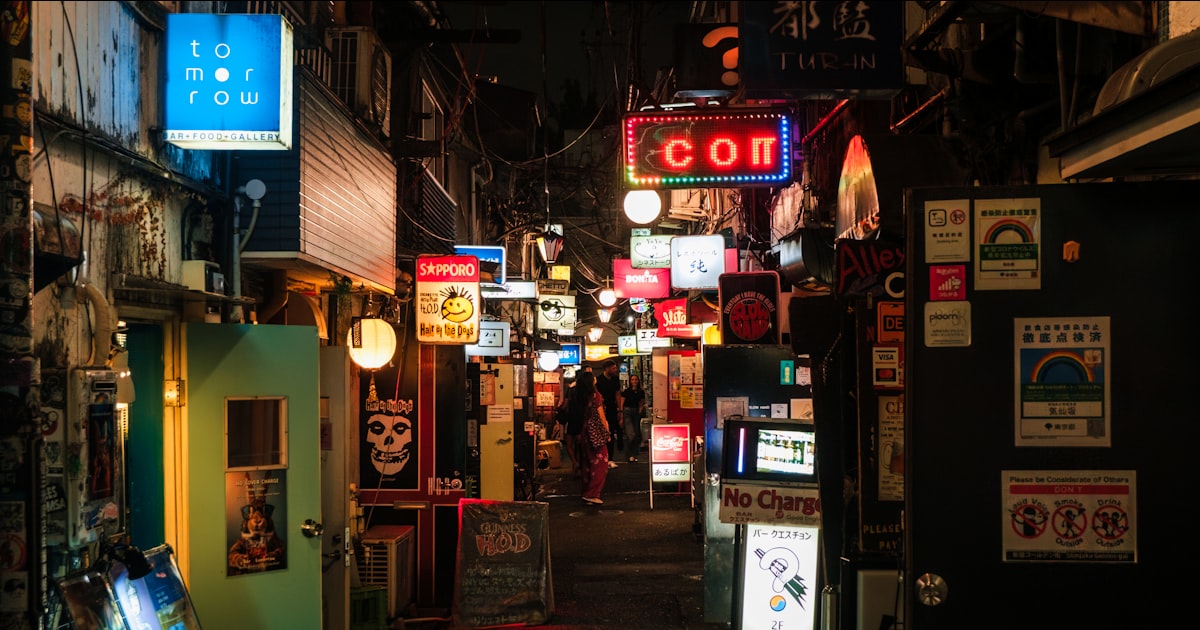
Golden Gai is six narrow alleys packed with roughly 200 bars, most no bigger than a closet, tucked into a single block of Shinjuku between the neon chaos of Kabukicho and the quiet grounds of Hanazono Shrine. It survived post-war black-market roots and decades of redevelopment pressure, and today it’s one of the last places in Tokyo where you can still drink shoulder-to-shoulder with a bar owner who’s been pouring the same five seats for thirty years. It’s touristy in places now, but it’s not a theme park — these are real, working bars, and knowing the unwritten rules before you go makes the difference between a great night and an awkward five minutes on the doorstep.
What Golden Gai Actually Is
Each “bar” here is typically one room: a counter, five to fifteen stools, and a theme or obsession that the owner (called the mama or master) has built the whole place around — old French New Wave films, punk records, horror movies, Okinawan music, shogi. There’s no single unifying style; the fun is in the variety packed into an area you can walk end-to-end in about five minutes. Most buildings are two storeys, with a second tiny bar stacked directly above the first, reached by a steep, narrow staircase.
Getting There and Timing Your Visit
The closest station is Shinjuku Sanchome (Marunouchi, Fukutoshin, or Toei Shinjuku lines) — take exit B2 or B3 and it’s a 3–5 minute walk. From the sprawling JR Shinjuku Station, it’s about a 10–12 minute walk northeast, or you can walk through Kabukicho, which is part of the experience if you don’t mind the touting.
Most bars open somewhere between 7–8pm and run until 3–5am; a handful open earlier, around 6pm. Golden Gai has almost no daytime life — there’s nothing to see before dark. Go on a weeknight (Tuesday to Thursday) if you want an easier time getting a seat; Friday and Saturday nights get crowded fast, and with only five or six stools per bar, a couple of large groups can fill a place in minutes. Arriving by 8–9pm gives you the best odds before the after-work crowd settles in. There’s no real seasonal angle since everything happens indoors, but summer alleys get uncomfortably humid and packed with smoke, so an air-conditioned bar with the door shut is genuinely a relief in July and August.
How the Bars Actually Work
This is the part that trips up first-timers. Almost every bar charges a seat charge (seki-ryo or chaji), typically ¥500–¥2,000 per person, on top of your drinks — this is standard practice, not a scam, and it’s how tiny bars with only a few seats stay in business. It should be posted somewhere near the entrance or on a card at the counter; if you don’t see it, ask “Seki-ryo wa arimasu ka?” before sitting down. Drinks themselves usually run ¥600–¥1,200 for a highball, beer, or simple cocktail.
Cash is still king. Many bars are cash-only, and Golden Gai is one of the few areas in Tokyo where you shouldn’t assume a card machine exists. Carry at least ¥5,000–¥6,000 for an evening covering two or three bars. Bar-hopping is normal and expected here — nobody stays in one place all night — but each new bar means a new seat charge.
Some doors have signs reading “jimoto no kata nomi” (local regulars only) or simply look closed even when they’re not. Respect those and move on rather than pushing the door open to check. A good number of bars, especially the more famous ones, are used to foreign visitors and will have English menus or an English-speaking owner — look for small English signage near the entrance as a signal.
Where to Drink: Budget to Splurge
- Budget: Look for bars advertising no cover charge or a low flat fee (around ¥500) plus a one-drink minimum. Highball- and beer-focused counters in the Nichome-dori alley tend to be the most casual and welcoming to walk-ins.
- Mid-range: Themed bars like Albatross (multiple floors, chandeliers, eclectic decor) or the cinema-themed La Jetée run a ¥1,000–¥1,500 seat charge and are well used to tourists, with staff who can chat in basic English.
- Splurge: A few counters specialize in aged whisky or rare shochu, where a proper pour can run ¥2,000–¥4,000 and the seat charge is higher. If you’re building a serious drinks itinerary in Tokyo, it’s also worth reading our guide to craft beer in Japan for taprooms with a more conventional pricing structure, and our primer on umeshu if you want to order Japan’s plum wine instead of another highball once you’re seated.
Etiquette and Common Mistakes
- Don’t walk in with a large group. Five people trying to enter a five-seat bar is a non-starter; split up or find a bigger space. Two or three people is the sweet spot.
- Ask before sitting, and ask about the charge. A quick “Ii desu ka?” (is it okay?) at the door and a nod from the owner is the norm before you take a stool.
- Don’t photograph the interior or other patrons without asking. Exterior alley shots are fine and everyone takes them; pointing a phone at the counter is not.
- Don’t expect food. A few bars serve light snacks, but Golden Gai isn’t for dinner — eat in Kabukicho or Shinjuku first.
- Check the last train. Shinjuku Sanchome’s last trains run around 12:20–12:40am depending on the line; after that you’re looking at a taxi or an all-nighter until the first trains resume around 5am.
Beyond the Bars
If you want a quieter, daytime contrast to Golden Gai’s late-night intensity, Shinjuku’s older, low-rise neighbor Yanaka offers the same sense of old, human-scale Tokyo backstreets but by daylight, with none of the drinking. Hanazono Shrine, right next to Golden Gai, is also worth a quick daytime walk-through before you come back after dark for the bars — it’s a strange, pleasant contrast to duck through torii gates a few steps from where you’ll be squeezing onto a barstool that night.
Golden Gai rewards curiosity more than planning. Pick an alley, peek through a few doors, and follow whatever theme catches your eye — that’s really the whole method.