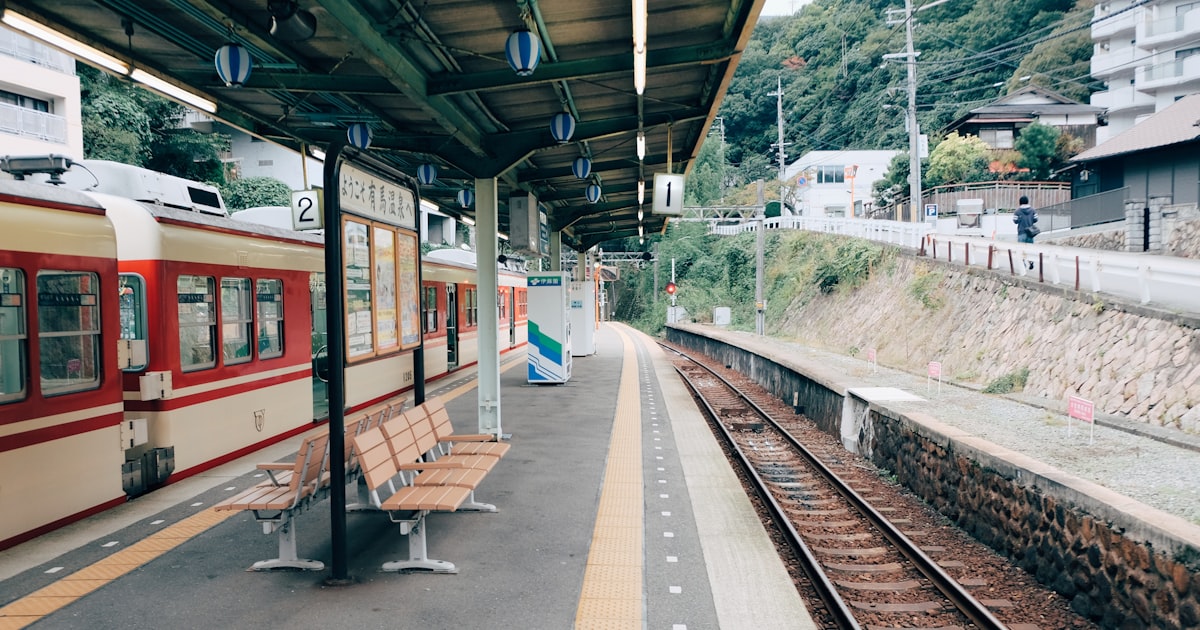
Photo by note thanun on Unsplash
Tucked into the hills above Kobe, Arima Onsen has been drawing bathers for over a thousand years — it gets a mention in the 8th-century Nihon Shoki, and both Toyotomi Hideyoshi and the Buddhist monk Gyoki are said to have soaked here. Unlike remote mountain onsen towns that eat up a full day of travel, Arima sits close enough to Kobe and Osaka that you can do it as a half-day or overnight trip without much planning. Here’s what you actually need to know before you go.
Why Arima Onsen Is Worth the Detour
Arima is one of Japan’s “three ancient springs” (Nihon Sankei) alongside Dogo Onsen and Shirahama Onsen, and it’s rare in having two chemically distinct hot spring waters bubbling up within a few hundred meters of each other. The town itself is compact — a cluster of steep, narrow streets lined with ryokan, souvenir shops, and public bathhouses that you can walk end to end in about 15 minutes. That makes it an easy add-on if you’re already based in Kobe or Osaka and want a genuine onsen experience without committing to a multi-hour train ride into the mountains.
Two Waters: Kinsen (Gold) and Ginsen (Silver)
Arima’s defining feature is having two types of spring water with different mineral content:
- Kinsen (金泉, “gold spring”) — iron- and salt-rich water that oxidizes to a rust-orange/reddish-brown color on contact with air. It’s said to be good for muscle and joint pain and improving circulation. This is the more famous of the two and what most public baths in town serve.
- Ginsen (銀泉, “silver spring”) — clear water containing radium and carbonate, lighter and cooler, believed to help with fatigue and skin conditions.
Most ryokan pipe in one or both types, so if you have a preference, check before booking. Note that Kinsen’s iron content can stain light-colored swimwear or towels, so bring a dark or old towel if you’re precious about it.
Getting There: Trains, Buses, and the Ropeway
From Kobe’s Sannomiya or Shin-Kobe stations, the most direct option is the Shinki Bus (via the Hankyu/Shinki bus network), which runs straight to Arima Onsen in about 30 minutes for roughly ¥720–750 one-way, IC card accepted. From Osaka (Umeda), Hankyu operates a direct highway bus in around 60–70 minutes for about ¥1,400 one-way — book ahead on weekends, since seats sell out.
The train route is slower but scenic: take the Kobe Electric Railway (Kobe Dentetsu) Arima Line, changing at Shin-Kaichi or Tanigami depending on your starting point, for a total travel time of around 60–70 minutes. If you’re combining Arima with a Mount Rokko visit, the Arima-Rokko Ropeway links Arima Onsen Station directly to the Rokko Garden Terrace area (roughly ¥1,000 one-way, operating hours generally 9am–5pm, with reduced winter schedules) — from there you can take the Rokko cable car down to the city side and bus back into Kobe, making a loop instead of backtracking. If you’re driving in from Osaka on the Chugoku or Meishin expressways, it’s worth checking the roadside stations (michi-no-eki) along the route for a coffee or produce break, and see our guide to renting a car in Japan if self-driving is on the table — parking in Arima itself is limited and many ryokan charge ¥1,000–1,500/night for a spot.
Where to Soak: Public Bathhouses vs. Ryokan Day Baths
You don’t need to stay overnight to bathe in Arima. Two public bathhouses anchor the town:
- Kin no Yu (金の湯) — the Kinsen gold-water bathhouse, entry around ¥800 for adults, open roughly 8am–10pm (last entry 9:30pm), closed the 2nd and 4th Tuesday of the month. There’s also a free foot bath (ashiyu) just outside for anyone who doesn’t want to pay for a full soak.
- Gin no Yu (銀の湯) — the Ginsen silver-water bathhouse, entry around ¥700, open roughly 9am–9pm, closed the 1st and 3rd Tuesday. A combined ticket for both is available for a small discount.
Budget travelers can hit both bathhouses for well under ¥2,000 total. Mid-range and splurge travelers should look at ryokan day-bathing (higaeri onsen), where non-guests can pay to use a ryokan’s private baths, typically ¥1,500–2,500 for a couple of hours — Taiko no Yu and Gosho-bo are well-known for this. If you want the full experience, an overnight ryokan stay with kaiseki dinner runs anywhere from about ¥20,000 to well over ¥50,000 per person depending on the property and season, and usually includes unlimited access to the inn’s own baths.
Best Time to Visit and How Much Time to Budget
Arima works year-round, but late November is peak season for autumn foliage on the surrounding hillsides, and the town gets genuinely crowded — book ryokan and bus seats well in advance if you’re going then. Summer is quieter and hot, which pairs oddly well with a cool Ginsen soak. For a day trip, budget 4–6 hours including travel from Kobe: enough time for one or two baths, a walk through the shopping streets, and a meal. If you want to add the ropeway/Mount Rokko loop, plan for closer to a full day.
Shopping and Snacking in the Onsen Streets
The two main shopping lanes, Yumoto-zaka and Ne-no-yu-zaka, are worth a slow wander. Look for tansan senbei — thin, slightly sweet crackers made using Arima’s naturally carbonated spring water, sold in most souvenir shops for around ¥500–800 a box. Arima is also known for Arima-ningyo-fude, decorative writing brushes with a small wooden doll dangling from the handle that pops out when you write, and for Arima-goma, hand-spun wooden tops — both make more distinctive souvenirs than the usual keychain. If you’re building out a broader souvenir list from your Japan trip, it’s worth comparing these regional crafts against more widely available items like carved hanko stamps or Akoya pearl jewelry, which you’ll find more easily in Kobe or Osaka’s main shopping districts. Note that quite a few of the smaller family-run shops in Arima are cash-only, so carry some yen.
Common Mistakes to Avoid
- Assuming both public baths keep the same hours and closed days. Kin no Yu and Gin no Yu close on different Tuesdays — check the calendar before you build your day around visiting both.
- Not booking weekend ryokan baths or buses ahead. Arima is a popular weekend escape for Kobe and Osaka residents, and both accommodation and the Hankyu highway bus can sell out.
- Bringing light-colored towels into a Kinsen bath. The iron content will stain fabric orange-brown — bathhouses sell inexpensive towels if you forget.
- Missing the last bus back. Direct buses to Sannomiya and Osaka thin out in the evening; if you’re day-tripping, check the return schedule before you get comfortable in the bath.
- Treating it purely as a bathing stop. The Taiko no Yudono Ato ruins — the excavated remains of Hideyoshi’s private bath — are a small but interesting historical stop most visitors walk right past.
If your itinerary already has you routing through the Kansai region, it’s worth checking whether the Kansai regional rail passes cover any of your connecting legs into Kobe or Osaka, though note that Arima’s own local buses and the Kobe Dentetsu line generally fall outside standard JR pass coverage, so you’ll pay those fares separately.