Photo by Yuika Takamura on Unsplash
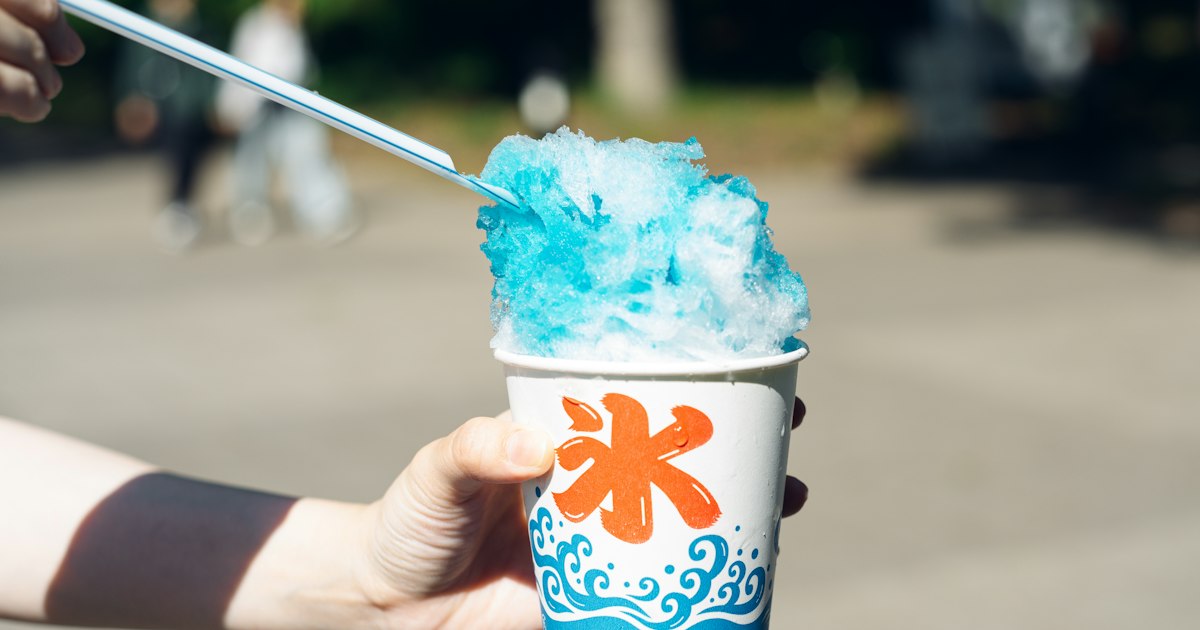
In most of Japan, shaved ice (kakigori) means a mountain of ice doused in a single bright syrup — strawberry, melon, lemon. In Kagoshima, at the southern tip of Kyushu, it means something stranger and better: a bowl of finely shaved ice soaked in sweetened condensed milk and buried under a landslide of fruit, mochi, and red bean, arranged so the whole thing looks back at you like a bear’s face. This is shirokuma, literally “white bear,” and it’s one of the few regional desserts in Japan worth planning a stop around.
What Exactly Is Shirokuma?
Shirokuma starts with shaved ice, but the texture is finer and fluffier than typical kakigori, almost like snow. Instead of flavored syrup, it’s drenched in condensed milk, which gives it a richer, creamier flavor than a plain ice dessert. On top comes a mix that usually includes canned mandarin segments, cherries, raisins, kiwi, pineapple, and a few cubes of mochi or anko (sweet red bean paste), all positioned so two cherries or raisins become “eyes” and the fruit forms a face. It’s less a dessert you eat quickly and more a dessert you compose a photo of first.
It was invented in Kagoshima City, not imported from anywhere else, which is why you’ll rarely see an authentic version outside Kyushu unless a shop is specifically importing the Kagoshima recipe.
Mujaki: The Birthplace in Tenmonkan
The shop credited with creating shirokuma is Mujaki (天文館むじゃき), which opened in Kagoshima’s Tenmonkan entertainment district in 1947. The original recipe is said to date to the late 1940s or 1950s, born out of a desire to make a shaved ice dessert filling enough to double as a light meal in Kagoshima’s brutal summer heat.
The flagship store, Tenmonkan Honten, is still the pilgrimage destination. It’s a short walk from the Tenmonkan-dori tram stop, in the middle of Kagoshima’s main shopping and nightlife arcade — easy to fold into an afternoon of wandering the covered shotengai, especially if you’re also visiting nearby spots like Kagoshima City Aquarium or taking the ferry to Sakurajima. Mujaki also runs a few branch locations around the city, including one inside Amu Plaza next to Kagoshima-Chuo Station, which is the more convenient option if you’re short on time between trains.
Opening hours at the Tenmonkan location run roughly 11:00–20:00 (last order around 19:30), though hours shift seasonally, so it’s worth checking signage or calling ahead if you’re making a special trip. The shop is almost always busiest on weekend afternoons in summer, when queues can stretch outside the door.
Price, Portions, and What to Order
A regular-size shirokuma at Mujaki generally runs somewhere in the ¥700–900 range, and that’s already a substantial portion — plan to share a regular between two people unless you’re genuinely hungry. Mujaki also sells a mini size (roughly ¥500–600) for solo diners who still want the experience without the calorie commitment, and a large or “tokudai” size that easily feeds three or four and is priced accordingly higher. Exact prices change with ingredient costs, so treat these as a planning range rather than a guarantee.
Flavor variations exist too — matcha shirokuma, chocolate shirokuma, mango, and seasonal fruit versions — but the original condensed-milk-and-mixed-fruit version is the one to order on a first visit. If you’re travelling with a larger group and want to split several flavors across the table, it’s worth knowing that big parties touring Japan can often get discounts on trains and restaurant bookings — see this guide to group travel discounts if you’re coordinating a group stop in Kagoshima.
When to Go — Season and Timing
Shirokuma is sold year-round in Kagoshima, and locals genuinely eat it in winter too — Kagoshima’s climate is mild enough that shaved ice never really goes out of season the way it might in Tokyo or Sendai. That said, the obvious best time is summer, roughly June through September, when Kagoshima’s heat and humidity make a bowl of iced condensed milk feel less like a treat and more like survival gear. July and August are peak cicada season across Japan (see our guide to Japan’s semi season), and Kagoshima’s volcanic-ash-dusted streets under a wall of cicada noise is a memorable backdrop for a shirokuma break.
If you’re visiting in peak summer, go early afternoon on a weekday if you can — weekend lines at Tenmonkan Honten can run 20–30 minutes in August. A handheld or neck fan is genuinely useful for the wait outside; this comparison of neck fans versus handheld fans is worth a look before you go, since Kagoshima’s humidity is a notch above even Tokyo’s.
Other Places in Kagoshima to Try Shirokuma
Mujaki isn’t the only option, and some visitors actually prefer the competition. Café Shirokuma and a handful of kissaten (old-school coffee shops) around Tenmonkan and near Kagoshima-Chuo Station serve their own versions, often with slightly different fruit mixes or a denser, more shaved-snow texture. Department store restaurant floors, like the one in Yamakataya, sometimes carry a shirokuma as well. Portions and condensed-milk ratios vary shop to shop, so if you have time for two visits, comparing Mujaki’s version against a smaller café’s is a fun way to taste the regional dessert’s range rather than treating it as a single fixed recipe.
If you’re doing Kagoshima as a day trip from Fukuoka or Kumamoto via the Kyushu Shinkansen, you can leave your main luggage at a coin locker near Kagoshima-Chuo Station and walk Tenmonkan unencumbered — see this guide to stashing bags at the station for how to find lockers when they look full.
Bringing Shirokuma Home
You can’t bring the fresh dessert home, but Seika Food, Mujaki’s parent company, sells a cup-ice version nationwide under the Seika “Shirokuma” brand, found in convenience stores and supermarkets across Japan, including Lawson and FamilyMart in many regions, usually priced around ¥150–250 per cup. It’s a reasonable souvenir-by-proxy if you want to introduce the flavor to someone back home, though it’s a simplified version — frozen rather than fresh-shaved, with the fruit mix pre-set rather than piled fresh.
Common Mistakes to Avoid
- Ordering a regular size solo and expecting to finish it. The portions are large by design; split a regular size two ways unless you’ve skipped lunch.
- Assuming it’s only a summer food. Shops serve it year-round, and locals eat it in winter — don’t rule out a visit just because you’re there in January.
- Confusing it with generic kakigori. If a shop’s “shirokuma” is just flavored syrup over ice with no condensed milk base and no fruit “face,” it’s not the Kagoshima original — worth knowing if you’re comparing shops.
- Skipping the wait in peak summer. Weekend afternoon queues at Mujaki’s Tenmonkan location are real; going right after opening or mid-afternoon on a weekday avoids most of it.
Shirokuma is one of those dishes that rewards going to the source. The convenience-store cup version is fine, but the real thing — fresh-shaved ice, condensed milk still cold enough to pool at the bottom, fruit piled high enough to need a spoon longer than usual — is worth the detour to Tenmonkan on its own.