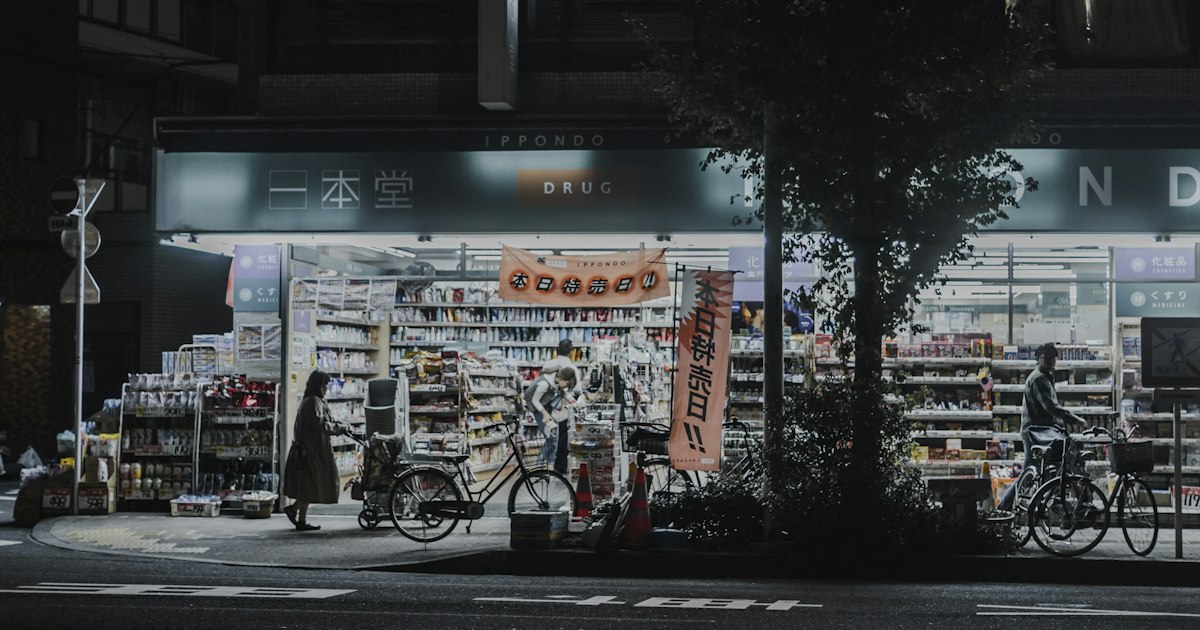
Photo by Redd Francisco on Unsplash
Japan has some of the strictest medicine import rules of any major travel destination, and they catch out well-meaning travelers every year — sometimes with a common cold medicine or ADHD prescription confiscated right at the airport. The good news is that the rules are clear and well-documented once you know where to look. Here’s exactly what you can bring in, what requires paperwork, what’s simply banned, and how to stock up on Japanese pharmacy favorites to take home.
Medications That Are Banned or Tightly Restricted
Japan’s Stimulants Control Law (覚醒剤取締法) is far broader than most travelers expect. It covers not just illegal drugs but many common prescription and over-the-counter medications sold freely elsewhere:
- Adderall, Vyvanse, and other amphetamine-based ADHD medications — illegal to bring into Japan, even with a valid prescription and even in small quantities. Travelers who need ongoing stimulant treatment typically switch to a non-stimulant alternative like atomoxetine (Strattera) before their trip, in consultation with their doctor.
- Pseudoephedrine-containing decongestants — this includes Sudafed, Actifed, and Vicks inhalers. Vicks inhalers in particular are a frequent confiscation because travelers assume an inhaler for stuffy noses is harmless.
- Codeine in high concentrations and other narcotic painkillers — allowed only within strict limits and often only with prior permission (see below).
- CBD products — legal CBD in your home country may still contain trace THC, which is illegal in Japan regardless of concentration. Bring only products with documentation confirming zero THC content, and even then, expect scrutiny.
When in doubt, check the Japanese Ministry of Health, Labour and Welfare’s official “Import of Medications for Personal Use” page before you pack, or contact the nearest Japanese embassy or consulate. Don’t rely on forum posts or guesses — the penalties for bringing in banned substances range from confiscation to prosecution.
The One-Month Rule for Everyday Medications
For medications that aren’t banned, Japan allows travelers to bring in a personal supply without any special certificate, as long as it fits within these limits:
- Up to a one-month (30-day) supply of prescription medication
- Up to a two-month supply of non-prescription (over-the-counter) medication and vitamins
- Up to 24 units of items like contact lenses per type
This covers the vast majority of leisure travelers — blood pressure pills, antihistamines, birth control, antidepressants, and similar daily medications for a two-week trip are almost never a problem. Keep medication in its original packaging with your name matching your passport, and carry a copy of the prescription or a doctor’s letter (ideally in English, listing the generic/active ingredient name, not just the brand) in case customs asks.
Getting a Yakkan Shoumei for Larger Quantities
If you’re staying longer than a month, need more than a two-month OTC supply, or are carrying injectable medications (like EpiPens or insulin pens) beyond a small personal set, you’ll need a Yakkan Shoumei — an import certificate issued by Japan’s regional Bureau of Health and Welfare (地方厚生局).
Key points on applying:
- Apply through the regional bureau covering your port of entry (Tokyo and Osaka bureaus handle most applications by mail or online submission).
- Processing officially takes about one to two weeks once documents are complete, but agencies and the bureaus themselves recommend applying one to two months ahead to allow for corrections and mailing time.
- You’ll need the medication’s generic name, dosage, and quantity, plus a doctor’s prescription or letter.
- The certificate is free to obtain directly from the bureau, though private agencies charge a service fee (typically ¥5,000–¥15,000) to prepare and submit it for you.
- Print the certificate and carry it with your medication when you enter Japan — you may be asked to show it at customs.
This is the single most common paperwork travelers overlook, especially digital nomads, long-stay visitors, and anyone managing a chronic condition with a multi-month supply.
Narcotic and Psychotropic Medications Need a Separate Process
Medications classified as narcotics under Japanese law — certain strong opioid painkillers, some sleep medications, and select psychiatric drugs — fall outside the standard Yakkan Shoumei system entirely. These require permission from Japan’s Narcotics Control Department (麻薬取締部) rather than the Bureau of Health and Welfare, and the process is stricter and slower. If your prescription includes anything in this category, start the inquiry well before booking flights, since approval isn’t guaranteed and typically requires more lead time than a standard Yakkan Shoumei.
Buying Medicine in Japan to Bring Home
Japanese drugstores are a shopping destination in their own right, and many travelers stock up on OTC staples that aren’t available (or are far pricier) back home. Chains like Matsumoto Kiyoshi, Sundrug, and Don Quijote are everywhere near train stations and tourist areas, generally open from around 9:00 or 10:00am until 9:00pm–midnight depending on location. If you’re browsing a bargain shopping street, the Osu Shopping Arcade in Nagoya has several drugstores mixed in among its otaku and vintage shops, worth a stop if you’re in the area.
Popular budget picks and rough prices:
- Loxonin S (loxoprofen painkiller, 12 tablets) — around ¥900
- Eve Quick (headache tablets, 40 count) — around ¥700–900
- Salonpas pain-relief patches (40 count) — around ¥600
- Sante FX or similar cooling eye drops — around ¥600–1,000
When you’re heading home, remember the rules run both ways: check your destination country’s import limits, since some Japanese OTC formulations contain ingredients restricted elsewhere. Most countries allow a reasonable personal-use quantity in original packaging without issue, but if you’re unsure, declare it.
Common Mistakes to Avoid
- Packing decongestant inhalers or cold medicine without checking ingredients — pseudoephedrine hides in many familiar brand names.
- Assuming a prescription automatically makes a drug legal — it doesn’t for banned substances like amphetamine-based ADHD medication.
- Leaving Yakkan Shoumei applications until the week before departure — processing plus mailing time can easily exceed two weeks.
- Packing medication loose or relabeled — always keep it in original, labeled packaging.
- Not carrying English documentation — a prescription in your home language alone may slow things down at customs.
Quick Pre-Departure Checklist
- Confirm none of your medications are on Japan’s banned list (check the MHLW site directly)
- Calculate whether your supply exceeds the one-month (prescription) or two-month (OTC) threshold
- Apply for a Yakkan Shoumei at least a month ahead if you’re over the limit or carrying injectables
- Check separately for narcotic-classified medications, which need Narcotics Control Department approval
- Pack a doctor’s letter or prescription copy in English, plus original packaging
With a little advance planning, medication is one of the easier parts of a Japan trip to get right — and one of the worst to get wrong at the airport. If you’re also sorting out how to pack everything for train travel around the country, the guide to Shinkansen oversized luggage rules is worth a read before you finalize your itinerary.