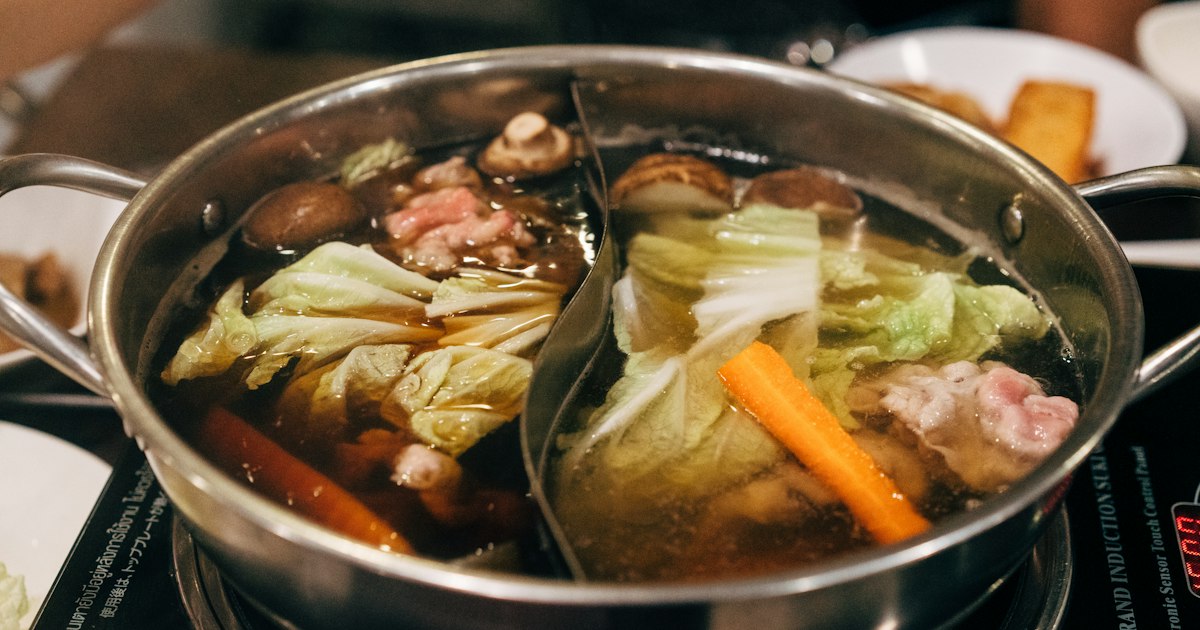
Photo by Markus Winkler on Unsplash
If you’ve ever finished a steaming pot of nabe (hot pot) in Japan and watched the server ask “zōsui shimasu ka?” with an expectant look, you’ve brushed up against one of the country’s most satisfying — and most misunderstood — dishes. Zosui (雑炊) is the rice porridge cooked directly in the broth left over from your hot pot, and ordering it wrong, or skipping it entirely, means missing the best part of the meal.
What Zosui Actually Is
Zosui is simmered rice cooked in dashi or hot pot broth until it turns into a loose, savory porridge — somewhere between risotto and congee in texture. It’s distinct from two dishes foreigners often confuse it with: okayu (plain rice porridge, usually for sick days or breakfast, cooked from raw rice in plenty of water) and ochazuke (rice with tea or dashi poured over it, served cold-to-warm rather than simmered). Zosui is always cooked, always savory, and almost always made from already-cooked rice rather than raw grains, which is why it comes together in five to seven minutes at your table.
The name itself hints at the dish’s frugal roots — “zatsu” (雑, mixed/miscellaneous) plus “sui” (炊, to cook) — a one-pot way of using up whatever vegetables, mushrooms, and meat or fish bits remain in the broth. It’s humble food that happens to taste like the concentrated essence of your entire meal.
Why It’s Served at the End of Hot Pot
After an hour of cooking vegetables, mushrooms, tofu, and meat or seafood in a shared pot, the broth has absorbed every bit of umami from those ingredients — plus whatever dipping sauce drips and simmered-off bits have joined in. Rather than waste that broth, restaurants (and home cooks) finish the meal by adding cooked rice and sometimes a beaten egg, turning the pot’s last act into a dish in its own right. It’s the Japanese equivalent of using a good stock to make risotto rather than pouring it down the drain — a philosophy of minimizing waste that shows up elsewhere in Japanese dining too, like the care given to leftover rice in an ohitsu wooden rice tub, which keeps rice at the right texture for later meals instead of letting it dry out in a cooker.
How to Order It Right
At restaurants serving nabe courses (sukiyaki, shabu-shabu, motsunabe, chanko, oden, and countless regional hot pots), zosui or a noodle finish (udon) is often a separate line item or an automatic final course included in set menus priced ¥3,500–¥8,000 per person. Here’s what to know:
- Ask before the broth runs low. Say “zōsui, onegaishimasu” (ぞうすい、お願いします) while there’s still a reasonable amount of broth left — maybe a third of the pot. Too little liquid and the rice turns gluey rather than porridge-like.
- It’s often an upcharge. Expect an extra ¥300–¥800 for the rice and egg, though some all-you-can-eat or premium course menus include it automatically — check the course description for “shime” (締め, the meal’s ending) or “zōsui/udon included.”
- Staff usually cook it for you. At many sit-down restaurants, a server will strain out remaining solids, add rice, stir, then crack in egg and scallions tableside. At casual izakaya chains, you may be handed a small pot of rice to add yourself — don’t dump it all in at once; add it gradually so you can stop before the broth gets too thick.
- Skip it if the broth is heavily seasoned or oily — some spicy or miso-based hot pots (like certain kimchi nabe) concentrate too much as they reduce, and the resulting zosui can be overly salty. A good server will often warn you if this is the case, or suggest diluting with a splash of water or dashi first.
Common Mistakes to Avoid
The most frequent error is ordering zosui too late, after the broth has reduced to a thick, salty syrup — at that point adding rice just makes mush rather than porridge. The second is using raw, uncooked rice; always use already-cooked rice (the kind served in small bowls alongside your hot pot, or rice brought out specifically for this purpose), since raw rice needs far more liquid and time than a near-empty pot can provide. The third mistake is over-stirring once the egg goes in — a gentle fold, Chinese egg-drop-soup style, keeps the egg in silky ribbons instead of scrambling it into a grainy mess. Finally, don’t add soy sauce or extra salt before tasting; the reduced broth is usually seasoned enough, and over-salting is easy to do and hard to undo.
Regional and Seasonal Notes
Zosui shows up most in autumn and winter (roughly October through March), when hot pot season is in full swing across Japan — it’s the natural finale to chanko nabe (sumo stable hot pot), motsunabe (Fukuoka’s offal hot pot), and yosenabe (mixed seafood hot pot). In Hakata (Fukuoka), motsunabe restaurants are famous specifically for their zosui finish, thickened with the rendered fat from beef or pork offal — if you’re flying through Fukuoka Airport, it’s worth detouring into the city center (about 15 minutes by subway) for a motsunabe dinner before your flight. In Hokkaido, kani (crab) nabe restaurants often finish with zosui enriched by crab roe and shell fragments for extra sweetness; travelers passing through New Chitose Airport can find crab hot pot sets in Sapporo before heading to the terminal.
Where to Try It: Budget to Splurge
Budget (¥1,500–¥3,000 total): Chain izakayas like Torikizoku, Tsubohachi, or Shirokiya offer single-portion nabe sets with zosui or udon finish included, no reservation needed. Just walk in after 5pm; most open for dinner from 17:00–24:00.
Mid-range (¥4,000–¥7,000 per person): Dedicated motsunabe, sukiyaki, or shabu-shabu restaurants (Motsunabe Ootafuku in Fukuoka, Suki-soba chains in Tokyo) typically require reservations on weekend evenings and include a rice or noodle finish as a course step rather than a bolt-on.
Splurge (¥10,000+): High-end kaiseki-style restaurants sometimes fold a refined, dashi-forward zosui into a multi-course winter menu as the rice course — a far more delicate version than the hearty izakaya style. If you’re curious how a formal multi-course Japanese meal is structured and where zosui might fit within it, our guide to kaiseki ryori covers how courses build toward a rice-and-soup finish. Travelers interested in the plant-based side of Japanese cuisine can also find vegetable-and-mushroom-broth versions of this rice-finish tradition at temple lodgings serving shojin ryori, where no meat or fish broth is used but the same waste-nothing philosophy applies.
A Few Practical Tips
Most hot pot restaurants are cash-and-card friendly, but smaller local nabe shops in regional cities sometimes remain cash-only — it’s worth carrying yen from a 7-Bank ATM at 7-Eleven just in case, especially outside major tourist areas. If you’re dining on a card, check whether your travel credit card waives foreign transaction fees before the bill arrives. And don’t rush the zosui course — it’s meant to be eaten slowly, almost like a dessert of savory comfort, as the true ending to the meal rather than something to skip on your way to the register.