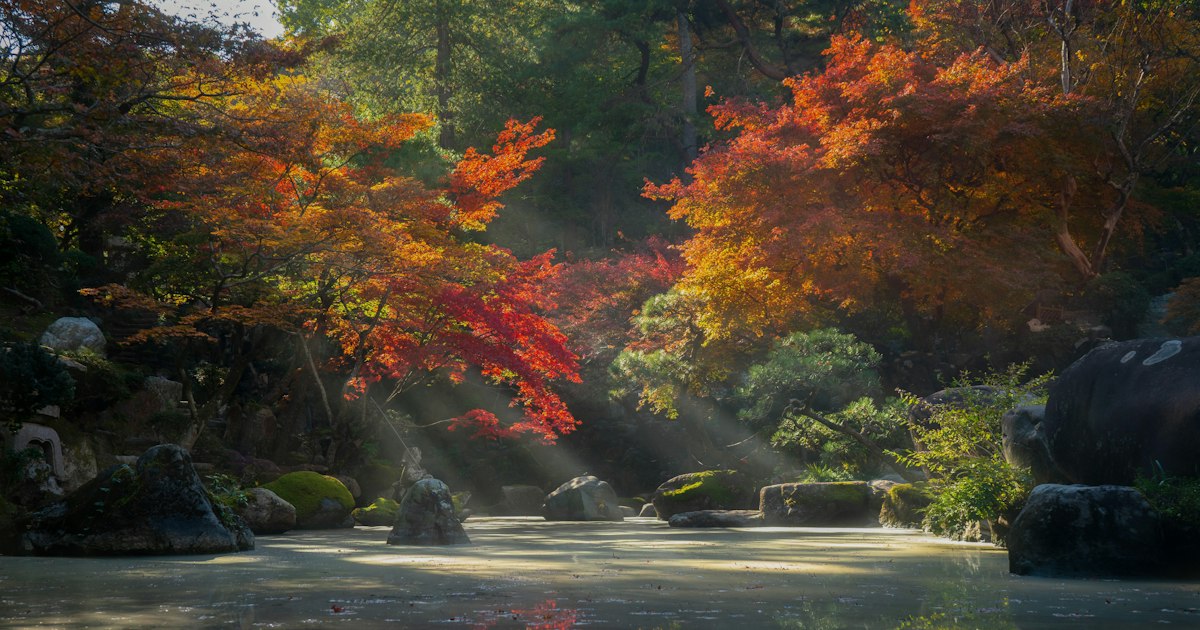
Photo by Lucas Calloch on Unsplash
About an hour from Nagoya Station, the Tomoe River cuts through a narrow wooded valley lined with roughly 4,000 maple trees that turn the whole gorge into a tunnel of red and gold every November. Korankei (香嵐渓) is one of the Chubu region’s best-known autumn leaf spots, yet it still flies well under the radar for foreign visitors who assume Nagoya is purely a business-and-ramen stopover between Tokyo and Kyoto. If you’re building a Japan itinerary around momiji season, this is a genuinely worthwhile detour — here’s how to time it, reach it, and not get stuck in the traffic jam that gives this valley its mixed reputation.
Why Korankei Is Worth the Trip
Korankei sits in the Nishi-Chibu area of Toyota City, Aichi Prefecture — yes, the same Toyota as the car company’s headquarters. The maples here were first planted in 1634 by a monk at the hillside temple Kojaku-ji, and nearly four centuries of plantings have built up a dense canopy along both banks of the Tomoe River. The signature photo is the arched Taigetsukyo bridge framed by maples, best shot from the riverbank just downstream. Behind the temple, a short climb up Mt. Iimoriyama gives you an elevated view over the whole valley if you want to escape the riverside crowds for twenty minutes.
Unlike many famous foliage spots that charge admission, the gorge itself is free to walk at any time of day — there’s no gate, no ticket, no opening hours to work around outside of the festival period described below.
When to Go: Peak Autumn Color Timing
Peak color at Korankei typically falls between mid-November and the first week of December, with the absolute peak usually landing in the last ten days of November. This shifts by up to two weeks year to year depending on autumn temperatures, so don’t lock in dates more than two or three weeks out — check one of Japan’s seasonal foliage-forecast sites closer to your trip and adjust rather than trusting a date you read months in advance.
During peak weeks, the Korankei Momiji Matsuri (Maple Festival) runs nightly illumination of the gorge, usually from around 5:30pm to 9:00pm. Seeing the maples lit up and reflected in the river is a different experience from the daytime version and worth staying for if your schedule allows — just confirm the last bus back before you commit, since return buses on festival nights can stop running earlier than you’d expect and taxis are scarce in this rural valley.
How to Get There from Nagoya
The standard route is: from Nagoya Station, take the Meitetsu Toyota Line to Toyotashi Station (roughly an hour, with a transfer depending on the train), then switch to a Meitetsu bus bound for Korankei (about 20–30 minutes, fare in the ¥500–600 range one-way). During the Momiji Matsuri weeks, extra direct seasonal buses sometimes run from central Nagoya — worth checking Meitetsu’s site for that year’s schedule if you’d rather skip the train transfer.
If you’ve never ridden a Japanese local bus before, it’s worth knowing the mechanics ahead of time — boarding from the rear door, taking a ticket or tapping an IC card, and paying on exit is standard practice across the country, and our guide to riding local buses in Japan covers it in detail so you’re not fumbling at the farebox with a line of commuters behind you.
Driving is an option outside peak weekends, but during the festival, the roads into the valley jam for hours and paid parking lots (roughly ¥1,000–1,500 per day) fill early. If you’re visiting on a Saturday or Sunday in late November, public transport is genuinely the faster option, not just the cheaper one.
What to Do in the Gorge
Korankei rewards a slow walk more than a checklist. Budget 2–3 hours for: crossing and photographing Taigetsukyo bridge, browsing the stalls along the main approach road, a stop at Kojaku-ji temple grounds, and the short hike up Iimoriyama if you want the overview shot. If you have a car or are willing to take a local bus onward, Obara — also within Toyota City — is known for shikizakura, a rare variety of cherry tree that blooms in autumn alongside the turning maple leaves, giving you pink blossoms and red foliage in the same frame. It’s a short add-on if you’re already out this way and have a half-day to spare.
The adjacent town of Asuke is also worth a wander — its Edo-period merchant street (Asuke-juku) is free to explore and far quieter than the gorge itself, a good option if the main crowds feel like too much.
Local Food: What to Eat on Site
The food stalls lining the approach to the gorge are a big part of the visit. The local specialty is gohei mochi — grilled, slightly flattened rice cakes on a skewer, coated in a sweet-savory miso-and-walnut or sesame glaze. It’s a mountain-region snack specific to this part of Chubu, not something you’ll easily find in central Nagoya, so it’s worth trying here rather than waiting. Expect to pay roughly ¥300–400 per skewer, cash-first at most stalls. You’ll also find roasted chestnuts, grilled dango, and simple noodle stands serving kishimen (Nagoya’s flat wheat noodle) for a more substantial lunch around ¥800–1,200.
Budget, Mid-Range, and Splurge Options
- Budget: The gorge is free to enter at any time. Pack a snack, pay only train and bus fare (roughly ¥2,000–2,500 round trip from Nagoya), and skip the illumination to catch an earlier, less crowded bus home.
- Mid-range: Add a gohei mochi or two, a noodle lunch, and a stroll through Asuke — figure ¥2,000–3,000 extra for food, plus parking if you’re driving outside peak weekends.
- Splurge: Stay overnight near Sanage Onsen or another ryokan in the Toyota City area so you can see the evening illumination without racing for the last bus, then walk the gorge again the next morning before the day-trip crowds arrive. Expect ¥20,000–40,000+ per person for a ryokan stay with dinner included, but it’s the most relaxed way to experience both the night lights and a quiet morning view.
Common Mistakes to Avoid
- Driving in on a peak weekend. Traffic into the valley during the last two weekends of November is notoriously bad; trains and buses are far more reliable on those dates.
- Trusting a foliage date set months in advance. Peak color shifts by up to two weeks year to year — check a current forecast within a few weeks of your trip rather than locking in a date from an old blog post.
- Expecting English signage or card payment everywhere. This is a domestic-tourist destination at heart; food stalls especially are often cash-only, so carry yen.
- Underestimating the round trip. Between trains, buses, and the walk through the gorge, this is realistically a half-day to full-day outing from Nagoya, not a quick stop between other sights.
- Staying for illumination without checking the last bus. Festival-night bus schedules don’t always match the full illumination hours — confirm your return time before you settle in for the evening lights.
If you’re building out a loop of lower-key day trips beyond the usual Tokyo–Kyoto–Osaka circuit, Korankei pairs well with other overlooked regional destinations — the canal-boat town of Yanagawa near Fukuoka or the castle town of Aizu-Wakamatsu in Fukushima follow the same formula: an hour or so outside a major hub, genuinely scenic, and far less crowded than the headline sights.