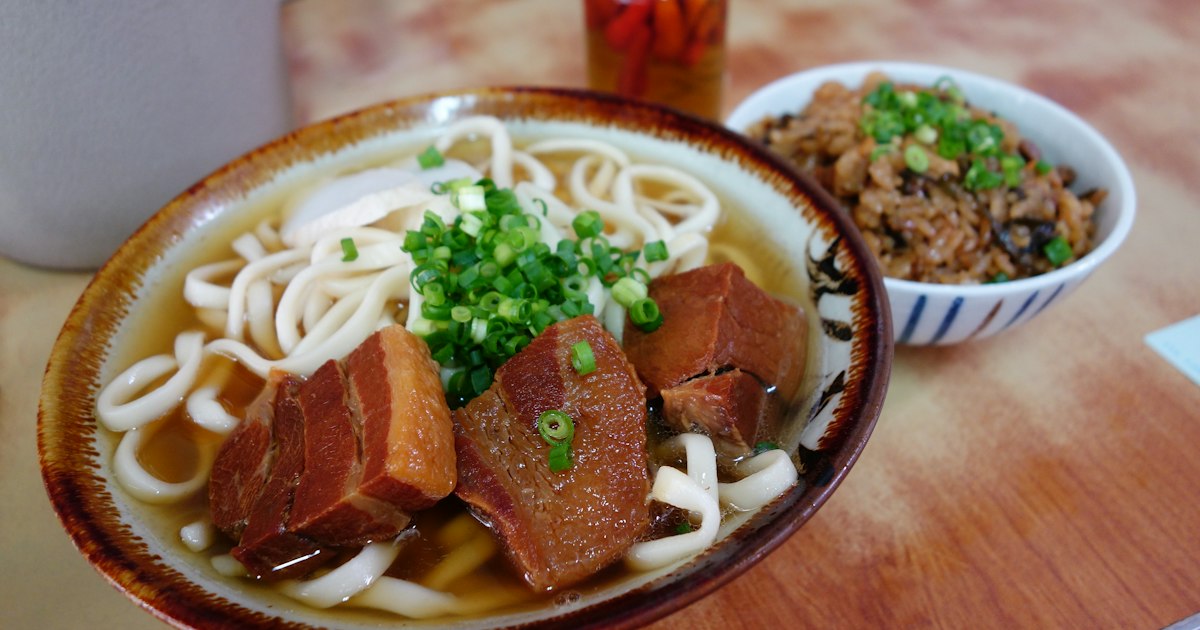
Order “soba” anywhere else in Japan and you’ll get thin, grayish-brown buckwheat noodles in a soy-dashi broth. Order soba in Okinawa and you’ll get something completely different: thick, pale, chewy wheat noodles floating in a cloudy pork-and-bonito broth, topped with a slab of stewed pork belly, a slice of fish cake, and a tangle of green onion. It looks nothing like soba because, technically, it isn’t. There’s no buckwheat in it at all. Here’s why that’s allowed, what to order, and which shops are worth planning a meal around.
Why It’s Called Soba When There’s No Buckwheat in It
In mainland Japan, the word “soba” is legally tied to buckwheat content — a product needs actual soba flour to use the name. Okinawa’s noodle, made purely from wheat flour and kansui (an alkaline mineral water that gives the noodles their yellow tint and springy bite), should technically not qualify. But the dish predates that mainland rule by decades and is deeply embedded in Okinawan food culture, dating back to Chinese-influenced court cuisine of the former Ryukyu Kingdom.
When the issue came to a head in the 1970s, the Japan Fair Trade Commission ruled in Okinawa’s favor in 1978, allowing “Okinawa soba” to keep its name as a regional exception. The ruling came down on October 17, which is why that date is now celebrated across the prefecture as Okinawa Soba Day, with special deals at soba shops island-wide. If you happen to be visiting in mid-October, it’s worth timing a bowl around it.
The Three Bowls You’ll Actually See on Menus
Okinawa soba isn’t one fixed dish — the broth and noodles stay the same, but the pork topping changes. Knowing these three names will save you from pointing randomly at a menu:
- Soki soba — topped with soki, pork spare ribs braised on the bone until the meat pulls away easily. This is the most popular version and the safest default order.
- Sanmainiku soba — topped with sanmainiku, a flat slice of boneless pork belly, closer in style to the braised pork belly used in rafute, Okinawa’s other famous pork dish.
- Nakami soba — topped with nakami, simmered pork intestine. It’s milder in flavor than it sounds, having been boiled and rinsed repeatedly to remove any gaminess, but it’s the one to skip if offal isn’t your thing.
Most bowls also come scattered with kamaboko (fish cake), scallions, and a small pile of beni shoga (red pickled ginger) — stir it in partway through rather than all at once, since it’s sharp and will dominate the broth if dumped in early.
Where to Eat It: Budget, Mid-Range, and the Pilgrimage-Worthy Splurge
Budget (500–800 yen): Local shokudo (diners) and the stalls inside Makishi Public Market in Naha serve no-frills bowls for well under 800 yen. These places aren’t fancy — think plastic stools and a handwritten menu — but the noodles are made fresh daily and the broth is honest. This is also the easiest category to find near Kokusai-dori, Naha’s main tourist strip, for a quick lunch between shopping stops.
Mid-range (800–1,200 yen): Sit-down soba specialists in central Naha fall here, often adding a side of jūshī (Okinawan seasoned rice) or a small plate of rafute for a combo set. This is the sweet spot for most visitors — enough polish to feel like a proper meal without tourist-trap pricing.
Splurge / pilgrimage (1,200–1,800 yen, plus a wait): Kishimoto Shokudo in Motobu, near Nago in the north of the main island, is widely regarded as the oldest Okinawa soba shop still operating, founded in 1905. It still makes its noodles using the traditional ash-water method rather than modern kansui, giving them a slightly different texture and aroma that soba purists travel across the island for. Expect a line before opening and a menu that’s barely changed in generations — it’s usually closed once the day’s noodles sell out, sometimes by early afternoon, so arriving right at opening is the only reliable strategy.
How to Get There and When to Go
Naha’s soba shops are walkable from the monorail (Yui Rail) stations along Kokusai-dori and around Makishi Public Market, making them an easy stop whether you’re coming from shopping or sightseeing. Kishimoto Shokudo in Motobu is a different story — it’s about an hour to 90 minutes by car or bus from central Naha, usually combined with a visit to Churaumi Aquarium or the Nago/Motobu area, since it isn’t realistic as a standalone trip. If you’re renting a car for the north, build lunch there into the route rather than trying to detour back for it.
Lunchtime (11:30 am–1:30 pm) is when soba shops are busiest, and popular ones genuinely do run out of noodles and close early, especially on weekends. Going right at opening, or later in the afternoon around 2–3 pm, avoids both the crowd and the risk of a sold-out sign. Summer (June–September) is peak tourist season in Okinawa generally, so even casual shokudo can have a short wait; shoulder months like April–May or October–November are calmer for food-focused stops like this.
Common Mistakes Visitors Make
- Assuming it’s gluten-free because “soba” sounds like buckwheat. It’s the opposite — Okinawa soba is 100% wheat, so it’s actually fine for people with buckwheat allergies but unsuitable for anyone avoiding gluten.
- Ordering without specifying soki vs. sanmainiku vs. nakami and being surprised by what shows up. If a menu just says “soba,” ask which pork topping it defaults to.
- Dumping all the beni shoga and kōrēgūsu (Okinawan chili-infused awamori) in at once. Both are meant to be added gradually to taste, not mixed in like a condiment from the start.
- Treating it as a light meal. The broth and pork topping make this heartier than mainland soba or ramen — it’s a full lunch, not a snack.
A Few Pairing Ideas
If you’re building out an Okinawan food itinerary, soba pairs naturally with a side of rafute (the two often appear together on set menus), and the pork theme carries through much of Okinawan cuisine generally — worth keeping in mind if you’re also curious about other regional pork specialties found elsewhere in Japan, like Osaka’s 551 Horai steamed pork buns. For a lighter contrast on the same trip, Okinawa’s seafood-forward dishes make a good counterpoint to all that pork broth — similar in spirit to a mainland kaisendon if you want something fresher between heavier meals.
Okinawa soba won’t satisfy anyone looking for the nutty, delicate flavor of real buckwheat soba — and it isn’t trying to. It’s a regional dish with its own name, its own 1978 legal backstory, and its own devoted local following, which is exactly what makes it worth seeking out rather than skipping because the name seems misleading.