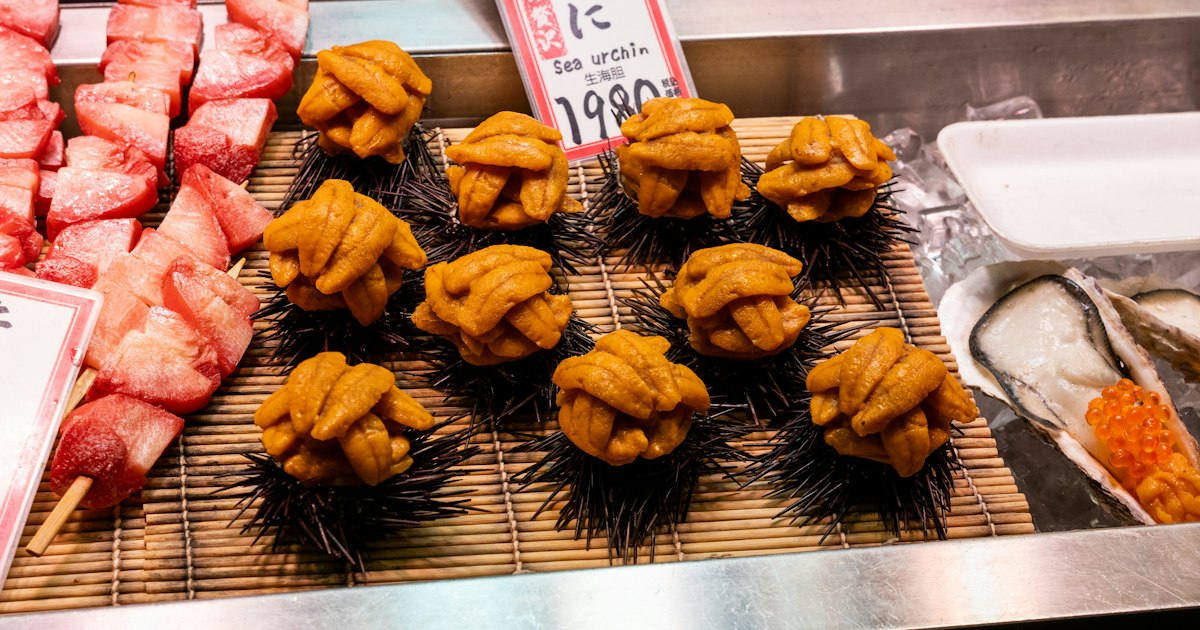
Photo by EMANUELE Ricciardi on Unsplash
If you’ve ever had a spoonful of uni so custardy and clean-tasting that it didn’t seem related to the tired, faintly ammonia-scented stuff in a Tokyo conveyor-belt restaurant, there’s a good chance it came from Hokkaido. Japan’s northernmost island supplies the country’s most prized sea urchin, and eating it where it’s caught — sometimes within hours of harvest — is one of the best reasons to build a trip around Hokkaido’s coast. Here’s what to know before you go, including the two main types, when to time your visit, and where to actually sit down and eat it without overpaying for frozen, alum-soaked leftovers.
Bafun Uni vs. Murasaki Uni: Know the Difference
Almost everything billed as “Hokkaido uni” falls into one of two species. Bafun uni (short-spined sea urchin) has smaller, deep-orange to brownish-gold roe with a dense, rich, slightly savory flavor — it’s the one most associated with Hakodate and the Okhotsk coast. Murasaki uni (long-spined sea urchin) is paler yellow, larger-grained, and sweeter, with a lighter, more delicate finish; Rishiri and Rebun islands off Wakkanai are famous for it, where the urchins feed on dense kelp beds and develop an outsized reputation for sweetness.
Neither is objectively “better” — it’s a style preference, similar to comparing two single malts. If a menu lets you order both side by side (many Hakodate and Sapporo sushi counters do), it’s worth the extra 1,000–2,000 JPY to compare.
The Alum Question: Why “Muen” Uni Costs More
This is the detail most visitors miss. Raw uni roe is extremely fragile and collapses into mush within a day, so most commercial uni is briefly dipped in alum (myoban) to firm it up and extend its shelf life for shipping. It works, but it leaves a faint bitter or metallic edge if you’ve eaten the alternative.
That alternative is muen uni (無塩, “no salt/alum”) — uni packed in its own liquid with no preservative, meant to be eaten within a day or two. It tastes noticeably sweeter and cleaner, with none of the bitterness. Muen uni is what you want to seek out at source in Hokkaido; it rarely survives shipping to restaurants outside the region, which is exactly why eating it on the island matters. Market stalls and sushi counters in Hakodate, Otaru, and Rishiri will often advertise it directly as 無塩うに.
When to Go: Uni Season by Region
Uni is sold year-round in Japan, but “in season” local uni is a different product, and the window is tighter than most people expect:
- Rishiri & Rebun Islands: roughly early June through August, with the fishery often closing by late August. This is peak murasaki uni territory and the single best place in Japan to eat it fresh.
- Shakotan Peninsula (near Otaru/Sapporo): a bafun and murasaki season running approximately June to August, coinciding with the peninsula’s famously turquoise “Shakotan Blue” coastline.
- Hakodate: unusually, has two seasons — murasaki uni in spring (roughly April–June) and bafun uni in autumn (roughly September–December) — because of how the Tsugaru Strait’s currents shift.
- Rausu/Shiretoko (Okhotsk side): summer season, generally July–September.
Outside these windows, restaurants are serving frozen or processed stock, which is fine for a casual uni-don but not what you’re traveling for.
Where to Actually Eat It
Hakodate Morning Market (Hakodate Asaichi): A few minutes’ walk from JR Hakodate Station, this market is the easiest first stop for uni tourism. Dozens of stalls sell uni-ikura-don (sea urchin and salmon roe over rice) starting around 3,000–4,000 JPY, with “triple” bowls adding crab for 5,000–7,000 JPY. Most stalls open around 6am and wind down by early-to-mid afternoon (roughly 6am–2pm, with some stalls starting earlier in peak summer) — go early, since the best cuts sell out.
Sapporo’s Nijo Market and Curb Market (Jogai Ichiba): Nijo Market, a short walk from Odori Station, and the larger Curb Market near Sapporo Station both have sit-down counters serving uni-don from about 2,500 JPY for a smaller mixed bowl up to 6,000–8,000 JPY for a premium bafun-only bowl. Shops generally run from around 7am to 6pm, though exact hours vary stall by stall.
Otaru’s sushi row: Otaru, a 30–40 minute train ride from Sapporo, has one of the highest densities of good sushi counters in Japan, many specializing in Shakotan-caught uni in season. Expect counter courses from roughly 5,000 JPY to 15,000+ JPY, or à la carte uni nigiri from about 800–2,000 JPY a piece depending on grade. It pairs naturally with a stop in nearby Shakotan, and if you’re driving the coastal route yourself, it’s worth reading up on ETC cards and expressway tolls before picking up a rental car.
Rishiri and Rebun Islands: The furthest to reach — fly or ferry via Wakkanai — but the reward is eating muen murasaki uni the same day it was opened, often at simple local shokudo for 3,000–5,000 JPY a bowl. July’s uni season also overlaps with Rishiri’s famous hiking trail up Mount Rishiri, making it an easy combination trip.
Budget, Mid-Range, and Splurge
- Budget (2,500–4,000 JPY): A mixed market uni-don with a modest portion, often from frozen or alum-treated stock outside peak season.
- Mid-range (5,000–8,000 JPY): A generous market or casual sushi-ya bowl of in-season, muen uni, possibly paired with ikura or crab.
- Splurge (15,000–40,000+ JPY per person): An omakase sushi course at a reservation-only Sapporo or Hakodate counter, where uni from a named producer or specific bay is presented as one of several courses alongside other Hokkaido seafood.
Common Mistakes to Avoid
- Ordering uni-don in Tokyo in January and expecting a Hokkaido-fresh experience. It will be perfectly nice, but it’s not the same product as muen uni eaten in season at the source.
- Skipping the “no alum” question. If a stall or restaurant doesn’t label it, ask — “Kore wa myoban nashi desu ka?” (“Is this alum-free?”) is a useful phrase.
- Assuming bigger is better. Larger, more uniform-looking uni blocks are sometimes a sign of alum treatment for shipping; fresh muen uni can look slightly irregular and still taste far better.
- Treating Hakodate’s two seasons as one window. Visiting in, say, February or late July can mean missing both the spring murasaki and autumn bafun peaks.
Bringing Some Home
Fresh raw uni obviously doesn’t travel, but bottled and salt-processed uni (often sold as a paste or in small wooden boxes) is a legitimate, well-regarded souvenir from Hokkaido’s airports and department store food halls, and travels fine in checked luggage if sealed. If you’re bringing some back for colleagues, it’s worth a quick read of the etiquette around omiyage gift-giving, since a strong-smelling or unusual seafood item isn’t always the safest choice for an office gift. If your itinerary doesn’t reach Hokkaido at all, note that the Izu Peninsula, much closer to Tokyo, has its own respected local uni season around Shimoda — a good fallback covered in our guide to the Izu Peninsula’s coastline and day trips.