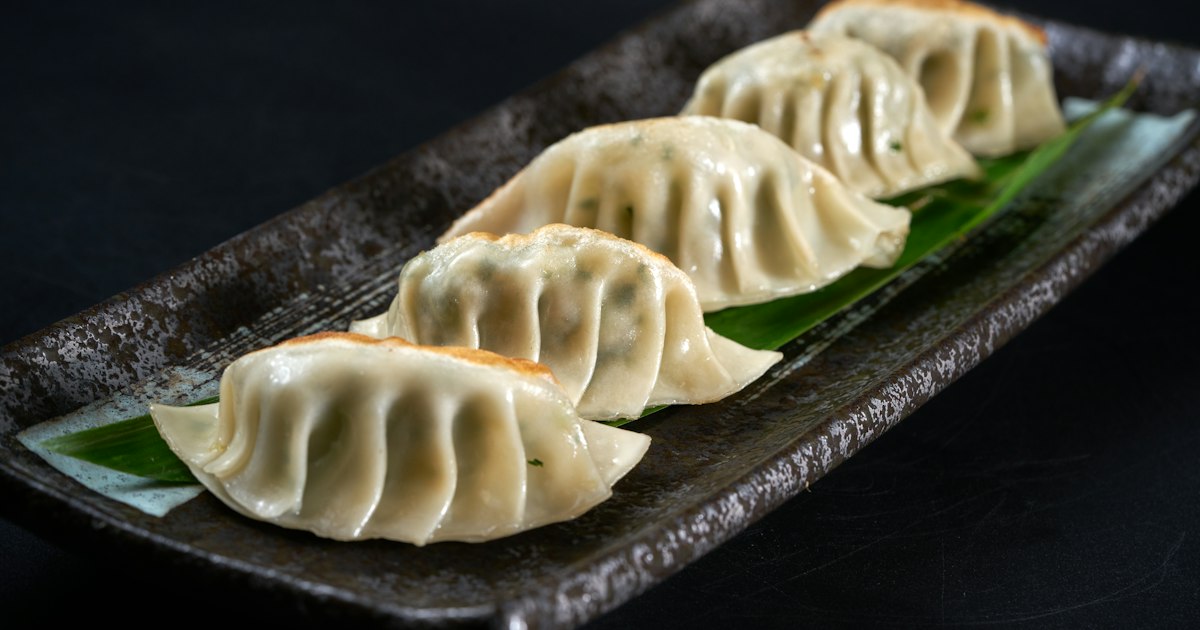
Photo by Huyen Bui on Unsplash
Ask someone from Fukuoka and someone from Utsunomiya which city makes Japan’s best gyoza, and you’ll start an argument that’s been running for decades. Both cities have built genuine food cultures — and civic pride — around the pan-fried dumpling, but they taste almost nothing alike. One is tiny, garlicky-but-mild, and built for a late-night yatai stall; the other is big, loaded with cabbage and raw garlic, and sold from a dedicated “Gyoza Stadium.” Here’s how to eat your way through both.
Two Cities, Two Gyoza Philosophies
Gyoza arrived in Japan from China via soldiers and civilians returning from northeastern China after World War II, and both Fukuoka and Utsunomiya claim early, independent gyoza scenes that grew up around returnee communities in the late 1940s. From there the styles diverged completely. Hakata (the old city-center name still used for Fukuoka’s food culture) developed small, almost dainty dumplings meant to be eaten two or three bites at a time alongside beer or ramen. Utsunomiya, in landlocked Tochigi Prefecture, leaned into bulk — big, cabbage-heavy gyoza sold by the plate as a meal in themselves, with both fried (yaki) and boiled (sui) versions on most menus.
Hakata Gyoza: Bite-Sized and Built for Late Nights
Hakata-style gyoza (hitokuchi gyoza, or “one-bite gyoza”) are small, thin-skinned, and pan-fried in neat rows, usually arriving eight to ten per plate for around ¥400–¥600. The thin wrapper-to-filling ratio and light garlic make them an easy companion to tonkotsu ramen or a round of highballs, not a standalone meal.
The classic way to eat them is at the yatai (open-air food stalls) along the Nakasu riverside and around Tenjin, where stalls typically set up from around 18:00 and run until 1:00–2:00 am, cash only, with seating for maybe eight to ten people elbow-to-elbow. Weather and construction can shut yatai down with no notice, so treat a specific stall as a “try to find it” rather than a guaranteed stop. For a sit-down version without the gamble, Gyoza no Tetsujin and Gyoza Taiho (near Nakasu, one of the shops credited with popularizing the hitokuchi style) serve the same dumplings daily, typically from lunch through late evening.
Utsunomiya Gyoza: Gyoza City’s Garlic-Forward Classics
Utsunomiya markets itself outright as “Gyoza no Machi” — Gyoza City — a title it adopted after statistics repeatedly showed its households among Japan’s top spenders on gyoza (it trades the top spot back and forth with Hamamatsu most years). There’s a gyoza statue outside JR Utsunomiya Station’s west exit, and the dumplings here are a different animal from Hakata’s: larger, stuffed generously with cabbage, and often more assertive with raw garlic.
The easiest one-stop introduction is Utsunomiya Gyoza Stadium, a food-court-style complex a short walk from the station gathering roughly a dozen of the city’s well-known gyoza shops under one roof, generally open from around 11:00 to 19:00 or 20:00 (hours vary by shop, and some close one weekday). Expect to pay ¥300–¥500 for a plate of six. Minmin, near the station’s east side, is the most famous standalone shop and routinely has a queue out the door at lunchtime — arrive by 11:00 or plan for a 20–30 minute wait.
Getting There: Trains, Times, and Ticket Prices
Utsunomiya is the easier day trip from Tokyo. The Tohoku Shinkansen (Yamabiko or Nasuno trains) covers it in about 50 minutes for roughly ¥4,500 one way; the slower JR Utsunomiya Line local/rapid service takes about 1 hour 40 minutes to 2 hours for around ¥1,980 and is covered by wide-area rail passes that include the Tohoku corridor. Either way, it’s a realistic half-day or full-day round trip without an overnight stay.
Fukuoka is a bigger commitment: the Sanyo/Tohoku Shinkansen from Tokyo takes around 5 hours and costs roughly ¥22,000 one way, while flying takes about 2 hours plus airport time. From Osaka, the Shinkansen to Hakata is about 2.5 hours for around ¥15,000. Most visitors fold Hakata gyoza into a broader Kyushu or Fukuoka city itinerary rather than a standalone trip — it pairs naturally with a ramen crawl or a stop at nearby Shinsekai-style retro food alleys if you’re routing through Osaka’s Shinsekai district on the same trip.
Best Time to Go and How to Avoid the Lines
Both cities’ gyoza scenes are year-round, but timing still matters. In Fukuoka, yatai are miserable and sometimes closed outright during the June–July rainy season and the worst of August’s humidity; late autumn through early spring, when the air is cooler, is the more comfortable season to eat standing or on a bench outdoors. In Utsunomiya, Gyoza Stadium and Minmin both get hit hardest at lunch on weekends, when tour groups and day-trippers from Tokyo stack up — a weekday lunch around 11:30, just after opening, is the easiest way to skip the worst of it.
A common mistake in Fukuoka is wandering Nakasu at 19:00 expecting a full stall lineup — many yatai don’t set up until closer to 19:30–20:00, and some well-known ones only operate a few nights a week. In Utsunomiya, the mistake is assuming one plate is enough; portions are smaller than they look, and most regulars order two or three rounds, splitting yaki and sui styles to compare.
Budget, Mid-Range, and Splurge Gyoza
- Budget (¥300–¥600): A single plate at either Gyoza Stadium or a Hakata yatai counter — enough for a snack, not a meal.
- Mid-range (¥1,000–¥2,000): A full sit-down meal — gyoza plus ramen or rice and a drink in Fukuoka; two or three gyoza plates plus a side at Minmin or a Gyoza Stadium shop in Utsunomiya.
- Splurge: Neither city’s gyoza scene is really a splurge category — the appeal is precisely that it’s cheap, fast, and unpretentious. If you want to spend more, pair the meal with a proper Hakata ramen tasting or a Tochigi sake flight on the side rather than ordering premium gyoza.
Mistakes to Avoid
Bring cash — many yatai and smaller gyoza shops in both cities still don’t take cards, and ATMs aren’t always nearby. Don’t expect English menus at the most authentic stalls; pointing at what the table next to you is eating works fine. If you want to bring gyoza home, both cities sell frozen, vacuum-packed sets designed for travel (look for them at the station or airport) — they make a genuinely appreciated gift, so it’s worth knowing the basics of omiyage etiquette before you hand a box to a Japanese colleague or host. And if your gyoza crawl is part of a bigger regional-specialty trip, it’s worth comparing notes with Japan’s other famous single-dish pilgrimage, Sendai’s grilled beef tongue (gyutan) scene — a useful reminder that almost every Japanese city has staked a claim to one dish, and the fun is in tasting the differences rather than crowning a winner.