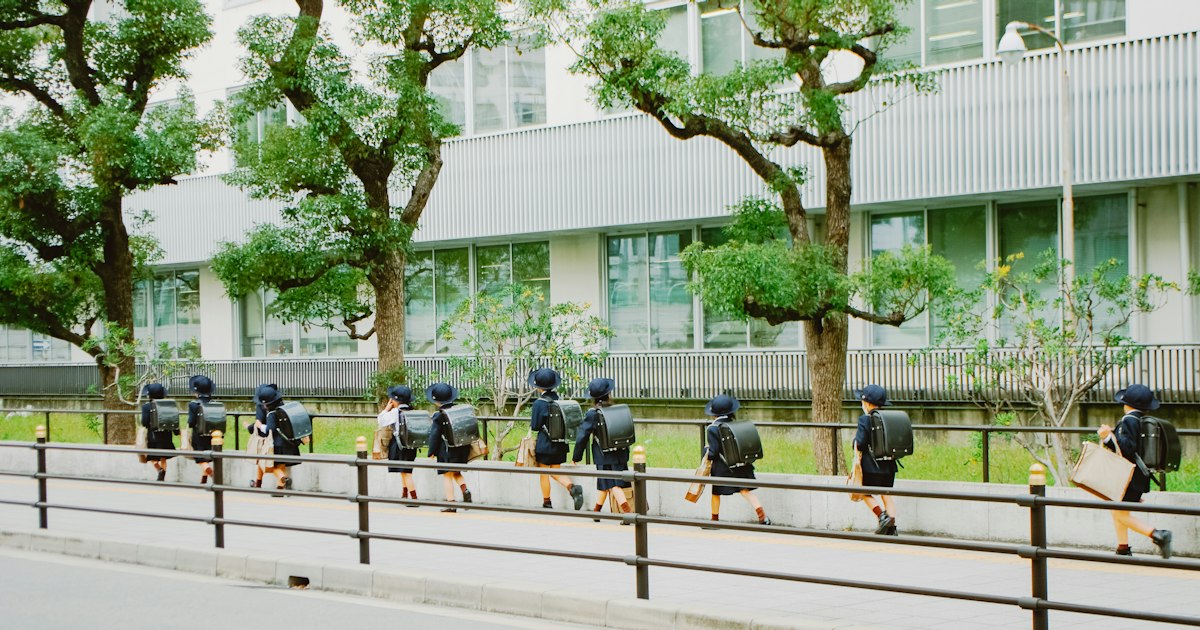
If you’ve spent any time near a Japanese train station in the morning, you’ve seen them: rows of small children marching to school with stiff, boxy leather backpacks strapped to their shoulders. That’s the randoseru, and it’s one of the most recognizable symbols of Japanese childhood — so recognizable, in fact, that adults now collect vintage and designer versions as fashion pieces, art objects, and nostalgia souvenirs. Here’s what the randoseru actually is, why it costs so much, and where to buy one whether you’re shopping for a child or yourself.
What exactly is a randoseru?
A randoseru is a hard-sided backpack, traditionally made of leather or heavy synthetic leather, used by nearly all Japanese children from the first day of elementary school (around age 6) through sixth grade (age 12). The name comes from the Dutch word “ransel” (backpack), a holdover from when the Dutch military satchel design was adopted by Japan in the late 19th century. The boxy shape isn’t just tradition — it’s structural. The rigid frame protects textbooks, distributes weight evenly across both shoulders, and is built to survive six years of daily abuse, including being thrown, sat on, and rained on.
Colors used to be strictly gendered — black for boys, red for girls — but since the early 2000s, manufacturers have expanded to 20-plus colors, including navy, lavender, and two-tone designs. Most weigh around 1-1.3kg empty and cost between ¥50,000 and ¥70,000 new, which surprises most foreign visitors. That price reflects genuine cowhide leather, reinforced stitching, and a six-year manufacturer warranty — Japanese parents expect the bag to survive without replacement, so quality is non-negotiable.
Why adults collect randoseru
Over the past decade, randoseru have crossed over into adult fashion and collecting culture for a few distinct reasons. First, nostalgia: adults who carried one as kids seek out the exact model or color they had. Second, design crossover: brands like Tsuchiya Kaban and Kuro Lavole now make adult-sized randoseru-style bags using the same leather and construction techniques, marketed as structured, durable everyday bags rather than toys. Third, straightforward collecting — vintage and discontinued-color randoseru, especially limited runs from makers like Seiban and Fit-Chel, trade on secondhand sites and in specialty shops the way sneakers or vintage cameras do.
If you’re into Japan’s broader collectible culture — the kind that turns small, mass-produced objects into things people hunt for — this will feel familiar. It’s the same impulse behind Iwako eraser collecting, just with a four-figure price tag instead of a few hundred yen.
Where to buy a new randoseru
If you want a brand-new, full-size kid’s randoseru as a gift or souvenir, go straight to the source rather than a general souvenir shop — most tourist stores don’t stock them because the margins and sizing logistics don’t suit walk-in sales.
- Tsuchiya Kaban flagship (Tokyo, Asakusabashi) — the best-known maker of premium leather randoseru, with a showroom where you can see the construction up close. Open 11:00–18:00, closed Tuesdays. Expect ¥70,000–¥95,000 for the classic leather lines.
- Seiban or Fit-Chel outlet counters inside major department stores (Isetan Shinjuku, Takashimaya) during the autumn “randoseru shopping season” — see timing note below.
- Loft or Tokyu Hands occasionally stock smaller, lower-cost randoseru-style bags (¥8,000–¥15,000) made of synthetic materials — good as a lightweight souvenir rather than an authentic school item, but far more packable.
Department stores with randoseru counters tend to cluster around Shinjuku, Ikebukuro, and Ginza in Tokyo, and around Umeda and Namba in Osaka — the same shopping districts you’d hit for general fashion browsing, including streets like Omotesando, where a few specialty leather-goods boutiques carry adult-oriented randoseru-style bags alongside their main lines.
Where to find vintage and collector pieces
For genuine vintage randoseru or discontinued colorways, your best bets are secondhand and specialty shops rather than mainstream retailers:
- 2nd Street and Mode Off secondhand chains occasionally carry used randoseru in excellent condition for ¥3,000–¥10,000 — check the kids’ goods section, as stock is inconsistent and location-dependent.
- Mercari and Yahoo! Auctions (Japan’s largest resale platforms) are where serious collectors actually hunt, since rare colors and discontinued maker collaborations surface there first. You’ll need a Japan-based shipping address or a forwarding service to use these from abroad.
- Jimbocho’s used bookstore district in Tokyo has a scattering of general antique and goods shops where old-school leather randoseru occasionally turn up, though it’s a hit-or-miss browse rather than a guaranteed find.
Best time to shop, and budget guidance
Timing matters more with randoseru than with most souvenirs. Japanese families place orders for the following school year between April and August, meaning showroom displays, catalogs, and the widest color selection are all available during Japanese spring and summer — if you’re visiting then and want to see the full new-season lineup, that’s the window. By autumn (September–December), popular colors and limited collaborations sell out, though this is also when outlet and clearance pricing appears at department stores, which is good news if you’re shopping for yourself rather than hunting a specific color for a child starting school next April.
Budget-wise:
- Budget (¥8,000–¥20,000): synthetic-leather kids’ versions from general retailers, or adult-style mini randoseru bags from brands like Anello — fine as a decorative souvenir, not built for six years of daily school use.
- Mid-range (¥40,000–¥70,000): standard Seiban, Fit-Chel, or Kuraberu cowhide randoseru — this is what most Japanese families actually buy for their children.
- Splurge (¥80,000–¥150,000+): Tsuchiya Kaban’s premium leather lines, limited-edition designer collaborations, or rare secondhand finds from discontinued color runs.
Common mistakes to avoid
A few things trip up first-time buyers. Don’t assume a randoseru will fit in a carry-on without compressing — the rigid frame doesn’t flatten, so factor it into checked luggage or ship it home separately; Japanese shops are used to arranging overseas shipping for exactly this reason. Don’t buy a full-size child’s randoseru expecting to wear it as an adult bag — the straps and proportions are built for a child’s torso, which is why brands like Tsuchiya Kaban make a genuinely separate adult-sized line rather than just selling the kids’ model up. And don’t expect every department store to carry randoseru year-round in full selection; stock rotates heavily with the April–August ordering season described above, so call ahead or check a store’s website before making a special trip.
Whether you’re picking one up as a quirky, well-made souvenir or going deep into collector territory, the randoseru is a good example of how a purely functional Japanese object — built to survive six years on a six-year-old’s back — ended up becoming a design icon in its own right.