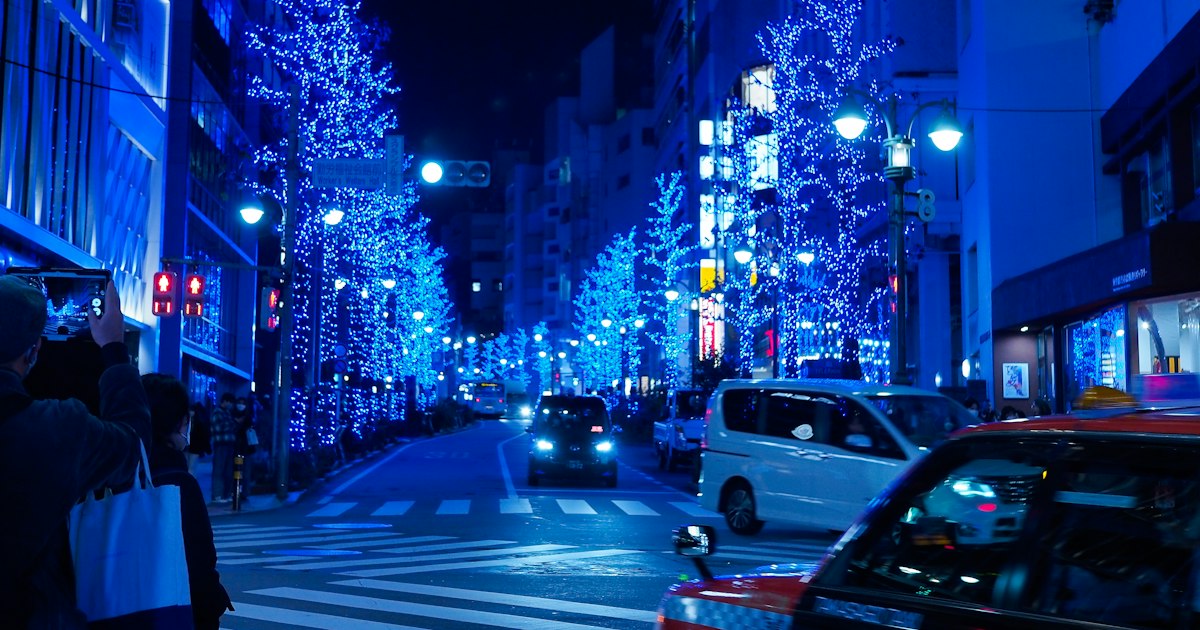
Photo by Yuika Takamura on Unsplash
If you’re picturing a quiet, church-centered holiday with a day off work, recalibrate: Christmas in Japan is a sparkly, commercial, date-night affair squeezed between two ordinary workdays. There’s no manger scene competing for attention — instead there’s fried chicken, strawberry shortcake, and some of the best light displays in the world. Here’s how it actually plays out, and how to join in as a visitor.
Why Japan’s Christmas Is Secular — and Not a Day Off
Christians make up roughly 1–2% of Japan’s population, so Christmas never took root as a religious holiday. It’s also not a public holiday: offices, schools, and most businesses operate normally on December 25. The real family holiday in Japan is New Year (Oshogatsu), when the whole country shuts down from around December 29 to January 3, trains get booked solid, and families gather for mochi and shrine visits. Christmas, by contrast, got imported mainly through postwar department store marketing and became something closer to a couples’ and kids’ holiday — a date night on the 24th, a family dinner with cake, and presents for children, but nothing resembling a Western religious observance.
Because it’s a normal workday, don’t expect reduced crowds or closed shops — if anything, restaurants and illumination spots are busier in the evenings as people squeeze celebrations in after work.
The KFC Christmas Tradition
This one genuinely surprises first-time visitors: fried chicken, specifically from KFC, is Japan’s unofficial national Christmas dish. It traces back to a 1974 “Kentucky for Christmas” marketing campaign that filled the void left by the absence of a turkey tradition, and it stuck so thoroughly that KFC Japan now sells what’s effectively a holiday party set — fried chicken pieces, sides, and sometimes a small cake — under names like “Christmas Dinner” or “Party Barrel.”
Prices for these sets typically run from around ¥4,000 up to ¥7,000–8,000 depending on the size and whether cake is included. The catch: Japanese families pre-order weeks in advance, and walk-in demand on December 24 is intense, with lines out the door and some stores selling out of walk-in stock entirely. If you want in on the tradition, check the KFC Japan app or website in early December and reserve a pickup slot — most pre-orders need to be placed by mid-to-late December for Christmas Eve or Christmas Day collection. If you miss the window, regular menu items are still available, just not the special boxed sets.
Christmas Cake: The Other Must-Have
Alongside chicken, the other fixture is “Christmas cake” — almost always a light sponge cake layered with whipped cream and fresh strawberries, decorated simply with a Santa figurine or chocolate plaque. You’ll see it everywhere from late November onward: convenience stores sell small individual-size versions for roughly ¥1,500–2,500, neighborhood bakeries and supermarkets sell whole cakes from about ¥2,500–5,000, and department stores and hotels offer elaborate versions from well-known patissiers for ¥6,000 and well upward of ¥10,000 for a splurge. As with the chicken, pre-ordering is standard practice in Japan — popular bakery and hotel cakes often sell out, so if you have your eye on something specific, reserve it by early-to-mid December rather than hoping to walk in on the 24th.
Where to See the Best Illuminations
Winter illuminations are arguably the most visitor-friendly part of the season, since they run for weeks and cost nothing to view. A few reliable options:
- Marunouchi Illumination (Tokyo) — hundreds of thousands of LED lights along Naka-dori Avenue near Tokyo Station’s Marunouchi exit, typically lit mid-November through mid-February. Free, and an easy add-on if you’re already near Tokyo Station.
- Roppongi Hills “Artelligent Christmas” — the Keyakizaka-dori approach to Roppongi Hills gets a blue-and-white light tunnel from mid-November through December 25. Free, short walk from Roppongi Station.
- Shibuya’s “Blue Cave” (Aoi Dokutsu) — a tunnel of blue lights running through the Shibuya/Yoyogi Park area most evenings in December, usually from around 17:00. Free and popular with couples, so expect crowds on weekends.
- Kobe Luminarie — a memorial light installation commemorating the 1995 Great Hanshin earthquake, held for about 10–12 days in early December near Kobe’s Motomachi/Sannomiya area. Entry is free (donations encouraged), and it’s an easy day trip from Osaka or a worthwhile detour if you’re already riding the Shinkansen through the Kansai region — see our guide to booking Shinkansen tickets online if you’re routing a trip from Tokyo.
Common mistake: assuming illuminations are a one-night event. Most run for six to twelve weeks starting in mid-November, so you don’t need to visit on Christmas Eve specifically — in fact, going a week or two earlier avoids the heaviest date-night crowds.
Getting Around During Illumination Season
Illumination-hopping in Tokyo usually means hitting two or three neighborhoods in one evening (Marunouchi, Roppongi, Shibuya are all doable in a single night), which makes an unlimited subway pass worth the cost rather than paying per ride. If you’re deciding between options, our comparison of the Tokyo Subway Ticket vs the Tono Furii Kippu breaks down which pass actually saves money for an evening of hopping between light displays. If your Christmas trip continues outside Tokyo — say, to Kobe Luminarie or a snowy detour — check the Shinkansen booking guide above, and keep in mind that December 29–January 3 is peak New Year travel, so booking those specific dates well in advance matters more than booking around Christmas itself.
Common Mistakes to Avoid
- Expecting a holiday atmosphere during the day. December 25 is a regular workday — shops, banks, and offices operate normally. The festive mood is concentrated in evenings, especially December 24.
- Walking in for KFC on December 24 without a reservation. Lines form early and stock runs out; pre-order through the app if the tradition matters to you.
- Confusing Christmas with Japan’s real holiday season. If you’re also in Japan for New Year, be aware that transport, restaurants, and many shops close or run reduced hours from roughly December 31 to January 3 — a completely different rhythm from the commercial bustle of Christmas week.
- Booking a Christmas Eve dinner reservation late. In Japan, December 24 functions like Valentine’s Day for couples — upscale restaurants get booked out weeks ahead.
None of this requires planning a trip specifically around the holiday — Christmas in Japan works well as a festive bonus layered onto an existing December itinerary, whether that’s a city-based Tokyo trip or a longer loop that continues on to winter destinations like Nozawa Onsen for snow and hot springs once the lights come down.