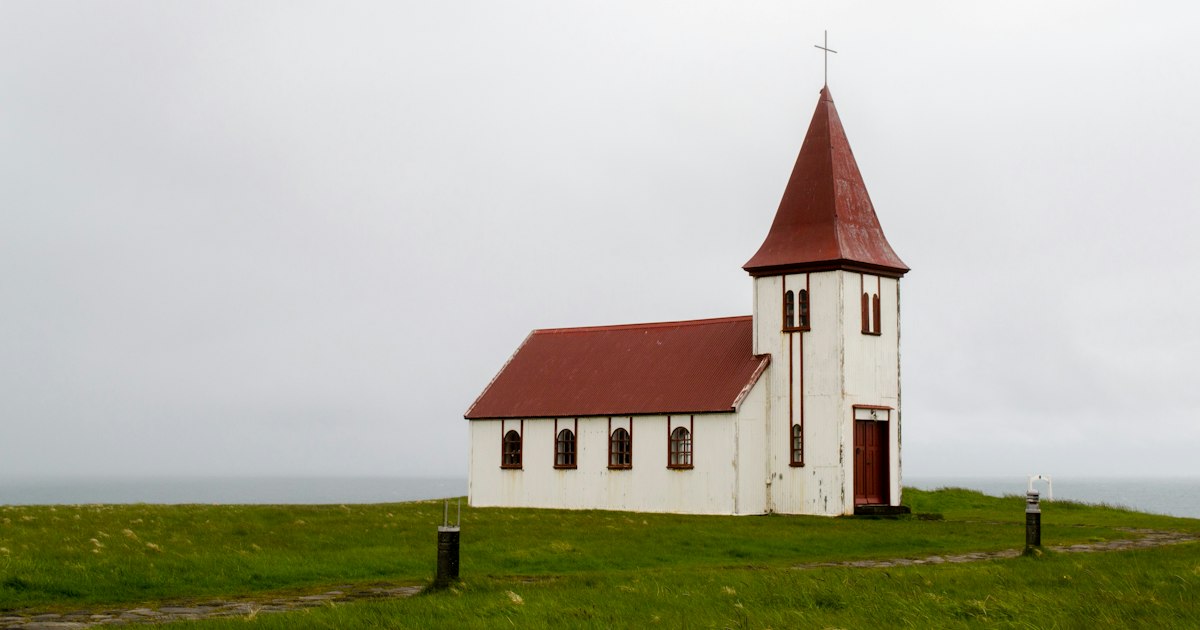
Photo by Soff Garavano Puw on Unsplash
Two hours off the coast of Nagasaki by boat, the Goto Islands feel like a different country — jagged volcanic coastline, turquoise coves, and a scattering of small wooden and brick churches built by communities who practiced Christianity in secret for over 200 years. The islands are part of the UNESCO World Heritage listing “Hidden Christian Sites in the Nagasaki Region,” inscribed in 2018, and they remain one of the least-visited corners of mainstream Japan travel. That’s exactly the appeal: empty beaches, no crowds at the churches, and a slower pace than almost anywhere else in Kyushu.
Where the Goto Islands Are and Why They Matter
The Goto archipelago sits roughly 100 km west of Nagasaki city in the East China Sea, made up of five main inhabited islands — Fukue, Naru, Hisaka, Wakamatsu, and Nakadori — plus dozens of smaller ones. From the 1600s, Japanese Christians fled here to escape persecution after the shogunate banned the religion, hiding their faith for generations until it was legalized in 1873. When they could finally worship openly, these “Hidden Christian” communities built modest churches, often blending Western religious architecture with local timber and stone techniques. That history is why Goto’s churches feel different from cathedrals elsewhere — small, weathered, and built by fishing villages rather than dioceses.
Getting There: Ferry, Jetfoil, or Flight
Everyone starts from Nagasaki. The fastest option is the Taiho jetfoil (operated by Kyushu Shosen) from Nagasaki Port to Fukue Port, taking around 90 minutes and costing roughly ¥7,500–8,000 one way. Regular car ferries take about 3.5–4 hours and cost closer to ¥4,000–5,000 one way — slower but cheaper, and useful if you’re bringing a rental car across. There’s also a short flight on Oriental Air Bridge from Nagasaki Airport to Fukue Airport, about 30 minutes for roughly ¥10,000–13,000, which is worth it if rough seas have you worried about cancellations (more on that below).
Reserve jetfoil and flight seats a few days ahead in peak season (Golden Week, O-bon in mid-August, and New Year), since capacity is limited and these aren’t routes with frequent backup departures. If you’re mapping your trip around Japan’s calendar, check our guide to Japanese public holidays to avoid or plan around in 2026 before booking.
Island-Hopping: Getting Around Once You Arrive
A rental car is close to essential. Public transport exists but runs infrequently, and the best church sites and beaches are spread across islands connected by bridges and short local ferries. Fukue Island (where you’ll land) has several rental agencies right at the port and airport — book ahead in summer, as the fleet is small and sells out. Fukue, Hisaka, Naru, and Wakamatsu are linked by road bridges, so you can drive between them without a car ferry, but double-check which crossings require one, since a few outlying spots still need a short boat hop with limited daily sailings.
Budget a full day just for driving distances — roads are narrow, winding coastal routes, and what looks like a short hop on the map can take 45 minutes. Fuel up before heading to smaller islands; gas stations thin out fast once you leave Fukue’s main town.
The Hidden Christian Churches You Shouldn’t Miss
Start with Dozaki Church on Fukue Island, the islands’ first permanent church (completed 1908) and now a small museum of hidden-Christian artifacts — open daily, roughly 9:00–17:00, admission around ¥300. It’s an easy, low-commitment introduction before heading further out.
Kashiragashima Church, on a small bridge-connected islet off Nakadori, is the most photographed building in Goto: a red-brick Gothic church against open water, built in 1919 by the small fishing community that worshipped there. It’s free to view from outside and usually unlocked for quiet visits during the day.
The centerpiece, though, is Egami Church on Naru Island — the actual UNESCO-listed site, a pale yellow wooden church from 1918 with a simple, beautiful ribbed-vault interior. Because it’s a protected World Heritage property, interior visits are limited and require advance reservation through the Goto tourism visitor system (arranged via the local tourist information center before you go, not walk-up). Don’t skip this step — travelers who show up without booking are often turned away from the interior, though the exterior and churchyard remain viewable.
Best Time to Visit
Spring (April–May) and autumn (late September–November) offer the calmest seas and most reliable ferry schedules, plus comfortable hiking and driving weather. Summer (July–August) brings the best beach conditions — Takahama Beach on Fukue is routinely ranked among Japan’s most beautiful, with pale sand and clear shallow water — but also typhoon season, which can cancel jetfoil sailings with little notice. If you’re traveling in August or September, build in a buffer day before any onward flight out of Nagasaki, and consider the plane route as backup. Winter is quieter and cheaper but rougher at sea, with a real chance of ferry cancellations.
Where to Stay and Eat
Budget travelers will find simple guesthouses and minshuku on Fukue from around ¥5,000–7,000 a night, often family-run with home-cooked dinners featuring local fish and the islands’ famous Goto udon (hand-stretched noodles served with a flying-fish broth — worth seeking out at any small shokudo in Fukue town). Mid-range means business hotels near Fukue Port, generally ¥8,000–13,000 a night with private bathrooms and parking, convenient if you have an early jetfoil or ferry. For a splurge, a handful of restored kominka (traditional farmhouses) on the smaller islands rent as private stays, and a few operators run boat charters around the coastline and sea caves — these need to be booked well ahead through the local tourism office since availability is tiny.
Restaurant menus outside Fukue’s main town are almost entirely in Japanese with no English support, so a translation app or printed phrase card helps; if you have dietary restrictions, our guide to food allergy cards and menu translation in Japan is worth preparing before you go, since remote areas like this have far fewer English-speaking staff than Nagasaki city.
Common Mistakes to Avoid
The biggest one is treating Goto as a single-day trip — between travel time to and from Nagasaki and the driving distances once you’re there, two full nights is the realistic minimum to see Fukue and Naru without rushing. Second, don’t assume you can visit Egami Church’s interior without a reservation; it’s a working protected site, not a tourist attraction with open hours. Third, charge your devices and bring a compact adapter if you’re coming from overseas — outlets are standard Japanese type A, and our guide to electrical outlets and voltage in Japan covers what you’ll need. Finally, keep a close eye on weather forecasts in typhoon season; sailings can be suspended same-day, and there’s no train alternative to fall back on the way there is on the mainland. If you lose something on a ferry or at a port terminal, Japan’s lost-and-found system still applies here — see our breakdown of how koban police boxes and lost-and-found offices work for what to do next.
If you’ve already done a remote-island day trip like the Kerama Islands off Okinawa, Goto scratches a similar itch for solitude and clear water, but with a completely different historical layer underneath it — one that rewards slowing down rather than rushing through.