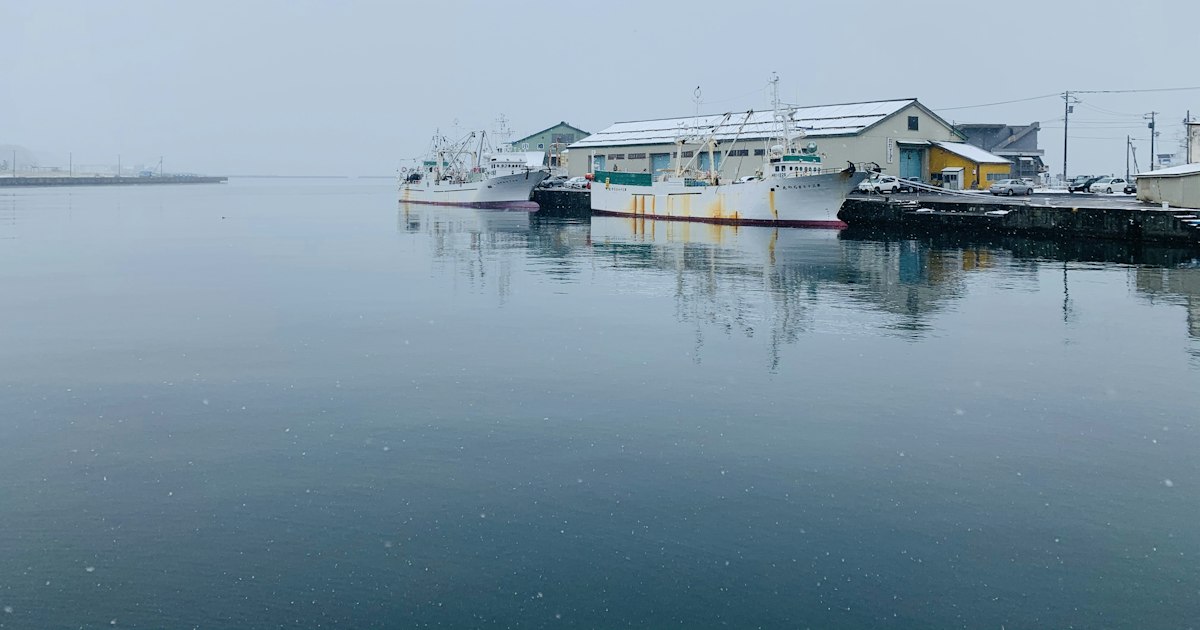
Photo by Vincent Zhao on Unsplash
Every winter, pack ice forms off the coast of Siberia, drifts south on the Amur River’s outflow and ocean currents, and piles up against the shores of eastern Hokkaido in sheets that can stretch to the horizon. This is the Okhotsk drift ice, or ryuhyo, and it’s one of the strangest seasonal spectacles in Japan: a port town like Abashiri wakes up one January morning to find the sea itself has turned white and solid. The way to experience it up close isn’t from the beach — it’s from the deck of a ship built to crack straight through it.
What the Drift Ice Actually Is
The Sea of Okhotsk is one of the southernmost places on Earth where sea ice forms, mainly because fresh water from the Amur River dilutes the surface seawater enough for it to freeze at a higher temperature than normal seawater would. Winds and currents push the resulting ice floes south and east, and by midwinter they jam up against the coastline around Abashiri, Mombetsu, and the Shiretoko Peninsula. The ice isn’t a flat, continuous sheet — it’s a jumbled mass of floes, ridges, and open leads that groan and crack as they shift, with seals, and occasionally Steller’s sea eagles, riding along on top. Locals still watch for “first contact” (ryuhyo settogan hi), the official date the ice is first visible from shore each year, which the local weather office announces and which usually falls in mid-to-late January.
The Ice-Breaker Cruises: Aurora and Garinko
Two purpose-built ships run tourist cruises straight into the pack ice, and they work differently:
- Aurora (おーろら), Abashiri Port: A conventional icebreaker hull that rides up and crushes the ice under its weight. Cruises run roughly one hour, with several departures a day during peak season (often 4–5 sailings between late morning and late afternoon). Fares are around ¥4,500 for adults and ¥2,250 for children, though prices are reviewed each season, so check the current schedule before you go. Boarding is a short walk or taxi ride from Abashiri Station.
- Garinko-go III IMERU, Mombetsu Port: About an hour’s drive northeast of Abashiri. This ship uses two large screw-shaped drills at the bow to auger through the ice rather than ride over it — a strange, satisfying thing to watch from the rail. Cruises run about 40–60 minutes and typically cost ¥3,500–4,000 for adults, roughly half that for children.
Both ships only break ice when ice is actually present and reachable; if the floes have drifted offshore (which happens some years, especially in milder winters), the cruise still runs but through open or looser water, which is less dramatic. There’s no refund for a light-ice day — it’s genuinely weather- and current-dependent, so build in a buffer day if you can.
Best Time to Go
The operating window is roughly late January through late March, but the sweet spot for thick, shore-hugging ice is early-to-mid February. Late January can be hit-or-miss as the ice is still arriving; by mid-March it’s often breaking up and retreating. If you only have one shot at this, aim for the first three weeks of February. Mornings tend to have calmer seas and clearer light for photos, though ice density matters more than time of day. Winter in general is Abashiri’s off-peak tourist season outside of the ice itself, so hotels are easier to book than in summer — just confirm your dates don’t collide with a national holiday rush; the 2026 public holiday calendar is worth a glance if you’re traveling in late January around the three-day weekend or in mid-February.
Getting to Abashiri
Abashiri is remote by Japanese standards, which is part of why the drift ice feels like such an event. Two realistic routes:
- Fly: Memanbetsu Airport (MMB), about 20–25 minutes by bus or taxi from Abashiri Port, has direct ANA flights from Tokyo Haneda (roughly 1 hour 50 minutes) and seasonal connections from Sapporo New Chitose. This is the fastest option by far.
- Train: From Sapporo, take a limited express to Asahikawa (about 1 hour 25 minutes), then transfer to the JR Sekihoku Main Line limited express “Taisetsu” or “Okhotsk” service to Abashiri (roughly 3.5–4 hours). Total journey from Sapporo runs 5–6 hours, so it’s really a one-way scenic option rather than a practical return trip unless you have time to spare.
Once in Abashiri, the Aurora dock, the Okhotsk Ryuhyokan museum, and most hotels cluster within a short bus or taxi ride of JR Abashiri Station — you don’t need a rental car for the cruise itself, though one helps if you want to detour to Mombetsu or Shiretoko.
What to Bring and Common Mistakes
The deck is open-air and you’re sitting in the middle of a frozen sea in February — wind chill out there is brutal even on a mild day. The single biggest mistake visitors make is dressing for a city winter instead of a maritime one.
- Layer up with thermal base layers, a proper insulated winter coat, waterproof gloves (not just wool), and a hat that covers your ears. Many ships rent heavier coats on board if you underestimate the cold, but don’t count on availability.
- Wear boots with real tread — the pier and deck get icy and slick.
- Book same-day if possible rather than weeks ahead; sailings are sometimes cancelled or re-timed based on ice conditions and sea state, and walk-up tickets are usually available outside the busiest weekends.
- Don’t assume the ice will be thick just because it’s “ice season” — check the ferry company’s site or call ahead on the morning of your visit for a real-time ice report if you’re flexible on dates.
- If you get seasick, take precautions before boarding — the hull shudders noticeably each time it rides up onto a floe.
Beyond the Cruise
If the cruise leaves you wanting more ice and more of this corner of Hokkaido, the Okhotsk Ryuhyokan museum in Abashiri (admission around ¥770) has a walk-in freezer room chilled to about -15°C stocked with real drift ice, plus tanks of clione — tiny translucent “sea angels” that only appear near the ice. For a different angle on winter Hokkaido entirely, Shiretoko’s Utoro side, about 90 minutes east, runs guided walks directly on the frozen sea ice in a drysuit, part of the same wildlife-rich coastline covered in our guide to the Shiretoko Peninsula’s UNESCO wilderness and summer cruises — worth reading if you’re building a longer eastern Hokkaido itinerary around both seasons.
Budget, Food, and Where to Stay
A budget day trip — one Aurora cruise, a museum stop, and convenience-store meals — runs comfortably under ¥7,000 per person excluding transport. Mid-range travelers should set aside a dinner for Okhotsk crab or local scallops, a specialty of the coast, at one of the seafood restaurants near the station (¥3,000–6,000 for a proper crab or seafood set). For a splurge, several hotels along the Abashiri waterfront offer rooms facing the Okhotsk Sea where you can watch the ice from your window at sunrise — book these early for the February peak, since rooms with a sea view sell out before standard rooms do. If you’re stacking a winter Japan trip with other cold-weather experiences further south, pairing this with a ski town like Nozawa Onsen in Nagano makes for a good contrast — one is ice at sea, the other is snow in the mountains, and both are at their best in the same window.