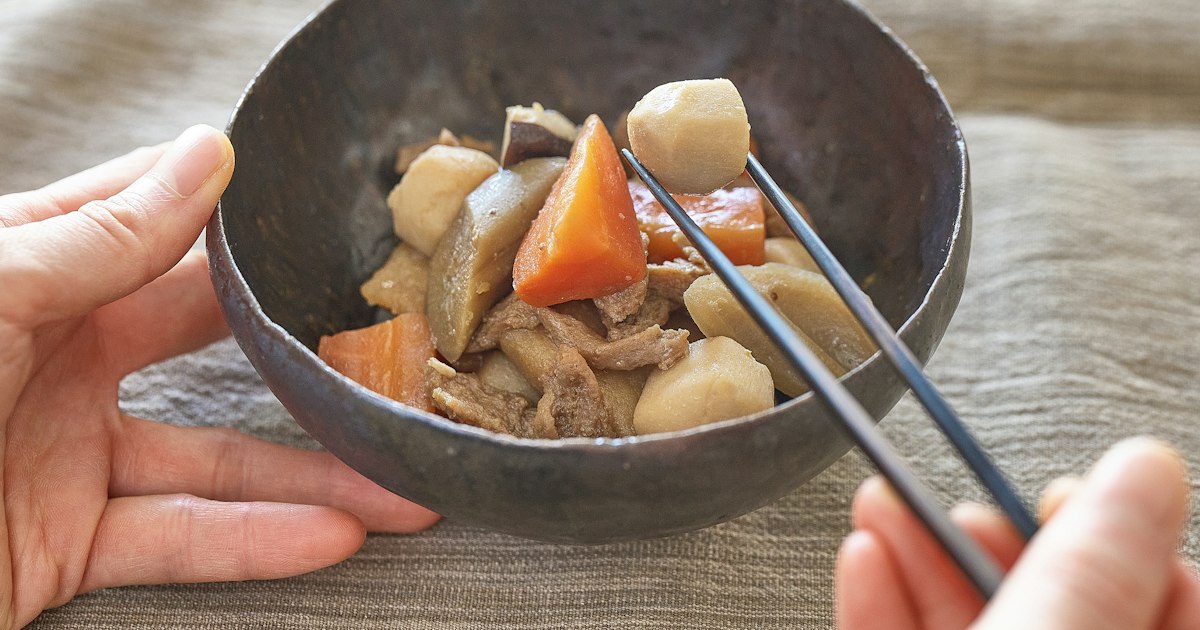
If you ask a Japanese person what their mother’s cooking tastes like, there’s a good chance the answer involves nikujaga. This simmered dish of thinly sliced meat, potatoes, onions, and carrots in a sweet-savory soy broth is the definition of katei ryori, or home cooking — unglamorous, deeply comforting, and found on nearly every family dinner table at some point in the week. Travelers rarely seek it out on purpose, but once you taste it at an izakaya or a teishoku (set meal) counter, it tends to become a repeat order for the rest of the trip. Here’s what it is, why it’s cooked the way it is, and where you can actually sit down and eat it.
What Nikujaga Actually Is
Nikujaga literally means “meat [and] potato” (niku + jagaimo). The dish is potatoes, onion, and often carrot and shirataki noodles, simmered with thin slices of beef or pork in a dashi-based broth seasoned with soy sauce, mirin, and sugar. The result is closer to a dry braise than a soupy stew — most of the liquid cooks down and gets absorbed, so what’s left on the plate is tender, falling-apart potato chunks coated in a glossy brown glaze, plus meat that’s more of a flavoring element than the main event.
There’s a real east-west divide in how it’s made. In the Kanto region (Tokyo and east), nikujaga is almost always made with thinly sliced pork, reflecting pork’s dominance in Tokyo home cooking. In Kansai (Osaka, Kyoto, and west), beef is the default, tied to the region’s historic beef culture and its overlap with sukiyaki. If a menu or a home cook specifies “gyu-niku” (beef) or “buta-niku” (pork) nikujaga, that regional lean is usually why.
The “Curry Origin” Story — and Why It’s Disputed
The most-repeated bit of nikujaga trivia is that it was invented by Admiral Heihachiro Togo of the Imperial Japanese Navy, who reportedly asked his cooks to recreate the beef stew he’d eaten in Britain while training there, but without the ingredients for a proper roux — so the cooks simmered beef and potatoes in soy and sugar instead, and curry became nikujaga. Both Maizuru (Kyoto Prefecture) and Kure (Hiroshima Prefecture), Togo’s former naval bases, claim the dish’s birthplace and run “nikujaga” tourism campaigns around it. Food historians are skeptical of the specifics — soy-and-sugar simmering was already a standard technique in Japanese cooking, so the dish likely evolved more gradually than the navy legend suggests. Still, it’s a fun bit of context if you end up in either city, and both have local restaurants that play up the connection.
Where to Eat It: Budget to Splurge
Budget (¥500–900): The easiest place to try nikujaga is a teishoku-ya or a casual set-meal chain. Yayoiken and Ootoya both rotate nikujaga as a side dish or a full teishoku (served with rice, miso soup, and pickles) for roughly ¥700–950, and both have English-friendly picture menus or touchscreen ordering in major cities. Department store basement food halls (depachika) also sell pre-made nikujaga by weight, around ¥400–600 for a single-portion container — a good option if you want to try it in a hotel room or on a train.
Mid-range (¥900–2,000): Izakaya menus almost always list nikujaga as a shared side dish, typically ¥500–800 a plate, meant to be ordered alongside grilled skewers or sashimi rather than as a standalone meal. For a more composed sit-down version, old-fashioned “shokudo” diners near train stations often do a nikujaga teishoku for ¥1,000–1,500 that includes rice, soup, and a small side — this is where you’ll get the most traditional, slow-simmered rendition, since these places tend to be family-run and cook the way grandmothers do.
Splurge: Nikujaga isn’t really a splurge dish by nature, but kaiseki (multi-course) restaurants occasionally include a refined, small-portion version as one course, using A5 wagyu instead of standard thin-sliced beef. If you’re already booked into a kaiseki dinner in Kyoto or Kanazawa and see “nikujaga” or “niku jagaimo” on the course list, it’s worth paying attention to — the texture is the same comforting dish, just built from much better beef.
A Few Specific Spots Worth Knowing
- Maizuru, Kyoto Prefecture — several restaurants near Maizuru’s naval port sell a “Maizuru nikujaga” plate, leaning into the Togo legend; look for shops around Maizuru Port and the Red Brick Park area.
- Kure, Hiroshima Prefecture — the rival birthplace city has its own “Kure nikujaga” association with a dedicated logo you’ll spot on restaurant signs near Kure Station; it’s usually served with a thicker gravy-like sauce than the home-style version.
- Tsukiji Outer Market, Tokyo — a few of the older sit-down shokudo tucked behind the main tourist strip serve nikujaga as a breakfast or lunch set; it’s easy to miss among the sushi stalls, so look for shokudo with a handwritten teishoku board out front.
Opening hours for shokudo-style restaurants tend to run roughly 11:00–14:00 for lunch and 17:00–21:00 for dinner, with many closing entirely in the mid-afternoon — show up outside those windows and you may find the shutters down even if the restaurant isn’t officially closed for the day.
Best Season and Timing
Nikujaga is eaten year-round, but it’s at its best in late autumn through winter (roughly November to February), when new-crop potatoes and onions are in season and restaurants lean harder on simmered, warming dishes generally. It’s a natural pairing with other cold-weather regional specialties — if you’re traveling in Toyama in winter, for instance, you might see nikujaga alongside kanburi on the same seasonal set menu, since both peak at the same time of year. (If that link looks off, the correct kanburi guide is on japantrove.com under the Toyama yellowtail article.)
Common Mistakes Visitors Make
- Expecting a soup. Nikujaga is simmered until most of the liquid is absorbed — if you’re picturing a ladle-able stew with broth to spoon up, you’ll be surprised by how dry and glazed the final dish actually is.
- Ordering it as a full meal at an izakaya. At most izakaya, nikujaga is a shared side portion meant to go with rice or drinks, not a main course — if you want it as a complete meal, look for a teishoku set instead.
- Confusing it with niku udon or sukiyaki. The thin beef or pork slices and brown soy glaze look similar to sukiyaki at a glance, but nikujaga has no raw egg dip and is served as a finished, room-temperature-friendly side rather than cooked tableside.
- Assuming beef is standard everywhere. If you specifically want the beef version, order in Kansai or ask for “gyu-niku no nikujaga” — in Tokyo and the east, pork is the default unless stated otherwise.
Making It (or Shopping for It) at Home
Nikujaga is simple enough that many visitors end up wanting to recreate it. The ingredients — soy sauce, mirin, and dashi powder — are all things you can legally bring home in reasonable quantities; if you’re unsure what’s allowed through customs, it’s worth checking Japan’s duty-free allowance coming home before you overpack your suitcase with condiments. Supermarkets also sell nikujaga seasoning packets (nikujaga no moto) for about ¥150–250, which let you recreate a decent version with just potatoes, onion, and sliced meat once you’re back home.