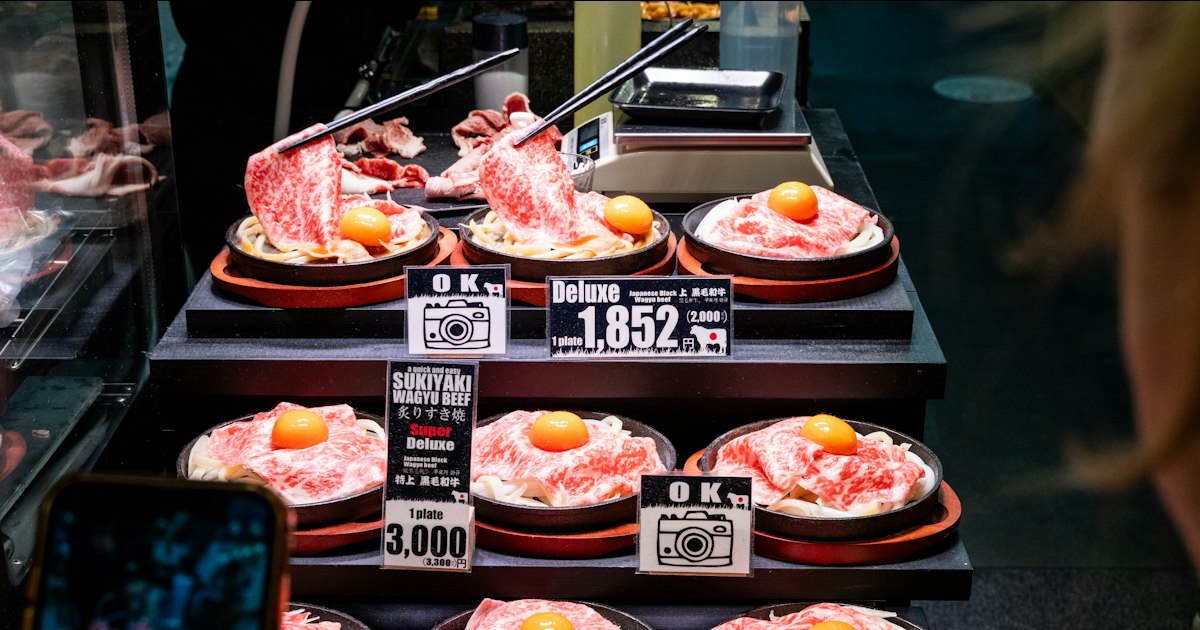
Photo by EMANUELE Ricciardi on Unsplash
Kobe gets the international name recognition, but ask most Japanese beef connoisseurs which wagyu they’d actually choose for a special occasion, and a surprising number will say Matsusaka. Raised in the hills of Mie Prefecture, Matsusaka beef is a smaller, stricter, and in many ways more exclusive brand than Kobe — most of it never leaves Japan, and a meaningful share never leaves Mie. Here’s what makes it different, and where to eat it without wasting money on an imitation.
What Actually Makes Matsusaka Beef Different
Matsusaka beef comes exclusively from virgin female Japanese Black (Kuroge Washu) cattle, most descended from the Tajima bloodline also prized in Kobe and Hyogo. The certification rules require the cattle to be raised within the Matsusaka region for the majority of their lives, and the feeding period is unusually long — often well past 900 days, versus roughly 26-30 months for standard wagyu. That extra time, combined with individual farmer attention, produces extremely fine, lace-like intramuscular fat (the marbling known as shimofuri) that starts melting at a lower temperature than most beef, which is why the fat tastes clean rather than greasy.
The “pampered” reputation isn’t just marketing. Some farmers do feed beer or shochu as an appetite stimulant during hot months and hand-massage the animals to keep them calm and evenly conditioned — practices that vary by farm but have stuck in the brand’s lore for decades. Each certified animal gets an individual ID, and restaurants serving genuine Matsusaka beef can usually show you the cow’s certificate of origin with its nose-print registration on request. If a menu doesn’t mention this and the price looks too reasonable for wagyu, it’s likely a blend or a different regional brand wearing the name loosely.
Getting to Matsusaka
Matsusaka City sits between Nagoya and Ise on the Kintetsu Yamada Line, which makes it an easy add-on to an Ise-Shima trip rather than a destination you need to plan a whole day around.
- From Nagoya: Kintetsu Limited Express to Matsusaka Station, about 70-90 minutes, roughly ¥3,000-3,500 one way.
- From Osaka (Namba): Kintetsu Limited Express, around 1 hour 50 minutes.
- From Ise: Just 15-20 minutes by Kintetsu express, making it simple to combine a Matsusaka lunch with an Ise Grand Shrine visit the same day.
JR’s Kisei Line also stops at Matsusaka Station, but Kintetsu is faster for most tourist routes. The main restaurant district is a short walk or taxi ride from the station — confirm with your hotel or the restaurant, since some of the oldest shops are tucked into residential streets without obvious signage in English.
Where to Eat It: Splurge
Wadakin (和田金), founded in 1877, is the restaurant most associated with Matsusaka beef in Japan — a wooden, old-merchant-house building near the station that still raises and fattens its own cattle. It serves sukiyaki and steak courses, and this is not a casual lunch: expect to pay somewhere in the ¥20,000-40,000 per person range depending on the course and cut. Reservations are essentially mandatory, ideally made days or weeks ahead for weekends, and the restaurant keeps traditional, limited service hours (roughly late morning and early evening sittings), so check current hours and closed days directly before you go, as they shift seasonally. Gyugin Honten (牛銀本店) is Wadakin’s long-running rival, similarly historic and similarly priced, also specializing in sukiyaki using its own graded beef.
If you’ve ever planned around the Toyosu tuna auction’s limited viewing slots, the mindset is the same here: the best Matsusaka beef experiences are small-scale and fill up, so lock in a reservation rather than showing up and hoping.
Where to Eat It: Mid-Range
Matsusaka Maruyoshi (松阪まるよし) is the most tourist-friendly way to try genuine certified Matsusaka beef without a splurge-level bill. It’s a butcher shop and restaurant chain, with its main Matsusaka location and branches as far as Nagoya, offering steak lunch sets, sukiyaki, and shabu-shabu starting around ¥3,000-6,000 for lunch and climbing toward ¥10,000-15,000 for dinner courses with higher grades. Portions are smaller than at Wadakin but genuinely use certified Matsusaka beef with the paperwork to prove it, and lunch sets are a realistic way to taste the brand on a normal travel budget.
Several butcher shops around Matsusaka Station also grill small skewers or sell beef croquettes using trim cuts — a much cheaper way to taste the fat quality. If that kind of butcher-shop detour appeals to you, it’s worth reading up on Japan’s korokke culture and the butcher shops worth seeking out, since Matsusaka’s meat shops follow exactly that pattern.
Where to Eat It: Budget
True certified Matsusaka beef rarely gets genuinely cheap, but there are two realistic low-cost entry points. First, the city holds an annual Matsusaka Beef Festival (Matsusaka Niku Matsuri), typically in autumn, where grilled samples and beef-based street food are sold at a fraction of restaurant prices — schedules shift year to year, so check the Matsusaka tourism association’s current dates before building a trip around it. Second, supermarkets and butcher counters in Matsusaka sell off-cuts, ground beef, and stew meat from certified animals at a steep discount to prime steak cuts, which is a good way to actually cook with it. A home-style preparation like nikujaga, Japan’s classic meat-and-potato stew, is traditionally made with exactly this kind of humble beef, and it’s a satisfying way to use a small, affordable portion of Matsusaka beef if you’re cooking during your stay rather than dining out.
Best Time to Go and Common Mistakes
Matsusaka beef doesn’t have a sharp “season” the way seafood does — cattle are raised year-round — but sukiyaki and shabu-shabu, the classic preparations for the fattiest cuts, feel most natural from October through March, and several restaurants lean into hot-pot menus in those cooler months. Summer visits are still fine, especially for steak or grilled cuts, which stay on the menu all year.
The most common mistakes visitors make:
- Assuming any beef bought in Matsusaka city is “Matsusaka beef.” The certification is strict and tied to an individual animal’s documentation — ask to see it if the price seems unusually low for wagyu.
- Ordering a thick grilled steak expecting Kobe-style char. The fat in top-grade Matsusaka beef is prized for melting at low heat, which is why sukiyaki and shabu-shabu — quick cooking in broth, not a hot grill — are the traditional showcase, not always steak.
- Walking in without a reservation at the famous houses. Wadakin and Gyugin Honten are small, old buildings with limited seating; same-day walk-ins are often turned away, especially on weekends.
- Treating it as a quick stop. A proper sukiyaki course is a slow, multi-stage meal — budget 90 minutes to two hours, not a fast lunch between trains.
Pair the trip with Ise Grand Shrine or the Ise-Shima coastline and Matsusaka stops being a detour and becomes a natural, satisfying stretch of a Mie itinerary — one built around genuinely pampered cattle rather than a brand name alone.