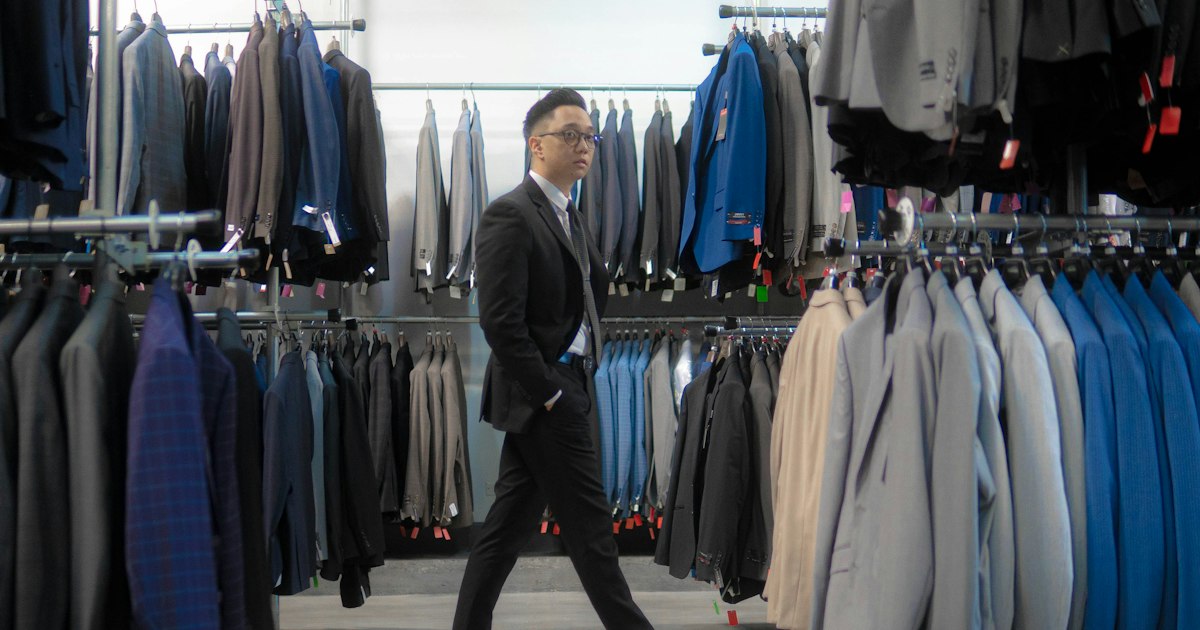
Photo by Luigi Estuye, LUCREATIVE® on Unsplash
If you’ve spent any time near a Japanese train station or suburban shopping center, you’ve probably noticed the dark storefronts with rows of near-identical suits lined up in the window: AOKI (アオキ) and Aoyama (洋服の青山, “Yōfuku no Aoyama”). These two chains, along with rivals Konaka and Haruyama, are the backbone of Japan’s budget business-wear industry — the places where salarymen, new graduates, and job-hunting students outfit themselves for the working world. For travelers, they’re also an underrated source of cheap, well-made dress shirts, ties, and even full suits, often at a fraction of what equivalent items cost back home.
AOKI vs. Aoyama: What’s the Difference?
Functionally, the two chains are nearly interchangeable, and that’s by design — both grew out of the same postwar boom in ready-made business suits and compete head-on for the same customer. AOKI is run by AOKI Holdings, which also owns the slimmer-cut, slightly pricier “Suit Select” brand. Aoyama Shoji operates under the simpler “Aoyama” name and is generally considered the larger of the two by store count, with locations in nearly every prefecture. Both sell men’s and women’s suits, dress shirts, ties, belts, bags, and formal shoes, and both run nearly identical seasonal sales calendars. If you’re just passing through, don’t waste time comparing the two — walk into whichever one is closer and the selection will be similar.
What’s Actually Worth Buying
The headline draw is the entry-level suit pricing. Basic two-piece suits regularly start around ¥9,900–¥19,900, and both chains run frequent “second suit half price” or “two suits for ¥19,900” campaigns that make a second work suit almost an impulse buy. These aren’t luxury fabrics, but for a standard polyester-wool blend business suit meant for office wear, the quality-to-price ratio is hard to beat anywhere else in the world.
Beyond suits, the better tourist value is often in the smaller items:
- Dress shirts — frequently ¥1,900–¥3,900, including non-iron and stretch-fabric options rarely found this cheap elsewhere.
- Ties — typically ¥1,500–¥2,900, with silk options a bit higher.
- Business bags and briefcases — functional nylon or faux-leather totes from roughly ¥5,000–¥12,000.
- Belts and formal shoes — budget leather shoes often sit around ¥6,000–¥10,000.
For a splurge option, both chains’ made-to-order (“order suit”) lines let you pick fabric and fit details for roughly ¥30,000–¥60,000, but these typically take two to four weeks to complete — not practical unless you’re based in Japan long-term, for example on a working holiday visa and need office-ready clothing for an extended stay.
Sizing, Alterations & Fit for Foreign Builds
This is where visitors most often run into trouble. Japanese ready-to-wear suits are sized by a letter-and-number combination (like “A5” or “BB4”) that encodes chest size and height category, calibrated to the average Japanese male frame. Taller, broader-shouldered, or larger-build shoppers will frequently find the largest in-stock size still runs tight through the shoulders and chest, even if the jacket length seems right. Try before you commit — don’t assume your home-country size converts cleanly.
On the upside, both chains offer in-house alterations (sum-up: すそ上げ) at the register, and hemming trousers is often free or a few hundred yen, usually ready within 30–60 minutes for simple adjustments, or same day for most requests. Jacket resizing (shoulders, sleeves) takes longer and may not be offered same-day at every branch, so ask before you buy if you need it quickly.
Tax-Free Shopping and Practical Tips
Larger AOKI and Aoyama branches — particularly flagship stores in big cities — participate in Japan’s tax-free program for tourists, typically requiring a same-day, same-store purchase over ¥5,000 and your passport at checkout. Smaller suburban branches may not have tax-free counters staffed, so if this matters to you, call ahead or stick to bigger locations. Staff at roadside branches rarely speak much English, but sizing and basic transactions are straightforward with pointing and a phone translation app.
Where to Find Stores & Best Timing to Shop
Both chains favor the same suburban, roadside retail format as many of Japan’s big-box stores — you’ll often spot an AOKI or Aoyama near a large AEON Mall or along the same arterial roads as electronics chains like Yamada Denki and Edion, with ample free parking. There are also smaller-format stores near major train stations in central Tokyo and other big cities. Typical hours run from around 10:00 to 20:00, seven days a week, with no fixed closing day at most locations — check Google Maps for the specific branch, since hours vary by store size.
Timing your visit matters. The best discounts cluster around three windows: the New Year “hatsuuri” sales in early January, the pre-spring rush from late February through March (ahead of Japan’s April fiscal/school year start, when new graduates buy “recruit suits” for job hunting and incoming employees need their first business wardrobe), and end-of-season clearance in July–August and December. Shopping during the March rush means huge selection but also the most crowded fitting rooms and alteration counters.
Common Mistakes to Avoid
The biggest misstep is assuming off-the-rack sizing will fit without trying it on — Japanese suit cuts run narrower in the shoulder than most Western ready-to-wear. Second, don’t expect same-day jacket alterations at every branch; call ahead if you’re on a tight schedule. Third, if you’re buying a suit to wear home rather than ship, remember it adds bulk and weight to checked luggage — worth checking your airline’s allowance via our guide to excess baggage fees on ANA and JAL before you go on a shopping spree. Finally, don’t overlook the small accessories — shirts, ties, and bags are often the better tourist buy than the suit itself, since they need no alteration and pack flat.