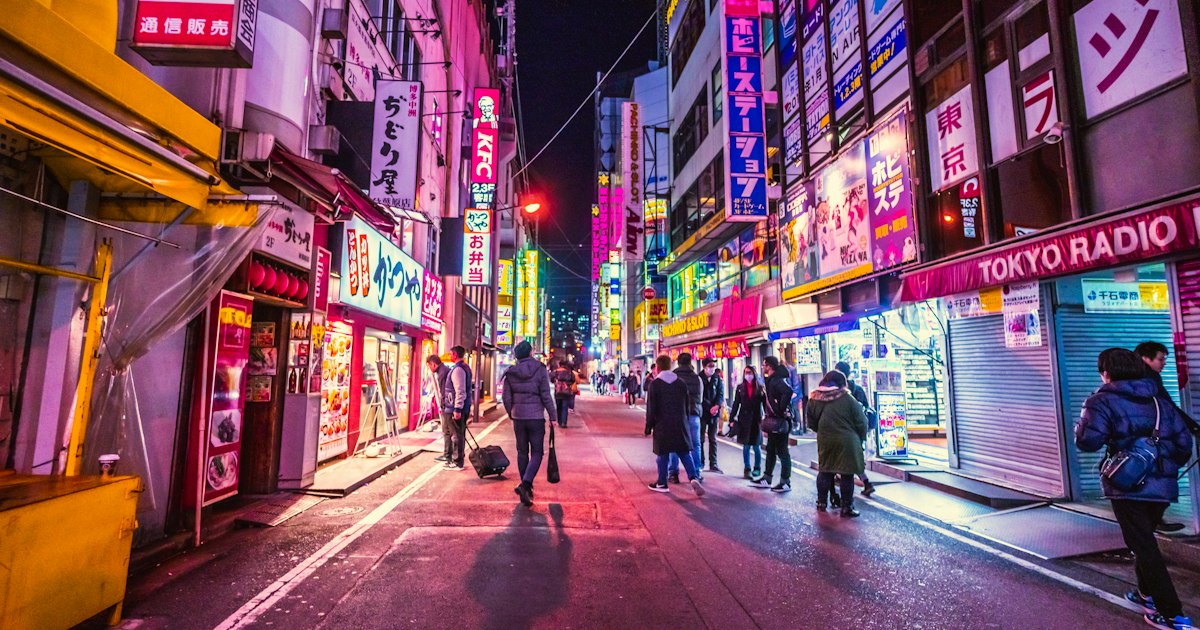
Photo by Jezael Melgoza on Unsplash
Tucked just one stop north of Shinjuku on the JR Yamanote Line, Shin-Okubo is where Tokyo goes for Korean food, K-pop merchandise, and Korean skincare — often all in the same afternoon. Since the early 2000s, the neighborhood’s main drag (Shin-Okubo-dori, nicknamed Koreatown or K-Town) has filled with cheese dakgalbi restaurants, photocard shops, and beauty stores stacked three stories high. It’s compact, walkable, and — unlike a lot of Tokyo’s bigger shopping districts — can be fully explored in two or three hours.
Getting There
Shin-Okubo Station (JR Yamanote Line) puts you right at the top of the main street as soon as you exit. If you’re coming from the Shinjuku side, Okubo Station on the Seibu-Shinjuku Line and Shin-Okubo on the Toei Oedo Line’s nearby Higashi-Shinjuku exit are both within a 10-minute walk. From central Tokyo stations like Tokyo or Shibuya, budget 20-30 minutes door to door. Because it’s one stop from Shinjuku, it’s easy to tack onto a day that starts or ends in that area — many visitors walk the 15-20 minutes between Shin-Okubo and Shinjuku Station instead of riding, since it cuts straight past Kabukicho.
K-Pop Shopping: What to Expect
The main street and its side alleys are dense with shops selling albums, photocards, light sticks, and trading-card accessories for both current and older K-pop groups. Multi-floor stores are common — ground floor for new releases and merchandise, upper floors for photocards, used albums, and fan goods sorted by group. Expect to pay roughly 2,000-4,000 yen for a new album with photobook, and anywhere from a few hundred yen to several thousand for individual photocards depending on rarity and demand. Several shops specialize in “random” photocard draws from sealed packs, which is a fun but non-refundable gamble — if you want a specific member or card, look for shops that sell singles by name instead.
Most shops open around 11:00 and stay open until 21:00 or 22:00, with some later on weekends. Weekday mornings and early afternoons are noticeably calmer; Saturday afternoons and evenings, especially after a group’s new release, can mean shoulder-to-shoulder crowds on a street that’s only about four meters wide. If you’re shopping for a specific artist’s new merchandise, arriving on a weekday within the first week of release still gives decent stock without the weekend crush.
Korean BBQ and Street Food
Korean BBQ (yakiniku-style, but with Korean marinades and banchan side dishes) is everywhere, with all-you-can-eat courses typically running 2,980-4,500 yen per person for 90-120 minutes, and à la carte galbi or samgyeopsal plates from around 1,000-1,800 yen. Cheese dakgalbi — stir-fried chicken and vegetables in gochujang sauce, topped with melted mozzarella — is the dish most associated with the neighborhood, usually priced 1,500-2,200 yen per person with a two-person minimum order at most places.
For something quicker, the street-food stalls and small counters sell Korean fried chicken (from about 500 yen for a small portion), tteokbokki, hotteok (sweet filled pancakes, around 300-500 yen), and bingsu shaved ice in summer. Lines form fast at the most popular stalls on weekends, so if a particular shop has a crowd of five or more outside, it’s often worth circling back on your way out rather than waiting it out immediately.
Korean Beauty Shopping
Korean skincare and cosmetics stores sit alongside the K-pop shops, often carrying brands that are harder to find — or pricier — outside Korea: sheet masks, cushion foundations, and the glass-skin serums and essences that drove the whole K-beauty wave. Prices are generally comparable to or slightly above Korean retail but still often cheaper than importing. Many shops offer tester products and English-speaking or English-signage help, since the clientele is heavily international. If you’re comparing against Japanese domestic beauty and personal-care staples — which lean more toward sensitive-skin, fragrance-light formulas — it’s worth knowing how the two countries’ approaches to things like deodorants and antiperspirants diverge, since Japanese formulas are generally milder and marketed differently than what’s standard in Korea or the West.
Shin-Okubo isn’t the only specialty shopping stop worth working into a Tokyo itinerary — if loungewear and comfort basics are also on your list, Gelato Pique’s flagship and department store counters are a similarly concentrated, easy-to-plan-around shopping detour elsewhere in the city.
Budget, Mid-Range, and Splurge Options
- Budget: Street food stalls (500-1,000 yen per item), a shared order of tteokbokki, and browsing photocard shops without buying the sealed random packs.
- Mid-range: A sit-down cheese dakgalbi or galbi meal (1,500-3,000 yen per person) plus one or two K-beauty items or a single album.
- Splurge: All-you-can-eat Korean BBQ with premium cuts (4,000-6,000+ yen per person), paired with a shopping run for a full K-pop merchandise set — light stick, album, and photobook can easily add up to 10,000-15,000 yen for a dedicated fan.
Best Time to Visit and Common Mistakes
Weekday late mornings (around 11:00-13:00) offer the calmest browsing and shortest food lines. Avoid Saturday from early afternoon through evening unless you don’t mind crowds — it’s genuinely one of the busiest single streets in Tokyo at that time. The most common mistakes visitors make: assuming every restaurant takes walk-ins without a wait (popular cheese dakgalbi spots often have a queue by lunchtime on weekends), buying sealed “random” photocards expecting a specific result, and not checking that a restaurant’s BBQ course has a minimum order size (often two people) before sitting down solo.
Because the neighborhood borders Kabukicho, it’s also worth knowing what you’re walking past after dark. Kabukicho has a dense cluster of hostess and host clubs that aggressively tout for customers on the street — our guide to Tokyo’s hostess bar districts and why tourists should steer clear explains how those touts operate and the surprise-bill scams that can follow, which is useful context if you’re walking between Shin-Okubo and Shinjuku Station after your shopping trip.
Practical Tips
Bring cash as a backup — many smaller specialty shops and food stalls are card-friendly but not all accept IC transit cards (Suica/Pasmo) the way convenience stores do. Shop bags get heavy fast if you’re buying cosmetics and albums in the same trip, so consider making beauty shopping and food/merchandise shopping two separate passes if you’re also carrying luggage. Finally, if you’re after a specific K-pop group’s merchandise for a concert or anniversary, call ahead or check a shop’s social media, since restocks and event-tied releases move quickly and inventory varies store to store even on the same block.