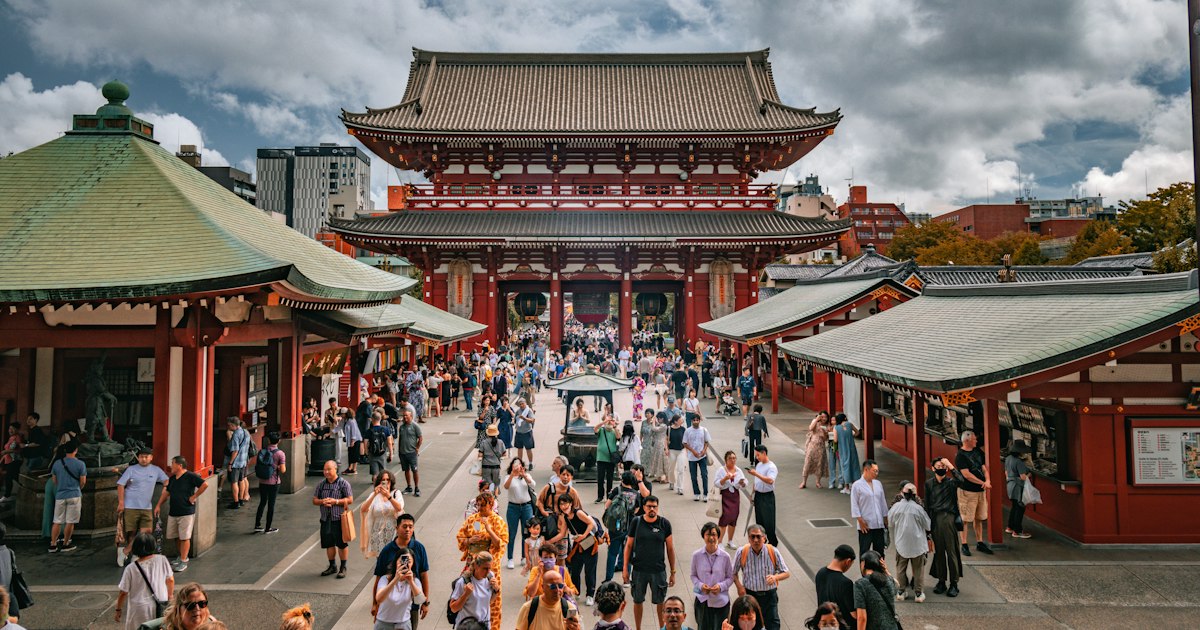
Tucked on a quiet hill a short walk from Akihabara’s blinking signage, Kanda Myojin looks at first glance like any other vermillion-and-gold Shinto shrine in central Tokyo. Look closer and you’ll notice something odd for a 1,300-year-old institution: a gift shop selling amulets for computer servers, a steady trickle of IT workers in company lanyards bowing at the main hall, and anime fans photographing a gate that appears in a popular idol series. Kanda Myojin has quietly become Tokyo’s unofficial shrine for the tech industry, and it’s one of the easiest worthwhile detours you can make if you’re already spending a day in Akihabara.
A Shrine That Adopted the Digital Age
Kanda Myojin (officially Kanda Jinja) was founded in 730 AD, making it older than Tokyo itself. It enshrines three deities: Daikokuten (good harvests and matrimony), Ebisu (business prosperity), and Taira no Masakado, a 10th-century warrior who was deified and became a guardian spirit for the city. For centuries the shrine protected 108 neighborhoods of old Edo, including the area that eventually became Akihabara’s electronics and otaku culture district.
That geographic accident is the whole story. As Akihabara shifted from postwar radio parts to PCs, servers, and anime goods, local shop owners and engineers kept coming to their neighborhood shrine for blessings — just for new kinds of businesses. The shrine responded by formally offering an “IT Information Safety” omamori (情報安全御守), explicitly blessing computers, data, and networks against crashes and breaches. It sounds like a novelty, but Japanese companies genuinely buy these for server rooms, and individual visitors pick them up half as a joke, half sincerely, before a big product launch or exam season.
What You’ll Actually See
The approach through the Zuishinmon gate — a 1975 concrete rebuild of the original Edo-period structure, painted in bright vermillion with ornate carved beams — is the shrine’s most photogenic spot. Inside the main courtyard stands a striking 6.6-meter bronze statue of Daikokuten, one of the largest in Japan, along with the main hall (honden) where most visitors stop to pray. Behind the main hall is a smaller shrine office and the EDOCCO cultural complex, which houses a café and a well-stocked omamori and souvenir shop — this is where the IT amulets, along with more traditional good-luck charms for business, romance, and traffic safety, are sold.
Fans of the anime franchise Love Live! will also recognize the shrine — it served as the real-world basis for a fictional shrine in the series, and it’s a minor pilgrimage stop for that fandom, with dedicated anime-collaboration goods sold seasonally.
Getting There From Akihabara
Kanda Myojin sits at 2-16-2 Sotokanda, Chiyoda-ku, about a 7-10 minute walk north from Akihabara Station’s Electric Town exit — just keep heading uphill away from the main electronics strip. If you’re coming by train directly, JR Ochanomizu Station (Chuo-Sobu Line) is closer, about a 5-minute walk, as is Tokyo Metro’s Shin-Ochanomizu Station on the Chiyoda Line. Train enthusiasts should know Ochanomizu is a decent spot to watch Chuo Line traffic pass below the station — worth a glance if you’re the kind of traveler drawn to Japan’s trainspotting subculture.
The shrine grounds are open 24 hours and entry is free. The shrine office and omamori shop, however, keep standard hours — generally 9:00 am to 5:00 pm daily — so plan your souvenir shopping within that window rather than a late-night visit.
Best Time to Visit
Any season works for a quick visit, since the shrine is compact and mostly outdoors. Weekday mornings are calmest, before Akihabara’s crowds build up. The one date worth planning around is the Kanda Matsuri, one of Edo’s three great festivals (alongside the Sanno and Fukagawa festivals). It’s held in mid-May in odd-numbered years — meaning the next full-scale festival falls in 2027 — and features a grand procession of around 300 people and dozens of mikoshi (portable shrines) winding through the neighborhoods the shrine protects. In off years, a scaled-down version still happens, but the big parade is worth timing a trip around if your visit happens to line up.
What to Buy and What It Costs
Budget: a standard omamori runs 800-1,000 yen, and the goshuin (shrine stamp) for your collection book costs 500 yen. These make genuinely practical, low-cost souvenirs that beat most mass-produced Akihabara merchandise for authenticity.
Mid-range: the IT Information Safety omamori is the signature purchase, typically priced similarly to other charms (around 1,000 yen), and makes a far better gift for a programmer or gamer friend than another keychain. The shop also sells business-prosperity and traffic-safety charms if you want something more universally useful.
Splurge: companies and individuals can request a formal kigansai blessing ceremony — a short norito prayer performed by a priest for things like new product launches, website go-lives, or business openings. Fees for these formal prayers generally start in the several-thousand-yen range and require advance arrangement through the shrine office; this is a niche option but a memorable one if you’re launching something in Japan.
Common Mistakes to Avoid
Don’t rush through on the way to Akihabara’s shops and skip the shrine office entirely — the IT omamori is the whole reason to detour here, and it’s only sold during office hours, not around the clock. Don’t assume the shrine will be empty; on weekends and especially during New Year’s hatsumode (the first shrine visit of the year), it gets genuinely crowded with both tourists and locals seeking business luck for the year ahead. And don’t photograph the main hall’s interior or priests performing ceremonies up close — standard shrine etiquette (quiet voices, no flash near worshippers, a small bow before approaching) applies here just as it would anywhere else.
If you’re building out a full Akihabara day, Kanda Myojin pairs naturally with electronics and character-goods shopping — it’s an easy add-on before or after browsing for things like Suica Penguin and other IC card mascot merchandise, much of which is sold in shops a short walk from the shrine. And if the idea of a luck-based calendar shaping big decisions intrigues you, it’s worth knowing that many visitors here also consult Japan’s six-day luck calendar before choosing an auspicious date for a shrine visit, product launch, or wedding — the same cultural logic that makes blessing a server rack feel perfectly normal in Tokyo.