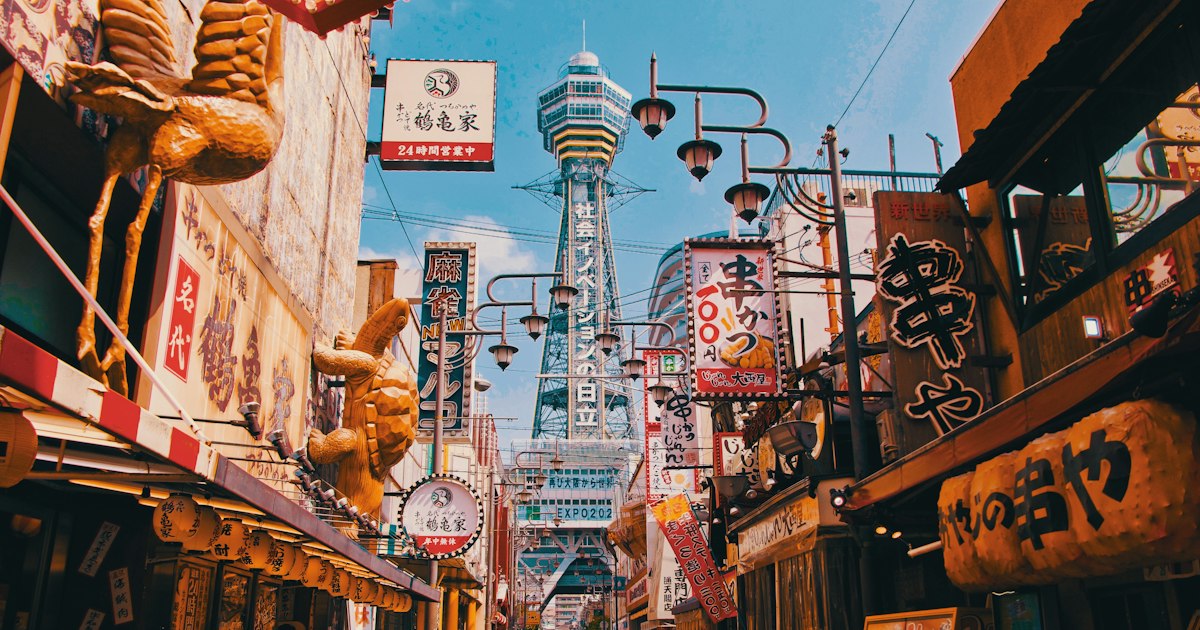
Photo by Nomadic Julien on Unsplash
Long before craft soda and matcha lattes took over Japan’s drink menus, there was hiyashi ame (冷やし飴) — a sweet, ginger-spiked malt drink served ice cold from glass bottles at sento bathhouses, summer festival stalls, and the kind of Osaka shokudo that still has a hand-written menu taped to the wall. It’s not famous outside Japan, and even inside Japan it’s slipping out of everyday life, which is exactly why it’s worth seeking out. Here’s what it actually is, where it survives in Osaka, and how to drink it like a regular rather than a confused tourist.
What Hiyashi Ame Actually Is
Hiyashi ame is made from mugi ame (barley malt syrup) or amazake-style fermented rice, thinned with water, sweetened, and spiked with grated or powdered ginger, then served chilled over ice. The name is literally “chilled ame (malt syrup).” It’s non-alcoholic — a common first mistake is assuming it’s a cousin of amazake sold at New Year’s shrine stalls, which is sometimes alcoholic and usually served hot. Hiyashi ame is the opposite: always cold, always sold as a summer drink, and closer in spirit to a ginger beer or a mild barley tea with sweetness and spice layered on top. The texture is thin and smooth, not syrupy, and the ginger hit ranges from barely-there to genuinely sharp depending on who’s making it.
Why It’s an Osaka Thing
Hiyashi ame belongs to the same Showa-era (1926–1989) drink culture as fruit milk and coffee milk — the small glass bottles with foil caps that used to wait in a cooler for bathers walking out of a sento. Osaka in particular held onto this drink longer than Tokyo did, partly because the city’s old shotengai (covered shopping streets) and public bathhouses never fully modernized their drink coolers, and partly because Osakans have a well-documented soft spot for nostalgic, unglamorous food. You’ll see it described on menus as a “natsu no teiban” (summer standard) rather than anything trendy — it’s comfort, not novelty, for the people drinking it.
Where to Try It in Osaka
You won’t find hiyashi ame at convenience stores reliably, so the hunt is part of the experience.
- Shinsekai / Janjan Yokocho — This retro district under Tsutenkaku Tower is the single best bet. Old-fashioned shokudo and standing bars along Janjan Yokocho arcade often keep hiyashi ame or amazake behind the counter in summer, alongside kushikatsu and beer. Get here via Dobutsuen-mae Station (Osaka Metro Midosuji or Sakaisuji Line) or Shin-Imamiya Station (JR Osaka Loop Line) — both are a 3-5 minute walk. Most shokudo here open around 11:00 and keep going into the evening; expect ¥400-600 for a cold glass if a shop has it.
- Sento (public bathhouses) — Osaka’s regulated public bath entry fee runs roughly ¥600-700 for adults, and the drink coolers by the exit are where hiyashi ame has traditionally lived. Not every sento stocks it today — ask “hiyashi ame, arimasu ka?” (do you have hiyashi ame?) at the front desk before assuming. A bottle typically runs ¥150-250 on top of the bath fee.
- Tenjinbashi-suji Shopping Street — Japan’s longest covered shopping arcade (about 2.6 km), reachable from Minami-Morimachi or Tenjinbashisuji-Rokuchome Station. Among its hundreds of shops are a handful of old-school confectioners and drink stalls that sell bottled or cup versions, especially in the stretch nearer Osaka Tenmangu Shrine.
- Supermarkets and drugstores — Chains like Life and Izumiya in the Kansai region sometimes stock small glass or PET bottles labeled 冷やし飴 in the soft drink aisle, usually ¥150-300. This is the easiest option if you just want to taste it without hunting for a shop, though stock is seasonal and not guaranteed.
Best Season and Timing
Hiyashi ame is strictly a hot-weather drink in practice, even though nothing stops a shop from serving it year-round. Shops stock it from roughly June through September, and it’s most visible during Osaka’s big summer festival, Tenjin Matsuri, held every July 24-25 near Osaka Tenmangu Shrine — festival stalls selling cold drinks pop up along the Okawa riverbank for the fireworks and boat processions. If you’re visiting outside summer, don’t expect to find it easily; ask rather than assume a shop carries it, since many swap it off the menu once the heat breaks.
Budget, Mid-Range, and Splurge Ways to Try It
There isn’t really a luxury version of hiyashi ame — it’s a working-class, nostalgic drink by design — but the experience scales:
- Budget (¥150-300): A bottled version from a Kansai supermarket, drunk on a park bench. Fastest and cheapest way to taste it.
- Mid-range (¥400-600): A cold glass at a Shinsekai shokudo or Janjan Yokocho standing bar, usually alongside kushikatsu or oden, which is how most locals actually drink it.
- “Splurge” (bath fee + drink, ¥800-1000 total): Pair it with a proper sento visit — the full ritual of a hot soak followed by a cold bottle at the exit cooler is the most authentic version of the experience and costs barely more than a coffee shop drink back home.
Common Mistakes to Avoid
The biggest one is confusing hiyashi ame with alcoholic amazake or with ginger ale — it’s neither, and ordering it expecting a fizzy soda will be a letdown since it’s flat and thicker-bodied. Second, don’t expect every shokudo or sento to carry it; it’s a shrinking niche item, not a standard menu fixture, so always ask rather than assume. Third, timing matters — showing up in December hoping for a chilled ginger drink is like asking for iced coffee at a hot pot restaurant; it exists, but you’re fighting the season. Finally, if you buy a bottle to take home, drink it cold — warming it up changes the flavor balance and makes the ginger taste flat rather than bright.
Bringing the Flavor Home
If you can’t find a bottle to pack in your suitcase, mugi ame (barley malt syrup) is sold in Japanese grocery stores and some import shops abroad — mix a spoonful with cold water, a squeeze of fresh ginger juice, and a little sugar to taste, and you’ll get reasonably close to the real thing. It’s a nice low-effort souvenir recipe, in the same spirit as other regional Japanese sweets worth tracking down while you’re traveling, like Fukuoka’s hiyoko manju or the chestnut confections of Obuse in Nagano. And if you’re building out a broader “convenience food survival kit” for the trip, it’s worth also learning how to open a conbini onigiri without destroying it — a skill you’ll use far more often than ordering hiyashi ame, but one that rewards the same kind of attention to small, overlooked Japanese food culture.