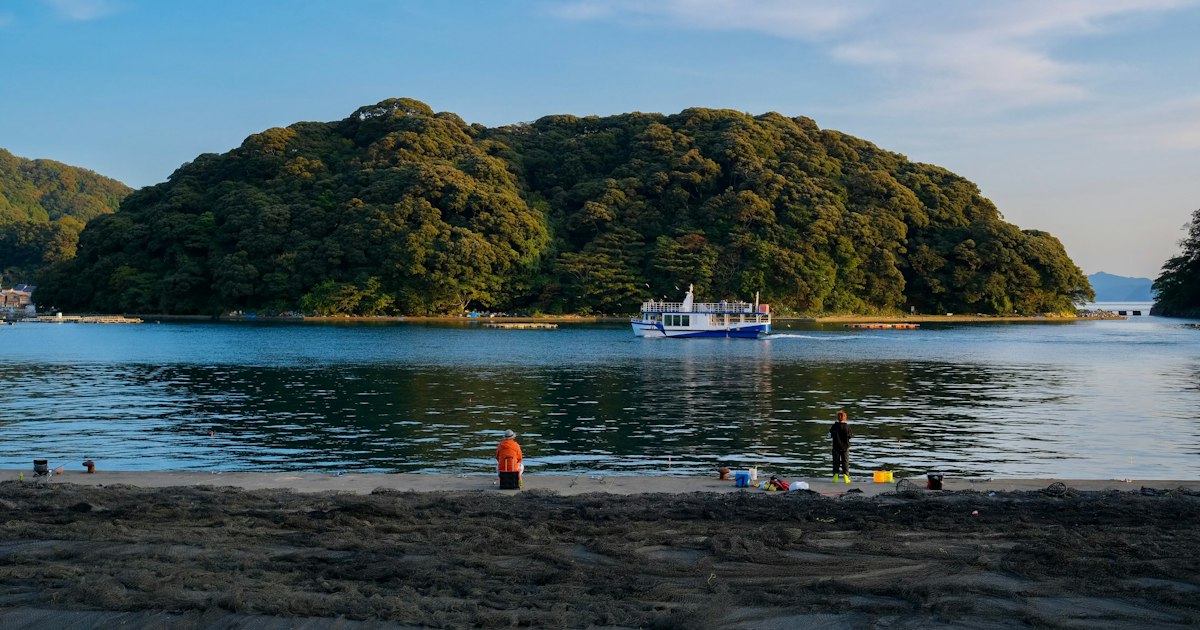
Photo by Yusheng Deng on Unsplash
South of Kyushu, strung out across open ocean between Yakushima and Amami Oshima, the Tokara Islands are about as far off the beaten path as Japan gets. There are no airports, no bridges, and no way to reach any of the seven inhabited islands except by a single village-run ferry that creeps down the chain once or twice a week. If you want a genuinely untouched slice of Japan — active volcanoes, masked festivals, turquoise water, and almost no other tourists — this is it. Here’s how the trip actually works.
Where Are the Tokara Islands?
Tokara (吐噶喇列島) is a chain of twelve small islands administered as a single municipality, Toshima Village (十島村), even though the village office itself is based in Kagoshima City on the mainland — there’s no “town hall island.” Seven islands are inhabited: Kuchinoshima, Nakanoshima, Tairajima, Suwanosejima, Akusekijima, Kodakarajima, and Takarajima, with total populations ranging from under 50 to around 200 people per island. Two more, Gajajima and Yokoatejima, are uninhabited but occasionally visited by researchers and lighthouse staff. The whole archipelago sits in the Satsunan island group, roughly between Yakushima to the north and Amami Oshima to the south, and it’s a very different experience from the better-known southern island hops you can reach from Nagasaki, like Iki Island or the sheltered bay cruises around Kujukushima — Tokara has no bridges, no regular tour boats, and nothing resembling a tourist infrastructure.
The Ferry Toshima: Your Only Way In
The only scheduled transport to Tokara is the Ferry Toshima (フェリーとしま2), a village-owned vessel that departs from Kagoshima’s South Pier (Minami-futo), a separate dock from the main Kagoshima Port terminal used by Yakushima and Amami ferries. The ship typically makes two round trips a week, working its way down the chain island by island before continuing to its final stop, Takarajima, and then reversing course on the way back. The full one-way run from Kagoshima to Takarajima takes around 12-13 hours overnight, while the nearer islands like Kuchinoshima or Nakanoshima are reached in roughly 4-7 hours. Because the boat calls at each island only briefly — sometimes just 15-20 minutes — and in many cases passengers and cargo are transferred by a smaller tender boat when there’s no proper pier, you need to be on deck and ready well before your island comes up.
Booking Tickets and Choosing a Cabin Class
There’s no English-language online booking system. Reservations are made by phone or fax directly with the Toshima Village ferry office in Kagoshima, and it’s strongly worth doing this at least a few weeks ahead, especially around festival dates (more below) when seats fill with returning residents. Fares are distance-based: expect roughly ¥3,000-4,000 one-way in 2nd class (open tatami floor) to the closer islands like Kuchinoshima or Nakanoshima, climbing to around ¥9,000-10,000 one-way for the full run to Takarajima or Kodakarajima. 1st-class cabins and a handful of private rooms cost more and are worth it for the overnight legs. Bring a Japanese speaker or a translation device if you’re calling to book — this is exactly the kind of situation a Pocketalk or similar translation gadget earns its keep, since the booking staff and island accommodation hosts generally don’t speak English.
Best Time to Go (and When to Avoid)
Late spring through early autumn (May-October) gives the calmest seas and the best swimming and snorkeling conditions, though typhoon season (roughly August-September) can cancel sailings with little notice — build slack into your itinerary, because a missed return ferry means waiting several days for the next one. Midsummer (July-August) is also when Akusekijima holds its Bōzesama festival, a masked ritual tied to the local lunar calendar that draws visitors and fills the ferry; if that’s your target, book months ahead. Winter sailings run but are rougher and colder, and some island guesthouses close seasonally, so confirm availability before you commit to dates.
What to Expect on Each Island
Each island has its own character but shares the same basic infrastructure: one or two minshuku (family-run guesthouses) with meals included, a small village shop with limited stock, and little to no public transport beyond what the guesthouse owner can arrange. Suwanosejima has an active volcano (Ontake) that vents almost continuously and has a small campsite popular with hardier travelers; Akusekijima is known for its Bōze masked festival and dramatic cliffside village; Kodakarajima has a sandy, swimmable lagoon that’s unusually calm for the chain; Takarajima — the southern terminus — has sea turtle nesting beaches and a reputation (likely more legend than fact) as a hideout for Edo-period pirate treasure, which is where its name (“treasure island”) comes from. None of the islands have convenience stores, ATMs, or hospitals beyond a basic clinic, so plan accordingly.
Money, Connectivity, and Common Mistakes
Bring all the cash you’ll need in yen before you leave Kagoshima — there are no ATMs on any Tokara island, and most minshuku expect cash payment for lodging and meals. If you haven’t sorted your yen, do it in Kagoshima city rather than hoping for a currency counter on arrival; see our guide to currency exchange in Japan for where rates are best before you head south. Mobile signal is patchy to nonexistent on several islands, so download offline maps and tell your accommodation your return ferry plans clearly, since schedule changes are announced locally rather than pushed to your phone. The single biggest mistake visitors make is treating this like a flexible island-hopping trip — with one ferry running a few times a week, you generally pick one or two islands per visit and build your whole trip around the sailing schedule, not the other way around.
Budget, Mid-Range, and Splurge Tips
Budget travelers can do a return trip to a near island like Nakanoshima for well under ¥10,000 in ferry fares plus roughly ¥6,000-8,000 per night for a minshuku with two meals included — there isn’t really a “cheap” option beyond that since lodging is essentially fixed-price full board everywhere. Mid-range travelers get the same experience just further down the chain, perhaps combining two islands in one trip if the ferry schedule allows a short stopover. The real splurge here isn’t luxury — it’s time: booking a full week so you’re not racing the ferry schedule, and arranging a private charter boat locally (through your minshuku host) to see sea caves or snorkeling spots the ferry never reaches. Whichever island you choose, pack snacks, a paper map, and patience; Tokara rewards travelers who come for the isolation itself, not for convenience.