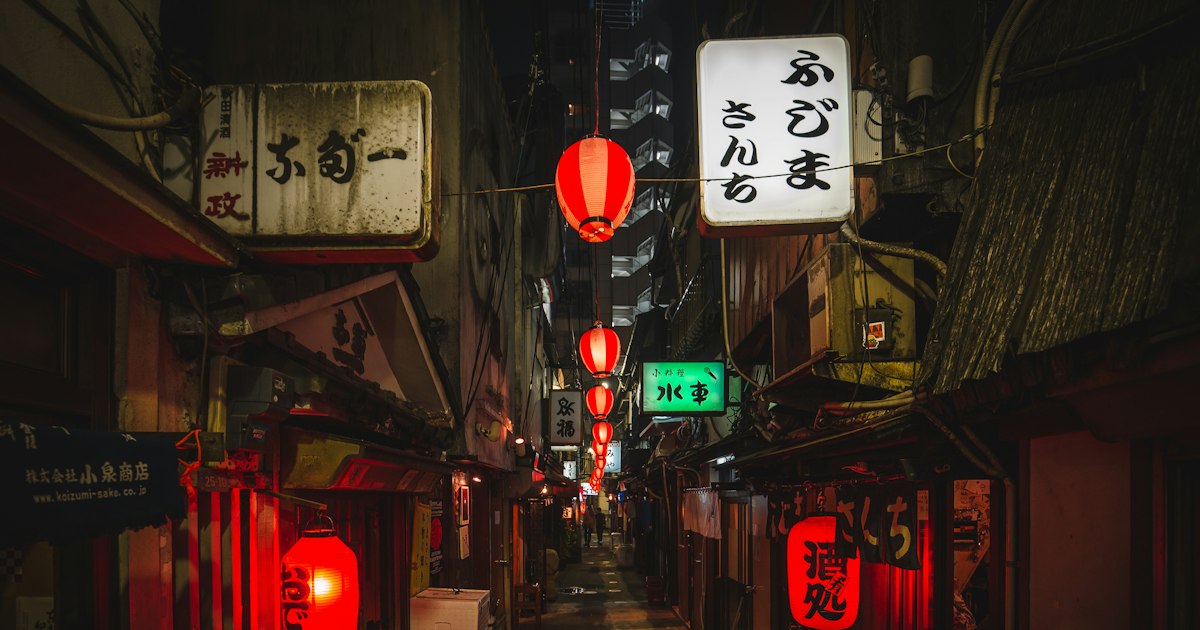
Photo by Denys Nevozhai on Unsplash
Walk into a Japanese izakaya for the first time and you’ll hit three small mysteries almost immediately: a dish you didn’t order shows up and gets charged anyway, the menu is a wall of unfamiliar small-plate names, and a server asks if you want “nomihodai” without much explanation. None of this is a scam or a tourist trap — it’s just how izakaya culture works, and once you know the rules, ordering becomes one of the easiest and most enjoyable parts of a Japan trip. Here’s how to read the menu, budget correctly, and drink like a local.
What an Izakaya Actually Is
An izakaya (居酒屋) is a casual Japanese pub-eatery built around small shared dishes and drinks, not a sit-down dinner with one main course per person. Think of it as the Japanese answer to tapas bars — you order several small plates over the course of the evening, refill drinks as you go, and the meal has no fixed start or end point. Most izakaya open around 17:00 and run until midnight or later, some until 2:00 or 5:00am in big entertainment districts like Shinjuku or Nakasu. Lunch-only or all-day izakaya exist but are less common; the format really comes alive after dark.
You’ll find everything from smoky yakitori counters seating eight people to multi-floor chains with picture menus and English translations. Chains like Torikizoku, Watami, and Tsukada Nojo are reliable for first-timers since they post prices clearly and often have tablet ordering. Independent, counter-style izakaya are more atmospheric but require more confidence reading a Japanese menu or pointing at what looks good.
The Otoshi Charge: Why You’re Billed for a Dish You Never Ordered
This is the single biggest point of confusion for visitors. Soon after you sit down, staff will bring a small dish — maybe simmered beans, a pickle plate, or a tiny salad — without you asking for it. This is otoshi (お通し), sometimes called tsukidashi in western Japan. It functions as a seating charge disguised as food, typically running ¥300–¥600 per person, and it is not optional. You cannot refuse it or send it back once it’s served (a few places will let you decline if you say so immediately when seated, but this is rare and awkward to negotiate in Japanese).
Think of otoshi the same way you’d think of a cover charge or table fee — it’s baked into how izakaya price their food (keeping other dishes cheaper) and compensates for low per-table spend from parties who only order drinks. It will appear on your bill automatically, usually unlabeled in English, so don’t assume you’ve been overcharged or scammed when you see an extra line item you don’t remember ordering. If a menu or storefront sign says “お通しなし” (otoshi nashi), that particular place skips the charge — worth knowing if you’re on a tight budget.
Reading the Otsumami Menu
Otsumami (お摘み) are the small snack dishes built for drinking — the izakaya equivalent of bar food, but far more varied. A typical order arc for two or three people looks like: one or two cold starters, a grilled item, a fried item, and something rice- or noodle-based to finish. Common categories to recognize:
- Yakitori (grilled skewers) — ¥130–¥250 per skewer; order 2-3 varieties per person
- Edamame — ¥300–¥400, the classic starter while you decide on everything else
- Sashimi moriawase (mixed sashimi platter) — ¥800–¥1,800 depending on quality
- Karaage (fried chicken) — ¥500–¥700, almost always a safe crowd-pleaser
- Agedashi tofu — ¥400–¥500, fried tofu in savory dashi broth
- Grilled or raw seafood specials — prices vary by season and catch
If you see squid on a coastal menu, it’s worth trying grilled whole — our guide to ikayaki, Japan’s grilled whole squid street food, covers what to expect from the dish if an izakaya near the water offers it. For something richer, salmon roe over rice (ikura donburi) occasionally appears as a late-order rice dish — see our breakdown of ikura and the best donburi to try it on if you spot it on the menu and want to know what you’re getting.
Order gradually rather than all at once — izakaya dining is paced, with 2-3 dishes arriving at a time so the table doesn’t get crowded or cold. Ordering everything upfront is the most common mistake foreign visitors make; staff genuinely expect you to keep ordering as the night goes on.
How Nomihodai (All-You-Can-Drink) Works
Nomihodai (飲み放題) is a fixed-price, time-limited all-you-can-drink deal, almost always sold as an add-on to a food course or as a standalone option at chain izakaya. Standard pricing runs roughly ¥1,500–¥2,500 per person for 90 minutes to 2 hours, with premium plans (including sake, shochu, or better beer) landing closer to ¥3,000–¬¥3,500. The clock usually starts when the order is placed, not when you sit down, and there’s typically a strict last-order cutoff 10-15 minutes before time runs out — staff will come by to remind you.
Nomihodai menus are usually separate from the regular drink menu and limited to specific items: draft beer, highball, a handful of sours, house sake, and soft drinks. Premium drinks, bottled craft beer, or aged sake usually aren’t included even on upgraded plans. Do the math before committing: if a beer averages ¥500-600 and a highball ¥450-500, you need to drink roughly 4-5 drinks in the window to break even on a ¥2,000 plan. For a couple having 2-3 drinks each over a relaxed dinner, paying à la carte is usually cheaper — nomihodai pays off for groups that drink steadily and fast, like a post-work gathering or a bachelor party crowd.
One practical note: if you’re on a nomihodai plan and this is a pre-shinkansen or late-train evening, pace yourself and watch the clock independent of the drink timer. Missing the last train home in Tokyo or Osaka is a common and avoidable mistake — our guide on how shuden (last train) times work explains what your options are if you cut it too close.
Budget, Mid-Range, and Splurge Nights Out
A realistic budget-night izakaya run — one chain-style spot, a few skewers, edamame, karaage, and 2-3 drinks each — lands around ¥2,500–¥3,500 per person including otoshi. Mid-range, with sashimi, a larger drink count, and a quieter independent izakaya, runs ¥4,000–¥6,000 per person. A splurge night at a higher-end izakaya specializing in seasonal seafood or wagyu skewers, with sake pairings, can run ¥8,000–¥15,000 per person — still social and casual in format, just with better ingredients and sake lists.
Cash remains useful at smaller, older izakaya even in 2026, though most urban chains now take IC cards and credit cards without issue. Tipping is not expected or practiced at izakaya — unlike the cash-envelope customs you might encounter at a ryokan (see kokorozuke, the ryokan tipping custom), izakaya pricing is all-inclusive and a service charge is never added separately.
Common Mistakes to Avoid
- Assuming otoshi is a mistake or a scam — it’s standard practice; raising it with staff as a complaint will just confuse them.
- Over-ordering at once — pace your dishes across the evening instead of ordering the whole menu in one go.
- Booking nomihodai without checking the drink list — ask to see the nomihodai-specific menu before committing; it’s usually more limited than you’d expect.
- Walking in during peak hours without a reservation — Friday and Saturday 19:00–21:00 is prime time in business districts; smaller independent izakaya (often under 15 seats) fill up fast and don’t always take same-day bookings for groups.
- Forgetting last-train timing — izakaya nights run long and the drinks keep flowing; set a phone alarm if you’re relying on trains to get home.
Once you know otoshi is non-negotiable, that otsumami ordering is meant to be gradual, and that nomihodai is a math problem rather than an automatic deal, izakaya hopping stops being confusing and becomes one of the most relaxed, affordable ways to eat well in Japan — whether that’s a quick post-sightseeing stop or the centerpiece of your evening.