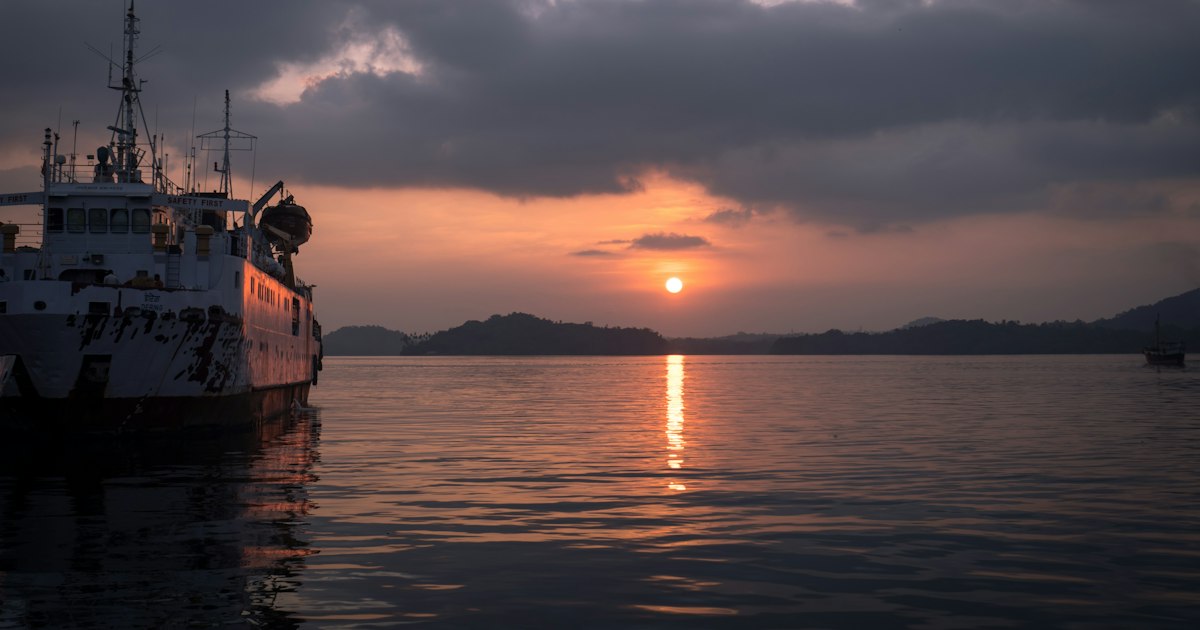
Photo by Nabil Naidu on Unsplash
Most visitors leaving Japan for China book a two-hour flight and never think twice. But a slower, stranger option still exists: a passenger-and-cargo ferry that crosses the East China Sea between Osaka or Kobe and Shanghai in roughly two nights. It’s not faster, and it’s rarely cheaper than a budget flight once you add up time — but for travelers hauling serious luggage, shipping a vehicle, or simply wanting the only way to watch Japan disappear over the horizon, it’s worth knowing about.
The Route at a Glance
The service alternates its Japanese departure port week to week: one sailing leaves from Osaka, the next from Kobe, both landing at Shanghai’s Waigaoqiao port. The crossing takes about 45 hours — roughly two full nights at sea — which is long enough that this is genuinely a “cruise” experience rather than a quick hop, even though the ships are working passenger-cargo vessels, not cruise liners. Sailings run about once a week, not daily, so this needs to be built into your itinerary well in advance rather than booked as a last-minute alternative to a cancelled flight.
Because frequency is low and schedules shift with fuel costs, dry-dock maintenance, and seasonal demand, always confirm the current timetable and fare directly with the operator (or a licensed travel agent in Osaka/Kobe/Shanghai) before building a trip around it — do not rely on an old printed schedule or a secondhand date.
Cabin Classes and What They Cost
Pricing is tiered by cabin class rather than a flat ticket, similar in spirit to an overnight domestic ferry but for an international crossing:
- Economy (shared multi-berth cabin): the budget option, roughly ¥20,000–¥25,000 one way. Bunks in a shared room, communal washrooms.
- Special/Japanese-style cabin: tatami-floored rooms shared with fewer passengers, generally in the ¥30,000–¥40,000 range.
- First class / suite: private Western-style cabins with en-suite facilities, typically ¥45,000–¥60,000 and up.
Treat these as ballpark figures — fuel surcharges and seasonal pricing move fares year to year, and the final price will include Japan’s consumption tax on the domestic portion of services purchased in Japan (see our guide to Japan’s consumption tax if the sticker price at the ticket counter doesn’t match what you expected to pay). Meals onboard are usually sold separately from the cabin fare, either à la carte or as set-price packages, so budget an extra few thousand yen per day for food unless you bring your own.
Getting to the Terminal
In Osaka, the ferry departs from the Nanko international ferry terminal in the bay area, reachable via the New Tram (Nanko Port Town Line) to Cosmosquare Station and then a connecting shuttle bus, since the terminal isn’t walkable from the nearest rail stop. In Kobe, the terminal sits in the port area accessible by bus from Sannomiya or Kobe Station. Both terminals are designed around check-in times that start a couple of hours before departure — arrive early, since cargo and passenger processing (plus Chinese customs paperwork started on the Japan side) takes longer than a typical domestic ferry check-in.
If you’re driving to the terminal rather than taking transit, note that Japanese ports generally don’t allow casual roadside waiting or free parking near the gates — you’ll want a proper paid lot. Our guide to coin parking lots and apps in Japan covers how to find and pay for legal parking near the terminal if you’re not taking public transport in.
If you’re staying overnight in Osaka or Kobe before an early departure, remember that Japanese hotels are required to copy your passport at check-in if you’re a foreign guest without a Japanese address — worth knowing in advance so it doesn’t slow you down the morning of a tight ferry connection. See our guide to hotel check-in rules for foreign guests for what to have ready.
Life Onboard for Two Nights
These ships are built for a mixed load of passengers and freight, so don’t expect cruise-ship entertainment. Amenities are modest: a dining hall, a shop selling snacks and basic goods, sometimes a small lounge or karaoke room, and deck space for watching the sea. Wi-Fi, if offered at all, is typically weak to nonexistent once you’re a few hours out from either coast — plan to be offline. Bring your own entertainment, snacks beyond what’s sold onboard, and anything you’d need for seasickness, since the East China Sea crossing can get choppy, especially outside the calmer months.
Best Season and Timing
Spring and autumn generally offer the calmest seas and most comfortable temperatures on deck. Summer brings the risk of typhoons moving through the same waters the ferry crosses, which can delay or cancel sailings with little notice — if you’re traveling June through October, build in slack time on both ends of the trip and don’t schedule a flight connection for the same day you’re due to land. Winter crossings are workable but colder and windier on deck, and the sea can be rougher.
Common Mistakes to Avoid
- Assuming daily departures. This isn’t a shuttle — sailings are weekly and alternate ports, so the wrong week means a long wait for the next one.
- Booking a same-day onward flight from Shanghai. Arrival times can shift with weather or port congestion; leave a buffer day.
- Not checking China visa requirements in advance. Unlike a flight where an airline may flag an issue at check-in, ferry operators expect your documentation sorted before you book — don’t assume visa-free transit rules that apply to airports automatically apply to a sea port.
- Underestimating the lack of connectivity. Two nights with little to no internet surprises travelers who assumed a “ferry” would be like a short domestic hop.
Who This Route Actually Suits
This isn’t the choice for someone optimizing for speed or price against a budget flight. It makes sense for travelers moving a car or motorcycle between Japan and China, people with cargo-level luggage (bulk purchases, business goods, a houseful of belongings during a relocation), or anyone who simply wants the experience of a slow sea crossing between two countries instead of a cramped economy cabin in the sky. If you’re drawn to international ferries as travel rather than just transport, it’s worth comparing this crossing with Japan’s other international sea route, the Fukuoka–Busan ferry to South Korea, which is shorter, far more frequent, and a gentler introduction to the idea before committing two nights to the Shanghai run.