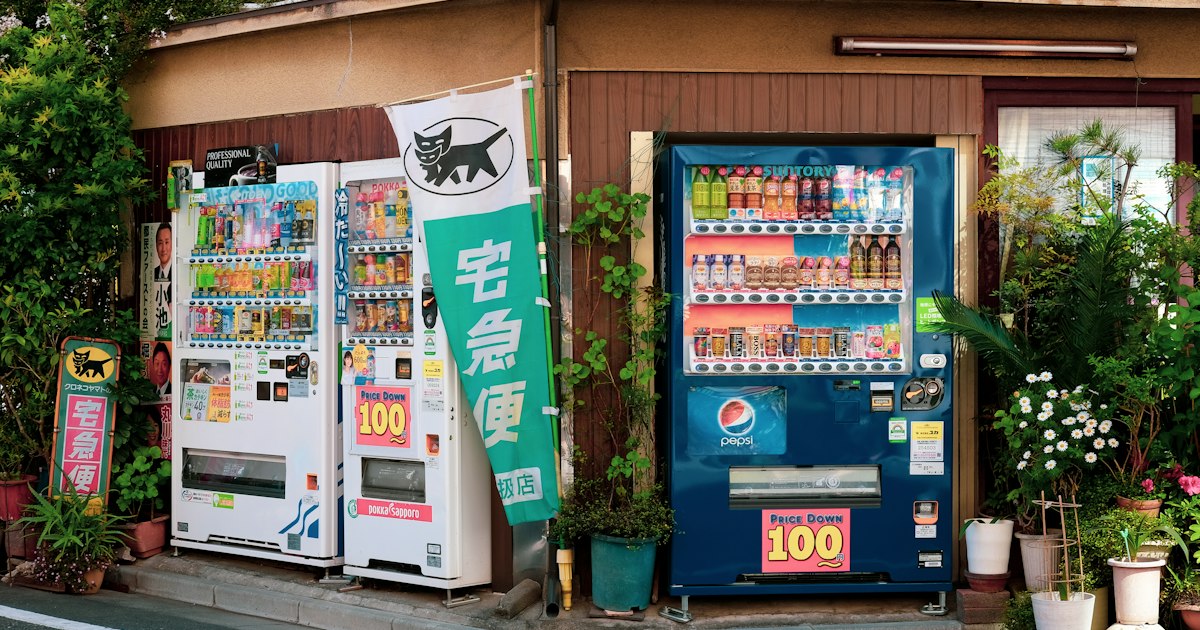
Photo by Mylène Larnaud on Unsplash
Walk into any 7-Eleven, Lawson, or FamilyMart in Japan and you’ll find an entire refrigerated wall dedicated to tea — and a surprising chunk of it isn’t green tea at all. It’s milk tea, usually labeled ロイヤルミルクティー (Royal Milk Tea) or ミルクティー (milk tea), sold in cans, PET bottles, and little cardboard cartons. For foreign visitors, it’s one of the easiest, cheapest, and most satisfying konbini discoveries — but the shelf is crowded, the Japanese-only labeling can be confusing, and not every “milk tea” is the rich, custardy drink you might be picturing. Here’s what to actually look for.
What Makes “Royal” Milk Tea Different
“Royal Milk Tea” isn’t a generic descriptor — it’s a specific brewing method popularized in Japan by Lipton in 1965. Instead of steeping tea in water and adding milk afterward (the way you’d make British-style tea), Royal Milk Tea is brewed by steeping black tea leaves directly in hot milk (or a milk-and-water mix), which pulls more tannins and color out of the leaves and produces a noticeably richer, creamier, slightly more astringent drink than standard milk tea. It’s sweeter and heavier than the milk tea you’d get at a Western cafe, closer in spirit to a chai without the spices.
This matters when you’re shopping, because “milk tea” (ミルクティー) and “Royal milk tea” (ロイヤルミルクティー) are often two different SKUs from the same brand, sitting next to each other. The Royal version is usually a little more expensive and a little more milk-forward; the plain milk tea version is lighter and less sweet.
The Konbini Shelf, Decoded: Brands to Look For
A few names show up at nearly every convenience store:
- Lipton Royal Milk Tea — the original and still the benchmark. Comes in a yellow-and-blue carton (around 280–500ml) and in cans, typically ¥130–¥170.
- Kirin Gogo no Kocha (午後の紅茶) — Kirin’s long-running “Afternoon Tea” line includes a Milk Tea variant that’s lighter and less sweet than Lipton’s Royal version, sold in 500ml PET bottles for roughly ¥150–¥160.
- Suntory and Pokka Sapporo both run their own milk tea lines, often slightly cheaper, closer to ¥120–¥150 for a can.
- Nittoh Kocha makes a well-regarded straight milk tea in a carton, popular for its smoother, less syrupy sweetness.
- Each konbini chain’s private-label line (7-Eleven’s 7 Premium, Lawson’s own brand) usually has a budget milk tea too, often the cheapest option on the shelf.
If you can’t read the packaging, look for the word 紅茶 (kocha, “black tea”) combined with ミルク (milk) — that combination almost always means milk tea rather than plain iced tea.
Hot or Cold? Reading the Season (and the Shelf)
Konbini fridges are split into clearly marked hot and cold sections, and milk tea is one of the few drinks sold meaningfully both ways. From roughly October through March, look for the heated shelf (often near the register, sometimes a separate small case) stocked with cans labeled あたたかい or ホット — hot canned milk tea is genuinely good and a nice way to warm up between sightseeing stops. In the warmer months, April through September, it’s all about the cold PET bottles and cartons, which you’ll find in the main beverage fridge. Vending machines follow the same hot/cold split and are everywhere — train platforms, near temples, outside convenience stores — so you’re never more than a few minutes from a drink regardless of season.
Budget, Mid-Range, and Splurge Picks
Budget (¥110–¥140): A small can of a konbini private-label or Suntory/Pokka Sapporo milk tea. Perfectly drinkable, best iced.
Mid-range (¥150–¥180): A 500ml bottle of Kirin Gogo no Kocha Milk Tea or a Lipton Royal Milk Tea carton — the sweet spot for flavor and volume, and what most visitors end up buying repeatedly.
Splurge (¥250–¥500): Skip the fridge and look for bottled milk tea sold at department store basement food halls (depachika) or specialty tea cafes, where brands make small-batch versions with higher-grade Assam or Ceylon leaves and less sugar. Some depachika food halls — the same kind of basement floor you’d find useful when hunting down other regional specialties — also sell gift-boxed tea bag sets of Royal Milk Tea blends for bringing home, which travel far better in a suitcase than liquid bottles.
Common Mistakes to Avoid
- Grabbing plain “kocha” thinking it’s milk tea. Unsweetened or lemon black tea (レモンティー) sits on the same shelf and looks similar at a glance — check for the ミルク (milk) label.
- Assuming hot and cold versions taste the same. Some brands formulate their hot and cold milk tea slightly differently (sweetness and milk ratio adjusted for temperature), so don’t be surprised if your favorite cold brand tastes a bit different hot.
- Ignoring the carton option. Cartons (like Lipton’s) are often the richest, most “Royal” version of a given brand, but travelers sometimes overlook them in favor of the more visible PET bottles.
- Expecting it unsweetened. Almost all bottled and canned Japanese milk tea is pre-sweetened — if you want something closer to unsweetened black tea with milk added yourself, you’ll need to make it at a hotel kettle with tea bags and a milk portion, not buy it bottled.
Where and When to Buy
You genuinely don’t need to plan around this — convenience stores in Japan are open 24 hours (a few rural locations trim overnight hours, but it’s rare) and milk tea is a permanent fixture, not a seasonal item, so there’s no wrong time to grab one. The only timing nuance is hot vs. cold stock, as above. If you’re staying somewhere without an in-room fridge, konbini runs are an easy substitute — something worth factoring in if you’re comparing accommodation on Rakuten Travel, Jalan, or Booking.com and picking a neighborhood. And if you’re the type who likes tracking down one distinctly local food or drink per region — the way travelers seek out something like the Sasebo burger in Nagasaki or a bowl of chirashizushi — milk tea brands can actually vary slightly by region, so it’s worth checking a konbini fridge in each new city rather than assuming it’s identical everywhere.
Total cost for a milk tea habit during a two-week trip: even at two bottles a day, you’re looking at roughly ¥2,000–¥4,000 total — a small, easy indulgence that ends up being one of the more memorable small pleasures of a Japan trip.