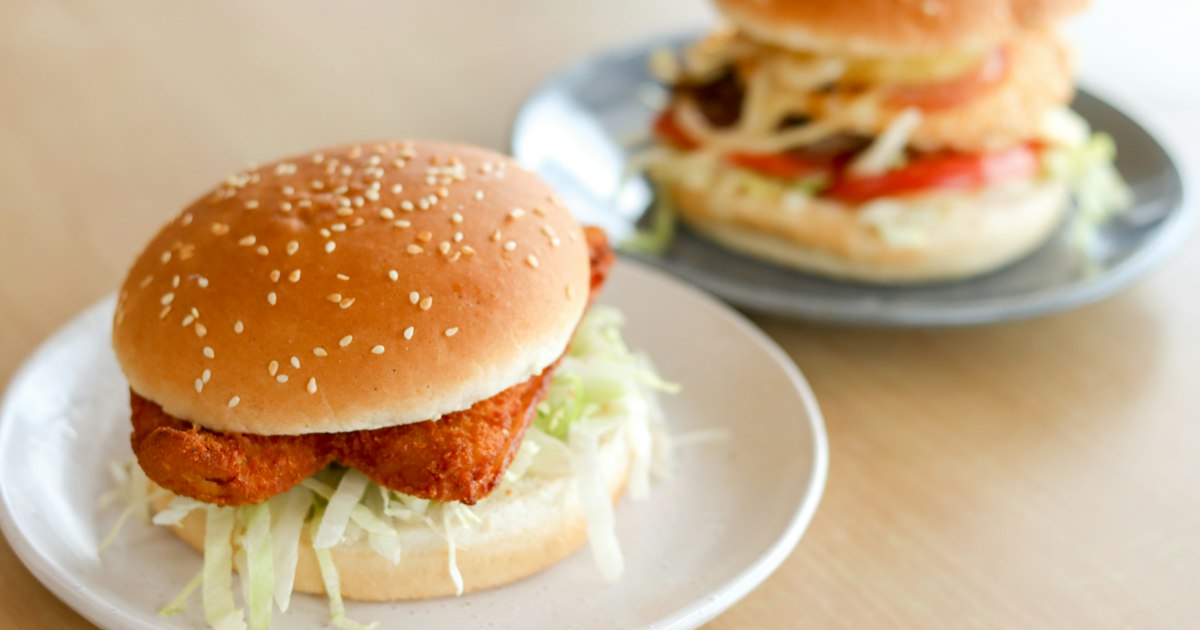
Photo by Joan Tran on Unsplash
If you only know Japanese fast food from McDonald’s or Yoshinoya, Mos Burger is worth the detour. Founded in 1972, it’s Japan’s homegrown burger chain — famous for swapping the bun for a disc of pressed rice, cooking everything to order, and quietly building a cult following among locals who think of it as “the good burger place.” For visitors, it’s also one of the easiest ways to get a hot, cheap, reliably good meal between sightseeing stops. Here’s what to order and how to navigate the counter without holding up the line.
What Makes Mos Burger Different From Other Fast Food
Two things set Mos Burger apart. First, the rice burger (raisu baagaa) — a patty or filling sandwiched between two lightly grilled rice cakes instead of bread, invented by the chain in 1987 and still its signature item. Second, the kitchen model: nothing is pre-made and sitting under a heat lamp. Your order is cooked after you pay, which means a slightly longer wait than a Big Mac but a noticeably fresher, hotter result. The chain also leans into seasonal and regional ingredients — think Hokkaido corn soup in autumn or sakura-themed desserts in spring — so the menu shifts throughout the year even though the core lineup stays put.
What to Order: The Core Menu and Prices
Prices vary slightly by region, but as a baseline (dine-in, 2026):
- Mos Rice Burger Yakiniku (焼肉ライスバーガー) — grilled beef and rice cakes, around ¥430-470. The classic entry point for first-timers.
- Teriyaki Chicken Burger — a bun version with a juicy teriyaki-glazed chicken thigh patty, around ¥450-500. Consistently ranked the most popular item on the menu.
- Mos Burger (original, with tomato sauce and meat sauce) — ¥380-430, the chain’s founding recipe from 1972.
- Mos Chicken — fried chicken on the bone, ¥220-250 a piece, good for sharing or adding to a set.
- Onion Rings / Mos Chips (hash-style potato) — ¥250-350, better than the standard fries in most visitors’ opinion.
- Hot Mos Coffee / Mos Shake — ¥200-350.
Order a “set” (setto) — burger, a side, and a drink — for ¥850-980 depending on the burger, which is roughly ¥100-150 cheaper than buying items separately. Budget travelers can eat well for under ¥600 by sticking to the original Mos Burger plus a drink; a splurge lunch with a seasonal limited burger, Mos Chicken, and a dessert pie runs ¥1,200-1,400.
How Ordering Works (and Why It’s Slower Than You’d Expect)
You order and pay at the counter first, then get a number card or buzzer, then wait — usually 4-8 minutes — for your tray to be brought to your table or called out. This trips up visitors used to fast food meaning instant food. Build the wait into your schedule if you’re on a tight sightseeing window; it’s not the place to grab a burger with five minutes until your train. Most urban branches have English-language touchscreen kiosks now, and even where there isn’t one, the menu boards use photos with prices, so pointing works fine. Staff rarely speak much English outside major tourist areas, but ordering by number or pointing at the photo menu is completely normal and expected.
Where to Find One, and the Best Time to Go
Mos Burger has over 1,300 locations across Japan, so you’ll find one near almost any train station, shopping street, or highway service area. Typical hours are 7:00 or 10:00 AM to 9:00 or 10:00 PM, though hours vary store by store — check the specific branch before planning around it, especially in smaller towns where some locations close earlier or take a midday break. Lunchtime (11:30 AM-1:30 PM) and dinner (6:00-7:30 PM) are the busiest windows near office areas and stations; mid-afternoon (2:00-4:30 PM) is quieter and the fastest time to get seated. If you’re doing a day trip and don’t want to carry shopping bags or a suitcase while you eat, it’s worth knowing what to do with your luggage first — see Luggage-Free Day Trips in Japan: Where to Stash Your Bags at the Station for station locker options before you sit down.
Mistakes First-Timers Make
- Expecting instant service. As above — this isn’t drive-thru-speed fast food. Plan a 10-15 minute stop, not a 5-minute grab-and-go.
- Skipping the rice burger because it sounds strange. It’s the thing to try here — the rice cakes are lightly grilled and hold together well; it’s not mushy or like eating a bowl of rice with your hands.
- Not checking for limited-time items. Mos Burger rotates regional and seasonal specials (a Hokkaido cheese item, a yuzu-flavored burger, etc.) that disappear within a few months — ask or check the in-store poster if you want to try something you can’t get at home.
- Assuming every branch is identical. Smaller suburban or roadside locations sometimes have a reduced menu and no English kiosk, while flagship stores in Tokyo and Osaka have the full lineup and more English support.
Vegetarian, Vegan, and Allergy Notes
Mos Burger sells a soy-based patty burger (Mos Veggie Burger) at many — not all — locations, which is one of the more reliable vegetarian fast-food options in Japan, though it may still be cooked on shared equipment. Fries and onion rings are generally vegetarian-friendly. There is no dedicated halal certification chain-wide, so if that matters to you, check ingredient lists via the in-store allergy chart (most locations post one near the counter, in Japanese) or the Mos Burger website’s allergen page before ordering. If strict dietary needs make counter ordering stressful, a home-cooking class is a good alternative way to eat safely and learn what’s in your food — see Booking a Japanese Cooking Class in a Local Home for how that works.
Pairing Mos Burger With the Rest of Your Food Itinerary
Mos Burger is a great low-cost, low-effort meal to slot between bigger food experiences rather than the centerpiece of a trip. If you’re stretching a food budget across a longer stay, it’s worth knowing about Japan’s other budget eating tricks, like the discount window on supermarket bento boxes — see Jikan Wari Biki: How to Shop Japan’s End-of-Day Supermarket Bento Discount Window for timing that right. And if you’re in Tokyo in the evening looking for something more atmospheric after a casual Mos Burger lunch, the bar-alley district comparison at Omoide Yokocho vs Golden Gai is a useful next stop for dinner and drinks.
Mos Burger won’t replace a proper sit-down meal, but as a reliable, inexpensive, genuinely tasty fast-food option — one that’s distinctly Japanese rather than an import — it earns a spot in most itineraries. Order the rice burger at least once; it’s the one thing you can’t easily get back home.