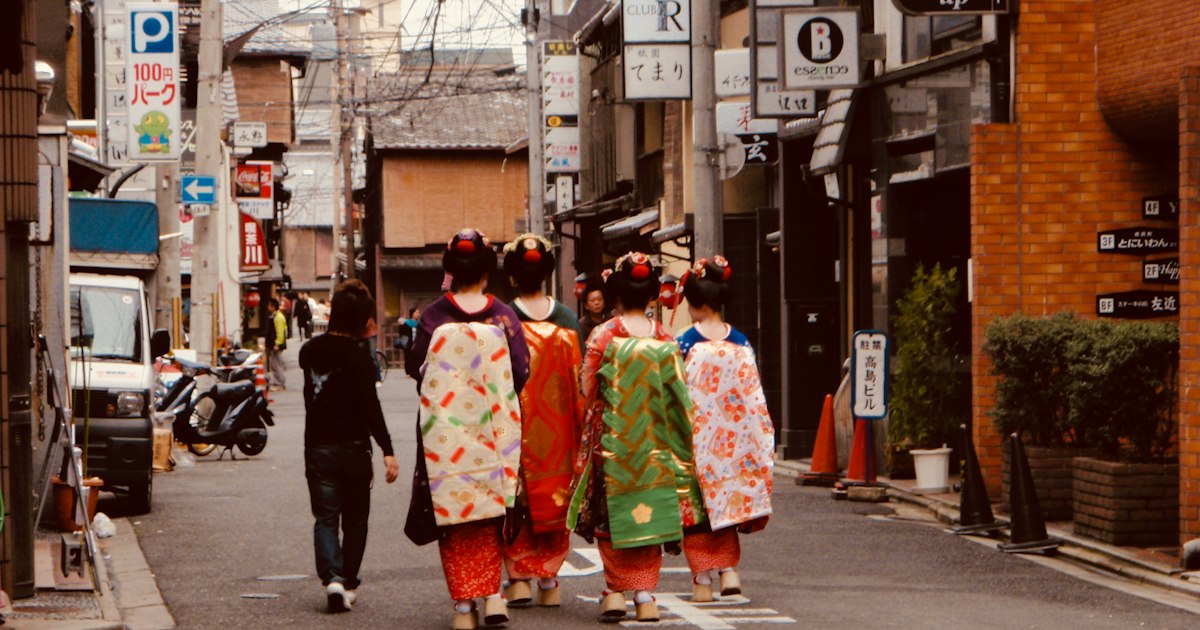
Photo by Kate Branch on Unsplash
Renting a kimono is one of the easiest souvenirs-that-isn’t-a-souvenir you can arrange in Japan — slip into a rental shop near a temple district in the morning, walk around in silk or polyester for a few hours, and hand everything back before dinner. But a growing number of shops, especially ones aimed at tourists in Kyoto, Asakusa, and Kanazawa, also offer multi-day plans where you keep the kimono overnight (or for several days) and return it by mail instead of walking it back to the counter. The two systems have different costs, different deadlines, and different ways to get them wrong. Here’s what actually happens with each.
Same-Day Plans: The Default, and the Deadline That Trips People Up
Most kimono rental shops operate on a same-day model: you arrive, get dressed (and usually have your hair done if you’ve paid for that add-on), spend the day sightseeing, and return by the shop’s closing time — typically 6:00 or 6:30 PM, sometimes as early as 5:00 PM in winter when daylight and shop hours both shrink. Standard plans run roughly ¥3,000–¥5,000 for women’s kimono with basic accessories, ¥4,000–¥6,000 with hair styling included, and ¥3,000–¥4,000 for men’s kimono, which have fewer layers and accessories to fit.
The deadline is the single most common source of stress. Shops need time to inspect, air out, and re-rack every piece before the next day’s customers, so returning at 6:45 for a 6:30 cutoff can mean a late fee (often a flat ¥1,000–¥2,000) or, at smaller shops, a genuinely annoyed staff member who now has to do inventory after hours. Build your return time backward from the shop’s closing time, not forward from when you feel like stopping — if you’re in Arashiyama and the shop is near Kiyomizu-dera, budget at least 40 minutes for the bus or taxi back, longer if it’s cherry blossom or autumn foliage season when roads around temples crawl.
Multi-Day and Mail-Return Plans: How They’re Actually Structured
Multi-day plans exist mainly for two groups: people doing a multi-city itinerary who want kimono photos in more than one location, and people who book a studio photoshoot and want the kimono for prep time beyond a single afternoon. Pricing is usually tiered by number of days — expect something like ¥5,000–¥8,000 for an overnight (2-day) rental and ¥8,000–¥15,000 for 3–5 days, scaling up with silk quality and how many accessories are included. A refundable deposit of ¥3,000–¥10,000 is common and gets returned (minus any shipping cost the shop fronted) once the kimono arrives back undamaged.
The mail-return mechanic itself is simple: the shop gives you a pre-paid shipping label and either a shop-supplied box/bag or instructions to repack everything in the original packaging. You drop it at a convenience store counter, a post office, or hand it to a courier pickup, and the countdown is based on the ship date stamped at drop-off — not the date it arrives at the shop. This is the detail people misunderstand most often: a plan that says “return by day 3” usually means “shipped by day 3,” confirmed by the courier’s receipt timestamp, not “received by day 3.” Keep that receipt until you get a confirmation message or email from the shop that the item arrived intact.
Packing the Kimono Correctly for Shipping
Shops are fairly specific about how they want things folded, because a sloppily packed silk kimono can crease in ways that are hard to steam out before the next renter. General rules that apply almost everywhere: fold along the original crease lines (don’t invent new folds), keep the obi (sash) separate from the kimono body so its stiff interfacing doesn’t crush the fabric, and never fold wet or damp items — if you got caught in rain or spilled something, let everything air dry fully before boxing it, even if that means missing your planned ship date by a few hours. Most shops would rather you ship a day late with dry goods than on time with damp ones that mildew in transit.
Use the courier service the shop specifies — usually Yamato Transport (Takkyubin) or Sagawa — rather than substituting your own carrier, since the pre-paid label is tied to that specific service’s system. If you’re already familiar with how Japan’s door-to-door courier network handles bulky items, the mechanics are the same ones used for forwarding luggage between cities; see Shipping Skis and Suitcases Ahead: Japan’s Takkyubin Counters at Ski Resorts for how those counters operate if this is your first time using one.
Which Plan Actually Costs Less
On paper, same-day plans look cheaper, and for a single city visit they usually are — you’re not paying the day-rate premium or fronting shipping costs. But the comparison flips once you factor in logistics. If your itinerary has you in Kyoto on Monday and Osaka on Wednesday and you want kimono photos in both places, two separate same-day rentals (two sets of hair styling, two dressing sessions, two walks back to two different shops) can easily cost more in time and money than one multi-day rental with a single mail return. Multi-day plans also remove the clock-watching: no need to structure your entire day around a 6 PM deadline, which matters if you’re trying to catch golden-hour light for photos, something worth planning around if you’ve also booked a separate shoot — see Hiring a Photographer in Japan: Studio and Outdoor Photoshoot Packages for Visiting Families and Couples for how those packages are timed.
Budget travelers: a basic same-day rental in a less touristy neighborhood (not directly outside a famous temple gate) can run as low as ¥2,500–¥3,000. Mid-range: the standard ¥4,000–¥6,000 same-day package with hair included is what most first-timers book. Splurge: a multi-day silk kimono rental with professional styling and a studio photo session bundled in can run ¥20,000–¥35,000 total, but covers multiple outfit changes and locations.
Best Season and Timing to Book
Late March to early April (cherry blossoms) and mid-November (autumn leaves) are peak demand — shops sell out of popular sizes and patterns, and mail-return slots can be limited because couriers themselves get backed up during these weeks. Book at least 3–5 days ahead for these windows, versus often same-day walk-in availability the rest of the year. Summer (July–August) is the cheapest and least crowded season for rentals but also the most physically uncomfortable one to wear layered kimono in Japan’s humidity — ask specifically about lighter yukata-weight options if you’re renting in summer, since they’re cooler and typically cheaper than full kimono sets anyway.
Common Mistakes Worth Avoiding
- Underestimating return travel time — especially from temples or gardens on the edge of a city, where buses slow to a crawl during peak foliage or blossom weeks.
- Losing small accessories. Kimono rentals include multiple cords, clips, and under-layers that are easy to misplace in a bag; shops charge replacement fees (often ¥500–¥3,000 per item) for anything missing at return or on unboxing.
- Shipping on the wrong date. If a multi-day plan’s deadline is a ship-by date, confirm that date against the courier’s cutoff time at your drop-off point — a convenience store counter in a small town may stop accepting Takkyubin packages well before closing time.
- Assuming all shops offer mail return. It’s a feature of larger or more tourist-oriented rental chains, not a universal option — confirm it’s available before you count on it, particularly outside Kyoto, Tokyo, and Kanazawa.
Whichever plan you pick, the core advice is the same: know your deadline in writing (a photo of the contract or a screenshot of the booking confirmation works fine), and don’t treat shipping day as a flexible target — Japan’s courier network is reliable, but it isn’t designed to absorb procrastination.