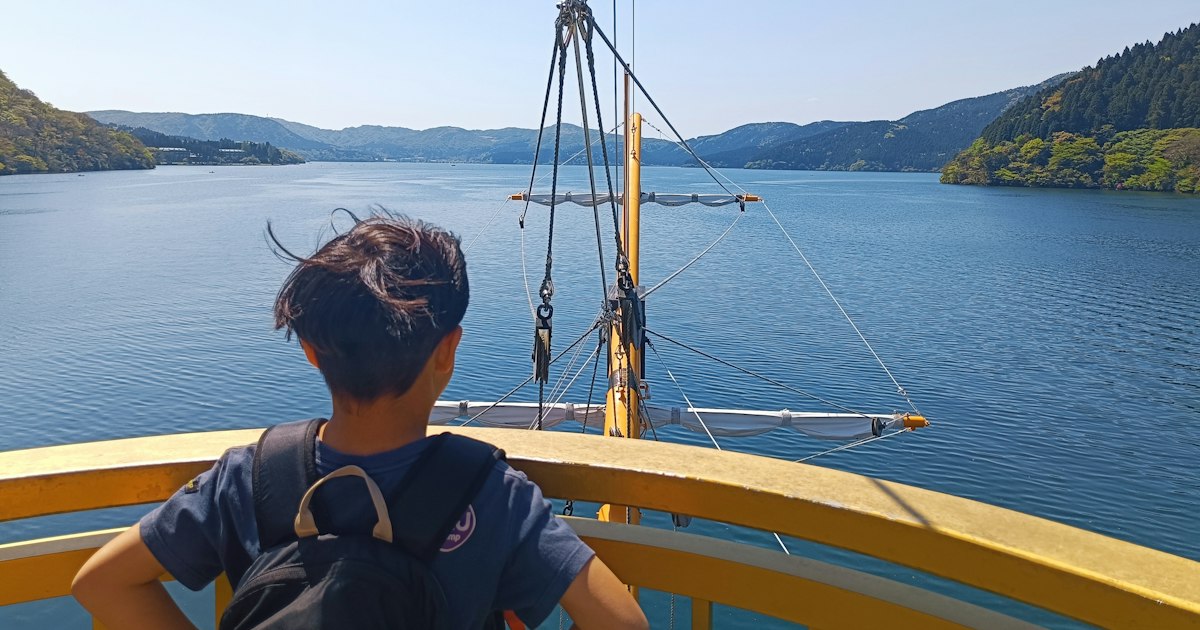
Photo by Ikarovski on Unsplash
Hakone has two cable cars that tourists routinely mix up, and the confusion costs people a wasted afternoon. One is the famous “Hakone Ropeway” that swings over the volcanic valley of Owakudani. The other is the Hakone Komagatake Ropeway, a shorter ride up a mountain on the far side of Lake Ashi. Both advertise Mt. Fuji views. Only one of them reliably delivers the postcard shot. Here’s how to tell them apart and pick the right one for your trip.
Two Different Ropeways, Two Different Views
The Hakone Ropeway runs between Sounzan Station and Togendai-ko on the shore of Lake Ashi, with a stop in the middle at Owakudani, Hakone’s steaming sulfur valley. It’s a long, continuously moving gondola line and the one most guidebooks mean when they just say “the Hakone ropeway.”
The Komagatake Ropeway is a separate, shorter system near Hakone-en on the eastern side of Lake Ashi. It climbs straight to the 1,327-meter summit of Mt. Komagatake in about seven minutes. Different company, different ticket, different mountain. If you book a tour or read a blog post that just says “ropeway,” double-check which one it means before you plan your day around it.
Hakone Ropeway: Volcanic Valley First, Fuji Second
This is the bigger draw of the two, mainly because of Owakudani. You’ll smell the sulfur before you see it — the valley is an active volcanic zone with vents, hot springs, and the famous kuro-tamago, eggs boiled in the sulfuric water until the shells turn black, sold at the summit shop for around 500 yen for a bag of five. It’s a legitimately strange, worthwhile stop on its own.
The Fuji view here is real but conditional. On a clear day, the stretch of cable car between Owakudani and Togendai gives you Fuji rising over Lake Ashi, and Owakudani’s observation deck itself has an unobstructed angle when the sky cooperates. The line runs roughly 9:00 a.m. to 5:00 p.m. (shorter in winter), gondolas arrive every minute or so, and a one-way Sounzan–Togendai ticket runs around 1,500 yen, with a round trip near 2,800 yen. Worth knowing: the Owakudani section has been closed for volcanic safety checks in the past, with a replacement bus substituted on short notice, so it’s worth checking the operator’s site the morning of your visit rather than assuming the full line is running.
Komagatake Ropeway: The Summit Shrine View
This is the one to prioritize if Fuji is your actual goal. The ride itself is short and unremarkable, but the summit opens up into a genuinely wide panorama: Lake Ashi directly below, Mt. Fuji across the water on clear days, and on the clearest winter mornings you can pick out the Izu Peninsula and even the silhouettes of the Izu Islands — the same island chain covered in our guide to Niijima & Shikinejima, if you’re curious how far that sightline actually reaches.
The summit also holds Hakone Motomiya Shrine, a quiet mountaintop shrine with none of the crowds of the main Hakone Shrine down by the lake. Round-trip tickets run around 1,800 yen for adults, and the ropeway typically operates from about 9:00 a.m. to 4:30 p.m. It does close periodically for cable inspections — these aren’t announced far in advance, so check the current schedule before you build a whole day trip around it.
Getting to Each One
From Shinjuku, the standard route is the Odakyu Romancecar to Hakone-Yumoto, then a transfer onto the Hakone Tozan Train and the chain of cable car and ropeway connections that eventually reaches Sounzan and the Hakone Ropeway. The Komagatake Ropeway is trickier to reach directly — your best options are the Izuhakone Bus to Hakone-en, or the Lake Ashi sightseeing cruise from Togendai or Moto-Hakone over to the Hakone-en pier, followed by a short walk to the ropeway base station. Because the two ropeways sit on opposite sides of the lake, don’t assume you can casually do both in one afternoon; budget the cruise or bus transfer time honestly, or you’ll end up rushing one of them.
If you’d rather swap altitude for a proper hike instead of two separate cable cars, Oyama Afuri Shrine is another Kanagawa mountain day trip from Shinjuku with its own waterfall pilgrimage route, worth keeping as a backup if the Hakone ropeways are socked in with cloud.
Best Season and Timing for Actually Seeing Fuji
Visibility, not the ropeway schedule, is the real variable here. Winter — roughly December through February — gives you the driest air and the clearest skies, and Fuji is visible on a much higher percentage of days than in summer. Go in the morning if you can; cloud and haze tend to build up around the mountain as the day warms, so a summit arrival by 10 a.m. beats one at 2 p.m. Rainy season (June into July) and the humid stretch of August are the worst bets — don’t plan a Fuji-view trip around either ropeway in that window unless Fuji views aren’t the main point of the day.
Common Mistakes
- Assuming “Hakone Ropeway” includes Komagatake. They’re different tickets on different mountains; check which one a tour or blog is actually describing.
- Going midday in summer. Morning haze burn-off and afternoon cloud buildup can erase Fuji entirely by lunchtime, even on a day that started clear.
- Not checking for closures. Both ropeways have had maintenance or volcanic-safety closures with little warning. Check the operator’s site the morning of your visit.
- Underestimating the lake crossing. The cruise between the two ropeway bases takes time and runs on its own schedule — don’t assume you can hop straight from one to the other.
- Skipping hydration prep. The Komagatake summit shop has drinks, but if you’re also hiking around Owakudani in summer, it’s worth knowing what’s actually in the vending machines before you buy — our guide to Pocari Sweat, Aquarius, and OS-1 covers which ion drinks actually help in the heat versus just being sugary soda.
Budget, Mid-Range, and Splurge
Budget: The Odakyu Hakone Freepass bundles train travel from Shinjuku with discounted or included rides on the Hakone Tozan Train, local buses, the Lake Ashi cruise, and a discount on the Hakone Ropeway — generally the best value if you’re hitting multiple Hakone sights in one or two days, priced in the 6,000 yen range from Shinjuku.
Mid-range: Pay fares individually and pick just the Fuji-relevant stops — Komagatake round trip plus the cruise crossing — without committing to the full Hakone loop. Expect to spend somewhere around 4,000–5,000 yen total for transport once you add the lake crossing.
Splurge: Charter a taxi for the day. Hakone’s public transport is efficient but runs on fixed schedules that don’t bend for a clearing sky — a private car lets you chase the morning weather window and reposition between viewpoints on short notice, which matters more here than almost anywhere else in Japan when the entire point of the trip is a mountain that spends half its life behind clouds.