Photo by Egidijus Bielskis on Unsplash
If you’ve wandered a Japanese summer festival with a paper lantern-lit yatai row on either side, you’ve probably smelled it before you saw it: a whole potato, split open and glistening with a melting pat of butter, handed over in a paper tray for a few hundred yen. That’s jagabata (じゃがバター) — “jaga” from jagaimo (potato) and “bata” from butter — one of the simplest and most satisfying things you can eat at a matsuri. The problem is that most travelers only encounter it at festivals, which run on a short, specific calendar. Here’s what it actually is, when and where it shows up at stalls, and how to track it down the other ten months of the year.
What Jagabata Actually Is
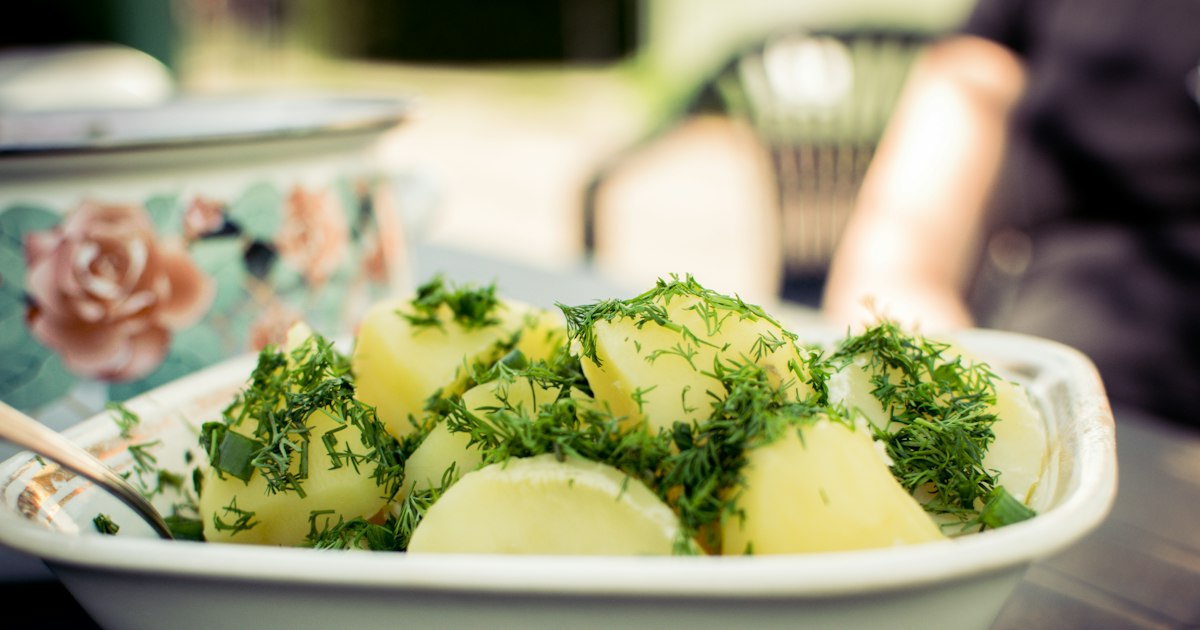
Jagabata is a whole potato — traditionally a Hokkaido-grown variety like Dansyaku (Irish Cobbler) or Kitaakari, prized for a fluffy, slightly sweet interior — steamed or boiled in its skin until soft, then cut partway open and topped with a thick pat of butter that melts into the flesh as it’s served. Most stalls add a shake of salt; some offer a miso-butter version, and at fancier stands you’ll see it topped with ikura (salmon roe) for a salty-sweet contrast. It’s unapologetically simple: no filling, no sauce drizzle, just a good potato and real butter, eaten straight out of the foil or paper cup with a small fork or wooden skewer.
At a typical natsu matsuri (summer festival) or aki matsuri (autumn festival) yatai, expect to pay 400–600 yen for a plain jagabata, with miso-butter or ikura-topped versions running 700–1,000 yen. Cash only, almost always — festival stalls rarely take cards or IC cards.
Why It’s a Festival-Season Food in the First Place
Jagabata’s association with matsuri comes down to logistics, not tradition: a whole potato needs almost no prep, holds heat well in a steamer box, and travels easily between festival circuits, which makes it ideal yatai fare. Japan’s main festival season runs roughly from mid-July through late August for natsu matsuri (Tenjin Matsuri, Gion Matsuri season, countless local bon odori and hanabi festivals), picking up again in September and October for regional aki matsuri tied to harvest celebrations. Outside those windows — basically November through June, aside from winter illumination events and New Year hatsumode stalls at shrines — the yatai carts simply aren’t set up, and jagabata becomes much harder to stumble into by accident.
Year-Round Option 1: Depachika Hokkaido Fairs
Department store basement food floors (depachika) in Tokyo, Osaka, and Nagoya regularly run “Hokkaido Fair” (北海道物産展) promotional weeks, usually a handful of times a year, where Hokkaido producers and food stalls set up temporary counters. Jagabata is a near-guaranteed item at these events, often served with ikura or crab butter upgrades, priced 600–1,200 yen. Isetan Shinjuku, Keio Shinjuku, Odakyu Shinjuku, and Daimaru/Matsuzakaya locations are the most consistent hosts. These fairs aren’t a fixed annual date, so check the department store’s event calendar online a few weeks before your trip — they typically run for about a week at a time, several times per year, concentrated in autumn and winter.
Year-Round Option 2: Hokkaido Specialty Shops
If you’re in Tokyo outside a fair window, head to a Hokkaido prefectural goods shop. The most useful one for travelers is Dosanko Plaza, run with Hokkaido prefectural backing, located inside the Tokyo Kotsu Kaikan building near JR Yurakucho Station and a short walk from Tokyo Station’s Marunouchi side (Ginza Station Exit C9 area). Alongside shelves of Hokkaido snacks, dairy, and seafood, it periodically runs a hot-food counter selling steamed potatoes with butter — worth checking when you’re in the neighborhood, though the hot-snack counter isn’t guaranteed to be running every single day, so treat it as a bonus rather than the sole reason for the trip. Typical opening hours for this type of shop run 10:00–20:00 daily. If you’re actually traveling to Hokkaido, Sapporo’s indoor/outdoor markets and roadside michi-no-eki rest stops near potato-growing regions like Furano and Biei sell jagabata from food stands year-round, since it’s simply regional comfort food there, not a festival novelty.
Year-Round Option 3: Ski Resorts and Winter Food Courts
Winter is actually jagabata’s second season. Ski resort cafeterias and lodge food courts in Hokkaido and Nagano — Niseko, Furano, Rusutsu, and similar areas — routinely sell jagabata as a quick, warming snack between runs, usually 500–700 yen, alongside other simple hot food like corn soup and oden. If your trip includes a ski or snowboard stop, this is one of the most reliable non-festival windows to find it, no planning required beyond showing up hungry.
The Reliable Backup: Izakaya Menus
When festivals and fairs don’t line up with your dates, the easiest fallback is an izakaya. Jaga bata (sometimes written just as “じゃがバター” on a laminated menu) is a common, inexpensive side dish at casual Japanese pubs nationwide, typically 400–600 yen, available any night of the year regardless of season. It won’t have quite the charcoal-smoke, festival-night atmosphere of a yatai version, but the potato-and-butter combination is identical, and it’s the most dependable year-round option if you’re based in a city with no Hokkaido fair running.
Common Mistakes to Avoid
- Assuming convenience stores carry it: jagabata is not a standard 7-Eleven/FamilyMart hot-case item the way oden or nikuman are — don’t plan a trip around finding it there.
- Bringing only cards to a festival stall: yatai are overwhelmingly cash-only; bring coins and small bills.
- Confusing it with baked potato stands at theme parks: those are often baked whole and loaded with cheese or bacon bits for a higher price (800–1,000+ yen) — a different, more Western-style snack than the simple steamed-and-buttered matsuri version.
- Timing a special trip around an unconfirmed depachika fair date: these events rotate and aren’t published far in advance, so check the specific department store’s current event page rather than relying on a general “Hokkaido Fair season.”
If you’re building out a broader list of regional snacks worth tracking down outside their usual season or region, the same hunt-it-down logic applies to daigaku imo, Japan’s candied sweet potato street snack, and to chasing down a specific regional Kit Kat flavor outside its release region. And if your itinerary includes a market stop in Kyoto or Kanazawa, pair it with the tsukemono tasting counters at Nishiki and Omicho markets for another cheap, no-reservation way to sample local food stall by stall.
Jagabata rewards a little flexibility: chase the festival calendar if your trip lines up with July through October, lean on depachika fairs and specialty shops the rest of the year, and keep the izakaya option in your back pocket as a sure thing on any night of your trip.