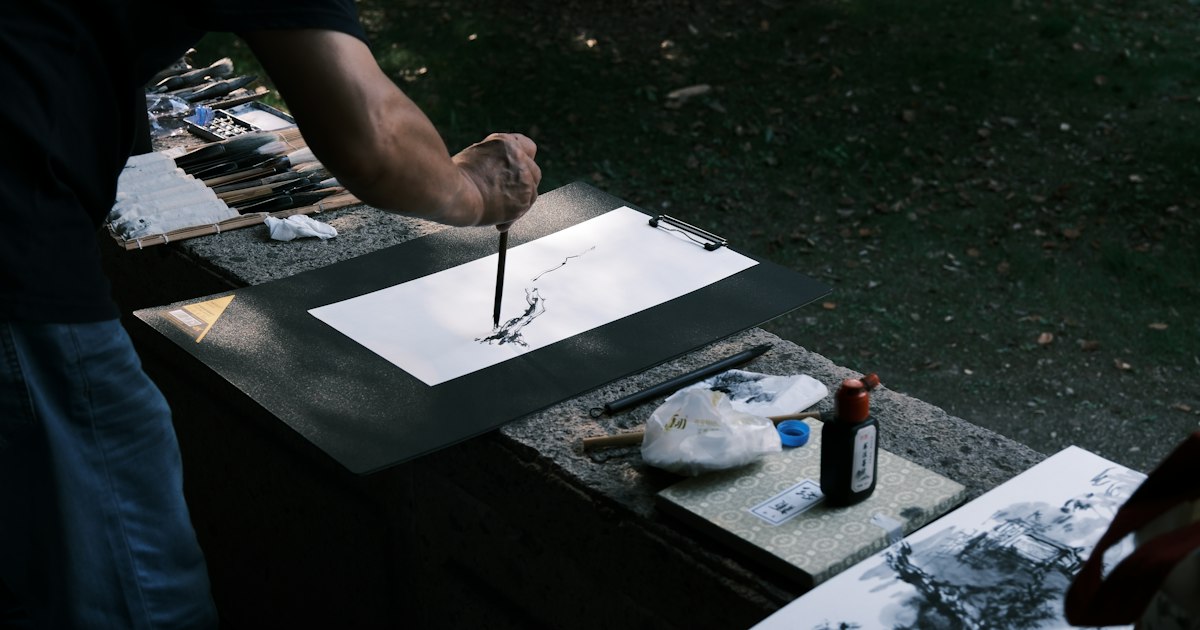
Photo by Zhao Wenjie on Unsplash
You don’t need to read or write Japanese to try shodo — the traditional art of brush calligraphy — and a one-off beginner class is one of the easiest “hands-on culture” bookings you can make in Kyoto or Tokyo. It’s quieter and less touristy than a kimono rental photo session, cheaper than a tea ceremony at a famous teahouse, and you walk away with an actual piece of paper you made. Here’s what a typical first class looks like, what it costs, and what trips up most beginners.
What shodo actually is, and why it’s worth an hour of your trip
Shodo (書道, “the way of writing”) is the practice of writing kanji and kana characters with a brush, ink, and washi paper, governed by centuries of stroke-order rules and aesthetic principles borrowed from Chinese calligraphy. It’s taught in Japanese elementary schools as a standard subject, which is part of why so many instructors who run visitor classes are retired or part-time schoolteachers — they’re used to absolute beginners and small hands struggling with brush control.
For visitors, the appeal isn’t mastering the art form in 60 minutes (you won’t), it’s the process: grinding or using pre-made ink, learning to hold a brush vertically instead of like a pen, and producing one or two characters — often your name transliterated into kanji, or a word like “dream,” “peace,” or “flow” — that you can roll up and bring home. It pairs naturally with a quieter cultural afternoon, the same way visiting a working sake kura during brewing season appeals to travelers who want to see a craft practiced, not just a monument photographed.
Kyoto or Tokyo: where to actually book one
Both cities offer classes, but the flavor differs. In Kyoto, several temples run English-friendly cultural programs that include calligraphy alongside zazen meditation — Shunkoin Temple in the Myoshinji complex (northwest Kyoto, near Hanazono Station) is one of the better-known examples, and the temple setting gives the activity more weight than a classroom would. Kyoto also has standalone cultural-experience studios in the Gion and Higashiyama areas that bundle shodo with tea ceremony or kimono as half-day packages.
In Tokyo, Asakusa is the easiest base — it’s already the city’s hub for short cultural experiences (rickshaw rides, kimono rental, sweets-making), so calligraphy studios there are used to walk-in foreign visitors and run frequent English sessions. Ginza and Nihonbashi also have culture centers and department-store workshop spaces that occasionally run single-session classes, though these are more often aimed at residents and may require Japanese-language booking.
Whichever city, book ahead — most of these classes cap at 6-10 students per session so one instructor can correct everyone’s grip and posture individually, and popular time slots (weekend mornings, late afternoon before dinner) fill up a few days out in high season.
What happens during the class
A typical beginner session runs 45-90 minutes and follows a predictable arc. The instructor demonstrates basic strokes first — horizontal, vertical, the sweeping diagonal — and explains that shodo is written top-to-bottom, right-to-left, with stroke order that’s non-negotiable (it affects the final shape and balance of the character). You’ll practice on scrap paper first, usually copying a model character placed underneath your sheet so you can see it through the semi-translucent washi.
Once the instructor is satisfied you can hold the brush correctly (upright, gripped higher up the shaft than a pen, with your whole arm moving rather than just the wrist), you move to your “real” sheet — sometimes two or three attempts, since the paper is cheap and instructors expect mistakes. Many classes end with the instructor adding a small red hanko stamp seal next to your finished character, which is the traditional way a calligrapher signs their work and makes an amateur piece look noticeably more finished.
Budget, mid-range, and splurge options
- Budget (¥2,000-¥3,500): Group walk-in sessions at Asakusa or Gion studios, shared instructor, basic set of tools provided, one character produced, no English guarantee beyond simple instructions.
- Mid-range (¥4,000-¥7,000): Small-group English-guided classes, often temple-based or bundled with a short tea ceremony, more one-on-one correction time, and a nicer paper or small scroll to take your work home in.
- Splurge (¥10,000+): Private lessons with a licensed calligraphy teacher (often holding a shihan or sensei-level certification), sometimes in their home studio, where you can request a specific word or phrase and get real feedback on composition rather than just stroke mechanics.
Tools, paper, and the ink stick or liquid ink are included at every tier — you’re not expected to buy anything beforehand. If you want your own starter set as a souvenir, basic brush-and-inkstone kits are sold at stationery shops like Itoya in Ginza or Kyukyodo in Kyoto, typically from around ¥2,000 for a simple student set.
Best time to go, and getting there
Shodo classes run year-round indoors, so there’s no bad season for this specific activity — it’s a genuinely good rainy-day or midwinter booking when outdoor sightseeing is unappealing. That said, many visitors pair it with other seasonal plans: a Kyoto temple-based class works well as a calm morning activity before an afternoon of autumn foliage viewing, since temple grounds are at their most atmospheric in November.
For getting to the venue, most studios and temples are a short walk from a train or subway station and list the nearest stop on their booking page. If you’re navigating on the day, note that Google Maps sometimes misjudges walking routes around Kyoto’s smaller temple lanes or Tokyo’s Asakusa backstreets — this is one of the cases where it’s worth cross-checking with Yahoo! Norikae Annai or NAVITIME, which tend to have more accurate local walking and transfer data than Google Maps in Japan.
Common beginner mistakes
The single most common mistake is gripping the brush too low, near the bristles, out of habit from holding a pen — instructors will reposition your hand repeatedly, and it feels unnatural at first but is essential for controlling line thickness. The second is rushing: shodo strokes are deliberate and single-pass, and beginners who try to “fix” a stroke by going over it twice end up with muddy, uneven lines that can’t be corrected. Third, don’t overthink the character choice if you’re asked to pick one — simple, common characters (like 和 “harmony” or 夢 “dream”) are deliberately chosen by instructors because they’re forgiving for first attempts; an elaborate multi-character phrase will eat your limited class time on stroke count alone.
Finally, let the finished piece dry fully — most studios will let it sit flat for 10-15 minutes before rolling or framing it, and packing wet ink into a tube too early will smear it. If you’re flying home, ask the studio for a protective cardboard tube or flat folder; a few offer these for a small additional fee, and it’s worth it if your finished calligraphy is going into checked luggage rather than a day bag.