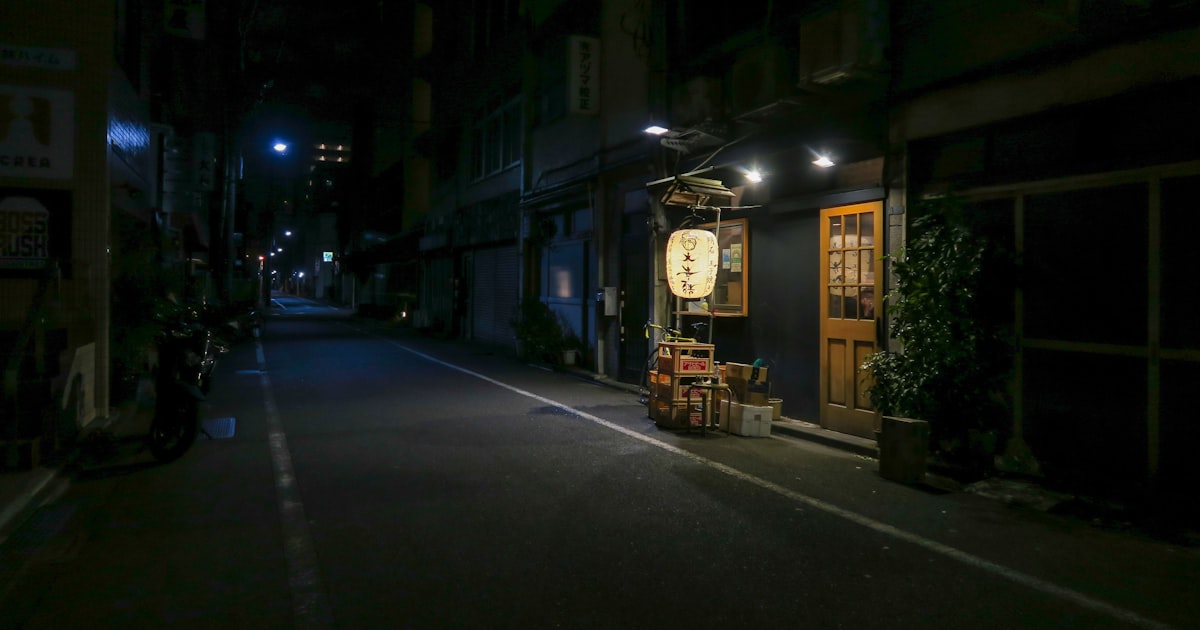
Photo by Shigeki Wakabayashi on Unsplash
The Shinkansen gets all the attention, but Japan’s overnight highway buses (夜行バス, yakō basu) are how a huge number of students, backpackers, and budget-minded locals actually get around the country. For a fraction of the bullet train fare, you can cover 500-1,000 km while you sleep, waking up in a new city with a full day ahead of you and a hotel night saved. They’re not for everyone, but for the right traveler and the right route, they’re one of the best value moves in Japan.
Why Take a Bus Instead of the Shinkansen
The math is simple: a Tokyo-Osaka overnight bus runs roughly ¥3,500-¥9,000 depending on the operator, season, and seat type, versus about ¥14,000-14,720 for an unreserved Nozomi seat one way. On longer routes the gap widens further — Tokyo to Hiroshima by bus is typically ¥8,000-¥13,000 against a Shinkansen fare north of ¥19,000. Because the bus departs late evening and arrives early morning, you also skip a night of hotel costs, which is often the bigger saving. The trade-off is time and comfort: a Tokyo-Osaka bus takes 7-9 hours versus 2.5 by rail, and you’re sitting (or semi-reclining) the whole way rather than lying flat.
How Much You’ll Actually Save
Pricing on Japanese overnight buses moves with demand, much like airline tickets, so booking early matters. As a rough guide: standard 4-row seating (yonretsu) on routes like Tokyo-Kyoto or Tokyo-Osaka starts around ¥3,000-¥5,000 on off-peak weeknights and climbs to ¥8,000-¥10,000 on Friday and Saturday departures. Premium 3-row or independent-seat buses run ¥8,000-¥15,000. On the busiest travel weeks — Golden Week (April 29-May 5), Obon (August 13-16), and New Year (December 28-January 3) — prices spike sharply and popular departures sell out weeks in advance, so the discount over the Shinkansen shrinks or disappears entirely. Outside those windows, a bus booked 2-3 weeks ahead is almost always your cheapest way to cover long distances.
Choosing Your Seat: Bus Classes Explained
Not all overnight buses are equal, and the seat type matters more than the operator name on most routes.
- 4-row (yonretsu): The cheapest option, four seats across with a center aisle, similar to a standard coach seat with a bit more recline. Fine for shorter overnight hops (5-6 hours) but tiring on longer ones.
- 3-row (sanretsu): Three seats across, meaningfully wider with deeper recline and usually a curtain or partition for privacy. This is the sweet spot for most travelers — a noticeable comfort jump for maybe ¥2,000-¥4,000 more.
- Independent/pod seats: High-end buses (Willer Express’s Cocoon and Relax seats, JR Bus’s Dream Sleeper) offer individual shell-like seats or even flat-ish sleeping pods with privacy curtains, USB ports, and reading lights. Expect ¥12,000-¥20,000+, which starts to approach Shinkansen pricing but still beats it on very long routes while saving a hotel night.
Booking an Overnight Bus
The two biggest platforms for foreign travelers are Willer Express (willerexpress.com), which has a full English booking site and issues an e-ticket you show as a QR code, and Kosoku Bus / Bus Hikaku (aggregator sites comparing multiple operators, though largely Japanese-language). JR Bus (JR each region’s bus subsidiary) also runs reliable overnight routes bookable via their Japanese sites or at any JR ticket counter. For English-speakers, Willer is the easiest starting point — search your route and date, filter by seat class, and pay by credit card. Buses depart from major terminals: in Tokyo, that’s mostly the Shinjuku Expressway Bus Terminal (Busta Shinjuku), directly above Shinjuku Station’s south exit; in Osaka, it’s the Osaka Umeda Bus Terminal or Namba OCAT. Counters at these terminals are typically staffed from early morning until the last departure, often past midnight, and have coin lockers if you need to store bags beforehand.
What to Expect on Board
Boarding usually happens 15-20 minutes before departure, and drivers are strict about on-time boarding — arrive at your gate number with margin. Most buses have onboard toilets, though budget services on shorter routes sometimes don’t, relying instead on one or two rest-area stops (called SA or PA) roughly every 2-3 hours, where you can use the bathroom, buy a drink, or grab a snack from vending machines. Lights go off and the driver announces quiet hours shortly after departure — talking, phone calls, and even phone screen brightness are expected to be kept to a minimum out of consideration for sleeping passengers. Bring an eye mask, a neck pillow, and a light layer, since air conditioning can run cold. Buses typically arrive at their destination terminal between 5:30 and 7:30 AM, which is earlier than most hotel check-in times — plan to store luggage in a station locker and start your day with breakfast or a visit to a public bath before checking in.
Best Routes and When to Use Them
Overnight buses shine most on routes where the Shinkansen either doesn’t reach directly or costs disproportionately more for the distance. Heading to the Japan Alps, an overnight bus from Shinjuku to Matsumoto lets hikers arrive early enough to head straight into the mountains — worth pairing with our guide to Matsumoto, Castle, Soba & Gateway to the Japan Alps. For Shikoku, where Shinkansen coverage is limited, overnight buses from Tokyo to Takamatsu or Tokushima are a genuinely practical way in — see our Shikoku Travel Guide for what to do once you arrive. Kansai-to-Kyushu overnight buses, such as Osaka to Beppu, are another strong value route for onsen-bound travelers — pair it with our Beppu & Yufuin guide. Once you land at your destination, remember that regional IC cards work differently from Tokyo’s Suica/Pasmo network for local transit — our guide to IC cards beyond Tokyo covers ICOCA, SUGOCA, and the rest.
Common Mistakes to Avoid
The most frequent regret travelers report is booking the cheapest 4-row seat for a route over 7-8 hours and arriving too exhausted to enjoy the first day — pay the extra ¥2,000-¥3,000 for a 3-row seat on longer hauls. Second, don’t assume every bus has a toilet; check the listing before booking if that matters to you. Third, avoid booking overnight buses during Obon, New Year, or Golden Week unless you’ve reserved weeks ahead, since both prices and availability move fast. Finally, note that most overnight bus tickets are non-refundable or carry steep cancellation fees close to departure, unlike a flexible Shinkansen reserved ticket, so only book once your plans are firm.
Used strategically — on the routes where the price and time savings are real, and with a seat class that matches how many hours you’ll actually be on board — overnight buses are one of the best budget tools for covering ground in Japan without burning through your travel fund on rail passes alone.