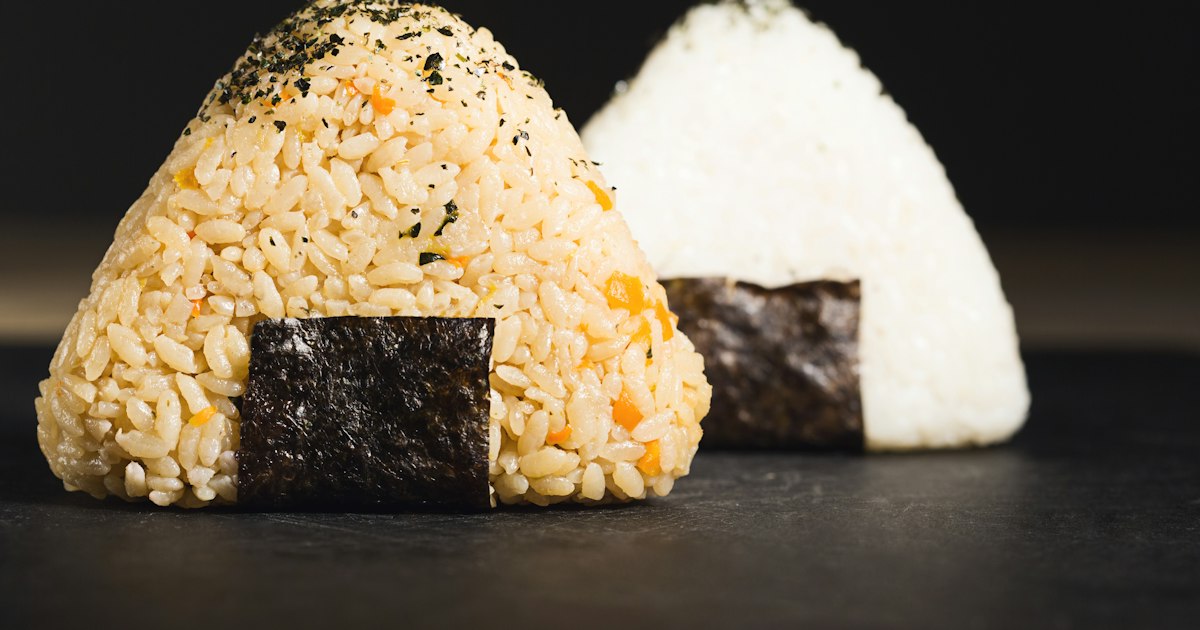
Photo by Luigi Pozzoli on Unsplash
Onigiri is the food you’ll eat more often than any other in Japan, whether you plan for it or not. It’s the ¥150 lunch you grab at a convenience store between train transfers, the thing your ryokan packs for a hiking day, and, at its best, the centerpiece of a decades-old specialty shop where people line up before opening. This guide covers what’s actually inside these rice balls, where to buy good ones at every budget, and the mistakes that trip up most first-time visitors.
What Onigiri Actually Is
Onigiri is a hand-formed ball or triangle of seasoned rice, usually wrapped in a strip of crisp nori (seaweed), with a filling tucked into the center. The rice itself is lightly salted, not sweetened or vinegared like sushi rice — that’s the main giveaway if you’re trying to tell it apart from a sushi roll at a glance. You’ll also see it written as “omusubi,” which is essentially the same food; some regions and shops simply prefer that name.
The shape matters less than people assume. Triangular is standard in Tokyo, but round and cylindrical shapes show up regionally, and some shops shape onigiri by hand only, which gives a looser, fluffier bite than the machine-pressed convenience store version.
The Fillings You’ll Actually Find
Convenience stores stock a fairly fixed rotation, and knowing the kanji or katakana helps you avoid a surprise:
- Umeboshi (梅干し) — pickled plum, intensely sour and salty. A traditional favorite, divisive for first-timers.
- Sake / Shake (鮭) — grilled salted salmon flakes, mild and reliable.
- Tsuna mayo (ツナマヨ) — tuna mixed with Japanese mayonnaise, the closest thing to a “safe” choice for most Western palates.
- Mentaiko / Tarako (明太子/たらこ) — spicy or plain cod roe, salty and a little briny.
- Okaka (おかか) — bonito flakes seasoned with soy sauce, savory and umami-forward.
- Konbu (昆布) — simmered kelp, sweet-salty and chewy.
Specialty shops go further, filling onigiri with grilled unagi, karaage chicken, mentaiko butter, or seasonal ingredients like matsutake mushroom in autumn. If you like eel, it’s worth reading our guide to unagi before you order an unagi onigiri — the same grading logic (kanto vs kansai style, unadon vs unaju) applies to how shops treat the filling.
Where to Buy: Budget to Splurge
Budget (¥120–¥260): convenience stores. 7-Eleven, Lawson, and FamilyMart are the baseline, and honestly a very good one — rice quality is consistent and the nori stays crisp thanks to a clever plastic wrapper with a pull-tab (see the “common mistakes” section below). Seven Premium and Lawson’s private-label onigiri are widely considered the best of the three chains by regular shoppers. Available 24 hours, everywhere.
Mid-range (¥300–¥600): depachika food halls. The basement food floors of department stores like Isetan Shinjuku, Takashimaya, or Daimaru sell hand-formed onigiri from specialty vendors, often using premium rice varieties like Koshihikari and higher-grade fillings. These make an easy pre-shinkansen lunch since most major stations have a department store attached.
Splurge (¥350–¥600 per piece, ¥1,500–¥3,000 for a set): specialty onigiri restaurants. Tokyo has a handful of shops built entirely around onigiri. Onigiri Asakusa Yadoroku, near Kappabashi in Asakusa, is generally considered the city’s oldest dedicated onigiri restaurant, operating since the 1950s with a rotating seasonal menu and rice cooked to order — expect it closed on Sundays and holidays, and note it’s cash-only. Onigiri Bongo in Otsuka is famous for fist-sized rice balls and a huge filling menu, with a line that forms well before opening; it’s a short walk from Otsuka Station on the JR Yamanote Line. Both are worth the detour if you want to understand why Japanese people take this simple food seriously.
Outside Tokyo, roadside michi-no-eki rest stops are an underrated source of regional onigiri if you’re on a road trip — many sell rice balls made with local specialty rice or regional fillings you won’t find in the city.
Best Time to Eat (and How Long Onigiri Keeps)
Convenience store onigiri is made fresh daily and marked with a sell-by time, typically 12–24 hours from production — check the small sticker on the back if you’re buying ahead for a hike or long train ride. Once opened, eat it within a few hours; the rice hardens noticeably once refrigerated or left out too long, since starch retrogradation (staling) happens faster in the cold. If you’re packing onigiri for a day trip, buy it in the morning rather than the night before, and avoid leaving it in a hot bag or car — rice with a raw fish or mayonnaise filling especially shouldn’t sit in summer heat for more than an hour or two.
There’s no strict seasonal window for onigiri itself, but fillings shift with the seasons — you’ll see ikura (salmon roe) and matsutake in autumn, and refreshing umeboshi and shiso leaf combinations pushed more in summer.
Common Mistakes First-Timers Make
The plastic wrapper trips up nearly everyone the first time. Convenience store onigiri use a two-layer film specifically designed so the nori stays separate and crisp until you eat it — there’s usually a black arrow or numbered tabs (1, 2, 3) printed on the wrapper. Pull tab 1 first, which splits the wrapper down the middle; then pull the two side tabs (2 and 3) outward and away from the rice. Pulling in the wrong order tears the wrapper and leaves rice stuck everywhere. If in doubt, ask a convenience store clerk to show you once — they’ve done it a thousand times.
Another common misstep: assuming all onigiri are gentle, plain snacks. Umeboshi and shiozake can be quite salty or sour by design — they were originally preservation methods before refrigeration, not flavor accents. If you want something closer to a safe default, tsuna mayo or okaka are good starting points. Also worth knowing: most convenience store onigiri contain fish, shellfish extract, or bonito flakes even when they look vegetarian, so if you’re avoiding animal products, check the ingredient label (原材料名) or stick to konbu or plain ume varieties.
Bringing the Flavors Home
If you get hooked, onigiri is easy to recreate — you mainly need short-grain Japanese rice, nori sheets, and furikake or umeboshi paste, all of which pack well and are sold at most supermarkets and souvenir shops. If you’re buying in bulk toward the end of your trip, our guide to shipping souvenirs home from Japan covers how to mail dry goods like these without paying for excess baggage. And if onigiri gets you curious about other affordable, fast Japanese meals worth comparing, the kaiten-zushi chain comparison is a natural next stop — same rice, very different format.
Onigiri rewards curiosity more than most Japanese convenience foods. Try a filling you don’t recognize, seek out one specialty shop if your itinerary allows it, and you’ll walk away understanding a food that Japan treats as comfort, craft, and quick lunch all at once.