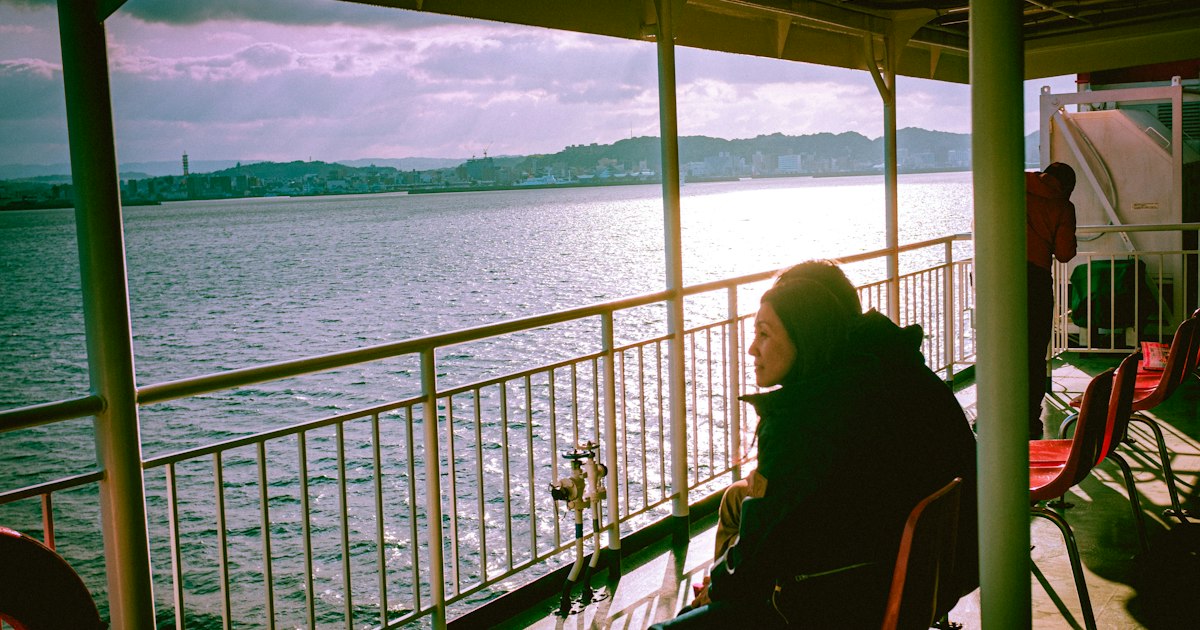
Photo by Christian Chen on Unsplash
Japan’s bullet trains get all the attention, but the country also has a genuinely great overnight ferry network — slower, cheaper than flying with a car or bike, and honestly one of the more relaxing ways to cover long distances. The flagship route for most visitors is Osaka to Beppu, an overnight sail through the Seto Inland Sea that drops you in Kyushu’s biggest onsen town by breakfast. Here’s how it works, what it costs, and where else these ferries can take you.
The Osaka–Beppu Ferry Sunflower
The Osaka–Beppu route is operated by Ferry Sunflower, using large car ferries that sail nightly in both directions. Ferries depart Osaka’s Nanko Ferry Terminal in the early evening (around 19:50) and arrive in Beppu the following morning (around 06:20–06:35), a crossing of roughly 11.5 hours. Going the other direction, ferries leave Beppu in the evening and reach Osaka the next morning. Either way, you sleep through most of the distance and wake up somewhere completely different — no wasted vacation day sitting on a train.
The Osaka terminal is at Nanko, in the south of the city. Take the Osaka Metro Chuo Line to Cosmosquare, transfer to the New Tram (Nanko Port Town Line), and get off at Nanko-guchi or Ferry Terminal Station; it’s about 45 minutes from central Osaka including the walk. In Beppu, the ferry port is a short bus or taxi ride from Beppu Station, and a shuttle bus timed to arrivals and departures usually runs for a small fee.
Cabin Classes and Prices
Fares vary by season (peak periods like Golden Week, Obon in August, and New Year cost more) and fuel surcharges shift year to year, so treat these as ballpark figures and check the current fare table before booking:
- Budget: Tourist/2nd class shared tatami rooms, roughly ¥9,000–11,000 one way. You get a futon mat in a large shared room — fine for one night, and how most backpackers travel this route.
- Mid-range: 2nd-class private or semi-private cabins with bunks, roughly ¥13,000–18,000, worth it if you want a locking door and an actual night’s sleep.
- Splurge: First-class and special (suite-style) cabins with a window, sofa, and private bathroom, roughly ¥20,000–35,000+. These book out fastest in summer.
You can also bring a car, motorcycle, or bicycle for an additional fee based on vehicle length — a real advantage if you’re planning a Kyushu road trip and don’t want to drive the whole way down from Kansai. Onboard there’s a restaurant, a bath (often with a window over the sea), vending machines, and an observation deck; some older ships still lean on cash for onboard purchases, so carry some yen even if your cards work fine on land.
Best Time to Sail and What You’ll See
Summer evening departures from Osaka catch sunset light over the Akashi Kaikyo Bridge not long after leaving port, and the ship threads narrow channels between small Seto Inland Sea islands before open water — bring a layer for the deck, since it gets breezy after dark. Arriving into Beppu in the early morning, you’ll often see steam rising from the town’s onsen before you’ve even docked, which is a nice way to arrive at a hot spring destination. Typhoon season (roughly August–September) occasionally causes delays or cancellations, so build in a buffer day if you’re sailing then, and winter crossings can be rougher but are usually cheaper and easier to book.
Common Mistakes to Avoid
The biggest one is assuming you can book same-day during Obon, New Year, or Golden Week — cabins, especially private ones, sell out weeks ahead in these windows. Check-in also closes well before departure (usually 30–60 minutes), so don’t plan to arrive at the terminal at the last minute after a full day of Osaka sightseeing. If you’re bringing a vehicle, arrive even earlier, since loading takes longer than foot passenger boarding. Finally, don’t assume every route runs daily year-round — some long-haul ferries drop to a few sailings per week outside peak season, so always confirm the actual day and time before building your itinerary around it.
Other Long-Distance Ferries Worth Knowing
Osaka–Beppu is the most tourist-friendly route, but Japan’s ferry network reaches much further:
- Osaka/Kobe – Miyazaki: Another Sunflower-brand overnight route, around 13 hours, landing you on Kyushu’s less-visited east coast.
- Osaka/Kobe – Shin-Moji (Kitakyushu): Multiple operators run this shorter Kyushu crossing, useful for connecting toward Fukuoka or Nagasaki without flying. If you’re continuing on to the Kyushu coast, our Nagasaki travel guide covers Dejima, Chinatown, and the Peace Park once you’re on the ground.
- Tokyo (Ariake) – Tokushima – Kitakyushu: A very long haul (around 34 hours total) that also stops in Shikoku, handy if you’re combining Tokyo with a Setouchi and Kyushu loop.
- Maizuru/Tsuruga – Otaru: The main sea link to Hokkaido from the Japan Sea side, roughly 20 hours, popular with drivers heading north.
- Nagoya – Sendai – Tomakomai: A multi-stop route connecting central Honshu to Tohoku and Hokkaido without touching Tokyo.
- Kagoshima – Naha (Okinawa): A roughly 25-hour southbound route through the Amami Islands — one of the few affordable ways to reach Okinawa without flying.
Several of these routes pass right through the Seto Inland Sea, the same scenic stretch of water that towns like Onomichi look out over — worth keeping in mind if you’re already building a Setouchi itinerary and want to see it from the water as well as the shore.
Ferry vs. Train: Which Makes Sense?
For pure speed, the Shinkansen wins every time — Osaka to Beppu by train and bus takes half the ferry’s crossing time. But the ferry saves you a hotel night, lets you bring a vehicle or oversized luggage cheaply, and is often less expensive than a Shinkansen fare plus accommodation, especially if you’re already comparing costs against a regional JR rail pass. If you’re coming from Kobe rather than Osaka and want an onsen experience before or after your Kyushu trip, it’s also worth weighing a stop at Arima Onsen, Kobe’s own historic hot spring town, against pushing straight on to Beppu.
Book directly through the ferry line’s website (Ferry Sunflower’s booking system has an English interface) rather than through a general travel agent, since fares and cabin availability update in real time there. Reserve at least a few weeks out for summer sailings, and you’ll land in Beppu well rested and ready for a full day of hot springs rather than jet-lagged off a red-eye flight.