Photo by Daniel Hooper 🌊 on Unsplash
Okonomiyaki translates loosely as “grilled how you like it,” and that name causes more confusion than it solves. Ask for okonomiyaki in Osaka and you’ll get a thick, mixed batter pancake studded with cabbage and pork. Order the same dish in Hiroshima and you’ll get something else entirely: a tall, layered stack built around a bed of yakisoba noodles. Both are proudly regional, both are fiercely defended by locals, and neither city considers the other’s version to be “real” okonomiyaki. Here’s how to tell them apart, where to eat each, and how to order without fumbling the etiquette.
The Core Difference: Mixed vs Layered
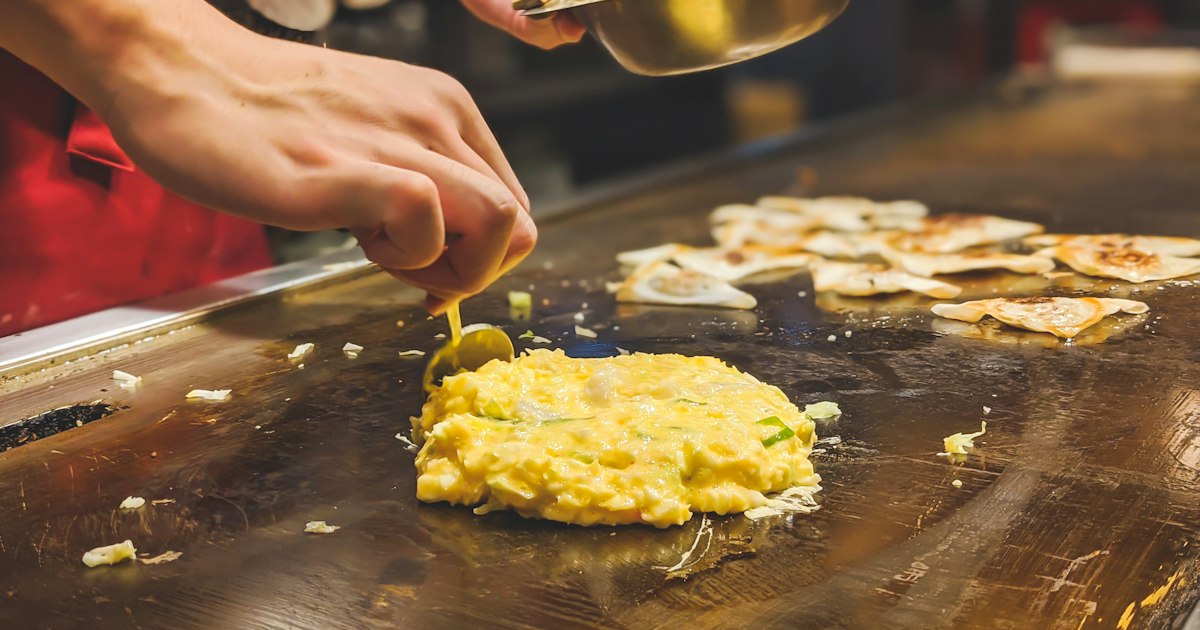
Osaka-style okonomiyaki (also called Kansai-style) starts as a batter — flour, grated nagaimo yam, dashi, egg, and shredded cabbage — that gets mixed together in a bowl before hitting the griddle. Pork belly, squid, or shrimp go into the same mix, so every bite has a fairly even distribution of ingredients. It cooks into one cohesive pancake, roughly 3-4 cm thick.
Hiroshima-style okonomiyaki never mixes the batter with the fillings. Instead, a thin crepe-like layer of batter is laid down first, then topped separately with a mountain of cabbage (often two to three times more than the Osaka version), bean sprouts, pork belly, and a full portion of yakisoba or udon noodles, with a fried egg either mixed in or placed on top at the end. It’s assembled in distinct layers and pressed down as it cooks, ending up taller and more structured — closer to a savory layer cake than a pancake. If you’ve tried Tokyo’s monjayaki, which uses a much runnier batter eaten straight off the griddle, it’s worth knowing that’s a third regional cousin entirely — see our guide to Monjayaki in Tsukishima if you’re curious how it compares.
Osaka: Where and How to Eat It
Dotonbori is the obvious starting point — the canal-side strip is lined with okonomiyaki chains and standalone shops, many with illuminated signs and picture menus for tourists. For a more local scene, head to Shinsekai or the backstreets around Namba, where prices run lower and portions are generous. A standard plate of pork or mixed-seafood okonomiyaki typically costs ¥900-1,400 at a casual shop; add cheese, mochi, or extra seafood and you’ll land closer to ¥1,600-2,000. Most okonomiyaki restaurants open around 11:00 or 11:30 for lunch, close for a mid-afternoon break, then reopen around 17:00-17:30 through 22:00 or later — check the specific shop, since hours vary more than you’d expect for a casual food category.
Many Osaka shops let you cook your own okonomiyaki at a built-in teppan grill at your table, which is part of the fun but also where first-timers go wrong (more on that below). Staff will usually cook it for you on request if you’d rather not risk it, and there’s no shame in asking.
Hiroshima: Where and How to Eat It
The essential stop is Okonomimura, a narrow multi-floor building in the Shintenchi district near Hondori shopping arcade, packed with roughly 25 small okonomiyaki counters, each seating just a handful of people around its own griddle. There’s no single “best” stall — regulars have their favorites, and picking one mostly comes down to which counter has a seat free. A standard Hiroshima-style plate with noodles, egg, and pork runs about ¥1,000-1,500; piling on squid, cheese, or extra noodles (“double”) pushes it to ¥1,700-2,200. Most stalls are open through lunch and dinner, roughly 11:00-22:00, though individual counters set their own last-order times, often around 21:00-21:30.
Unlike in Osaka, you almost never cook your own okonomiyaki in Hiroshima — the chef builds and flips the layered stack for you on a shared griddle built into the counter, then serves it directly onto a small plate in front of you on the same hot surface. This is largely a spectator dish here, which makes counter seating at Okonomimura genuinely entertaining even before the food arrives.
How to Order Like a Local
In Osaka, decide on your protein or seafood up front (pork = buta-tama, squid = ika-tama, mixed = mikkusu), and if the shop hands you a spatula (hera), that’s your cooking tool — use it to flip and to eat directly off the griddle instead of a fork. Don’t press down on the pancake while it cooks; that squeezes out moisture and makes it dense rather than fluffy. Let it cook undisturbed for several minutes per side.
In Hiroshima, you’ll typically be asked whether you want soba or udon noodles, and whether you want the egg mixed in or fried flat on top (many locals prefer it folded underneath as a final layer). “Nikutama soba” — pork, egg, soba noodles — is the standard order if you’re not sure what to get. Sauce is applied generously by the chef before serving in both cities, so there’s usually no need to add more, though a squeeze bottle is normally on the table if you want extra, along with aonori (dried seaweed flakes) and katsuobushi (bonito flakes) to finish it.
Best Time to Visit and Common Mistakes
Okonomiyaki is a year-round comfort food, but it’s especially popular in the cooler months (November-March) when a hot griddle dish in a warm shop is genuinely appealing after a day of sightseeing. Lunchtime (11:30-13:00) is the easiest window to walk into a popular shop without a wait; dinner service, especially at Okonomimura and well-known Dotonbori spots, can mean a 20-30 minute queue after 18:30 on weekends.
The most common mistake at DIY-grill shops in Osaka is flipping too early, before the underside has set — wait until the edges look dry and slightly crisp. The second is over-ordering: a single okonomiyaki plate is a filling meal on its own, closer to a large pizza than a side dish, so it’s rarely necessary to order more than one per person plus a shared side like yakisoba. If you’re carrying luggage between train stations while city-hopping between Osaka and Hiroshima, it’s worth stashing bags in a station locker rather than lugging them into a cramped okonomiyaki counter — our guide to coin lockers in Japan covers sizes and prices at major stations.
Budget, Mid-Range, and Splurge
Budget (¥800-1,200): a simple pork or vegetable okonomiyaki at a no-frills neighborhood shop in either city, often cash-only and counter-seating only. Mid-range (¥1,300-2,000): seafood-mixed versions with cheese or mochi add-ins, plus a drink, at well-reviewed shops in Dotonbori or Okonomimura. Splurge (¥2,500+): a full course at a teppanyaki-style restaurant pairing okonomiyaki with other griddled dishes like yakisoba and grilled seafood, sometimes alongside premium wagyu cuts — if you’re chasing that kind of grilled-meat experience elsewhere in Japan, our guides to yakiniku ordering etiquette and wagyu grades are useful companion reading. Either way, okonomiyaki remains one of the best-value hot meals in both cities, and trying both regional styles back to back is one of the more satisfying culinary comparisons you can make on a Kansai-to-Hiroshima itinerary.