Photo by Dynamic Hong Kong on Unsplash
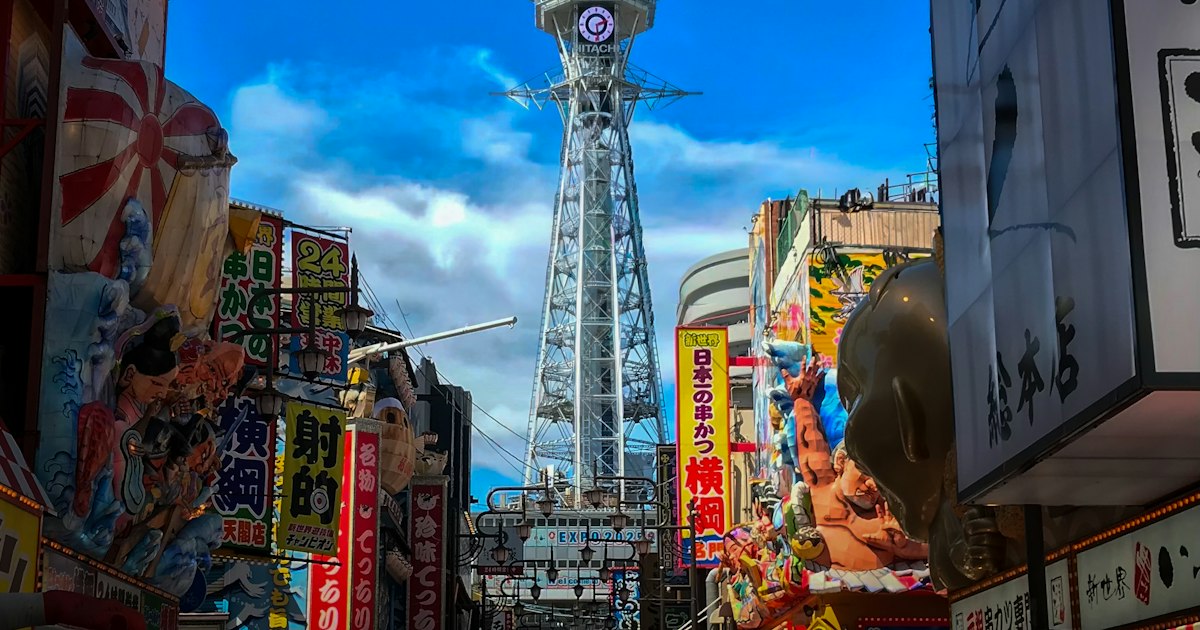
Shinsekai means “New World,” and when it opened in 1912 that’s exactly what it was meant to be — a slice of Paris and Coney Island grafted onto southern Osaka, complete with its own Eiffel Tower knockoff. More than a century later, the utopian theme-park ambitions are long gone, replaced by something stranger and more likeable: a compact grid of neon-lit alleys, deep-fried skewer shops, retro arcades, and a tower that still glows over it all. It’s touristy, a little scruffy around the edges, and one of the most photogenic few blocks in the city.
What Shinsekai Actually Is
Shinsekai sits at the southern edge of central Osaka, wedged between Tennoji Park and the older working-class neighborhoods south of it. The district’s layout still follows its original 1912 plan: streets radiate out from Tsutenkaku Tower like spokes, a design borrowed from Paris’s Champs-Élysées, while the tower itself was inspired by the Eiffel Tower. The current tower isn’t the original — that one was dismantled for scrap metal during World War II — but the 1956 rebuild has become one of Osaka’s most recognizable landmarks anyway, especially at night when its LED sides flash and its beacon changes color to forecast the next day’s weather (blue for clear, orange for cloudy, and so on).
The neighborhood’s reputation swung from glamorous to rough through the 20th century — it bordered Kamagasaki, a day-laborer district — before reinventing itself again in the 1990s and 2000s as a nostalgia destination. Today it’s safe and heavily visited, though it still feels grittier and more lived-in than Dotonbori a few kilometers north.
Getting There
The easiest approach is Dobutsuen-mae Station, served by the Midosuji Line, Sakaisuji Line, and Sennichimae Line — it’s a two-minute walk to the base of the tower. Ebisucho Station on the Sakaisuji Line is equally close and also connects to the Hankai Tramway, Osaka’s last surviving streetcar line, which is worth riding for its own retro charm if you have time. Shinsekai is also an easy 10-minute walk from JR Tennoji Station or Shin-Imamiya Station, both of which are on the JR Loop Line and connected to Kansai Airport via the Haruka limited express, so it works well as a first or last stop on a Kansai itinerary.
Tsutenkaku Tower
The tower’s observation deck runs roughly 10am to 8pm (last entry around 30 minutes before close), with adult admission around ¥900–¥1,000; tickets are sold at the base and lines build up on weekend afternoons. Inside, the main draw is Billiken, a squat, grinning good-luck statue enshrined on one of the observation floors — tradition says you rub the soles of his feet (not his head) to make a wish come true, and most visitors do. The view itself isn’t Tokyo Skytree-scale, but that’s the point: you’re looking down at Shinsekai’s own rooftop signage and pachinko lights rather than a generic skyline, which makes it one of the more atmospheric tower views in Japan.
Kushikatsu Alleys: Eating Your Way Through
Shinsekai is the spiritual home of kushikatsu — bite-sized meat, seafood, and vegetables skewered and deep-fried in a light batter — and the streets fanning out from the tower are lined with shops competing for your attention with hanging lanterns and life-size chef mascots. Daruma, founded here in 1929 and instantly recognizable by its scowling mascot logo, is the most famous chain and has several branches within a few blocks; expect skewers from around ¥100–¥250 each and a wait at peak dinner hours. For the full etiquette rundown — including the famous “no double-dipping” rule, where the communal sauce pot is off-limits to a skewer that’s already been bitten — see our dedicated guide to kushikatsu in Osaka. It’s genuinely enforced here, not just a tourist myth, and breaking it is the single most common mistake first-time visitors make — use the shredded cabbage provided at the table to scoop extra sauce instead of re-dipping.
Most kushikatsu shops open for lunch around 11am and stay open until 11pm or later, and many don’t take reservations, so arriving right at opening or well before 6pm avoids the worst queues.
Jan-Jan Yokocho and the Standing Bars
Just south of the main tower strip, the covered arcade of Jan-Jan Yokocho is the district’s older, quieter half — a narrow lane of shogi and go parlors, cheap noodle counters, and standing bars that hasn’t changed much in decades. It’s a good place to see the neighborhood’s working-class roots up close, away from the souvenir shops. Several tachinomi (standing bars) here serve small plates and cheap draft beer to a mostly local, older crowd standing at counters rather than sitting; if the format is new to you, our guide to tachinomi culture and ordering etiquette covers the basics — pay as you go, keep your visit relatively short, and don’t expect an English menu.
Best Time to Visit and Common Mistakes
Shinsekai is genuinely a nighttime district — the neon signage and tower lighting are the main event, so aim to arrive around sunset and stay through dinner rather than treating it as a daytime stop. Weekday evenings are noticeably calmer than Friday and Saturday nights, when the main strip gets shoulder-to-shoulder. Any season works, since most of the experience is indoors or under the arcade roof, though summer evenings are muggy and a light jacket helps in winter since you’ll be walking between shops.
- Mistake: double-dipping the sauce. It’s the one rule everyone enforces here — dip once before your first bite.
- Mistake: eating at the first shop you see. The shops directly facing the tower tend to charge more for the same skewers as places one block over.
- Mistake: skipping Jan-Jan Yokocho. Most visitors only see the tower-facing strip and miss the more atmospheric older arcade a minute away.
- Mistake: assuming credit cards work everywhere. Many of the smaller stalls and standing bars are cash-only; bring yen.
Budget, Mid-Range, and Splurge
On a tight budget, you can eat well for under ¥1,500 by picking five or six skewers at a counter-style kushikatsu shop and pairing them with a ¥400 draft beer at a standing bar in Jan-Jan Yokocho. A mid-range dinner at a sit-down branch of Daruma or a similar established chain, with a full course of skewers, rice, and miso soup, runs closer to ¥3,000–¥4,000 per person. For a splurge, some of the larger kushikatsu restaurants near the tower offer premium courses with wagyu beef, whole prawns, and seasonal vegetables for ¥6,000–¥8,000, plus private tatami seating — worth it if you want the full experience without standing at a counter. Whichever tier you choose, pair it with the ¥900 trip up Tsutenkaku beforehand; watching the neon switch on from above makes the alleys below far more fun to wander afterward.