Japan Trove

Author: JapanTrove Editorial

  • Japanese Woodblock Prints (Ukiyo-e): Where to Buy Originals & Reproductions

    Japanese Woodblock Prints (Ukiyo-e): Where to Buy Originals & Reproductions

    Photo by Claire on Unsplash

    Ukiyo-e — the woodblock prints of geisha, kabuki actors, and Hokusai’s great wave — are some of the most portable, gift-worthy art you can bring home from Japan. But the market is confusing for first-timers: a single print can cost ¥2,000 or ¥2,000,000 depending on whether it’s an original Edo-period impression, a later reprint from the original blocks, or a modern reproduction. This guide walks through exactly where to shop, what you’re actually paying for, and how to avoid the most common (and expensive) mistakes.

    Understand What You’re Buying First

    Before you spend a yen, learn the vocabulary — it’s the difference between a fair price and getting fleeced.

    • Original prints (shoban): Pulled during the artist’s lifetime or shortly after, from the original carved blocks. These are the real collectibles, and prices reflect condition, rarity, and whether the colors have faded.
    • Later editions/reprints (kohan): Struck from the same blocks decades or a century later, once the blocks had worn down or been recut. Still genuinely old, still hand-printed, but far cheaper than a first edition.
    • Modern reproductions: New prints made from newly carved blocks copying a famous design, often by living craftsmen using traditional mokuhanga techniques. These are not fakes — reputable publishers stamp or label them clearly — and they’re the best entry point if you want something beautiful and affordable rather than an investment piece.

    Reputable dealers will tell you upfront which category a piece falls into. If a seller can’t or won’t explain this, walk away.

    Jinbocho: Tokyo’s Antiquarian Book and Print District

    Jinbocho (神保町), in Chiyoda ward near Ochanomizu Station, is Tokyo’s used-bookstore neighborhood and the single best place in Japan to browse original ukiyo-e in person. Along and just off Yasukuni-dori, a cluster of specialist dealers has traded in prints, maps, and antiquarian books for generations.

    Ohya Shobo is the best-known ukiyo-e specialist here, with browsable print boxes near the entrance — you can flip through hundreds of pieces sorted loosely by subject and price. Common later-edition landscape and beauty prints in decent condition often start around ¥3,000–¥15,000; well-preserved first editions by major names like Hiroshige or Kunisada climb into the ¥50,000–¥300,000+ range, and museum-grade rarities go well beyond that. Most Jinbocho antiquarian shops keep shopkeeper hours — roughly 10:00–18:30 on weekdays and Saturdays, with many closed Sundays and national holidays — so check ahead if you’re making a special trip, and go on a weekday if you want less crowded browsing.

    Hara Shobo, a long-established dealer in Nihonbashi (a short train ride from Jinbocho), is worth the detour if you’re serious about condition and provenance — it caters more to established collectors, with correspondingly higher average prices but excellent authentication.

    Adachi Institute of Woodcut Prints: New Impressions, Old Techniques

    If you want something guaranteed authentic, gorgeous, and reasonably priced, skip the antique hunt and buy from the Adachi Institute of Woodcut Prints (Adachi Hanga) in Bunkyo ward. Adachi carves new blocks and hand-prints editions of classic designs — Hokusai’s Great Wave, Hiroshige’s Tokaido series, Sharaku’s actor portraits — using the same multi-block, water-based pigment method as the originals, executed by trained craftsmen. Nothing here is a photographic reprint; each sheet is pulled by hand.

    Prices for standard ōban-size prints generally run from about ¥16,500 up to ¥33,000 or more for larger or more complex multi-block designs, with smaller formats and postcards priced lower. It’s a shop and gallery space rather than a tourist stall, so the atmosphere is calm and staff can explain the printing process. Confirm current opening hours before visiting, as they vary and the space occasionally closes for exhibition changeovers.

    Museum Shops: The Easiest Reliable Option

    If you don’t have time to hunt through antiquarian shops, museum gift shops are the low-stress fallback. The Tokyo National Museum in Ueno and the Ota Memorial Museum of Art in Harajuku (a museum dedicated entirely to ukiyo-e) both sell well-made reproduction prints, postcards, and books in their shops, priced from a few hundred yen for postcards up to several thousand yen for larger giclée or woodblock-style reproductions. These are honest, clearly-labeled reproductions — good for gifts, not for investment — and shopping here requires no negotiation or expertise. The Ota Memorial rotates its actual ukiyo-e exhibits monthly because the original pigments are light-sensitive, so check what’s on display before you go if you want to see specific artists.

    Asakusa’s souvenir strip near Sensoji Temple also sells inexpensive printed reproductions on paper, fans, and tote bags — fine for a cheap souvenir, but don’t mistake these mass-printed items for anything hand-pulled.

    Beyond Tokyo: Kyoto and Flea Markets

    Kyoto’s Teramachi and Shinmonzen shopping streets have antique and print dealers as well, though the selection skews toward Kyoto-associated subjects (geisha, temples) rather than the Edo-centric ukiyo-e of Tokyo dealers. If you’re traveling between cities anyway, the regional JR rail passes can make a Tokyo–Kyoto print-shopping circuit more affordable than buying individual Shinkansen tickets.

    Tokyo’s monthly antique markets — most notably the Oedo Antique Market, held roughly twice a month at Tokyo International Forum near Yurakucho — occasionally turn up ukiyo-e among the ceramics and kimono fabric. Prices are negotiable and quality varies wildly, so this is a browsing activity for people who enjoy the hunt, not a reliable source if you have one specific print in mind.

    Common Mistakes to Avoid

    • Assuming “old-looking” means original. Toned paper and worn edges can be faked or simply be the result of a later reprint. Ask which edition you’re looking at.
    • Ignoring fading and trimming. Sun-faded colors (especially reds and purples) and trimmed margins significantly reduce value — check this before comparing prices between shops.
    • Skipping export paperwork for high-value pieces. Japan does not generally restrict export of ukiyo-e, but ask the dealer for a receipt describing the piece’s age and edition — useful for customs and for your own records.
    • Transporting prints unprotected. Reputable dealers wrap purchases in acid-free paper or a rigid sleeve; if you’re buying several pieces, a furoshiki cloth makes a surprisingly good flat, padded carrier for the trip home, and doubles as a souvenir itself.
    • Overpaying at tourist-oriented stalls. If a “hand-printed antique” is priced under ¥2,000 in a souvenir district, it’s a modern reproduction, not an original — that’s fine if you know it, a problem if you were told otherwise.

    Budget, Mid-Range, and Splurge Cheat Sheet

    • Budget (under ¥5,000): Museum shop postcards and small reproductions; Asakusa souvenir prints.
    • Mid-range (¥5,000–¥35,000): Adachi Institute hand-pulled reproductions; common later-edition originals from Jinbocho dealers.
    • Splurge (¥50,000+): First-edition Edo or early Meiji originals by major artists from Ohya Shobo or Hara Shobo, priced by condition and rarity.

    Collectors who enjoy the thrill of the hunt for one category of Japanese collectible often enjoy others — the same instincts for spotting condition issues and authenticity apply whether you’re examining a woodblock print or checking a card’s edge wear in our guide to buying Pokémon cards in Japan. And if traditional craft is what draws you to ukiyo-e in the first place, Kanazawa’s Kutani ware porcelain makes a natural companion souvenir from the same trip.
  • Omoide Yokocho: How to Crawl Shinjuku’s “Piss Alley” for Yakitori and Beer

    Omoide Yokocho: How to Crawl Shinjuku’s “Piss Alley” for Yakitori and Beer

    Photo by Pema G. Lama on Unsplash

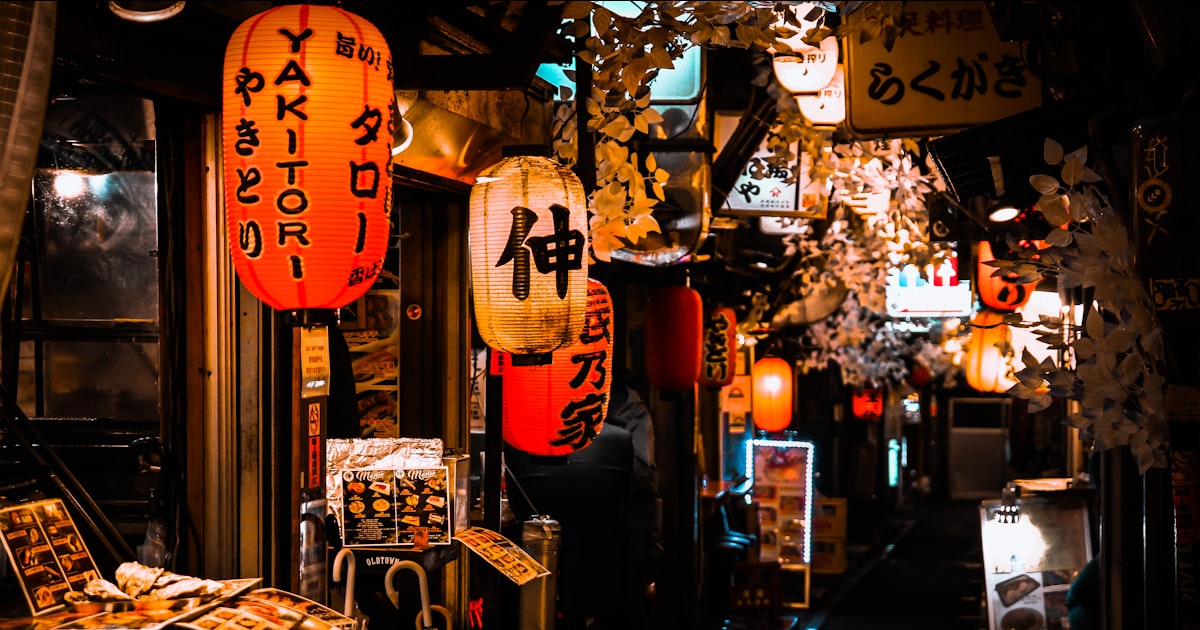
    Wedged between the JR tracks and Yodobashi Camera’s flagship store, Omoide Yokocho is two narrow lanes of yakitori stalls so small that half the seats are just stools facing a grill. Its nickname, Shonben Yokocho (“Piss Alley”), dates back to the postwar black-market years when the area had no public toilets — the name stuck even after the alley cleaned up. It’s touristy now, smoky, and a little cramped, and it’s still one of the best places in Tokyo to eat grilled chicken parts off a stick while a cook two feet away fans the coals. Here’s how to actually do it well.

    What Omoide Yokocho Actually Is

    This is a cluster of roughly 60 tiny stalls (yatai) spread across two covered alleys just northwest of Shinjuku Station’s West Exit, most seating between 4 and 15 people. Almost every stall specializes in some version of yakitori or motsuyaki (grilled offal) — chicken thigh, skin, cartilage, liver, heart, and the beef and pork intestine dishes that give the alley its slightly funky smell. A handful of stalls do ramen, oden, or unagi instead, so it’s not exclusively a chicken-skewer crawl. The area burned down in 1999 and again partially in 2014, and was rebuilt with modern wiring and fire suppression, so despite the retro Showa-era look, the structure itself is new.

    Getting There and Best Timing

    From JR Shinjuku Station, take the West Exit (Nishiguchi) and walk about 2–3 minutes north along the tracks; you’ll see the low wooden entrance signs before you reach Yodobashi Camera’s main building. It’s also a 3-minute walk from Seibu-Shinjuku Station. There’s no gate and no admission — you just duck into whichever stall has an open seat.

    Most stalls open around 3–5pm and run until midnight or later; a few open for a lunch service around 11am–2pm with cheaper donburi or yakitori sets (around ¥800–1,200), which is a good option if you want the atmosphere without the crowds. The alley is loudest and most packed from 7pm to 10pm, especially Friday and Saturday. If you want elbow room to actually enjoy your beer, aim for a weekday between 5pm and 6:30pm, or go for the quieter lunch window. After 10pm on weekends it can be standing-room only in the narrower lane.

    How to Order Like You’ve Done This Before

    Walk the alley once before committing — most stalls post a menu outside, often with photos or English/Chinese translations, and you can see how full each one is. Once you sit, a few things are near-universal: many stalls charge a small seating/table charge (otoshi), typically ¥300–500, sometimes in the form of a small starter dish you didn’t order but do pay for. This isn’t a scam, it’s standard izakaya practice across Japan — just budget for it.

    Skewers (yakitori/motsuyaki) usually run ¥150–450 each depending on the cut, and most people order 2–3 different skewers at a time rather than a big batch all at once, so you can keep pace with your beer. A mug of draft beer (nama biru) is around ¥500–700; highballs and shochu are similar. Cash is still king in the alley — plenty of stalls, especially the smallest ones, don’t take cards or IC cards (Suica/Pasmo), so carry at least ¥5,000–8,000 in cash for a night out. Seats are limited and shared with strangers, so if a stall is full, it’s completely normal to stall-hop rather than wait.

    What to Eat (and What to Skip if You’re Squeamish)

    The classics worth ordering: negima (chicken thigh and leeks), tsukune (chicken meatballs, often with a raw egg dip), kawa (crispy grilled skin), and tebasaki (wings). If you’re feeling adventurous, nankotsu (chicken cartilage) and reba (liver) are good gateway items into the offal side of the menu, before you graduate to motsu (intestines) or hatsu (heart). A few stalls do exotic items like grilled frog or horse — these are the exception, not the rule, and are usually clearly marked.

    If yakitori isn’t your thing, some stalls in the alley grill unagi or serve oden, and it’s worth knowing more broadly what you’re looking at if eel interests you — see our guide to unagi and where to eat it for context on grades and pricing elsewhere in Tokyo. And if the smoke and offal genuinely aren’t for you, Yodobashi Camera’s building and the station concourse have several conveyor-belt sushi options nearby — our kaiten-zushi chain comparison covers what to expect if you’d rather eat sushi than skewers.

    Budget, Mid-Range, and Splurge Nights

    Budget (¥1,500–2,500): One drink, 4–5 skewers, and the seating charge at a standing-only stall. This is enough to get the experience without committing to a full meal.

    Mid-range (¥3,000–5,000): Two rounds of drinks, 8–10 skewers, maybe a bowl of ramen or oden to finish, split across one or two stalls. This is the sweet spot most visitors land on for a proper dinner-and-drinks night.

    Splurge (¥6,000–9,000): A few of the newer, slightly more polished stalls run sake-pairing courses or offer rarer cuts (wagyu skewers, uni add-ons) at proportionally higher prices. Worth it once if you want a step up from the plastic-stool standard.

    Common Mistakes to Avoid

    • Assuming every stall is tourist-friendly. A few smaller counters are effectively regulars-only in practice — if the staff seem hesitant or the menu is handwritten Japanese with no photos, it’s fine to just move to the next stall rather than force it.
    • Not carrying cash. Card and contactless acceptance has improved but is still inconsistent stall to stall; don’t rely on it.
    • Confusing this with Golden Gai. They’re both historic Shinjuku alleys but serve different purposes — Omoide Yokocho is about food and standing-bar yakitori, while Golden Gai across town near Kabukicho is almost entirely tiny themed bars with cover charges and little to no food. If you want both in one night, see our guide to Golden Gai and how to drink there — it’s a 10–15 minute walk from Omoide Yokocho and makes a natural second stop.
    • Expecting to linger for hours at one stall. Seats are scarce and turnover is part of the culture; if there’s a line forming behind you, it’s polite to wrap up after a round or two rather than camp out.
    • Skipping breakfast the next morning. If you overdo the shochu, Shinjuku has several old-school kissaten serving thick coffee and pilaf-style breakfasts that are a good antidote — our guide to kissaten and what to order covers what to look for.

    Omoide Yokocho rewards showing up hungry, curious, and with small bills in your pocket. Go early for a calmer meal, go late for the full smoky, shoulder-to-shoulder atmosphere — either way, it’s one of the few spots in central Tokyo where a five-minute walk from a major train station still feels like stepping into 1955.

  • Kaiten-Zushi Chains Compared: Sushiro, Kura Sushi, Genki Sushi & Uobei

    Kaiten-Zushi Chains Compared: Sushiro, Kura Sushi, Genki Sushi & Uobei

    Photo by Mateo Krossler on Unsplash

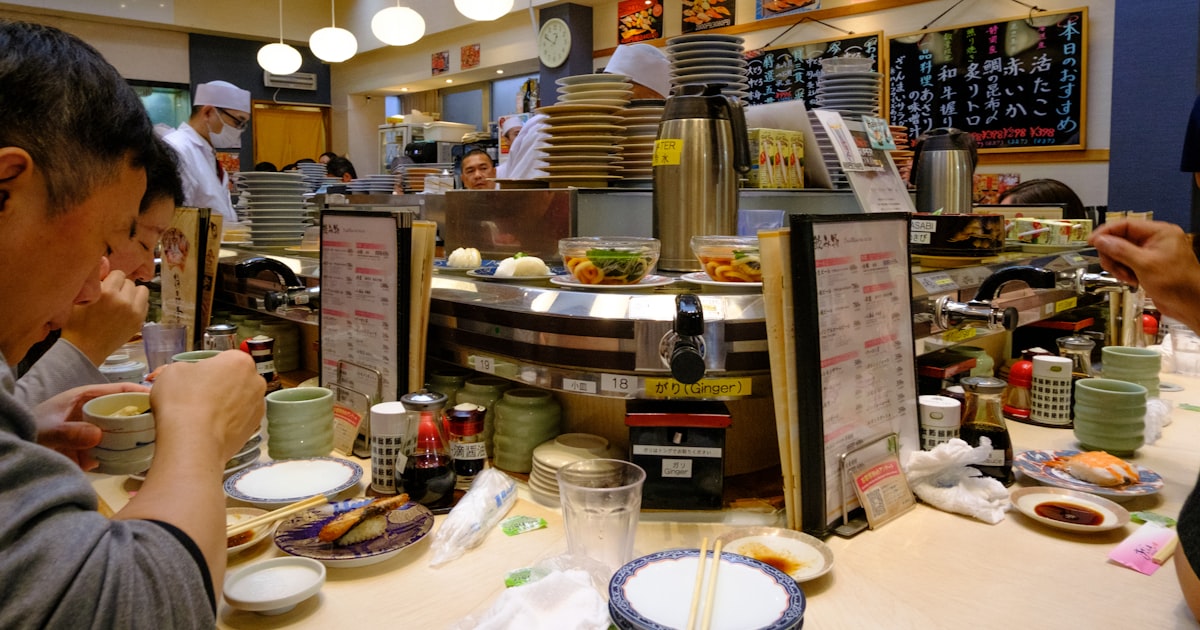
    Conveyor-belt sushi (kaiten-zushi) is one of the best-value meals in Japan — a full, satisfying dinner for under ¥2,000 per person, no reservation or Japanese ability required. But the four big national chains — Sushiro, Kura Sushi, Genki Sushi, and Uobei — are not interchangeable. They differ in price, how food actually reaches your table, and how crowded they get. Here’s what to expect from each so you pick the right one for your trip.

    The Four Chains at a Glance

    All four use touchscreen tablets for ordering in addition to (or instead of) the classic spinning belt, and all four accept cash and most IC cards (Suica/Pasmo) plus credit cards. None require a reservation for walk-in counter seats, though Sushiro and Kura Sushi let you join a virtual queue through their apps, which is worth doing on weekends.

    • Sushiro — largest chain (600+ locations), best fish quality-to-price ratio, busiest.
    • Kura Sushi — “no additives” policy, gacha game for kids, very consistent quality.
    • Genki Sushi — food arrives via a dedicated fast-lane track, not the shared belt.
    • Uobei — no belt at all, tablet-only ordering, delivery in under a minute; mainly in central Tokyo.

    Sushiro: Japan’s Biggest Belt, Best Variety

    Sushiro (スシロー) is the chain most Japanese people would name first, and for good reason — it buys fish in bulk directly from ports, which keeps quality high even at entry-level prices. Standard plates run about ¥120 for two pieces (prices are tax-excluded on menus, so add 10% at checkout), with premium items like otoro, uni, or seasonal specials priced at ¥180, ¥270, ¥390, or ¥570. A filling meal for one person typically lands between ¥1,200 and ¥2,000.

    You seat yourself (or check in on a tablet by the entrance), order via the touchscreen at your table, and dishes either arrive on the belt or, for anything ordered directly, on a dedicated express lane that stops right in front of you with a chime. Every eighth or so order unlocks a small capsule-toy game called Bikkura Pon on tablet screens — a nice touch if you’re dining with kids. Hours are usually 11:00–23:00, though smaller suburban branches may close earlier. Lunchtime on weekdays (11:00–14:00) and mid-afternoon are the least crowded windows; Friday and Saturday evenings can mean 30–60 minute waits at popular urban branches, so use the Sushiro app to check the queue or reserve a time slot before you go.

    Kura Sushi: The “No Additives” Chain With a Game Built In

    Kura Sushi (くら寿司) markets itself on its mutenka (no additives) policy — no artificial preservatives, colorings, or sweeteners in its food, which appeals to travelers with dietary sensitivities. Pricing mirrors Sushiro closely: most plates ¥115–¥125 (tax included figures are usually posted at Kura), with premium plates up to ¥400–¥500.

    The signature feature is what happens after you eat: each empty plate gets slotted into a small hatch built into your table, which automatically counts and whisks it away for washing. Every five plates you insert triggers a chance at winning a toy capsule from an overhead machine — genuinely fun for families and a good icebreaker if you’re traveling with children. Order everything via the tablet; the belt mostly carries a display selection you generally shouldn’t take without confirming freshness with staff. Typical hours are 10:30/11:00–23:00. Kura Sushi is a bit less crowded than Sushiro at peak times, making it a solid backup if your first-choice Sushiro branch has a long queue.

    Genki Sushi: Fast-Lane Delivery, Fewer Crowds

    Genki Sushi (元気寿司) takes a different approach: the main belt often carries only décor or a few sample plates, and virtually everything you eat is ordered on a tablet and delivered via a separate high-speed rail track that runs above or alongside the belt, stopping precisely at your seat. This means less picking-over of dishes that have been circling for a while, and it’s easy to track exactly what you’ve ordered and spent on the tablet’s running total.

    Prices are similar to Sushiro and Kura — most plates around ¥115–¥140 — but Genki Sushi branches tend to be smaller and less packed with tourists, so waits are shorter even on weekends. Genki Sushi is also the chain most likely to have overseas outposts (Hawaii, Hong Kong, Taiwan), so if you’ve already tried it abroad, the Japan branches will feel familiar but noticeably fresher and cheaper. Hours generally run 11:00–22:00 or 23:00 depending on the branch.

    Uobei: Tokyo’s Touchscreen-Only, Tourist-Friendly Pick

    Uobei (魚べい) is Genki Sushi’s sister brand, concentrated in central Tokyo — Shibuya, Shinjuku, Akihabara, and Ikebukuro are the most convenient locations for visitors. There is no rotating belt at all: you sit at a counter, order everything through a touchscreen (with an English option), and your plates arrive on an individual fast lane within about a minute, announced by a short jingle. It’s one of the fastest, most low-hassle sushi meals in Tokyo, particularly good for solo travelers or anyone short on time between sightseeing stops.

    Pricing is straightforward — most plates are around ¥115 before tax, with only a handful of premium items priced higher, so it’s easy to estimate your bill in advance. Because it’s counter-heavy and tightly packed into small footprints near stations, Uobei branches turn tables quickly even during lunch and dinner rushes, and walk-in waits are usually shorter than at Sushiro. Typical hours run 11:00–23:00 or later in nightlife districts like Shibuya.

    How to Order, Pay, and Avoid Common Mistakes

    A few habits will smooth out your first visit at any of these chains:

    • Check in before sitting down. Most locations have an entrance kiosk where you select party size and get a table number — don’t just sit at an open counter seat, even if it looks free.
    • Order via tablet for anything specific. The belt is convenient for casual grazing, but items you actually want (limited seasonal fish, cooked dishes, desserts) should be ordered directly so they arrive fresh and fast.
    • Track your plate count. At Sushiro and Genki Sushi, staff or a camera system counts your plates by color/pattern to calculate the bill — don’t stack plates from other tables or take extras “just in case,” since over-ordering is the single most common way solo diners overspend here.
    • Tea and soy sauce are self-serve. Powdered green tea (agari) and hot water taps are usually built into the counter; soy sauce, ginger, and wasabi packets sit in a small caddy at your seat.
    • Pay at a machine, not the counter. Take your printed receipt/table slip to a self-checkout machine near the exit — cash and card both work, but you generally can’t pay staff directly.

    Which Chain Should You Choose?

    Budget and quality first: Sushiro. It has the widest selection and the best fish for the price, especially for tuna and seasonal items, but expect a wait at dinner.

    Traveling with kids: Kura Sushi, for the plate-return gacha game and additive-free reassurance.

    Want speed and fewer crowds: Genki Sushi, especially outside Tokyo’s densest neighborhoods.

    Solo, short on time, based in central Tokyo: Uobei — the fastest in-and-out experience of the four, and the easiest to navigate with limited Japanese.

    If you’re building out a broader Osaka food itinerary — Sushiro and Kura Sushi both trace their roots to the Kansai region — it pairs naturally with a stop for Osaka’s takoyaki on the same trip. Many suburban branches of these chains sit inside roadside shopping complexes, so if you’re renting a car in Japan for a road trip, a kaiten-zushi stop makes an easy, affordable lunch break. And if you’re hopping between cities to try region-specific branches or flagship stores, check whether a regional JR rail pass covers your route before buying individual tickets. Finally, if the plastic food displays outside these restaurants catch your eye, real versions of those sushi models and the plates themselves are sold to the public at Kappabashi Kitchen Town in Tokyo.

  • Kissaten: Japan’s Retro Coffee Shops and What to Order

    Kissaten: Japan’s Retro Coffee Shops and What to Order

    Photo by Yanhao Fang on Unsplash

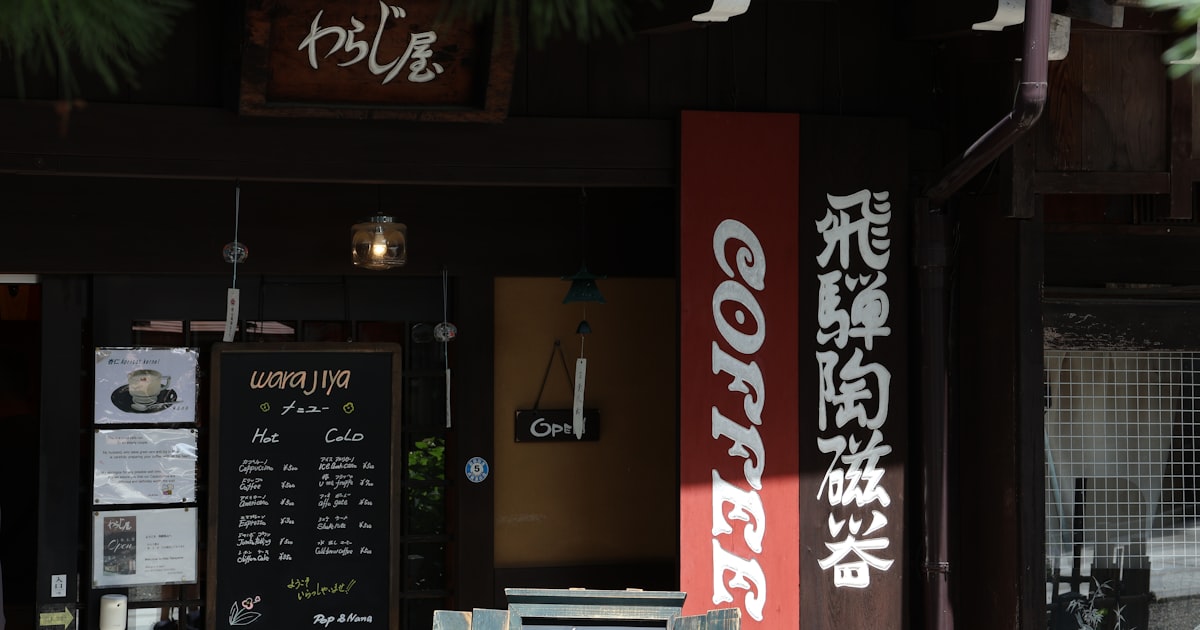
    Long before third-wave coffee bars and convenience-store lattes took over Japan, there was the kissaten (喫茶店) — a dim, wood-paneled coffee shop with siphon pots bubbling behind the counter, jazz or classical music on the speakers, and a menu of naporitan spaghetti and cream soda floats that hasn’t changed since the Shōwa era. Kissaten are a different species from Japan’s modern specialty cafes: slower, smokier (some still allow indoor smoking), and steeped in a hospitality style that treats a single cup of coffee as worth an hour of your time. If you want a genuinely retro slice of Japan that most tourists walk right past, this is it.

    What Is a Kissaten, Exactly?

    “Kissaten” literally means “tea-drinking shop,” a term that dates to the early 20th century when Western-style coffee culture first arrived in Japan. Legally and culturally, a kissaten is distinct from a café: it’s typically family-run, doesn’t serve alcohol (though some jazz kissaten quietly do), and survives on a menu that hasn’t been updated in decades — thick-cut toast, hand-drip or siphon coffee, and old-fashioned “yōshoku” (Japanese-Western fusion) plates like omurice and naporitan. Many kissaten were built in the 1950s–1970s coffee boom and are now run by second-generation owners, often octogenarians, which is part of the appeal: you’re sitting in a living time capsule, not a themed recreation.

    What to Order: The Kissaten Classics

    The menu is where kissaten culture really shows itself. A few dishes to look for:

    • Naporitan — spaghetti tossed with ketchup, sausage, and peppers, invented in postwar Japan as a riff on “Neapolitan” pasta. Usually ¥800–1,200.
    • Morning service (mōningu) — order any coffee before 11am and many kissaten throw in free toast, a boiled egg, and sometimes yogurt or salad. This tradition is strongest in Nagoya, where some shops still price the whole set at ¥500–600.
    • Cream soda — bright green melon soda with a scoop of vanilla ice cream floating on top, around ¥700–900. Purely nostalgic, and very photogenic.
    • Pizza toast — thick white bread topped with ketchup, cheese, and ham, grilled until crisp.
    • Siphon or Nel-drip coffee — brewed slowly at the counter in glass siphon vacuum pots or cloth (nel) filters. This is the thing to order at a serious kissaten; expect ¥600–1,300 depending on the shop’s reputation and bean rarity.

    Don’t expect oat milk or extensive customization — kissaten coffee is usually served one way, sometimes with sugar and cream on the side, and that’s the point.

    Tokyo’s Best Kissaten and How to Get There

    Tokyo has dozens of standout kissaten, but three are worth planning around:

    • Kayaba Coffee (Yanaka) — a 1916 building turned coffee shop, in the old-Tokyo neighborhood of Yanesen. A 5-minute walk from Nezu Station (Chiyoda Line) or Sendagi Station (Chiyoda Line). Open roughly 8am–11pm; go early for the egg sandwich morning set.
    • Café de l’Ambre (Ginza) — founded in 1948 and still run with the philosophy that coffee beans, like wine, improve with age. A short walk from Ginza-itchōme Station. Coffee runs ¥650–1,500; this is the splurge option for serious coffee drinkers.
    • Chatei Hatou (Shibuya) — a hushed, formal kissaten a few minutes from Shibuya Station’s Hachikō exit, known for meticulous hand-drip coffee poured tableside. Expect to pay ¥1,000+ per cup and to sit in near-silence — it’s the opposite experience of Shibuya Crossing outside.

    If you’re spending an evening bar-hopping nearby, Golden Gai’s tiny alleys have a similar retro-Shōwa atmosphere after dark, and a few of its bars are essentially night-shift kissaten with jazz records instead of coffee siphons.

    Kyoto and Nagoya Kissaten Worth the Detour

    Kyoto’s Smart Coffee (Smart Kissa), near Sanjo Station, opened in 1932 and is often cited as the city’s oldest surviving kissaten. It’s famous for its French toast and a morning set served until 11am; a coffee-and-toast combo runs around ¥800–1,000, and there’s usually a short line on weekend mornings, so arrive by 9am if you want a table.

    Nagoya deserves special mention as Japan’s morning-service capital — the free-toast-and-egg custom is thought to have started there in the 1950s among local businessmen, and chains like Komeda Coffee (now nationwide) still honor it. If you’re road-tripping through the region, it’s worth pairing a Nagoya kissaten stop with a stretch break at a michi-no-eki roadside station, where you can pick up local snacks for the rest of the drive.

    Budget, Mid-Range, and Splurge Options

    Kissaten pricing is refreshingly transparent and rarely surges with tourism the way some cafes do:

    • Budget (¥400–700): Neighborhood kissaten in residential areas or near train stations, where a basic blend coffee is often cheaper than a convenience-store canned coffee plus snack. Look for shops with hand-lettered menus and no English signage — these are usually the least touristed and least expensive.
    • Mid-range (¥700–1,000): Named shops like Kayaba Coffee or Smart Coffee, where you’re paying a bit more for atmosphere, a historic building, or a well-known morning set.
    • Splurge (¥1,000–1,500+): Single-origin, aged, or rare-bean pours at places like Café de l’Ambre or Chatei Hatou, where the coffee itself is the destination, not a side order to a meal.

    Common Mistakes First-Timers Make

    A few things trip up visitors:

    • Treating it like a quick coffee stop. Kissaten culture is built around lingering — nobody will rush you, but nobody expects you to rush either. Budget at least 30–45 minutes.
    • Expecting to pay at the register on the way out only. Many kissaten still use handwritten paper checks or a small tray system; watch what other customers do, or simply take your bill to the counter.
    • Assuming everywhere is non-smoking. Older kissaten were grandfathered out of Japan’s 2020 indoor smoking ban if they meet certain size and registration conditions, so some small shops still permit smoking. If it matters to you, check a shop’s website or a recent review before visiting.
    • Showing up during the lunch rush expecting quiet. Between roughly 11:30am and 1:30pm, kissaten near business districts fill with regulars ordering set lunches; late morning (9–11am) or mid-afternoon (2–5pm) is calmer and better for savoring the morning-service menu.

    Best Time to Go

    Kissaten work year-round since they’re entirely indoors, which makes them a good rainy-day or extreme-heat plan in summer, or a warm mid-winter break between temple visits. Morning-service deals are only available before 11am, so if that’s your goal, build it into the start of your day rather than treating it as a lunch stop. Weekday mornings are consistently quieter than weekends at famous shops like Smart Coffee, where a Saturday queue can add 15–20 minutes to your wait.

    Kissaten pair naturally with a slow, analog day out — the kind of afternoon you might also spend browsing vintage shops in Shimokitazawa or working through a plate of old-school Japanese curry rice at a nearby diner. None of it is flashy, and that’s exactly why it’s worth seeking out.

  • Takoyaki: Osaka’s Octopus Balls and Where to Eat the Best

    Takoyaki: Osaka’s Octopus Balls and Where to Eat the Best

    Photo by Aoi on Unsplash

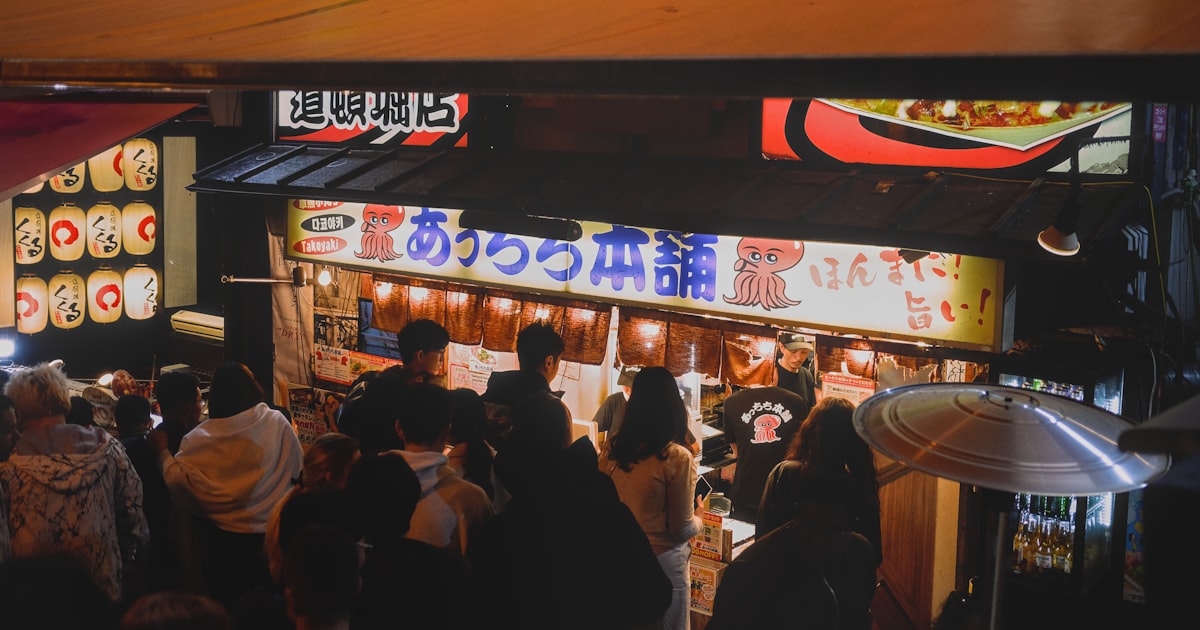
    Crisp on the outside, molten and slightly gooey inside, and dotted with a whole piece of octopus — takoyaki is Osaka’s signature street food, and no trip to the city is complete without eating it hot off the griddle. It looks simple: a golf-ball-sized batter sphere brushed with sauce and mayo. But there’s real technique behind a good one, real history behind the dish, and a few rookie mistakes that trip up almost every first-time visitor. Here’s how to find the best takoyaki in Osaka and eat it the way locals do.

    What Exactly Is Takoyaki?

    Takoyaki (たこ焼き, literally “grilled octopus”) is a ball-shaped snack made from a wheat-flour batter poured into a specialized half-sphere griddle, then filled with a chunk of boiled octopus, tempura scraps (tenkasu), pickled ginger, and green onion. The cook flips each ball with a metal pick as it cooks, building a thin, crisp shell around a soft, custardy center. Finished balls are brushed with a Worcestershire-style takoyaki sauce, striped with Japanese mayonnaise, and dusted with dried bonito flakes (katsuobushi) and green seaweed powder (aonori). A standard order is 6 or 8 pieces in a paper tray or boat, meant to be shared or eaten solo as a snack rather than a full meal.

    A Bit of History: Born in Osaka in the 1930s

    Takoyaki was invented in Osaka in 1935 by a street vendor named Tomekichi Endo, who adapted an earlier snack called “radio-yaki” by swapping in octopus — a nod to Osaka’s strong seafood culture and its Akashi-yaki dish (a similar egg-rich octopus ball from nearby Akashi, eaten dipped in dashi broth rather than sauce). The dish caught on fast in Osaka’s working-class neighborhoods and spread nationwide after World War II. Osaka still treats takoyaki as a point of civic pride — many households even own a home takoyaki griddle for parties, and you’ll find takoyaki-flavored snacks, keychains, and plushies all over the city’s souvenir shops.

    Where to Eat the Best Takoyaki in Osaka

    Dotonbori is the obvious starting point and genuinely delivers. Along the canal and its side streets you’ll find several long-running specialists:

    • Aizuya (会津屋) – widely credited as running in the direct lineage of the original 1935 recipe, serving a simpler, sauce-free style so you taste the octopus and dashi-based batter. A few locations near Dotonbori and Namba.
    • Takoyaki Doraku Wanaka – a Dotonbori institution with the giant lit-up crab sign nearby; balls come with a noticeably crisp shell and generous octopus chunks. Around 600–700 JPY for 8 pieces.
    • Juhachiban (十八番) – a small, always-busy stand tucked in the backstreets off the main canal, popular with locals for its molten, almost soupy center.

    For a different scene, head to Shinsekai, the retro neighborhood under Tsutenkaku Tower, where Wanaka (Sakuraya Honten) is the original outpost of the Dotonbori chain above and considered by many Osakans to be the better version — less touristy, slightly cheaper, and open late. If you’d rather sample several styles side by side in one stop, the Osaka Takoyaki Museum at Universal CityWalk Osaka (right outside Universal Studios Japan, on the JR Yumesaki Line) gathers stalls from several famous Osaka takoyaki brands under one roof, which is a convenient way to compare shops without crossing town — handy if you’re already heading to USJ for the day.

    How Much It Costs and What to Expect

    Takoyaki is one of the cheapest hot meals you’ll find in Japan. Expect roughly 500–800 JPY for 8 pieces at a street stall, and 600–1,000 JPY at a sit-down izakaya version with extra toppings like cheese, spicy mayo, or negi-shio (green onion and salt, no sauce). Most stalls are cash-friendly and increasingly take IC cards (Suica/ICOCA) or PayPay; don’t assume every tiny stand takes credit cards. There’s no real “splurge” tier for takoyaki itself — even upscale versions rarely exceed 1,200 JPY — but some restaurants serve it as part of a larger okonomiyaki-and-teppan set menu for 2,000–3,000 JPY if you want a fuller meal built around it.

    How to Order and Eat It Like a Local

    Most stalls are order-at-the-window, pay-first operations — point at the menu photo or say the number of pieces you want (“hachi-ko,” 8 pieces, or “roku-ko,” 6 pieces). The single biggest rookie mistake is biting straight into a fresh ball: the center holds heat far longer than the crust suggests, and burnt-mouth takoyaki injuries are common enough among tourists that it’s practically a running joke in Osaka. Let it sit for a minute, or eat it in two bites so the steam escapes. Use the wooden pick or toothpick provided rather than your fingers — the outside can still be surprisingly hot even after the center has cooled. If you don’t like mayo, ask for “mayo nashi” (no mayo) before they finish topping it, since scraping it off afterward ruins the texture. And don’t fill up before trying it — portions are small on purpose, so it’s meant to be one stop of several on a street food crawl, similar in spirit to grazing through Nishiki Market in Kyoto.

    Best Time to Go

    Takoyaki is a year-round food with no real seasonal peak, but timing your visit still matters for the experience. Dotonbori stalls are least crowded on weekday afternoons (2–5pm); evenings and weekends bring long lines, especially at the famous names. Most stands open around 10 or 11am and stay open until 10 or 11pm, with some late-night spots in Shinsekai running past midnight. If you want to watch the griddle work up close without being jostled by crowds, arrive right at opening.

    Getting There

    Dotonbori and Shinsekai are both easily reached on foot or by subway from Namba or Shinsaibashi stations, and are typically covered by regional rail passes if you’re coming in from elsewhere in Kansai — check the JR Regional Rail Passes for Kansai if you’re planning a wider loop through the region. If you’re arriving from Tokyo on a budget, an overnight bus is a common way to save on the trip down. And if you fall hard enough for takoyaki that you want to make it at home, takoyaki griddle pans (both electric and stovetop) are sold at kitchen supply shops around Osaka and at Tokyo’s Kappabashi Kitchen Town, which stocks the professional-grade cast iron versions used by actual stalls.

  • Furin: Japan’s Summer Wind Chimes and Where to Buy Them

    Furin: Japan’s Summer Wind Chimes and Where to Buy Them

    Photo by Geoff Oliver on Unsplash

    Walk through almost any Japanese neighborhood in July or August and you’ll hear it before you see it: a thin, glassy chirin-chirin drifting from a shop awning or an apartment balcony. That’s furin, Japan’s traditional wind chime, and it’s one of the most authentic, packable souvenirs you can bring home from a summer trip. Here’s how to buy one that’s actually worth carrying home, where to see the best displays, and the mistakes first-time buyers make.

    What Is Furin, and Why Do You Hear Them in Summer?

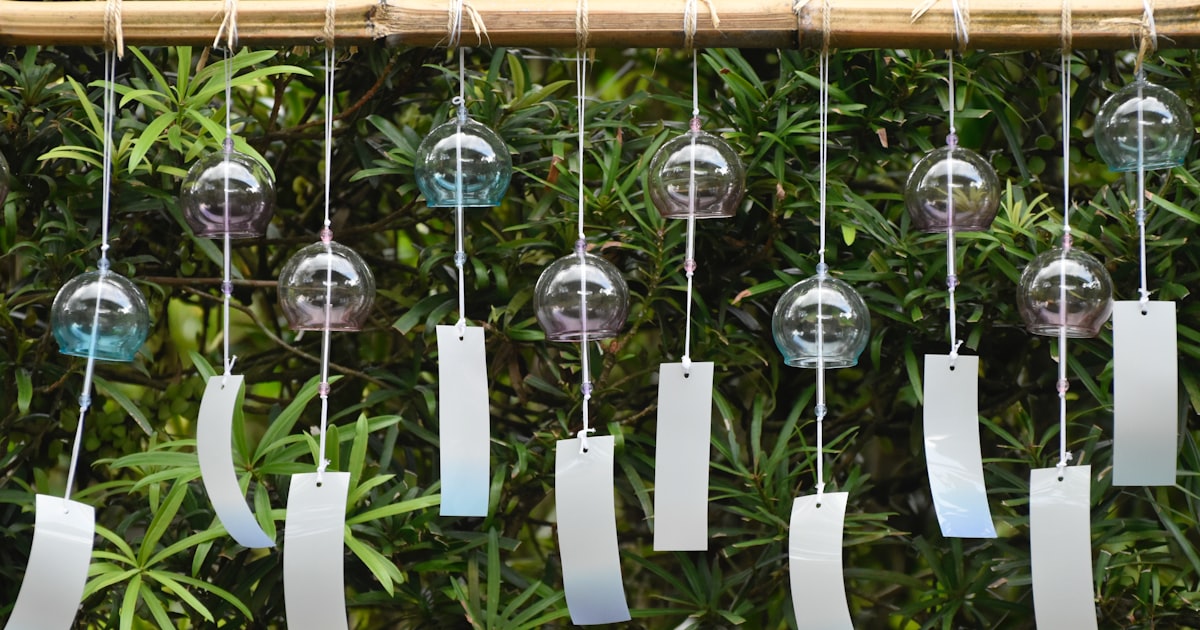
    A furin is a small bell, traditionally glass, iron, or ceramic, hung with a clapper and a dangling paper strip called a tanzaku that catches the wind and swings the clapper against the bell. In Japan, the sound is culturally coded as “cooling” — long before air conditioning, the high, thin ring was a psychological trick to make sweltering afternoons feel a few degrees lighter. That’s why furin appear everywhere from late June through late August and then quietly disappear once autumn starts: they’re a seasonal object (a kigo, in poetry terms), not a year-round decoration, and most Japanese people take theirs down once summer ends.

    The Main Types You’ll Find

    Not all furin sound or look the same, and knowing the differences helps you pick the right one:

    • Edo furin (江戸風鈴) — Hand-blown glass, made in Tokyo, with a deliberately rough, unground rim so the clapper produces a slightly irregular, higher-pitched ring. The inside is hand-painted with goldfish, morning glories, or fireworks motifs, applied from the inside of the glass so the color never rubs off. Expect ¥2,500–¥5,000 for a genuine hand-painted piece.
    • Nanbu tekki furin (南部鉄器風鈴) — Cast iron, made around Morioka and Oshu in Iwate Prefecture using the same technique as Nanbu ironware teapots. These have a deep, clear, bell-like tone that carries much further than glass, and they’re virtually indestructible. Prices run ¥3,000–¥8,000 depending on size.
    • Ceramic and Ryukyu glass furin — Ceramic ones (often from craft towns) have a duller, softer knock; Ryukyu glass furin from Okinawa are thicker, bubble-flecked, and colorful, with a lower tone than Edo glass. Both are typically ¥1,500–¥3,500.
    • Souvenir-grade furin — Mass-produced, machine-painted, sold for ¥500–¥1,500 in tourist shopping streets. Fine as a cheap gift, but the sound is thinner and the paint often sits on the outside, where it can wear off.

    Where to Buy Furin in Tokyo

    For the real thing, skip the airport gift shop and go to a specialist:

    • Shinohara Furin Honpo — A family workshop in Edogawa Ward (near Funabori Station on the Toei Shinjuku Line) that has hand-blown Edo furin since 1915. You can watch the glass-blowing and painting process, and during summer they often let visitors pick a blank bulb and watch it get painted to order. It’s a working workshop, not a polished retail store, so hours can be irregular — call ahead or check with your hotel concierge before making the trip.
    • Asakusa’s Nakamise-dori and side streets — The easiest option if you’re already sightseeing near Sensoji Temple. Quality varies from genuine Edo furin to cheap imports, so look for the painted-from-inside detail and ask if it’s hand-painted before paying mid-range prices.
    • Department store “furin ichi” fairs — Stores like Isetan Shinjuku, Nihombashi Takashimaya, and Mitsukoshi run temporary wind-chime fairs (usually on a rooftop or event floor) each June, gathering Edo, Nanbu, and Ryukyu furin from different regions in one place. It’s a good way to compare styles side by side before committing. Exact dates shift year to year, so check the store’s event calendar for the current summer.

    Kawagoe’s Wind Chime Festival: See Thousands in One Place

    If you want the full sensory experience rather than just a single chime, visit Hikawa Shrine in Kawagoe, a small city about 30–50 minutes from central Tokyo (Tobu Tojo Line from Ikebukuro, or Seibu Shinjuku Line from Seibu-Shinjuku Station). Each summer, roughly mid-July through mid-September, the shrine hangs around 1,700 to 2,000 furin from its walkways for the “Enmusubi Furin” display — a tunnel of chimes that ring in unison whenever the wind picks up. On weekend evenings the shrine strings paper lanterns among the chimes for an illuminated night version. Entry is free, and Kawagoe itself (nicknamed “Little Edo” for its preserved warehouse district) makes a pleasant half-day trip on its own, easily combined with a stroll through its old merchant street. Neither Kawagoe nor Morioka requires a rail pass for a single day trip, but if you’re planning a broader Kanto or Tohoku itinerary, it’s worth checking the Regional JR Rail Passes: JR East, JR West & Kansai Explained guide to see if a pass pencils out.

    Buying Nanbu Ironware Furin at the Source

    If cast iron is more your style, Morioka in Iwate is the source. Foundries there sell direct at their workshop shops, and the local craft center in central Morioka stocks pieces from multiple makers so you can compare tones before buying — the pitch varies noticeably between foundries and sizes. It’s a full-day trip from Tokyo via Tohoku Shinkansen, so it only makes sense if you’re already heading north; otherwise, look for Nanbu tekki furin at traditional craft shops in Tokyo or at the department store fairs mentioned above.

    Prices, Shipping, and Common Mistakes

    Budget: ¥500–¥1,500 for souvenir-grade glass, fine for gifts but skip if you want the authentic sound. Mid-range: ¥2,500–�¥5,000 for a genuine hand-painted Edo furin or a mid-size ceramic piece — this is the sweet spot for most travelers. Splurge: ¥6,000–¥10,000+ for a large Nanbu ironware furin or a named-artist Edo furin with detailed reverse-glass painting.

    The most common mistake is treating furin like a normal souvenir when packing. Glass ones are genuinely fragile — ask the shop to wrap it in bubble wrap and box it (most will, especially at specialist shops), and carry it in your hand luggage rather than checked baggage. Cast iron furin are heavy; factor that into your luggage weight if you’re checking bags for a flight home. The other mistake is losing or discarding the tanzaku paper strip: it’s not just decorative, it’s what catches the wind and makes the clapper move, so a furin without it will barely ring at all. If you’re already thinking about how to wrap and carry delicate purchases home, the same principles that apply to a traditional furoshiki wrapping cloth — snug wrapping, no loose rattling — work well for glass furin too.

    Finally, timing matters: shops sell down their furin stock through August and many stop restocking by early September since the item is explicitly seasonal, so if you’re traveling in autumn or winter, expect to find much thinner selection outside of a few year-round craft specialists. Furin pair naturally with other small, quintessentially Japanese purchases — if you’re already building a shopping list, guides on Japanese incense and Kutani ware porcelain cover two other traditional crafts that travel just as well.

  • Regional JR Rail Passes: JR East, JR West & Kansai Explained

    Regional JR Rail Passes: JR East, JR West & Kansai Explained

    Photo by Jiachen Lin on Unsplash

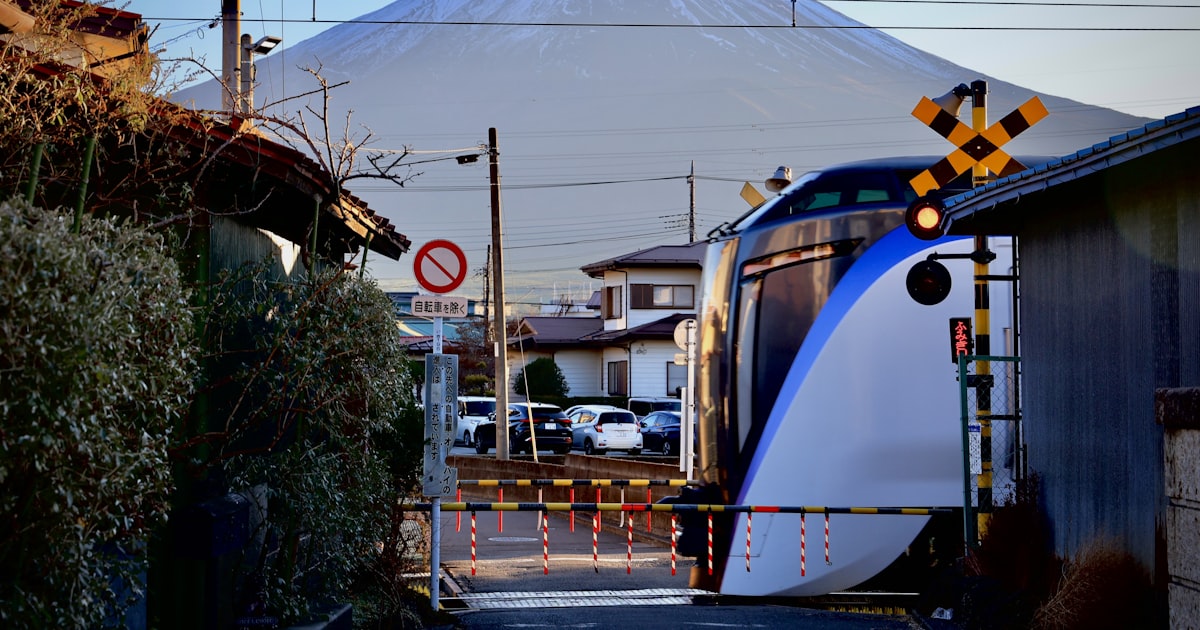
    The national Japan Rail Pass gets all the attention, but for most trips it’s actually the wrong tool. If you’re staying in one region—Tokyo and its day-trip radius, or Kansai and its neighbors—a regional JR pass is usually cheaper and covers exactly the trains you’ll actually ride. The catch is that JR East, JR West, and JR Central each sell their own overlapping lineup of area passes, with different coverage maps, validity windows, and rules about which seats you can reserve. Here’s how to tell them apart and pick the right one.

    Why a Regional Pass Instead of the National JR Pass

    The nationwide JR Pass (7/14/21 days, ¥50,000/¥80,000/¥100,000 for the ordinary 7-day tier as of recent pricing) only pays off if you’re covering long distances across multiple regions—say, Tokyo to Hiroshima and back. If your itinerary is Tokyo plus Nikko, Kawaguchiko, and Karuizawa, or Osaka plus Kyoto, Kobe, and Himeji, a regional pass covering just that zone almost always costs less than half as much and includes local lines the national pass doesn’t bother optimizing for. Regional passes also tend to be usable the same day you buy them, without the advance exchange-voucher hassle some travelers still associate with the national pass.

    JR East Regional Passes: Tokyo and Beyond

    JR East’s most useful pass for short trips is the JR Tokyo Wide Pass: ¥15,000 for adults, ¥7,500 for children, valid 3 consecutive days. It covers unlimited rides on JR East lines within the greater Tokyo area plus reserved seats on the Narita Express, the Joetsu Shinkansen out to GALA Yuzawa, and the Nagano/Hokuriku Shinkansen as far as Karuizawa and Nagano. It also includes the Fujikyu Railway line, making it one of the few passes that gets you to the Kawaguchiko/Mt. Fuji area on rails without paying separately. Buy it at JR East Travel Service Centers at Narita or Haneda airports, or major stations like Shinjuku and Tokyo.

    If you’re going further north, the JR East Pass (Nagano, Niigata area) and the JR East Pass (Tohoku area) are 5-day flexible passes (you pick 5 non-consecutive days within a 14-day window) priced around ¥18,000–¥20,000 for adults. These make sense if you’re chasing snow country onsen towns or the Tohoku coast rather than staying Tokyo-centric.

    JR West Regional Passes: Kyoto, Osaka, and the San’in Coast

    JR West sells a tiered set of passes depending on how far you’re ranging. The Kansai Area Pass is the simplest: unlimited JR West trains (not the Shinkansen) between Kyoto, Osaka, Kobe, Nara, and Kansai Airport. Pricing runs roughly ¥2,800 for 1 day up to ¥6,800 for 4 days for adults—buy it if you’re doing day trips between those cities and want to skip juggling individual tickets.

    Step up to the Kansai WIDE Area Pass (around ¥5,000–¥6,000, 4 consecutive days) and you get the San’in Kaigan coast, Himeji, Okayama, and reserved seats on limited express trains and select Shinkansen segments within the zone. This is the one that makes sense if Kinosaki Onsen is on your list—the pass covers the JR limited express that runs straight there from Kyoto or Osaka, which otherwise costs around ¥5,000–¥6,000 each way. For trips extending toward Hiroshima and the Seto Inland Sea, the Sanyo-San’in Area Pass (7 consecutive days, roughly ¥19,000–¥20,000) adds Shinkansen coverage down to Shimonoseki, useful if you’re also detouring to Onomichi to ride the Shimanami Kaido.

    Where “Kansai Passes” Get Confusing

    Here’s the trap: not every pass with “Kansai” in the name is a JR pass. The Kansai Thru Pass is sold by a consortium of private railways and subway operators (Osaka Metro, Hankyu, Hanshin, Kintetsu, Keihan) and deliberately excludes JR lines entirely. It’s the better choice if your days are heavy on Kyoto’s Keihan/Hankyu lines, Nara via Kintetsu, or Osaka’s subway—but it will not get you on a JR train, full stop. Mixing this up is the single most common mistake visitors make: they buy the Thru Pass expecting it to cover a JR ride to Kansai Airport, tap in, and get charged in full. If your plan genuinely mixes JR and private lines evenly, it’s often cheaper to just use an IC card (Suica/ICOCA) and pay as you go rather than buying two overlapping passes. For a fuller comparison of area passes including Hokuriku, see our JR Regional Rail Passes guide to Kansai, Hokuriku & other area passes.

    How to Buy and Activate Your Pass

    Most JR East and JR West regional passes can be purchased in person on the day of travel at designated ticket offices (marked “JR Travel Service Center” or “Midori no Madoguchi”) without advance booking, which is a real advantage over the national pass’s exchange-order system. Some, like the Tokyo Wide Pass, can also be reserved online in advance for slightly faster pickup. You’ll need your passport for foreign-tourist-only passes—these are not available to Japanese residents. Once issued, write your travel dates on the pass if it’s a paper ticket, and keep it until you exit the gate on your last day; station staff do random checks at manned gates.

    Common Mistakes to Avoid

    Beyond the JR-vs-private-line mix-up, the other frequent error is buying a multi-day pass for a trip that doesn’t need it. If you’re only making one round trip—say, Osaka to Himeji and back—check the individual fare first; a single round-trip ticket is often cheaper than even the 1-day Kansai Area Pass. Also double-check whether your pass includes Shinkansen reserved seats or only local/rapid trains; the cheaper area passes generally exclude the Shinkansen entirely, and trying to board one without the right coverage means paying the fare difference on the spot. Finally, remember these passes don’t cover the Tokaido Shinkansen (Tokyo–Osaka), which is JR Central territory and needs its own ticket or the national JR Pass.

    Budget, Mid-Range, and Splurge Picks

    On a tight budget, skip passes altogether for short stays and load a Suica or ICOCA IC card instead—no expiration pressure, works everywhere, and refunds unused balance at the end (minus a small fee). Mid-range travelers doing a Kyoto-Osaka-Kobe-Nara loop over 3–4 days get the clearest value from the Kansai Area Pass. If you’re stretching out to Kinosaki Onsen, Himeji, and Okayama in one trip, the Kansai WIDE Area Pass earns its price back in a single limited-express ride. For a genuine splurge itinerary covering Tokyo, Karuizawa, and a Fuji day trip, the Tokyo Wide Pass is worth it even for two rides, since a round trip to Karuizawa alone runs close to the pass price. Whichever route you take, it pairs well with overnight buses for the longer legs outside your pass zone, or with a rental car if you want to reach spots the rail network simply doesn’t touch.

  • Michi-no-Eki: Japan’s Roadside Stations for Road Trippers

    Michi-no-Eki: Japan’s Roadside Stations for Road Trippers

    Photo by Zion C on Unsplash

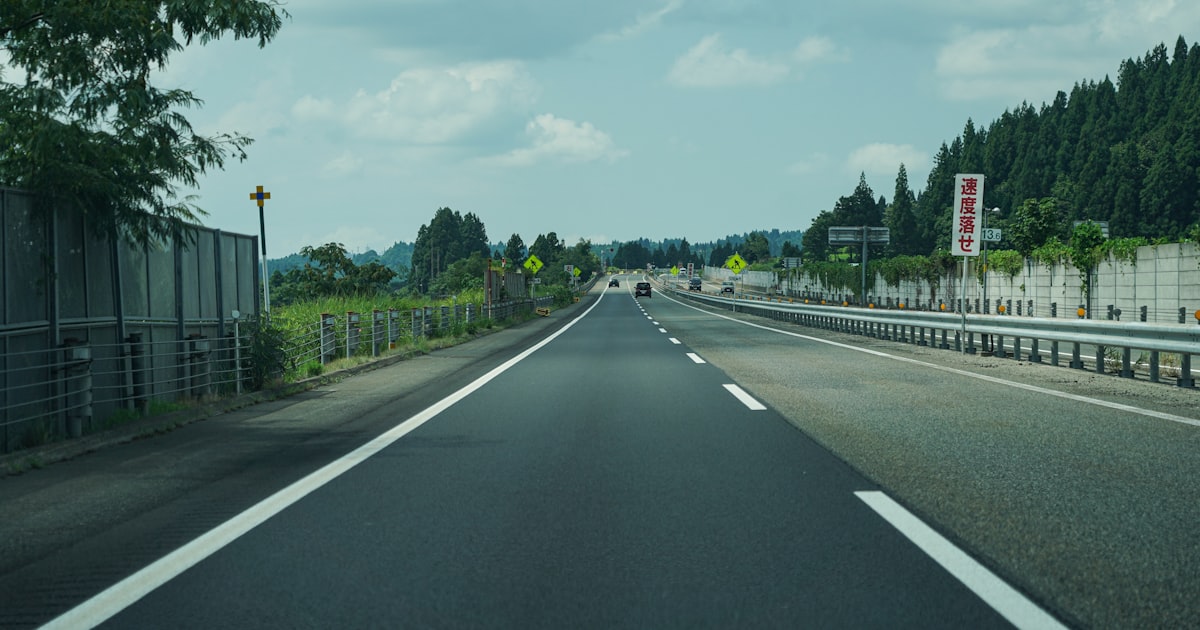
    If you’re renting a car in Japan, you’ll pass a brown-and-white sign reading 道の駅 (michi-no-eki) roughly every 15-20 minutes on rural highways. These “roadside stations” are one of Japan’s most useful and least-discussed travel resources: free parking, clean toilets, local produce, regional food, and a genuine window into small-town Japan that most tourists never see. There are now over 1,200 of them nationwide, and for anyone doing a self-drive trip, they’re worth planning around rather than stumbling into.

    What Exactly Is a Michi-no-Eki?

    Michi-no-eki are government-registered rest stops, certified by the Ministry of Land, Infrastructure, Transport and Tourism since 1993. Unlike a generic highway service area, each one is run in partnership with the local municipality, so the mix of shops always reflects the surrounding region. A typical station has three fixed elements: a free 24-hour parking lot and restroom, a farmers’-market-style shop selling produce and goods from within that town or prefecture, and at least one food counter or restaurant. Beyond that, facilities vary wildly — some have onsen baths, campgrounds, playgrounds, EV chargers, or small museums attached. Entry and parking are always free, and the toilets and parking stay open even after the shops close for the night.

    The key distinction from a standard highway SA (service area) is that michi-no-eki sit on regular national and prefectural roads, not the tolled expressway network, so you don’t need to exit and re-enter the toll system to use one — useful if you’re avoiding expressway fees, which typically run ¥24-27 per km.

    What You Can Actually Buy There

    The produce section is the main draw for most visitors: bags of just-picked vegetables, fruit, rice, and pickles priced well below city supermarkets, often ¥100-500 per item, sold by the farmers themselves and restocked through the day. Many stations also carry regional specialty goods you won’t find elsewhere — local sake, miso, dried fish, or craft items tied to that prefecture’s traditions. If you’re already hunting for ceramics on a Kansai or Kyushu itinerary, it’s worth noting that michi-no-eki near production areas sometimes stock seconds-quality pieces from nearby kilns at a discount; travelers heading toward the Kutani or Arita/Imari regions should keep an eye out. Food-wise, expect a soft-serve ice cream stand (often a local fruit or vegetable flavor, ¥300-400), a food court serving a regional take on standards like katsu curry (a cousin of the curry rice you’ll find all over Japan) for around ¥800-1,200, and vending machines selling everything from hot corn soup to local craft beer.

    Opening Hours and When to Time Your Stops

    Parking and restrooms are open 24/7/365 at essentially every michi-no-eki, which is the whole point — they’re designed as safe overnight rest points for long-haul drivers. The shops and restaurants, however, keep normal retail hours: typically 9:00 a.m. to 6:00 p.m., with restaurants often closing their kitchen by 4:00 or 5:00 p.m. even if the building stays open later. This matters more than it sounds: arrive at 6:30 p.m. hoping for dinner and you may find only vending machines working. Plan your driving day so you hit the station you actually want to shop or eat at before mid-afternoon, and treat any stop after 5 p.m. as a bathroom-and-stretch break only. Produce sections sell out fastest on weekend mornings, so if you want the best selection of local vegetables, arrive before 10 a.m.

    Seasonally, spring (cherry and strawberry season) and autumn (harvest, persimmons, chestnuts) bring the best produce and the most crowded parking lots, especially near popular scenic routes. Winter stations in snow regions are genuinely useful for checking road conditions and warming up, but some smaller ones reduce hours or close entirely between December and March.

    How to Find and Use Them on a Road Trip

    Every rental car’s built-in navigation system (and Google Maps) marks michi-no-eki with their own icon, so you don’t need to plan routes around them in advance — just glance at the map as you drive and detour to whichever one is coming up. The official michi-no-eki association also publishes a nationwide list by prefecture if you want to research stops before a trip, particularly useful if you’re building an itinerary around a specific route like the coastal roads near Kinosaki Onsen or the approach to Ise Jingu. For the specifics of renting the car itself — international driving permit rules, typical rental costs (budget around ¥6,000-9,000/day for a compact car), and suggested routes — see our full guide to renting a car in Japan.

    If you’re not driving a car but still want the michi-no-eki experience, a few are accessible by local bus or bicycle — most notably along the Shimanami Kaido, where roadside stations double as cyclist rest points with air pumps, water, and repair stands built in alongside the usual produce shop.

    Common Mistakes to Avoid

    The single biggest mistake is treating every michi-no-eki as interchangeable and stopping at random without checking what’s actually there — some are little more than a parking lot and vending machines, while others a few kilometers away have full restaurants and onsen baths. A quick look at the map listing (most show a photo and facility icons) before detouring saves wasted time. Second, don’t assume credit cards work everywhere: smaller produce stalls and food counters, especially in rural Tohoku, Shikoku, and parts of Kyushu, are still cash-only, so keep ¥1,000-¥5,000 in small bills on hand. Third, remember these are not 24-hour convenience stores — if you’re driving late at night expecting a hot meal, you’ll likely find only vending machines and toilets. Finally, resist the urge to buy too much produce too early in a multi-day trip; fresh vegetables and fruit don’t hold up well in a hot rental car, so it’s better to buy near the end of your route or somewhere you can refrigerate that night.

    Budget, Mid-Range, and Splurge Stops

    At the budget end, most stations cost nothing beyond whatever snacks you buy — a rice ball or bag of fruit runs ¥150-300. Mid-range stops are the ones with a proper restaurant serving a regional set meal, typically ¥1,000-2,000, worth timing your lunch around. At the splurge end, a growing number of “super” michi-no-eki have added day-use onsen baths (¥500-800 entry) or attached hotels, turning a rest stop into a genuine overnight destination — a good option if you’re stringing together a multi-day loop and want to break up long drives without booking a formal ryokan every night.

  • Unagi: Japan’s Grilled Eel and Where to Eat It

    Unagi: Japan’s Grilled Eel and Where to Eat It

    Photo by Takuma Tsubaki on Unsplash

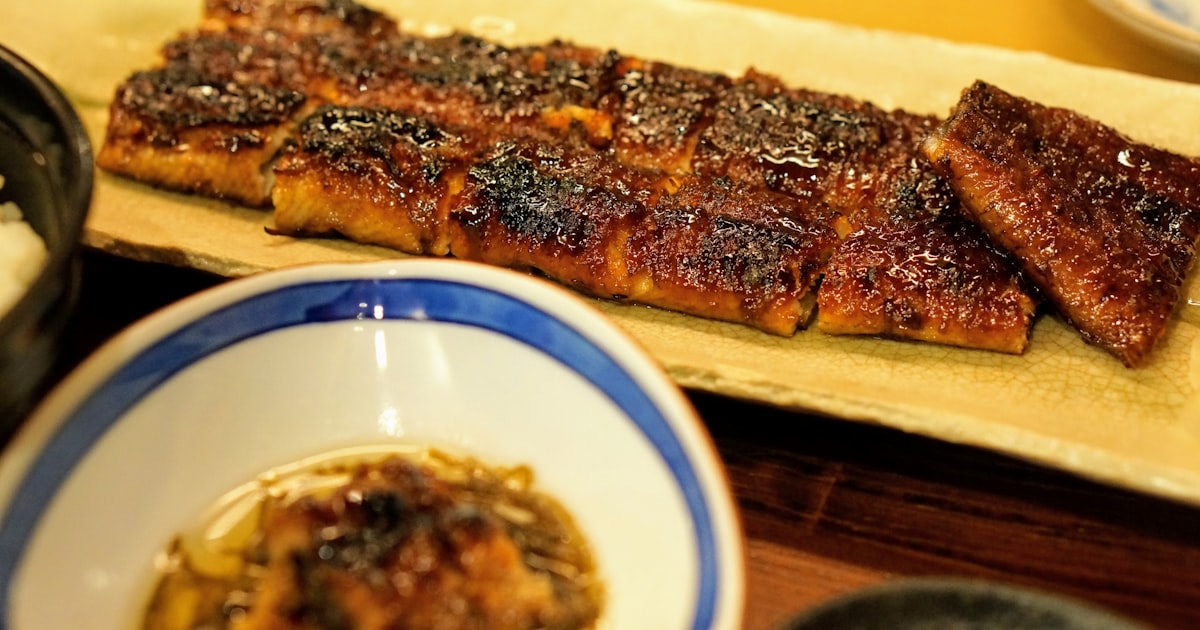
    Unagi, or freshwater eel, is one of Japan’s oldest comfort foods — smoky, sweet, and rich enough that a small portion feels like a full meal. It’s also one of the more expensive everyday dishes you’ll encounter, thanks to decades of declining wild eel stocks, so knowing how to order it well and where to spend your money makes a real difference. Here’s what to know before you sit down.

    What Is Unagi, and Why Do Japanese People Eat It in Summer?

    Unagi refers specifically to freshwater eel (as opposed to anago, saltwater conger eel, which is milder and more common in sushi). It’s split down the back or belly, deboned, skewered, and grilled with a sweet-savory tare sauce made from soy sauce, mirin, and sugar — the same style of glaze used on yakitori, but thicker and glossier.

    The tradition of eating unagi in midsummer comes from Doyo no Ushi no Hi, the “Day of the Ox” in the old lunar calendar, which usually falls in late July. The custom is said to date back to the Edo period, when a shop owner asked the scholar Hiraga Gennai for help with slow summer sales; his marketing angle — that eating unagi on this day fights summer fatigue — stuck for over 200 years. In practice, this means unagi shops get very busy and some raise prices slightly around that date, so if you want a quieter, cheaper meal, aim for any other week in summer or autumn, when eel is arguably at its best condition anyway.

    Kanto vs Kansai: Two Ways to Grill an Eel

    Japan has a genuine east-west split in unagi preparation, and it’s worth knowing before you order. In Tokyo and the Kanto region, the eel is butterflied from the back, steamed to render out fat and soften the flesh, then grilled — producing a texture so tender it barely needs chewing. In Kansai (Osaka, Kyoto) and much of western Japan, the eel is split from the belly and grilled directly with no steaming step, giving a crisper, slightly charred skin and a firmer bite. Neither is “correct”; they’re just different, and trying both if your trip covers both regions is a good way to appreciate the difference. If you’re building a Kyoto food day around this, the stalls and counters of Nishiki Market occasionally have grilled eel skewers worth flagging down alongside the market’s other specialties.

    How to Order: Unadon, Unaju, Hitsumabushi, and Shirayaki

    Menus can look intimidating, but the core options are simple:

    Unadon — eel over rice in a round lacquer or ceramic bowl (donburi). The everyday, slightly more casual version.
    Unaju — the same idea served in a square lacquer box (jubako), generally considered a step up in presentation and often price.
    Hitsumabushi — a Nagoya specialty where chopped eel over rice is meant to be eaten three (or four) ways: first plain, then with chopped scallions, nori, and wasabi mixed in, then with hot dashi or green tea poured over it like ochazuke, and a final bowl however you liked best. It’s genuinely more fun to eat than a standard unadon and worth seeking out if you pass through Nagoya.
    Shirayaki — eel grilled plain with no tare, dipped in salt or wasabi-soy. It shows off the eel’s own flavor and is a good order if you find kabayaki sauce too sweet, or want to pair the eel with sake.

    Where to Eat Unagi: By Budget

    Budget (¥1,000–¥2,000): Chain restaurants and department store basement (depachika) counters sell compact unadon or unagi bento, and convenience stores sometimes carry unagi bowls as a seasonal item around Doyo no Ushi no Hi. Portions are smaller and the eel is usually imported and pre-processed, but it’s a legitimate way to try the dish without commitment.

    Mid-range (¥3,000–¥6,000): Dedicated unagi specialty shops (unagi-ya) in most cities fall here. You’ll get a proper unaju set with liver soup (kimosui) and pickles, freshly grilled to order — expect a wait, since good shops grill in small batches rather than pre-cooking.

    Splurge (¥6,000–¥15,000+): Old, established unagi restaurants that source domestic (kokusan) eel and have been perfecting their tare — some recipes are decades or over a century old — for generations. Nodaiwa in Azabu, Tokyo, dates back over 250 years and is one of the most famous names in this category; expect to book ahead and possibly queue even with a reservation.

    Regions Worth a Detour for Eel

    A few places have built real reputations around unagi. Hamamatsu, on Lake Hamana between Tokyo and Nagoya on the Tokaido Shinkansen line, is one of Japan’s historic eel-farming centers and has unagi restaurants clustered around the station. Nagoya is the place for hitsumabushi — Atsuta Houraiken, founded in 1873 near Atsuta Shrine, is credited with inventing the dish. Yanagawa in Fukuoka Prefecture, a small canal town, is known for seiro mushi, a steamed version of unaju where the rice and eel are steamed together in a bamboo box — a distinct texture from the grilled versions elsewhere. If you’re routing a Kansai-area trip that includes any of these regions, check whether a JR regional rail pass covers your route before buying individual tickets.

    Common Mistakes to Avoid

    Don’t show up at a well-known unagi restaurant right at opening on a summer weekend without a reservation or a plan to wait — many places grill to order and can sell out of the day’s eel entirely by mid-afternoon, especially around Doyo no Ushi no Hi. Don’t assume unadon and unaju are interchangeably priced; the box version is often ¥500–¥1,500 more for the same eel. And don’t skip the kimosui (eel liver soup) that comes with set meals — it’s included, mild, and a nice contrast to the rich, sweet main dish. If you’re new to ordering rice-bowl meals in Japanese and want a gentler introduction to reading a donburi menu, our guide to Japanese curry rice covers similar bowl terminology and etiquette.

    A Note on Sustainability

    Japanese eel (Anguilla japonica) is listed as endangered by the IUCN, and glass eel (young eel) catches have declined sharply over recent decades, which is the main reason prices have risen steadily. Most unagi served in Japan today is farmed from wild-caught glass eels rather than fully wild-caught adults, and a portion is imported, often from other parts of Asia. This isn’t a reason to avoid unagi entirely — it remains a legal, regulated food — but it’s worth knowing why a bowl that used to be an everyday lunch is now, in many shops, a special-occasion meal.

  • Japanese Curry Rice: A Beginner’s Guide to Kare Raisu

    Japanese Curry Rice: A Beginner’s Guide to Kare Raisu

    Photo by Kelsey He on Unsplash

    Ask any Japanese kid what they want for dinner and there’s a good chance the answer is kare raisu — curry rice. It’s not the curry you’ll find in India or Thailand; it’s a thick, mildly sweet, roux-based stew that Japan adopted from British naval cooks in the Meiji era and then made entirely its own. It’s cheap, it’s everywhere, and it’s one of the easiest ways for a visitor to eat well on a tight schedule. Here’s how to actually order it, where to eat it, and what to avoid.

    What Makes Japanese Curry Different

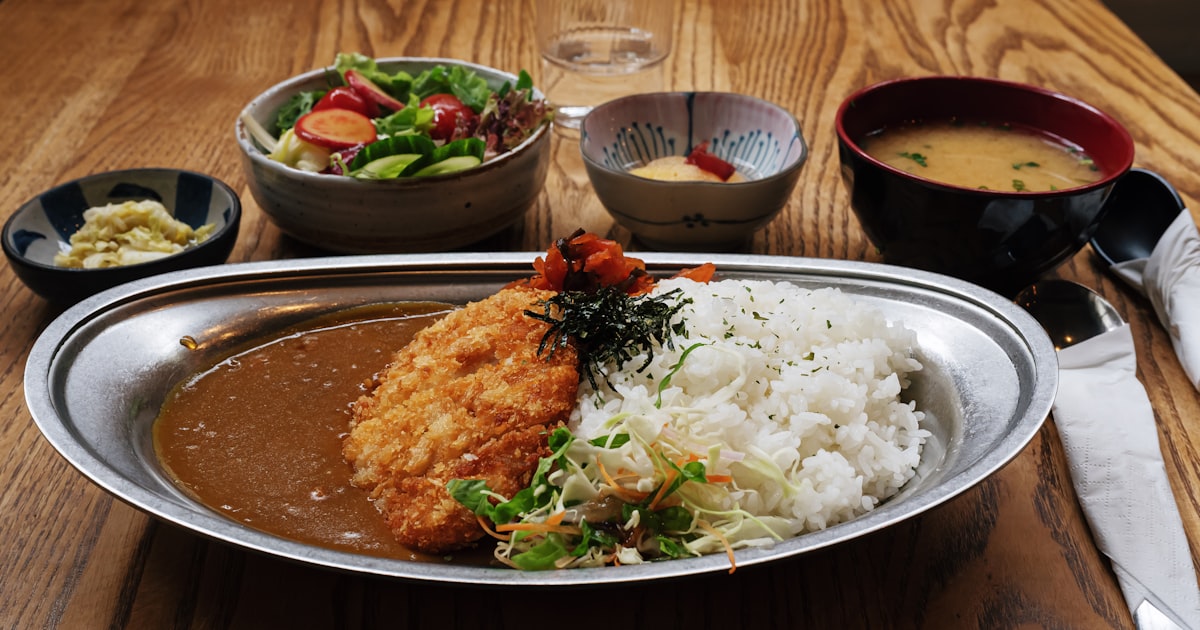
    Japanese curry is built on a roux — flour, fat, and curry spices cooked into a solid block — melted into a pot of stewed onions, carrots, potatoes, and meat (usually pork, beef, or chicken). The result is thick, glossy, and closer to a gravy than a soup. It’s mild by South or Southeast Asian standards even at “hot” settings, with a rounded sweetness from caramelized onion, apple, or honey that’s often added to commercial roux. Don’t expect chili heat; expect umami and comfort-food richness. It’s typically ladled over a mound of short-grain white rice on an oval plate, often with a small pile of fukujinzuke (sweet pickled vegetables) or raw shredded cabbage on the side.

    Where to Eat It: Chains, Specialty Shops, and Regional Styles

    You don’t need to hunt this down — it will find you. The most useful entry point is CoCo Ichibanya (CoCo Ichi), Japan’s biggest curry chain with well over a thousand locations nationwide, including inside train stations and airports. A base plate runs about ¥700–900, and the appeal is total customization: you choose your spice level (usually 1 to 10, sometimes higher), rice amount (from a light 200g to over 1kg at no extra charge, though very large portions cost a bit more), and toppings — cheese, a fried pork cutlet (katsu), a fried egg, or vegetables — each added for roughly ¥100–400. Most branches are open from around 11am to 11pm; some in Tokyo run near 24 hours.

    For a very different, thicker, darker style, look for Go Go Curry or curry counters around Kanazawa — this is “Kanazawa curry,” served on a metal plate with shredded cabbage, no rice-plate ceremony, and a fork instead of a spoon. It’s rich, almost espresso-dark, and a specialty worth seeking out if you’re already exploring that region for its crafts — see our guide to Kutani Ware in Kanazawa and pair a pottery afternoon with a curry lunch. Elsewhere, don’t overlook kare udon (curry broth over thick noodles) or curry bread (kare pan) from any bakery, both cheap ways to try the flavor in a different format.

    If you’re grazing through a food market, Kyoto’s Nishiki Market occasionally has stalls selling curry-stuffed buns or curry croquettes as a quick snack between stops — a good low-commitment way to sample the flavor without sitting down for a full meal.

    How to Order Like You’ve Done This Before

    At a counter like CoCo Ichibanya, the order goes: base curry type (there are usually a few, like plain, cheese, or a seafood option) → spice level → rice amount → toppings, all read off a laminated picture menu or ordered via ticket machine at some locations. A word of caution for beginners: the spice scale is not linear the way you might expect. Level 1–3 is genuinely mild; by level 5 it has real heat; level 10 and above is a serious, slow-building burn that many regulars build up to over repeat visits, not something to jump into on a first try. Start at level 2 or 3 if you have no reference point, and remember rice amount is usually free to adjust, so there’s no cost penalty in asking for less if you’re not sure how hungry you are.

    Budget, Mid-Range, and Splurge

    Budget (¥400–800): Convami-style bakery curry bread, a bowl of kare udon at a standing noodle counter, or a basic CoCo Ichibanya plate with no toppings. Convenience store curry-in-a-bag (retort pouch, heated at the register) is even cheaper, around ¥300–500, and surprisingly decent for a 2am hunger fix.

    Mid-range (¥900–1,500): A loaded CoCo Ichibanya or Go Go Curry plate with katsu and cheese, or a sit-down curry specialty restaurant (many independent shops in Tokyo and Osaka serve a slow-simmered version with better-quality meat in this range).

    Splurge (¥2,000–4,000+): A handful of high-end restaurants, particularly in Tokyo, serve “European-style” curry with wagyu beef or long-simmered demi-glace bases — some chefs treat curry as a serious craft dish rather than a fast-food staple. These usually require no reservation but do have lines at peak lunch hours (12–1pm), so aim for 11:30am or after 1:30pm.

    Bringing the Flavor Home

    Curry roux blocks (brands like House Vermont Curry, Golden Curry, and Java Curry) are sold in every supermarket and convenience store for ¥150–300 a box and pack flat in a suitcase — an easy, cheap souvenir that actually gets used. If you want to cook with proper gear once you’re home, Tokyo’s Kappabashi Kitchen Town is the place to pick up the oval curry plates restaurants actually use, along with the distinctive curry spoon (flat-edged, meant for scooping rice and sauce together in one motion). Most Kappabashi shops open around 9am–5 or 6pm, and many close on Sundays, so check before making a special trip.

    Common Mistakes to Avoid

    • Assuming “curry” means spicy. Default Japanese curry is mild; you have to actively choose a hot level where it’s offered.
    • Mixing the curry into the rice before eating. Most locals eat it in sections — a bite of curry-soaked rice, then plain rice — rather than stirring the whole plate into a uniform mush, though nobody will stop you either way.
    • Skipping the pickles. The red fukujinzuke or pale pink beni shoga aren’t garnish for show — their acidity cuts the richness of the roux, and it’s worth trying a bite with and without.
    • Overordering rice out of habit. Because large portions are often free, it’s easy to over-order and leave a mountain of rice; ask for a smaller size if you’re not sure, since most places let you upsize but not always downsize after the fact.

    Best Time to Go

    Curry has no real season — it’s a year-round comfort food, if anything more popular in winter for its warmth and in summer as a cheap, filling lunch that pairs well with a cold drink afterward (if you want to turn it into a proper evening, Japan’s growing craft beer scene makes a good chaser to a spicy plate). The main timing tip is about crowds, not weather: chain restaurants near stations and office districts get slammed from 12–1pm on weekdays, so eating slightly earlier or later gets you a table without a wait almost anywhere in the country.