Japan Trove

Category: Uncategorized

  • Hamo: Kyoto’s Prized Summer Pike Conger and Where to Try It

    Hamo: Kyoto’s Prized Summer Pike Conger and Where to Try It

    Photo by White.Rainforest ™︎ ∙ 易雨白林. on Unsplash

    If you’re in Kyoto between June and August and see a pale, delicately fanned piece of fish arranged like a chrysanthemum on a lacquered plate, you’ve found hamo — pike conger eel, the dish locals consider inseparable from Kyoto summer itself. It isn’t flashy like tuna or showy like wagyu, and most first-time visitors walk right past it on a menu because the name means nothing to them. That’s a shame, because hamo is one of the few foods that genuinely explains how Kyoto eats with the seasons. Here’s what it is, when to order it, what it costs, and where to find it without stumbling into a tourist-trap plate.

    What Exactly Is Hamo?

    Hamo (鱧) is a species of pike conger eel, similar in family to unagi and anago but leaner, firmer, and riddled with hundreds of tiny, needle-sharp bones running through its flesh. Unlike unagi, hamo isn’t something you can simply fillet and grill — those bones have to be cut, a technique called hamo no honekiri (骨切り), in which a chef makes dozens of fine cuts per inch of flesh without slicing all the way through the skin. It takes years to master and is a genuine point of pride among Kyoto kaiseki chefs. Because Kyoto sits inland with no direct sea access, hamo’s unusual hardiness — it can survive hours out of water — made it one of the only fresh fish that could reach the old capital from the Seto Inland Sea before refrigerated transport existed. That history is part of why it’s so tied to the city specifically, rather than to Osaka or Tokyo.

    Why Summer, Specifically

    Hamo is at its fattiest and most flavorful from late June through August, which happens to coincide with Gion Matsuri, Kyoto’s biggest summer festival. The overlap isn’t a coincidence — hamo is sometimes called “Gion Matsuri no sakana” (the fish of Gion Matsuri), and many ryokan and kaiseki restaurants build special hamo courses specifically around the festival dates in July. If you’re planning a Kyoto trip around the float processions on July 17 or 24, pairing the festival with a hamo lunch is one of the most locally resonant things you can do that week. Outside of this window — say, in autumn or winter — hamo largely disappears from menus or appears frozen and noticeably less interesting, so timing really does matter here more than with most seasonal Japanese dishes.

    How It’s Served

    • Hamo no otoshi (gravel-boiled hamo): The classic preparation — bone-cut hamo is blanched for a few seconds in boiling water, which causes the cut flesh to curl into a flower-like shape, then plunged into ice water. Served chilled with a dab of plum (ume) paste or ponzu. Light, slightly chewy, and the best introduction to the fish.
    • Hamo sushi: Lightly simmered hamo brushed with a sweet soy glaze (nitsume) over rice, similar in spirit to unagi or anago sushi but firmer in texture.
    • Hamo tempura: Deep-fried, often with a sliver of ume or shiso tucked inside — a good gateway dish if raw/chilled textures aren’t your thing.
    • Hamo chiri / hamo nabe: A hot-pot style preparation popular in slightly cooler months at the edges of the season, simmered with vegetables in a light dashi broth.

    Where to Try It: Budget to Splurge

    Budget (¥1,500–3,500): Nishiki Market has several stalls selling hamo tempura skewers or small hamo-sushi sets you can eat while walking — a good way to try the texture without committing to a full meal. Many standard kaiseki-style lunch sets at casual Kyoto-cuisine restaurants also add a hamo course in summer for a modest supplement.

    Mid-range (¥4,000–8,000): Restaurants around Pontocho and Kiyamachi, Kyoto’s riverside dining streets, often run seasonal lunch kaiseki sets in the ¥5,000–7,000 range that feature hamo otoshi as the centerpiece course during summer. Lunch sets are consistently better value than dinner for sampling a hamo course without the full ryotei price tag.

    Splurge (¥15,000 and up): Established Kyoto ryotei and kaiseki houses — many with histories stretching back over a century — build entire multi-course summer dinners around hamo, pairing honekiri-cut hamo with other peak-season ingredients like ayu (river trout) and matsutake-adjacent vegetables. These typically require reservations well in advance, often only in Japanese, so booking through your hotel concierge or a reservation service is the realistic path for most visitors.

    Getting There and Timing Your Visit

    Most of the restaurants worth targeting cluster around central Kyoto — Gion, Pontocho, and the Shijo-Kawaramachi area — all easily walkable from Kyoto’s Keihan or Hankyu lines, or a short taxi from Kyoto Station (roughly ¥1,500–2,000). Lunch service for kaiseki restaurants typically runs from around 11:30am to 2pm, and reservations matter more than people expect, especially during Gion Matsuri in July when the city is at its most crowded. Arriving right at opening time gives you the best shot at a walk-in seat at the smaller, no-reservation spots in Nishiki Market or Pontocho. If you’re visiting in peak summer heat, pack accordingly — see our guide on UV cut arm covers and cooling towels for surviving Kyoto’s brutal July and August humidity between meals.

    Common Mistakes to Avoid

    • Ordering it out of season: Hamo served in November is almost certainly previously frozen and a pale imitation of the June–August version. If a restaurant offers it outside summer, ask before ordering.
    • Judging it like unagi: Hamo is leaner and firmer, not sweet and fatty. Visitors expecting an eel-don texture are often confused by how light and almost bouncy properly bone-cut hamo is — that texture is the point, not a flaw.
    • Skipping the otoshi because it’s served cold: Chilled hamo otoshi is the dish’s purest form; it’s not an afterthought starter, it’s often the highlight of the course.
    • Not booking ahead during Gion Matsuri week: Hamo season and festival season overlap exactly, so July reservations at well-known kaiseki spots disappear fast — book at least a few days out, ideally longer for dinner service.

    A Fish Worth Planning Around

    Hamo won’t show up on an izakaya menu in Tokyo, and you won’t find it easily outside of Kyoto and parts of Osaka — which is exactly what makes it worth seeking out rather than leaving to chance. If your trip lands between late June and August, treat a hamo lunch as seriously as you would a visit to a famous temple: time it, book it if needed, and go in knowing roughly what you’re ordering. It’s a small, specific window into why Kyoto’s food culture is built so tightly around the calendar, and it pairs naturally with a quieter cultural stop the same day — a zazen session at a Kyoto temple in the morning followed by a hamo lunch in the afternoon makes for a genuinely well-paced summer day in the city.
  • Zazen for Beginners: Where Tourists Can Try Zen Meditation at a Kyoto or Kamakura Temple

    Zazen for Beginners: Where Tourists Can Try Zen Meditation at a Kyoto or Kamakura Temple

    Photo by Seval Torun on Unsplash

    You don’t need to be Buddhist, flexible, or fluent in Japanese to sit zazen. A growing number of temples in Kyoto and Kamakura run sessions specifically aimed at curious visitors, and the barrier to entry is lower than most people expect — some are free, walk-in, and over in under an hour. Here’s what’s actually on offer, what it costs, and how to avoid the mistakes that make a first session more painful than it needs to be.

    What Zazen Actually Involves

    Zazen (坐禅) is seated Zen meditation, usually done facing a wall or a plain space, with attention on posture and breath rather than on reaching any particular mental state. A typical beginner session at a temple runs like this: a monk or guide explains the basic posture (cross-legged on a cushion, or kneeling on a low bench if your knees won’t cooperate), you sit for one period of roughly 15–20 minutes, there’s often a short walking-meditation break (kinhin), and then a second sitting period. Some temples ring a bell to mark the start and end, and some monks will tap you on the shoulder with a flat wooden stick (keisaku) if you ask for it — it’s a wake-up aid, not a punishment, and you can decline. Total time commitment is usually 45 minutes to an hour.

    Kamakura: Free, Walk-In Zazen at Kenchoji and Engakuji

    Kamakura, an easy day trip from Tokyo, is the more low-key and budget-friendly of the two cities for this. Kenchoji Temple, Japan’s oldest dedicated Zen training temple, holds public zazen sessions on Friday and Saturday evenings at 5:00 pm in its main hall. No reservation, no English guarantee, and the entry fee is the same as general temple admission (around 500 yen) — the zazen session itself is free. Sit toward the back or sides if you want to watch how returning practitioners handle the posture before the bell rings.

    Engakuji Temple, a short walk from Kita-Kamakura Station, also runs a public zazen meeting on Sunday mornings, open to anyone who shows up a little before start time. Because schedules shift seasonally and around temple events, it’s worth checking each temple’s official notice board or website the week you plan to go rather than locking in a date months ahead.

    Both temples are a few minutes’ walk from JR Kita-Kamakura Station on the Yokosuka Line, about an hour from Tokyo Station with no transfer. If you’re coming from central Tokyo, this is a comfortable half-day trip combined with the Kamakura Daibutsu or the Hase-dera gardens.

    Kyoto: English-Guided Sessions at Shunkoin and Kenninji

    Kyoto’s options are more structured, more expensive, and more reliably in English — useful if you want an explanation of what’s happening and why, not just a quiet room to sit in.

    Shunkoin Temple, a sub-temple within the Myoshinji complex in northwest Kyoto, is the best-known option for foreign visitors. Sessions are led in English, typically run close to two hours including a talk on Zen philosophy, and need to be booked in advance through the temple’s own website — walk-ins aren’t accommodated. Expect to pay in the range of 3,000–4,000 yen per person. This is less a quick taste and more a genuine introductory class, which makes it a good fit if you want context, not just the physical sitting.

    Ryosokuin, a sub-temple of Kenninji in the Gion area, also offers zazen experiences with English support by reservation, set inside a quieter, moss-and-rock garden setting that’s worth the visit on its own. Because it sits right in the Gion/Gion-Shijo area, it pairs naturally with a walk through the old streets before or after — this is also the neighborhood that fills up during the Gion Matsuri float processions each July, so if your trip overlaps with the festival, book your zazen slot early and expect heavier foot traffic around the temple.

    Best Season and Timing

    Zazen itself isn’t seasonal, but your comfort sitting still on a temple floor is. Spring (April) and autumn (October–November) are the easiest months — rooms are unheated or only lightly heated, and midsummer sessions in Kyoto’s humidity can be genuinely uncomfortable in formal seated posture. If you’re visiting in July or August, dress as lightly as temple etiquette allows and bring a hand towel; the UV-cut arm covers and cooling towels sold in convenience stores and drugstores around the city are genuinely useful for the walk to and from the temple, not just the session itself. Winter sessions in Kamakura and Kyoto can be cold enough that tatami-floor halls feel it through your trousers — thick socks help more than a jacket does.

    Morning sessions tend to be quieter and less rushed than afternoon ones, especially at temples that also run general sightseeing hours. Arrive 15–20 minutes early everywhere; latecomers are sometimes turned away rather than seated mid-session.

    What to Wear and Common Beginner Mistakes

    • Loose, dark, modest clothing. Tight jeans make cross-legged sitting miserable. Avoid shorts and sleeveless tops at more traditional temples.
    • Socks, not bare feet or shoes. You’ll remove your shoes before entering the hall; bring socks without holes.
    • Don’t lock your knees into full lotus if it hurts. Temples offer cushions and benches precisely because most visitors can’t sit full lotus comfortably — half-lotus or simply kneeling is completely normal and nobody will judge you for it.
    • Silence your phone before you walk in, not after you sit down — fumbling for it mid-session is the most common disruption guides mention.
    • Don’t assume English is available at the free Kamakura sessions. If you want spoken explanation, Shunkoin or Ryosokuin in Kyoto are the safer bet.

    Budget, Mid-Range, and Splurge Comparison

    • Budget: Kenchoji or Engakuji in Kamakura — effectively free beyond basic temple admission (around 500 yen), no reservation, minimal English.
    • Mid-range: Ryosokuin at Kenninji in Kyoto — roughly 2,000–3,000 yen with reservation, English support, garden setting.
    • Splurge / most thorough: Shunkoin Temple’s full English session — around 3,000–4,000 yen, nearly two hours, includes a philosophy talk and personal Q&A with the guiding monk.

    Getting There

    For Kamakura, take the JR Yokosuka Line from Tokyo, Shinagawa, or Yokohama Station directly to Kita-Kamakura Station — both Kenchoji and Engakuji are within a five-minute walk. For Kyoto’s Myoshinji complex (Shunkoin), the nearest station is Hanazono on the JR Sagano Line, about 15 minutes from Kyoto Station, followed by a short walk through the temple grounds to find the correct sub-temple gate — they aren’t always clearly signed in English, so screenshot a map in advance. Ryosokuin, inside Kenninji, is walkable from Gion-Shijo Station on the Keihan Line or from Kiyomizu-Gojo on the Keihan line, both a few minutes’ ride from Kyoto Station. If you’re taking local trains at off-peak hours, note that priority seating rules are stricter than the signage suggests — leave those seats open even if the car looks empty, since elderly passengers and those with disabilities get priority regardless of how busy the train appears.

    However you choose to try it, treat zazen as an experience to sit through rather than one to master in a single visit — even the monks running these sessions will tell you that sitting badly once is still worth more than reading about sitting well.

  • Dover Street Market Ginza: Inside Comme des Garçons’ Flagship Concept Store

    Dover Street Market Ginza: Inside Comme des Garçons’ Flagship Concept Store

    Photo by Jezael Melgoza on Unsplash

    Most visitors to Ginza come for the department stores and the Chanel-and-Cartier glitter of Chuo-dori. Dover Street Market Ginza is something stranger and, for anyone interested in fashion, far more rewarding: a seven-floor concept store built by Comme des Garçons founder Rei Kawakubo and her husband Adrian Joffe, where the walls, fixtures, and even the floors are treated as part of the art. If you only know Comme des Garçons from the heart-eyes logo on a cardigan, this store will recalibrate what the brand actually is — and it’s one of the few places in Tokyo where shopping itself feels like visiting a gallery.

    What Makes Dover Street Market Ginza Different

    Dover Street Market started in London in 2004 as Kawakubo’s answer to the conventional multi-brand boutique: instead of racks organized by size or category, each label gets its own architecturally distinct “installation,” redesigned every few months by the brand itself, outside artists, or the DSM creative team. Ginza, opened in 2012, was the first Asian outpost, and it remains the largest. You’ll find the full range of Comme des Garçons lines alongside a tightly curated roster of other designers — historically including Junya Watanabe, Noir Kei Ninomiya, Gosha Rubchinskiy-adjacent names, and rotating guest labels — plus exclusive collaborations and archive pieces you won’t find at any other CDG retailer, including the brand’s own stores elsewhere in Tokyo.

    Getting There: Location, Hours, and Transit Tips

    The store occupies the Ginza Komatsu building at 6-9-5 Ginza, Chuo-ku — right on Chuo-dori, Ginza’s main shopping boulevard. The closest station is Ginza Station (Tokyo Metro Ginza, Marunouchi, and Hibiya lines), about a 3–5 minute walk from exit A2; Higashi-Ginza Station on the Toei Asakusa and Hibiya lines is a similarly short walk. Opening hours are 11:00–20:00 daily, with no regular closing day, though it’s worth checking for adjusted hours around New Year’s. If you’re new to navigating Tokyo’s subway during the commuter crunch, it helps to brush up on escalator etiquette before tackling Ginza Station’s busier exits, and if you’re arriving on a packed train, a quick refresher on priority seating rules will save you an awkward moment.

    What’s Inside: Floor-by-Floor Highlights

    The building runs from B1 to the 6th floor, and each level mixes several brand “rooms” rather than one label per floor. Expect mainline Comme des Garçons womenswear and menswear, Junya Watanabe’s more experimental silhouettes, and a dedicated space for the more wearable, logo-driven CDG Play line. Scattered throughout are smaller installations for guest designers and limited-run collaborations that change on no fixed schedule — regulars will tell you the store looks noticeably different every few months, which is the entire point of the concept. The top floor houses Rose Bakery, the same café chain found at CDG’s Dover Street Markets in London and New York, a good spot to rest with a slice of quiche or carrot cake (roughly ¥800–¥1,500 per item) before continuing down through the building.

    Budget, Mid-Range, and Splurge Shopping

    Prices span an enormous range, which is actually useful if you’re traveling with a fixed fashion budget:

    • Budget (under ¥15,000): CDG Play T-shirts, socks, and small accessories typically run ¥6,000–¥14,000. Postcards, pins, and the occasional small zine or printed matter are the cheapest way to leave with something in a DSM bag.
    • Mid-range (¥15,000–¥60,000): Play cardigans and sweaters, small leather goods and wallets, and Junya Watanabe T-shirts or basics generally land in this bracket.
    • Splurge (¥60,000 and up): Mainline Comme des Garçons runway pieces, structural jackets, and exclusive DSM collaborations can run from ¥100,000 well into the ¥300,000+ range. Archive and rare pieces sold through the store’s vintage-adjacent corners are priced individually and can be the most expensive items in the building.

    If sculptural, deconstructed shapes aren’t your thing but you still want serious Tokyo fashion hunting, it’s worth pairing a DSM visit with a trip to Nishi-Ogikubo’s vintage shop street, which scratches a completely different but complementary itch for secondhand and archival finds.

    Best Time to Visit

    Weekday mornings right at the 11:00 opening are by far the calmest time to browse — staff have more time to talk through pieces, and you won’t be navigating around tour groups. Weekends, especially Saturday afternoons, get busy with both tourists and local fashion students, particularly during Tokyo’s spring (March–April) and autumn (October–November) shopping seasons when foot traffic in Ginza peaks generally. If you’re hunting for discounts rather than exclusives, Comme des Garçons’ sales periods typically land around late December into January and again in late June through July, mirroring Japan’s standard seasonal sale calendar — though the rarest collaboration pieces rarely go on sale and can sell out within days of release.

    Common Mistakes to Avoid

    The biggest misconception is treating DSM Ginza as “just a Comme des Garçons shop.” Visitors expecting a single, consistent store layout are often thrown by the installation-based design — ask staff which rooms are new if you want the full experience rather than wandering past half the building. Another frequent mistake is assuming cash is required: DSM Ginza accepts major credit cards and increasingly IC cards, so there’s no need to carry large amounts of yen. Finally, don’t assume the store is CDG-exclusive merchandise only — some of the most interesting buys are the smaller guest-designer corners that rotate out quickly, so if something catches your eye, it may not be there on a return trip.

    Tax-Free Shopping and Practical Tips

    As with most large Japanese retailers, Dover Street Market Ginza offers tax-free shopping for visitors on a tourist visa, provided your same-day purchase total (excluding consumables) reaches ¥5,000 before tax. Bring your passport — it’s checked at the point of sale, and the tax-free paperwork is processed on the spot rather than at a separate counter. Bags and purchases are usually sealed per Japan’s tax-free export rules, so plan to keep clothing purchases unworn until you’ve left the country if you want to retain the exemption. Give yourself at least an hour to properly see the building; rushing through at a department-store pace means missing exactly the installations that make this flagship worth the trip.

  • Mimiga: Okinawa’s Pickled Pig Ear Dish and Where Adventurous Eaters Can Try It

    If you’ve eaten your way through sushi, ramen, and yakitori and are looking for something that actually surprises you, Okinawa has an answer: mimiga (ミミガー), thinly sliced pig ear dressed in vinegar, peanuts, and sometimes a slick of chili oil. It’s one of the defining dishes of Ryukyu cuisine, a style of cooking that developed on a subtropical island chain with its own history, separate from mainland Japan’s culinary traditions until well into the 20th century. Here’s what it is, what it tastes like, and exactly where to order it without fumbling through a menu in Naha.

    What Exactly Is Mimiga?

    Mimiga is boiled or steamed pig ear, cut into thin strips and tossed with a dressing — usually rice vinegar, soy sauce, sesame or peanut paste, and sliced scallion. Okinawan cooking traditionally uses nearly every part of the pig (locals say “everything but the oink”), and mimiga sits alongside dishes like rafute (braised pork belly) and ashitebichi (pig trotter stew) as proof of that philosophy. The texture is the main event: a slightly springy, cartilage-rich crunch that’s closer to a firm jellyfish salad than anything else most visitors will have tried. The flavor itself is mild — it takes on whatever the dressing gives it — so the dish lives or dies on the sauce. A good vinegar-peanut version is bright, nutty, and refreshing, which is exactly why Okinawans treat it as a cold starter with awamori (the local distilled spirit) rather than a heavy main course.

    How It’s Served and What to Expect

    You’ll typically see mimiga listed on izakaya menus as a shared small plate, priced around ¥480–¥780. It arrives cold, already sliced and dressed, often alongside mimiga pīsan (mimiga mixed with bitter melon, peanuts, and tofu) or a mimiga sanpin salad version with cucumber. If the idea of pig ear alone feels like a big ask, ordering it as part of a mixed Okinawan starter platter is the gentler way in — you get a small portion alongside things like umibudo (sea grapes) and tofuyo (fermented tofu), so you’re not committing to a full plate on your first try. For readers who enjoy working through Japan’s lesser-known regional dishes, this sits in the same adventurous-but-approachable category as hiyayakko — a cold dish that depends entirely on how it’s dressed.

    Where to Try Mimiga in Naha

    The single easiest place to see mimiga before you commit to ordering it is the Makishi Public Market (First Makishi Public Market) in Naha, a short walk off Kokusai Dori. The market’s ground floor has butchers selling pre-sliced, pre-dressed mimiga by weight, so you can see the texture and ask for a small taste-sized portion — useful if you want to try it without sitting down for a full meal. Upstairs, several stalls will cook or plate what you’ve bought downstairs for a small fee, a system unique to this market.

    For a sit-down version, Naha’s long-running Okinawan restaurants near Kokusai Dori are the most reliable bet — look for izakayas advertising “郷土料理” (kyodo ryori, local cuisine) in their window rather than generic yakitori chains, since mimiga rarely appears on mainland-style menus. These restaurants generally open for dinner around 17:00 and serve until 23:00–24:00, and mimiga is almost always on the appetizer section of a laminated, sometimes English-translated menu. Staff are used to foreign visitors asking what it is, so don’t hesitate to point and ask — “kore wa nan desu ka?” (what is this?) works fine, and most places are happy to describe it as pig ear before you order.

    Best Time to Go and Getting There

    Mimiga is served year-round and isn’t seasonal the way some Japanese dishes are, so there’s no particular month you need to target. What does matter is timing your Okinawa trip around the weather: spring (March–April) and autumn (October–November) avoid both the rainy season (roughly early May to mid-June) and the worst summer humidity. If you do visit in peak summer, pack accordingly — the kind of UV-cut arm covers and cooling towels sold throughout mainland Japan are just as useful, if not more so, on Naha’s streets.

    Naha Airport is a direct flight from Tokyo (around 2.5–3 hours), Osaka, and several other Japanese cities, and Kokusai Dori is about a 15-minute taxi ride or a short monorail trip (the Yui Rail) from the airport to Makishi Station, which puts you right next to both the public market and the izakaya district.

    Budget, Mid-Range, and Splurge Options

    • Budget (¥300–¥600): Buy pre-packed sliced mimiga by weight at Makishi Public Market or a Naha supermarket like San-A, and eat it as a snack with a convenience-store beer.
    • Mid-range (¥500–¥900 per plate): Order it as a shared appetizer at a Kokusai Dori-area izakaya alongside rafute and awamori — a typical night out with 3–4 small plates and drinks runs roughly ¥3,000–¥4,500 per person.
    • Splurge: Some of Naha’s higher-end Ryukyu-cuisine restaurants plate mimiga as part of a multi-course kaiseki-style tasting menu (often ¥6,000–¥10,000+ per person), presenting it with more refined dressings and smaller, more delicate cuts — a good option if you want to try the full range of Okinawan pork dishes in one sitting without ordering a la carte.

    Common Mistakes Visitors Make

    The biggest mistake is ordering a full-size portion as your very first bite of the dish — the cartilage texture is the one thing that catches people off guard, so a shared small plate or a market taste-portion is the smarter entry point. The second mistake is assuming it will taste strongly of pork; it doesn’t, since boiling largely neutralizes the flavor and the dressing does the work, so if you’re hoping for something rich and meaty, you may be disappointed, and if you’re wary of strong flavors, you’ll likely find it milder than expected. Finally, don’t assume every Okinawan restaurant has it — plenty of tourist-facing spots on Kokusai Dori stick to a “greatest hits” menu of taco rice and Okinawa soba, so look specifically for a kyodo ryori izakaya if mimiga is the goal.

    Bringing Mimiga Home

    Vacuum-packed, shelf-stable mimiga (already sliced and seasoned) is sold as a souvenir item in Naha Airport’s departure-area shops and at Okinawa specialty stores on the mainland, including Okinawa antenna shops in Tokyo that stock island products like awamori, goya, and pork specialties. It’s a genuinely distinctive food souvenir — more interesting than another box of matcha sweets — though note that it’s a pork product, so check your destination country’s customs rules on meat imports before packing it in checked luggage.

  • Goto Udon: Nagasaki’s Hand-Pulled Noodle Tradition from the Goto Islands

    Goto Udon: Nagasaki’s Hand-Pulled Noodle Tradition from the Goto Islands

    Photo by Kirill Tonkikh on Unsplash

    Most visitors who know Japan’s “big three” udon styles can name Sanuki udon from Kagawa without hesitation. Far fewer have heard of the third: Goto udon, hand-stretched on a remote archipelago off Nagasaki, finished with local camellia oil, and traditionally eaten straight out of the cooking pot with a raw egg dip. It’s one of the few regional noodle traditions in Japan that still requires real effort to track down — which is exactly what makes it worth the detour.

    What Makes Goto Udon Different

    Unlike Sanuki udon, which is kneaded and cut by hand or machine into thick, chewy strands, Goto udon is made using a stretching technique closer to how somen or Chinese hand-pulled noodles are produced. The dough is repeatedly stretched into long loops and hung over wooden rods to rest and elongate under its own weight, which is why the noodles come out notably thinner than Sanuki or Inaniwa udon — closer in diameter to a thick somen than a classic udon strand.

    Two local ingredients define the flavor and texture. First, salt harvested from the surrounding Goto Sea is worked into the dough instead of standard table salt, which locals credit for the noodle’s firm, springy bite. Second, and more distinctively, the stretched dough is coated in camellia (tsubaki) oil pressed from trees that grow wild across the islands, rather than the vegetable oil or dusting flour used elsewhere in Japan. The oil keeps the strands from sticking as they’re stretched and gives the finished noodle a faint, clean fragrance that locals consider Goto udon’s signature.

    The Jigoku-daki Ritual: How It’s Actually Served

    The classic way to eat Goto udon is called jigoku-daki, literally “hell-boiling.” A clay or metal pot of noodles is kept simmering at the table, and diners pull servings straight out of the broth with chopsticks rather than draining them into a separate bowl first. The noodles go into a small dipping cup containing a raw egg beaten with soy sauce, sometimes loosened with a splash of the hot cooking water — the heat from the noodles gently cooks the egg into a silky, custard-like sauce as you eat.

    What makes the broth itself worth paying attention to is ago dashi, a stock made from flying fish (ago) that’s a Nagasaki specialty used across the prefecture’s cooking. It’s lighter and slightly sweeter than the kombu-and-bonito dashi used in most of Japan, and it’s the backbone of both the dipping sauce and any accompanying soup. A full jigoku-daki set for one person at a restaurant typically runs somewhere in the ¥1,500–¥3,000 range, depending on whether it comes with extras like tempura, local fish, or seasonal vegetables; ordering it to share among two or three people is common since the pot stays hot and refillable servings are normal.

    Getting to the Goto Islands

    Goto is a chain of islands roughly 100km west of Nagasaki city, and getting there takes real planning. The jetfoil (high-speed boat) from Nagasaki Port to Fukue, the islands’ main hub, takes about 1 hour 20 minutes to 1 hour 40 minutes and costs roughly ¥6,000–¥7,500 one way. The regular car ferry is slower, around 3 to 3.5 hours, but considerably cheaper at roughly ¥3,000–¥4,500 one way. There are also short flights from Nagasaki Airport to Fukue Airport on regional carrier ORC, taking about 30 minutes, with fares that swing widely by booking window — anywhere from around ¥6,000 if booked early to over ¥13,000 for a walk-up fare. Schedules for all three options are limited and change seasonally, so check current timetables before building an itinerary around a day trip; many travelers plan an overnight stay on Fukue or nearby Naru and Wakamatsu islands rather than rushing back same-day. If you’re arranging local transport on the islands, it’s also worth knowing that fishing is a core part of Goto’s economy and culture — a local fishing boat charter is a genuinely good way to see the coastline and understand where the flying fish in that ago dashi actually comes from.

    Best Season and Timing to Visit

    Spring (April–May) and autumn (October–November) offer the mildest weather for exploring the islands’ coastline and churches, with calmer seas and more reliable ferry crossings. Summer brings good weather but also typhoon risk from August through September, which can cancel jetfoil and flight schedules with little notice — build in buffer days if you’re traveling then. Winter is quieter and noodle-making itself is at its traditional best, since cold, dry air is considered ideal for stretching and drying udon outdoors, but ferry service can be choppier and some smaller eateries reduce hours.

    Where to Eat It — On the Islands and in Nagasaki City

    If the ferry or flight doesn’t fit your itinerary, you don’t have to skip Goto udon entirely. A number of udon specialty restaurants and izakaya in Nagasaki city serve it alongside other local dishes, often as part of a set menu that pairs well with a day spent around Glover Garden and the harbor area. Expect to pay roughly ¥900–¥1,500 for a simple hot or cold bowl at a casual shop in the city, versus the full jigoku-daki experience on the islands themselves, which leans toward the ¥2,000–¥3,000 range when it includes local seafood or tempura sides. Budget travelers can find simpler cold Goto udon bowls dressed with ago dashi tsuyu for under ¥1,000 at some lunch counters; splurge-minded visitors should look for ryokan on Fukue or Naru that build an entire multi-course dinner around the jigoku-daki pot, often alongside Goto beef or fresh sashimi.

    Bringing Goto Udon Home: Buying Dried Noodles

    Dried Goto udon is one of Nagasaki’s most reliable noodle souvenirs — it travels well, doesn’t need refrigeration, and is sold in gift-boxed bundles at souvenir shops around Nagasaki Station, Nagasaki Airport, and on the islands themselves. A standard box of several servings typically costs somewhere between ¥800 and ¥2,000 depending on quantity and packaging, and most boxes include a small packet of ago dashi-based tsuyu so you can recreate something close to the dipping sauce at home. If you’re also passing through Kyushu’s rail network, it’s worth comparing notes with the broader world of JR Kyushu station-limited snacks, since station shops are often the easiest place to grab a boxed set right before boarding a train or bus out of the region.

    Common Mistakes to Avoid

    The biggest mistake is assuming Goto udon is interchangeable with Sanuki udon and expecting the same thick, dense chew — the whole point of Goto’s noodle is that it’s thinner and more delicate, so judging it by Sanuki’s standards misses what makes it special. Second, skipping the raw egg dip because it sounds unfamiliar: the egg is there to form a sauce as it cooks against the hot noodles, not to be eaten raw on its own, and it’s central to the jigoku-daki method. Third, underestimating ferry and flight scarcity — Goto’s transport links are genuinely limited, especially outside peak travel periods, so booking a fixed return time without a buffer is a common way to get stranded. Finally, travelers obsessed with regional noodle rivalries elsewhere in Japan, like the Onomichi versus Innoshima ramen debate in the Setouchi region, will find Goto udon makes a worthwhile addition to that kind of noodle-tourism itinerary — just one that requires a boat instead of a train.

  • Doria: Japan’s Baked Rice Gratin and Where to Try This Yoshoku Comfort Food

    Doria: Japan’s Baked Rice Gratin and Where to Try This Yoshoku Comfort Food

    Photo by Claudio Schwarz on Unsplash

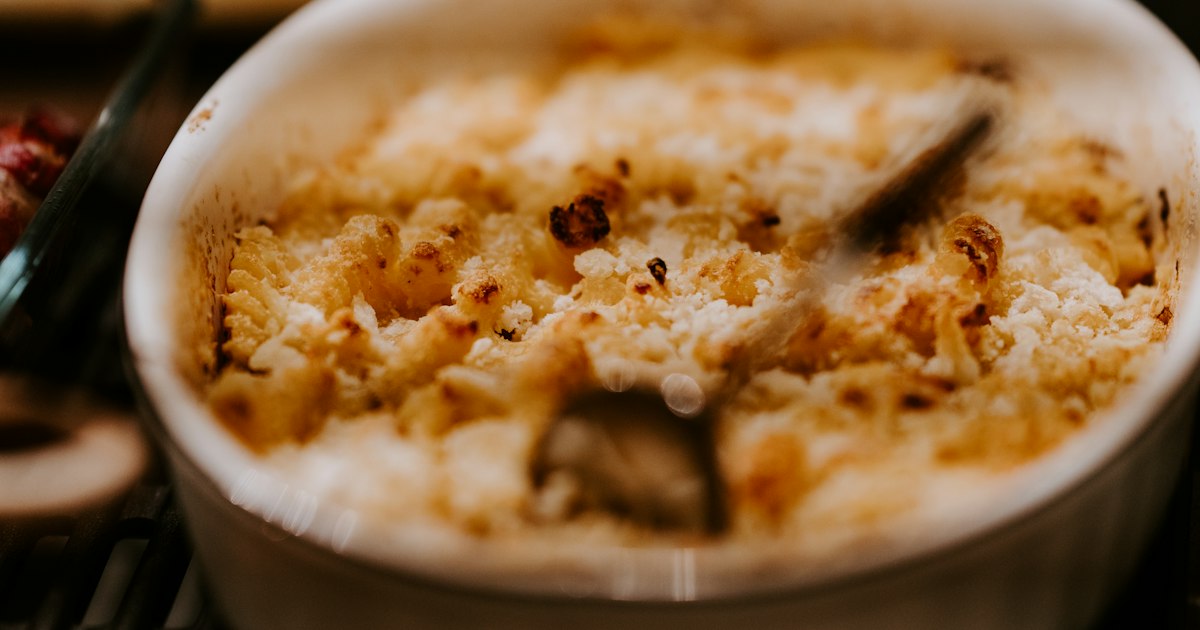
    If you’ve wandered into a Japanese café on a cold day and seen someone eating what looks like a casserole dish of rice bubbling under melted cheese, that’s doria — one of the cornerstones of yoshoku, Japan’s category of Western-inspired comfort food. It’s rice, a creamy sauce, and a protein of your choice, baked together under a golden layer of cheese until the edges turn crisp and the center stays molten. It’s not on most tourist itineraries, which is exactly why it’s worth seeking out.

    What Doria Actually Is

    Doria is baked rice gratin: pilaf-style or plain buttered rice spread in a shallow oven dish, topped with a white sauce (usually a béchamel or cream-based sauce, sometimes a demi-glace variant), a protein like shrimp, chicken, or minced beef, and a blanket of cheese, then baked until browned on top. The texture contrast is the whole point — crisp cheese crust, molten sauce, and rice that’s absorbed just enough creaminess without turning to mush.

    It sits in the same yoshoku family as hamburg steak, omurice, and korokke — Japanese reinterpretations of European dishes that emerged in the late 19th and early 20th centuries as Japan opened to Western food culture. If you enjoyed digging into hayashi rice, doria is the next logical stop — both dishes lean on rich, European-style sauces poured over Japanese short-grain rice, but doria’s defining move is the oven and the cheese.

    Where the Dish Actually Comes From

    Doria’s origin story is tied to Yokohama’s Hotel New Grand, which opened in 1927 and became a hub for Western-style dining as Japan modernized its port cities. The hotel’s Swiss-born chef, Saly Weil, is widely credited with creating doria for a guest who wanted something light but warming. Whether or not every detail of that story is exact, Hotel New Grand still serves its own version today, and it’s the most historically grounded place to try the dish if you’re in the Yokohama area.

    Hotel New Grand is a short walk from Yokohama Station (or Nihon-odori Station on the Minato Mirai Line), right by Yamashita Park and the waterfront — an easy half-day add-on if you’re already doing Minato Mirai or Chinatown. The hotel’s main dining room, The Café, serves its signature “Shrimp Doria” (ドリア) for around 2,500–3,000 yen, which is on the higher end for this dish but comes with the historical bragging rights of eating it where it was supposedly invented.

    Budget, Mid-Range, and Splurge Options

    Doria’s everyday home is the family restaurant chain, not the fine-dining room, so most people’s first bite comes cheap.

    • Budget (500–900 yen): Saizeriya, the ubiquitous Italian-style family chain, sells several doria variations — the Milanese-style doria and a mushroom cream doria are regulars on the menu — for well under 1,000 yen. It’s an easy, low-risk way to try the dish if you’re not sure you’ll like it.
    • Mid-range (900–1,500 yen): Family restaurants like Royal Host, Jonathan’s, and Denny’s Japan all carry doria, often paired with a small salad and soup set. Royal Host’s version tends to use a richer demi-glace or cream sauce and is a step up in quality from the fast-casual chains.
    • Splurge (2,000–3,000+ yen): Hotel New Grand in Yokohama, as above, plus standalone yoshoku specialty restaurants in Tokyo and Osaka that make their white sauce from scratch and bake individual portions in copper or ceramic gratin dishes. These places treat doria as the centerpiece of the meal rather than a side option, often adding lobster, crab, or wagyu versions.

    How to Order and Eat It

    Doria is almost always ordered by its filling: ebi doria (shrimp), kani doria (crab), chicken doria, or hambagu doria (hamburg steak doria, essentially doria topped with a minced meat patty). Menus will usually list it simply as “〇〇ドリア.” It arrives in the baking dish itself, blisteringly hot — restaurants will warn you with a “お気をつけください” (please be careful) if the dish just came out of the oven, and they mean it. Give it two or three minutes before digging in, both because the ceramic dish retains heat and because the sauce needs a moment to set slightly so it doesn’t just run off the rice.

    It’s eaten with a spoon, not chopsticks, and usually comes with no side dishes beyond maybe a small salad or soup in a set meal. Don’t expect bread on the side — this is a rice dish through and through, not a European gratin substitute.

    Best Season and Timing

    Doria is a cold-weather dish by instinct — it’s warming, rich, and feels right in autumn and winter, roughly October through March. That said, it’s on year-round menus at every chain that serves it, so you won’t struggle to find it in summer; it’s just less of a “craving” item when it’s 35°C outside. If you’re building a cold-season itinerary around onsen towns or snow regions, doria is a reliable lunch option in station cafés and department store restaurant floors (depachika) where yoshoku counters are common.

    Lunchtime is the best time to go if you want it at a sit-down restaurant without a wait — most family restaurants run lunch sets from around 11:00 to 15:00 that include doria at a discount versus the dinner menu price.

    Common Mistakes to Avoid

    • Ordering it expecting pasta-adjacent lightness. Doria is heavier and richer than it looks in photos — the rice absorbs the sauce, so portions that look modest can be quite filling.
    • Touching the dish right away. The ceramic gratin dish holds heat far longer than the food looks like it should; burned fingers are the most common doria mishap.
    • Assuming every “doria” is the same. Chain versions use a simpler béchamel, while specialty yoshoku restaurants may use a brown demi-glace sauce closer to hayashi rice. If you want the classic white, creamy version, look for “cream doria” or “white sauce doria” (ホワイトソースドリア) specifically.
    • Skipping it because it seems “not Japanese enough.” Yoshoku is as much a part of everyday Japanese dining as ramen or soba — it’s just less photographed. Doria, hayashi rice, and omurice are staples of the same lunch-counter culture.

    Finding It Outside the Big Cities

    Because doria lives mainly in chain family restaurants and department store restaurant floors, you’ll find it almost anywhere in Japan, including smaller cities and even rural service areas along expressways. It’s a useful fallback meal if you’re traveling somewhere like a Fuji-area day trip (after a stop at Oshino Hakkai, for instance) and want something warm and filling without hunting for a specific regional specialty. The same goes for quieter island getaways — on a trip to somewhere like Kozushima, a family restaurant doria might be the most reliable hot meal you’ll find outside of seafood-focused local spots.

    If you’re building out a broader yoshoku-tasting itinerary, pairing doria with hayashi rice and omurice across a few meals gives you a good sense of how Japan absorbed and reshaped Western cooking over the past century — comfort food that’s distinctly its own thing by now, whatever its Swiss-chef origin story.

  • Hayashi Rice: Japan’s Demi-Glace Beef Stew and the Yoshoku Classic Few Tourists Know

    Hayashi Rice: Japan’s Demi-Glace Beef Stew and the Yoshoku Classic Few Tourists Know

    Photo by Rita Chou on Unsplash

    Ask a first-time visitor to name a Japanese rice dish and you’ll hear curry rice, omurice, maybe katsudon. Almost no one says hayashi rice (ハヤシライス), even though it sits on the same menus, at the same family restaurants, and in the same supermarket roux aisle as its more famous cousins. That’s a shame, because hayashi rice is one of the gentlest, most approachable dishes in the entire yoshoku (Western-influenced Japanese) repertoire — thinly sliced beef and onions simmered in a glossy brown demi-glace sauce, ladled beside a mound of white rice. If you like simple rice-based comfort food, this is worth tracking down.

    What Hayashi Rice Actually Is

    Hayashi rice is beef and onion, slow-cooked until soft, in a sauce built on demi-glace — the reduced brown stock-and-wine base borrowed from French cooking and adapted for Japanese kitchens in the late 19th century. It’s often finished with a splash of red wine, a little tomato, and sometimes mushrooms. The sauce is poured over or beside steamed rice, not mixed into it, and the rice usually stays separate on the plate rather than curry-style soaked.

    The texture and flavor sit between beef stew and curry rice: smoother and less spiced than curry, richer and more sauce-forward than a plain hamburg steak (hambagu). It’s typically eaten with a spoon, and most restaurants serve it with a small side salad and sometimes a cup of soup as part of a lunch set (teishoku).

    A Murky, Contested Origin Story

    Unlike curry rice, which has a fairly well-documented British-via-Royal-Navy path into Japan, hayashi rice’s name is genuinely disputed, and that uncertainty is part of its charm. Two stories circulate. The first says it’s a phonetic adaptation of “hashed beef” — Meiji-era Japanese speakers struggled with “hash,” and it drifted toward “hayashi.” The second credits a scholar or clerk named Hayashi connected to the Maruzen bookstore and cafe in Tokyo, who supposedly asked the kitchen to combine leftover beef stew ingredients over rice, and the dish became known as “Hayashi-san no raisu” (Mr. Hayashi’s rice). Neither claim is conclusively proven, and Japanese food historians still argue about it — so treat any restaurant that confidently claims to be “the original” with a little skepticism.

    Where to Actually Order It

    Hayashi rice isn’t a specialty-restaurant destination dish the way sushi or ramen can be; it’s more of a reliable menu item you’ll stumble onto. Knowing where to look saves time.

    • Budget (¥800–1,200): Family restaurant chains — Jonathan’s, Royal Host, Skylark, and similar — almost always carry hayashi rice as a lunch set with soup and salad. It’s consistent, if simplified, and a good way to try the dish without hunting.
    • Mid-range (¥1,200–1,800): Department store restaurant floors (often the 8th floor “restaurant street” in older stores like Takashimaya or Isetan) and old-school yoshoku specialty shops serve a more carefully made version, usually with visibly hand-cut beef and a thicker, longer-simmered sauce.
    • Splurge (¥2,000–3,500): A handful of long-running Western-style grill restaurants (grill or “guriru” in their name) in Tokyo and Osaka make hayashi rice with wagyu trimmings and house-made demi-glace that’s been reducing for days. These are usually the same kitchens known for hamburg steak and omurice, so check the full menu rather than assuming hayashi rice alone justifies the trip.

    Hotel breakfast buffets at Western-style city hotels occasionally feature hayashi rice as the “Japanese-Western fusion” station, which is a low-effort way to try it if you’re already staying there.

    Best Season and Timing to Order It

    Hayashi rice has no festival, no seasonal ingredient tied to it, and no opening-hours quirk — it’s an everyday lunch and dinner item, available year-round wherever it’s on the menu. That said, it leans toward cold-weather comfort food in practice: demand (and menu prominence) tends to rise from late autumn through winter, the same way curry rice and stew dishes do. If you’re building a Japan itinerary around comfort food in cooler months — say, pairing a trip to see Mount Fuji from Oshino Hakkai with a hearty lunch back in town — hayashi rice fits that slot nicely. Lunch sets are usually cheaper than the same dish at dinner, so order it midday if the restaurant offers both.

    Common Mistakes Visitors Make

    • Confusing it with curry rice on sight. Both are brown sauce over white rice. Menus abroad rarely explain the difference, so if you want hayashi rice specifically, look for the katakana ハヤシライス or ask directly — “curry” (カレー) and “hayashi” are different dishes even though they look similar in a photo.
    • Expecting restaurant-grade demi-glace at every price point. The ¥900 family-restaurant version is closer to a convenience stew than a French reduction. That’s not a bad thing — it’s the everyday version — but don’t judge the dish entirely on a rushed, cheap bowl.
    • Skipping the rice-and-sauce ratio. Unlike curry, hayashi rice sauce is meant to be eaten more slowly, spoonful by spoonful with rice, rather than fully mixed in from the start. Mixing everything together immediately makes the last few bites dry.
    • Not realizing it’s a home-cooking staple, too. Many Japanese households make hayashi rice from boxed roux blocks exactly like curry roux, so don’t expect every version you encounter to be a chef’s specialty — plenty of family-restaurant and even some casual-dining versions are built from the same supermarket base home cooks use.

    Bringing Hayashi Rice Home

    This is where hayashi rice becomes a genuinely useful souvenir. Japanese supermarkets, Don Quijote, and airport grocery sections sell boxed hayashi rice roux — solid blocks of pre-made demi-glace-style sauce base, similar in format to curry roux — from brands like House Foods and S&B, usually ¥150–300 per box. You just melt the block into a beef-and-onion stew at home for a reasonably close approximation of the restaurant dish. It packs flat, doesn’t need refrigeration until opened, and is far lighter to carry than jarred sauce. If you’re already assembling a Japanese-kitchen haul — say, alongside a tetsubin for coffee — a couple of hayashi roux boxes are a cheap, practical addition that most airport shops back home simply don’t stock.

    If you’d rather compare it to other rice-bowl dishes while you’re exploring Japan’s food scene, it’s worth setting hayashi rice against something like negitoro don — both are rice-bowl staples that locals eat constantly and tourists mostly overlook, just from opposite ends of Japan’s culinary history: one rooted in sushi-counter tradition, the other in Meiji-era Western adaptation.

  • Kozushima: Tokyo’s Quiet Izu Island of Free Hot Springs and Star-Sand Beaches

    Kozushima: Tokyo’s Quiet Izu Island of Free Hot Springs and Star-Sand Beaches

    Photo by Cris Tagupa on Unsplash

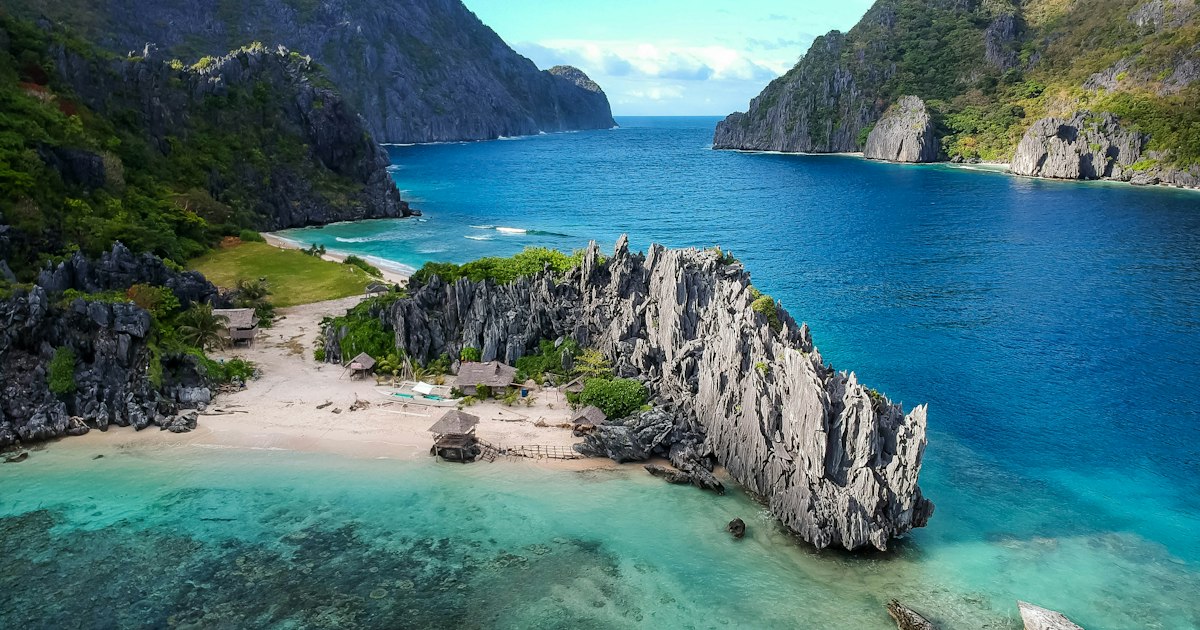
    Technically, Kozushima is part of Tokyo. Practically, it feels like a different country: a volcanic cone rising out of cobalt-blue water, a few hundred fishing boats, and almost no tourists. It’s one of the farthest-flung of the Izu Islands, reached by overnight ferry or a tiny propeller plane, and the payoff for the extra travel time is free open-air hot springs, water clear enough to see 20 meters down, and beaches that stay nearly empty even in August. If you’ve already done Tokyo, Kyoto, and Osaka and want something that still feels undiscovered, this is it.

    Where Is Kozushima and Why Go

    Kozushima sits roughly 180 km south of Tokyo, past Izu Oshima and Niijima in the Izu Islands chain. It’s small — about 18 km of coastline and a resident population under 2,000 — and dominated by Mount Tenjo, an 572m extinct volcano whose obsidian deposits are rare enough in Japan that the island has built a small museum around them. The appeal isn’t a checklist of sights; it’s the combination of free coastal hot springs, swimmable water the color of a postcard, and a slow pace that’s hard to find anywhere this close to central Tokyo.

    Getting There

    There are two realistic options, and both require planning ahead because this isn’t a same-day trip.

    • Overnight ferry: Tokai Kisen runs large ferries from Takeshiba Pier in Tokyo, departing around 22:00 and arriving at Kozushima the next morning after calling at other Izu islands along the way. The trip takes roughly 9-10 hours. Second-class (unreserved floor space) fares run around ¥9,000-11,000 one way; private cabins cost more. Check the Tokai Kisen schedule before booking anything else — sailings aren’t daily year-round, and services to Kozushima are among the first to be cancelled when seas are rough, since it’s one of the more exposed islands on the route.
    • Flight: New Central Airservice flies small propeller planes from Chofu Airport in western Tokyo to Kozushima in about 50 minutes. One-way fares are typically in the ¥18,000-20,000 range, flights are limited to a few per day, and baggage allowance is tight on these small aircraft. Weather cancellations happen here too.

    Either way, build in a buffer. If rough seas or fog cancel your return sailing or flight, you may be stuck an extra day — travel insurance that covers trip disruption is worth having for this one.

    Free Hot Springs You Can Soak In Anytime

    This is Kozushima’s signature feature: several open-air hot spring baths on the coast that cost nothing to use. The best known is Akazaki Yuhodo Onsen, a rotenburo built into the black volcanic rock on a walking path at the island’s southern tip, with the ocean essentially as your view. There’s also a free bath near the port at Mamashita, convenient if you want a soak right off the ferry.

    A few things catch first-timers off guard. These are public, mixed-gender, outdoor baths, so swimsuits are required — leave the full-nude bathing etiquette for a conventional ryokan onsen. Soap and shampoo are not allowed since the water drains straight back into the sea. And there’s no staff on site, so bring your own towel and expect basic, unheated changing areas rather than a spa experience. Akazaki in particular is best visited in daylight; there’s no lighting at night, and the rocks are uneven.

    Beaches and the Island’s Famously Clear Water

    Kozushima’s water visibility is the reason local dive shops get repeat customers from mainland Japan. Maehama, the main beach near the port, has pale, fine-grained sand and shallow turquoise water that’s calm enough for casual swimming. Some visitors do find small amounts of star-shaped shell fragments mixed into the sand on quieter coves — nowhere near the volume you’d see on Okinawa’s famous star-sand beaches, but a fun detail if you’re looking closely.

    The more striking sight is Tataki, a narrow sandbar connecting the main island to a small rocky islet, with water so clear and blue it looks tropical rather than 180 km from Tokyo. Snorkeling gear is worth packing or renting locally; several operators also run half-day boat trips, and if you want to fish rather than just look at the water, the kind of small-boat charter covered in this guide to booking a local fishing boat charter is exactly the setup you’ll find around Kozushima’s port.

    Sun exposure on the water is intense with little shade on the beaches, so the kind of UV arm covers and cooling towels described in this guide to Japan’s anti-sunburn gear are genuinely useful here, not just a city-street accessory.

    Best Time to Visit

    June through September is swimming and diving season, with the warmest water and the best visibility. August is also typhoon season for the Izu Islands, which is when ferry cancellations are most frequent — if your schedule is tight, early-mid summer or September tends to be more reliable than peak August. Spring (April-May) and autumn bring fewer crowds and pleasant hiking weather on Mount Tenjo, and the free hot springs are arguably at their best in cooler months, when sitting in warm water with an ocean view is a genuine contrast rather than just a hot day made hotter. Winter is quiet and cold-feeling, but the baths stay open and sailings, while less frequent, still run in calmer stretches.

    Common Mistakes to Avoid

    • Treating it as a day trip. Between the overnight ferry schedule and limited flights, most itineraries need at least two nights to make the travel worthwhile.
    • Not checking the sailing schedule for cancellations. Kozushima is one of the farther islands on the route and gets cancelled first in rough weather — have a backup plan or flexible return date.
    • Forgetting a swimsuit for the free baths. Unlike most onsen, these are not nude bathing, and there’s nowhere to buy one on short notice outside the port area.
    • Relying on cards. Cash is still the safer bet for minshuku, small restaurants, and scooter rentals; ATMs are limited to the post office and a couple of spots near the port.
    • Driving without knowing the rules. If you rent a scooter or kei car to reach Akazaki or Tataki, the same regulations apply as anywhere in Japan — it’s worth a quick read of this rundown on speed cameras and fines for foreign drivers before you set off on unfamiliar island roads.

    Where to Stay and What It Costs

    Lodging is almost entirely small, family-run minshuku rather than chain hotels. Budget travelers can expect around ¥8,000-10,000 per person per night including two meals — often featuring the day’s catch. Mid-range options are small pensions or guesthouses with private bathrooms and sometimes an ocean view, running ¥12,000-18,000 per night. There’s no real luxury resort tier on the island; the closest thing to a splurge is chartering a dive boat or fishing trip for the day, or booking a room with a private outdoor bath. Scooter or small-car rental runs roughly ¥3,000-5,000 per day and is the most practical way to reach the free onsen and farther beaches, since public transport is minimal.

    Since you’ll likely be on an overnight ferry at least one way, and minshuku walls can be thin, it’s worth packing the kind of sleep mask and earplugs covered in this guide to sleeping better in Japanese accommodation — the ferry’s shared floor seating and small-town quiet both benefit from a bit of extra sound and light control.

    Kozushima won’t suit travelers who want convenience stores on every corner or a packed sightseeing itinerary. What it offers instead is a free hot soak with an ocean view, water clear enough to forget you’re in Tokyo at all, and the kind of quiet that’s increasingly rare anywhere within reach of the capital.

  • Negitoro Don: Japan’s Scallion-Tuna Rice Bowl and Where to Order It

    Negitoro Don: Japan’s Scallion-Tuna Rice Bowl and Where to Order It

    Photo by Chloe Evans on Unsplash

    Negitoro don looks unassuming next to a glossy platter of nigiri, but it’s one of the most quietly satisfying things you can order in Japan: finely minced tuna, folded with chopped scallion, piled over warm rice. It’s cheap enough to eat daily and good enough that plenty of Japanese diners order it over pricier cuts of toro. Here’s what it actually is, where to get a good one at every budget, and what trips up first-time visitors.

    What Is Negitoro Don, Exactly?

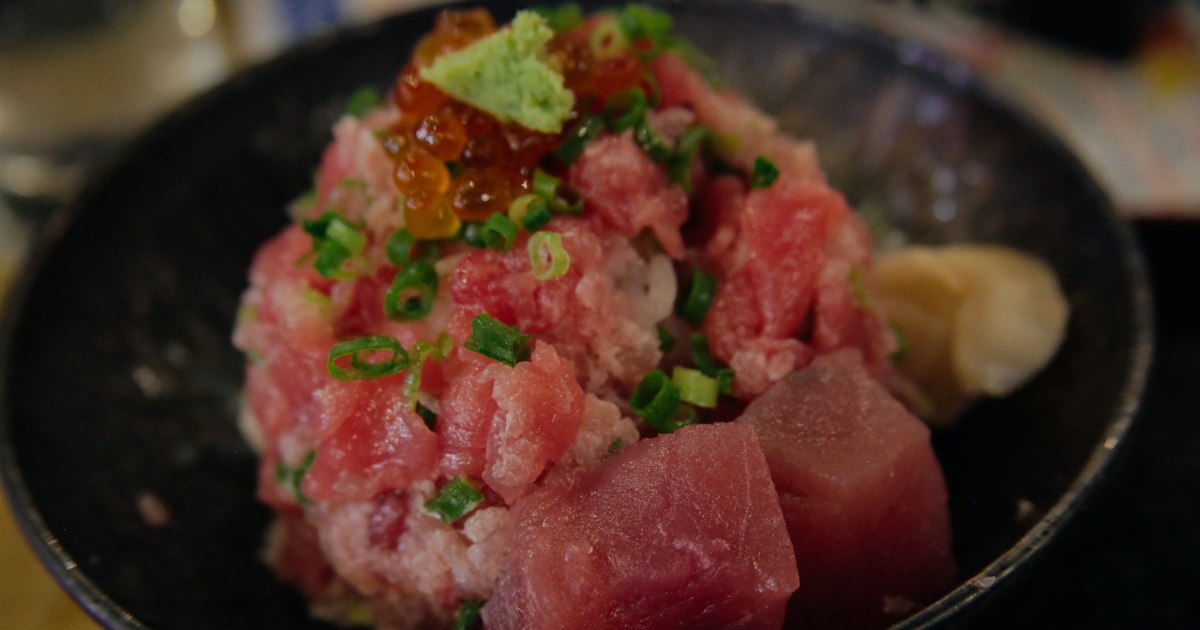
    “Negi” means scallion, “toro” refers to the fatty belly of tuna — but negitoro itself isn’t usually made from whole toro. It originated as a way to use nakaochi, the scraps of meat scraped off the bones after a tuna is filleted. Those scraps are minced to a soft, almost paste-like texture, mixed with finely chopped scallion (usually the white part of a long onion, not the leafy green chives sprinkled on top for color), and served as a gunkan-maki topping, a don (rice bowl), or stirred into a bowl of somen noodles in summer.

    Because it’s made from trimmings rather than a prime cut, it’s historically a frugal, everyday dish — closer in spirit to a humble breakfast rice bowl like tamago kake gohan than to a special-occasion sushi order. Don’t let that fool you, though — a well-made negitoro don, with good tuna and a splash of soy sauce and wasabi mixed through, is genuinely one of the better-value items on a sushi menu.

    Budget Option: Conveyor-Belt Sushi Chains

    The cheapest, most reliable place to try negitoro is a kaiten-zushi (conveyor-belt sushi) chain — Sushiro, Kura Sushi, Hama-zushi, and Uobei all have it. A plate of negitoro gunkan (usually two pieces) typically runs ¥115–170, and most branches serve rice bowl versions too, around ¥400–600. These chains are nationwide, open roughly 11:00–23:00, take walk-ins (expect a queue card and a wait at busy locations around lunch and dinner), and have English touchscreen menus at most branches, so they’re a safe first try even with zero Japanese.

    Worth knowing: at this price point, some negitoro — especially pre-packaged versions sold in supermarkets and used by the cheapest chains — is tuna scraps blended with a small amount of added vegetable oil to mimic the richness of real toro fat. It’s not unsafe or unusual, just worth knowing if the texture tastes unexpectedly smooth or oily; it’s a known trick in the industry, not a sign of a bad shop.

    Mid-Range: Standing Sushi Bars and Market Stalls

    For a step up without a reservation, look for tachigui (standing) sushi bars, which are common around Tokyo’s fish market areas and train stations. Uogashi Nihon-Ichi, with several branches near the old Tsukiji site, is well known specifically for cheap, fast negitoro gunkan at roughly ¥150–250 a piece, eaten standing at a counter in a couple of minutes.

    The Tsukiji Outer Market (Tsukiji Jogai) and the Toyosu Market dining hall are the other classic hunting grounds. Expect negitoro don here in the ¥1,200–2,500 range, often served with a raw quail egg yolk on top. These market stalls keep early, fisherman’s hours — most open around 5:00–7:00 and close by early-to-mid afternoon (often 14:00–15:00), and many are closed on Sundays and some Wednesdays, so check the specific stall’s schedule before planning a trip around one. Cash is still the safer bet at the smaller stalls, even though card acceptance has improved.

    Splurge: Hand-Mixed Negitoro at a Proper Sushi-ya

    At a sit-down sushi restaurant or a department store restaurant floor, negitoro is made to order rather than pre-packed, with the chef mincing fresh toro trimmings by hand and seasoning them lightly with soy sauce right before serving. A negitoro don at this level runs roughly ¥1,800–3,500, or it may appear as one course within an omakase set. The texture difference is real — looser, fresher, with visible flecks of fat rather than a uniform paste — and it’s a good way to taste the dish at its best if you’ve only had the conveyor-belt version so far.

    Best Time to Go

    Negitoro itself is available year-round because it’s made from trimmings rather than a seasonal cut, so there’s no “wrong” month to order it. That said, bluefin tuna’s fat content peaks in winter (roughly December through February), so negitoro made in winter tends to taste noticeably richer at any shop that sources fresh tuna daily rather than frozen. For market visits specifically, go on a weekday morning — weekends at Tsukiji Outer Market get crowded with tourists by mid-morning, and the first week of January is especially chaotic around the market’s New Year reopening. Lunch (roughly 11:30–13:30) is the busiest window at conveyor-belt chains; arriving right at opening or after 14:00 cuts the wait significantly.

    Common Mistakes Visitors Make

    • Confusing it with tekkadon. Tekkadon is sliced tuna over rice; negitoro is minced. They look similar in photos but are different dishes with different textures — ask for “negitoro don” specifically if that’s what you want.
    • Expecting premium toro flavor at a ¥150 price point. Cheap negitoro is made from scraps, not the prized cut. It’s a different, more everyday pleasure than a ¥1,500 slice of otoro nigiri — comparing them head-to-head sets up disappointment.
    • Not mixing the bowl. Negitoro don usually comes with soy sauce, wasabi, and sometimes a raw egg yolk arranged on top rather than already stirred in. Mix everything together before eating — it’s meant to coat the rice, not sit as a garnish.
    • Assuming market stalls take cards and stay open all day. Many close by mid-afternoon and some are cash-only. Go early and bring yen.

    How to Order and Eat It Like a Local

    If you’re ordering at a counter or on a touchscreen, “negitoro don, onegaishimasu” is all you need. At an izakaya, negitoro often shows up as a small shared plate rather than a full rice bowl — a good pairing is a cold tofu dish like hiyayakko, which cuts nicely against the richness of the tuna. Stir the bowl thoroughly before your first bite, eat it reasonably quickly since the minced texture doesn’t hold up well once it warms to room temperature, and don’t be shy about asking for extra scallion or a dash more soy sauce — it’s a casual dish, and nobody will blink at the request.

    If raw tuna in minced form sounds mild and you’re curious to push further into Japan’s more unusual seafood traditions, dishes like funazushi, Shiga’s fermented crucian carp sushi, sit at the opposite end of the spectrum — but negitoro don remains the friendliest, most approachable entry point into Japan’s raw-fish-over-rice tradition, and one worth ordering more than once on any trip.

  • Hiyayakko: Japan’s Chilled Tofu Dish and How to Dress It Like a Local

    Hiyayakko: Japan’s Chilled Tofu Dish and How to Dress It Like a Local

    Photo by Sherman Kwan on Unsplash

    If you’ve sat down at a Japanese izakaya in summer and seen a small white block topped with green onion and brown flakes arrive before anything else you ordered, that’s hiyayakko. It looks plain, costs almost nothing, and is one of the most quietly satisfying things you can eat in Japan — if you know what’s actually on top of it and why.

    What Is Hiyayakko, Exactly?

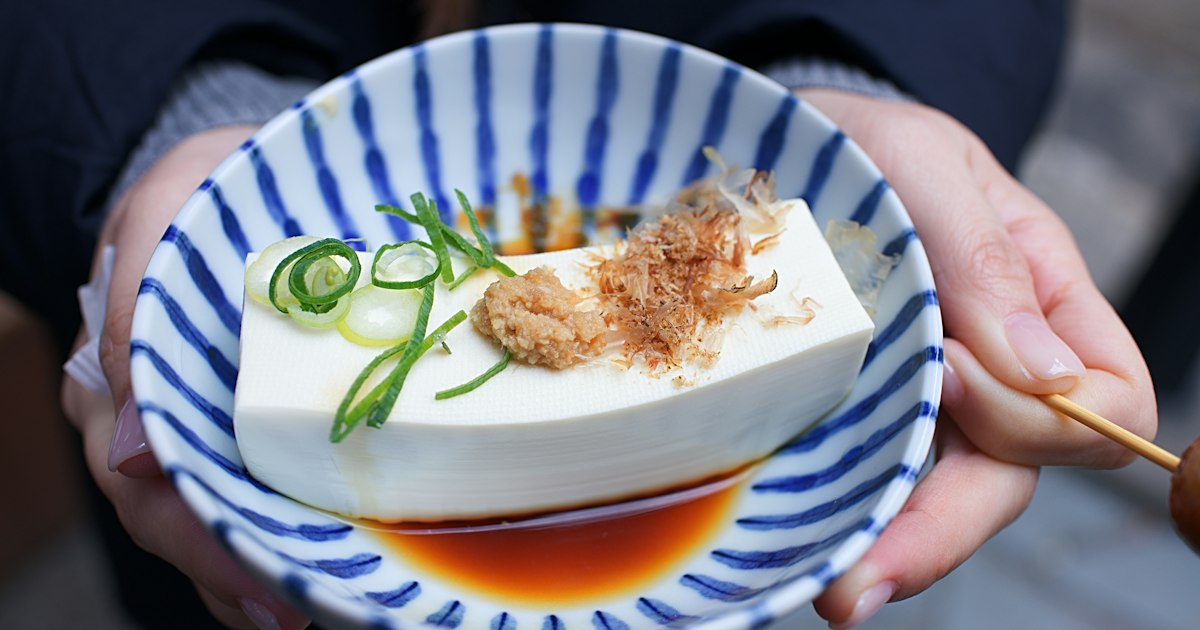
    Hiyayakko (冷奴) is simply chilled tofu served whole or halved, topped with aromatics and finished with a splash of soy sauce. The name comes from “hiya” (cold) and “yakko,” an old word for a block-shaped crest pattern that the tofu’s cube shape resembles. It’s not a recipe so much as a format — the tofu itself is the point, and the toppings are there to contrast with its blandness, not mask it.

    Restaurants almost always use kinugoshi (silken) tofu for hiyayakko rather than momen (firm) tofu. Silken tofu has a wobblier, custard-like texture that works when you’re eating it cold with a spoon; firm tofu is saved for dishes that get cooked, like agedashi or mabo tofu. If a restaurant serves you a firmer, denser block, it’s usually a regional specialty tofu rather than a mistake.

    The Toppings That Make It Japanese (Not Just Cold Tofu)

    The standard topping set, in rough order of how often you’ll see it:

    • Katsuobushi — shaved dried bonito flakes, added for umami and a little visual movement as the flakes curl in the heat of the tofu’s surface moisture.
    • Negi — finely chopped green onion, for sharpness.
    • Oroshi shoga — grated fresh ginger, a small mound on the side.
    • Myoga — a mild, floral Japanese ginger bud, sliced thin; common in summer versions and genuinely hard to find outside Japan.
    • Shiso — a shredded or whole perilla leaf, for a grassy, slightly minty note.
    • Soy sauce — poured directly over, sometimes swapped for ponzu (citrus soy) in summer for extra brightness.

    A drizzle of sesame oil and a few drops of rayu (chili oil) turn it into a more Chinese-leaning “piiman-fu” or “chilled tofu Sichuan-style” variant that’s also common on izakaya menus, usually labeled something like “piritofu” or “goma-rayu dofu.”

    Best Season and Where to Order It

    Hiyayakko is technically available year-round, but it’s a summer dish by convention — in haiku and seasonal-food lists it’s classified as a kigo for summer, alongside things like wind chimes and cold noodles. June through September is when you’ll see it on every izakaya menu and when myoga and shiso are at their freshest. Order it as a starter; it’s meant to come out fast, before your hot dishes, and most places will have it on the table within a couple of minutes of ordering.

    At a typical izakaya, hiyayakko runs about ¥350–¥600, often listed under “tsumami” (small bites/snacks) rather than the mains. It’s one of the cheapest, most reliable things to order while you wait for everything else, and a safe pick if your group has a vegetarian — just double-check the soy sauce or tare isn’t dashi-based, since Japanese dashi is often made with bonito or fish stock even in dishes that look plant-based.

    Tofu Shops Worth a Detour

    Most hiyayakko you eat will come from supermarket tofu, which is genuinely good in Japan — a plain block from a conbini or supermarket, chilled, costs roughly ¥100–¥200 and is perfectly fine with your own toppings added at a ryokan or Airbnb kitchen. If you want to taste the difference good tofu makes, look for a dedicated tofuya (tofu shop), usually a small storefront that opens early (around 8:00–9:00) and sells out of fresh blocks by afternoon — Kyoto has several well-known ones near Fushimi Inari and the Nanzenji area in the east of the city, where temple-adjacent tofu restaurants have served tofu-based set meals for generations. These shops make tofu that’s noticeably creamier and more flavorful plain, with almost no bean bitterness.

    If your trip includes a traditional inn, you may already encounter well-dressed hiyayakko without ordering it — it’s a frequent component of a ryokan breakfast tray, usually in a small side dish with minimal toppings so it doesn’t compete with the grilled fish and rice.

    Budget, Mid-Range, and Splurge Ways to Eat It

    Budget (¥150–¥500): a conbini tofu pack plus a sachet of soy sauce, or an izakaya’s house hiyayakko ordered alongside drinks.

    Mid-range (¥1,200–¥2,500): a lunch set at a dedicated tofu restaurant, where hiyayakko comes as one course alongside agedashi tofu, yuba (tofu skin), and rice — common around Kyoto’s Nanzenji and Arashiyama districts.

    Splurge (¥5,000–¥10,000+): a multi-course tofu kaiseki dinner at an established Kyoto tofu-ryori restaurant, where hiyayakko or a chilled yuba course opens a sequence of six to ten tofu preparations, served in a garden setting. Book ahead — these restaurants often require a reservation a day or more in advance and may have limited English-language booking options, so having your hotel call is worth the ask.

    Common Mistakes Visitors Make

    The biggest one is over-soaking tofu in water before eating it — restaurants drain the block well before serving, and dumping a chilled block straight from a water-packed supermarket container without patting it dry will water down your soy sauce and dilute the flavor. Pat it with a paper towel first.

    The second is piling on too many toppings at once. A good hiyayakko has restraint — negi and katsuobushi with soy sauce is already complete; adding ginger, myoga, shiso, sesame oil, and rayu all together just muddies everything. Pick two, maybe three.

    The third is assuming it’s always vegetarian-safe. Katsuobushi is fish, and soy sauce blends and ponzu sometimes include dashi. If you’re vegetarian or vegan, ask for “katsuobushi nashi” (without bonito flakes) and confirm the soy sauce is plain shoyu.

    Dressing Your Own Hiyayakko at Home

    This is an easy souvenir-adjacent dish to recreate: bring back a bottle of good soy sauce, a bag of katsuobushi, and if you can find a shaver, a block of dried katsuobushi to shave fresh (fresh-shaved flakes curl and move on warm tofu in a way that pre-shaved packets don’t). Fresh myoga and shiso don’t travel, but green onion and ginger are available almost anywhere, so you can get close to the real thing within a day of coming home.

    It’s a small dish, but it’s a good one to understand early in a Japan trip — once you know what’s supposed to be on top, you’ll notice how differently restaurants treat something that looks, at first glance, like nothing at all. If you’re traveling in peak summer when hiyayakko is most common, it’s also worth pairing the meal planning with the right gear for the heat — see our guide to UV-cut arm covers and cooling towels for walking between restaurants in July and August. And if you liked the idea of a simple, ingredient-driven Japanese home dish, the chilled-tofu mindset carries over nicely to tamago kake gohan, another dish where quality of the base ingredient matters more than technique.