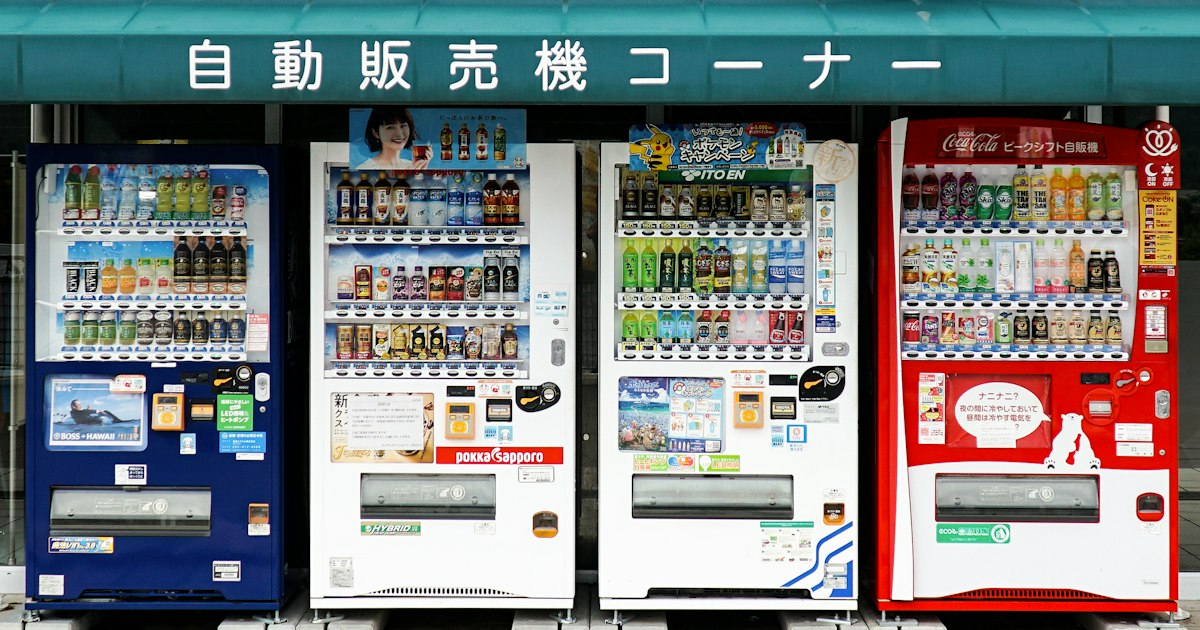
Photo by Ji Seongkwang on Unsplash
Walk into any convenience store in Japan during a humid August afternoon and you’ll see locals reaching past the cola and iced tea straight for a pale blue or clear bottle labeled Pocari Sweat or Aquarius. These aren’t flavored water and they aren’t quite soda — they’re “ion drinks” (イオン飲料), a category Japan has been refining since 1980, and understanding what they’re actually for will save you from an odd first sip and help you use them the way Japanese people do: for real rehydration, not just refreshment.
What Makes an “Ion Drink” Different From a Western Sports Drink
If you’re used to Gatorade or Powerade, your first taste of Pocari Sweat or Aquarius will likely surprise you — they’re noticeably less sweet and slightly salty, almost watery by comparison. That’s intentional. Japanese ion drinks are formulated to be closer to isotonic or even hypotonic relative to blood plasma, meaning the sugar and electrolyte concentration is tuned so the body absorbs the fluid quickly rather than sitting in the stomach. The name “ion drink” refers to the electrolytes — sodium, potassium, calcium, magnesium — that are lost through sweat and need replacing, not vague marketing language.
This matters practically: these drinks are marketed and genuinely used for sweating from exercise or heat, for rehydrating during a fever, and even as a folk remedy for hangovers, rather than as an everyday sweet treat. If you’re hiking somewhere like the waterfall trail described in our guide to Oyama Afuri Shrine, or spending a full day outdoors around Hakone using a pass detailed in our Fuji Hakone Pass comparison, an ion drink will rehydrate you more effectively in summer heat than plain water alone.
Pocari Sweat vs Aquarius: Taste, Price and Where to Buy
Pocari Sweat, made by Otsuka Pharmaceutical since 1980, has a slightly grapefruit-citrus, almost powdery taste and a cloudy white-ish appearance. Aquarius, Coca-Cola Japan’s answer launched in 1983, is clearer and a touch more citrusy-sweet, closer to a diluted sports drink Westerners might recognize. Both are sold everywhere: convenience stores (Lawson, 7-Eleven, FamilyMart), supermarkets, drugstores, and the millions of vending machines scattered across every train platform and street corner.
- Vending machines: ¥150–160 for a 500ml PET bottle — the most convenient but priciest option.
- Convenience stores: ¥140–160 for 500ml, sometimes on a 2-for-¥250 promotion in summer.
- Supermarkets and drugstores: ¥98–130 for 500ml, and large 900ml–2L bottles for ¥150–300 if you want to refill a reusable bottle for a full day of walking.
Both brands also sell sugar-reduced variants — Pocari Sweat Ion Water and Aquarius Zero — for visitors watching sugar intake while still wanting the electrolyte benefit.
OS-1 and the Medical-Grade Rehydration Drinks
One step beyond Pocari and Aquarius is OS-1 (also by Otsuka), an oral rehydration solution sold mostly in pharmacies and the health sections of drugstores rather than regular vending machines. OS-1 is noticeably saltier and less palatable to most first-time drinkers — it’s formulated for genuine dehydration from fever, diarrhea, or heatstroke, not casual sipping. It typically costs ¥150–200 for a 500ml bottle. If you or a travel companion comes down with a stomach bug or summer heat exhaustion, this is what a Japanese pharmacist will point you toward — don’t be put off by the taste; it’s doing a specific medical job.
Powder, Jelly and Other Formats Worth Packing Home
The most practical souvenir version isn’t the bottle — it’s the powder. Pocari Sweat sells boxes of individually portioned powder sticks (each mixes with about 500ml–1L of water) for roughly ¥500–650 for a box of 6–8, available at drugstores like Matsumoto Kiyoshi, Don Quijote, and most supermarkets. They weigh almost nothing, don’t count against liquid restrictions, and let you recreate the drink at home. Pocari Sweat also sells a jelly pouch version (for quick absorption when chewing or drinking normally is hard, popular with elderly people and during illness) and larger bulk powder tins aimed at households and sports clubs.
If you’re also buying bottled versions to take home in checked luggage, remember that liquids over 100ml can’t go in carry-on, and Japanese-style screw caps and resealable pouches generally pass customs fine, but it’s worth checking current rules — our guide to TSA rules and packing liquids home covers exactly this kind of edge case before you fly out of Narita or Haneda.
When Locals Actually Drink These (Timing and Season)
Ion drinks are sold year-round, but their heaviest marketing and sales season runs roughly June through September, when convenience stores build entire chilled-case displays around them ahead of the rainy season’s end and peak summer heat. You’ll also see a second, quieter demand spike in winter — not for sweat, but for flu and cold season, when doctors and pharmacists recommend ion drinks over plain water or juice for anyone running a fever. School sports days (undokai) and after-school club practices (bukatsu) are also reliably when you’ll see teenagers carrying the distinctive blue Pocari Sweat bottle in a drawstring bag.
Common Mistakes Foreign Visitors Make
- Expecting it to taste like Gatorade. It’s deliberately milder and saltier — judging it against a sweeter Western sports drink on the first sip leads a lot of tourists to wrongly assume something’s wrong with the bottle.
- Grabbing OS-1 instead of Pocari Sweat by accident. The packaging looks similarly clinical-blue in some product lines; if you just want a pleasant hydrating drink rather than a rehydration therapy, double-check you’re not picking up the much saltier OS-1.
- Buying from a vending machine when a supermarket is nearby. The price difference (¥150 vs ¥98–120) adds up fast if you’re drinking one a day on a two-week trip.
- Not refrigerating before drinking. Both brands taste noticeably better cold; a warm bottle from a non-refrigerated rack (common at some discount stores) tastes flatter and more medicinal.
Budget vs Splurge: What to Buy Where
For a tight-budget approach, buy large 900ml–2L bottles at a supermarket (¥150–300) and refill a reusable bottle each morning — this is what cost-conscious locals do for sports and outdoor work. For mid-range convenience, a 500ml bottle from any konbini at ¥140–160 is the standard tourist default, available literally everywhere. For a splurge or souvenir angle, pick up a boxed powder set (¥500–650) or try Pocari Sweat’s limited seasonal flavors and collaboration packaging, which occasionally appear in convenience stores and make for a more interesting gift than a plain bottle you can’t bring through security anyway.
Whichever format you choose, keep a bottle of Pocari Sweat or Aquarius in your bag for any day involving a lot of walking, a shrine hike, or a humid summer afternoon in Tokyo — it’s one of the simplest, cheapest pieces of local wisdom you can adopt on a Japan trip.