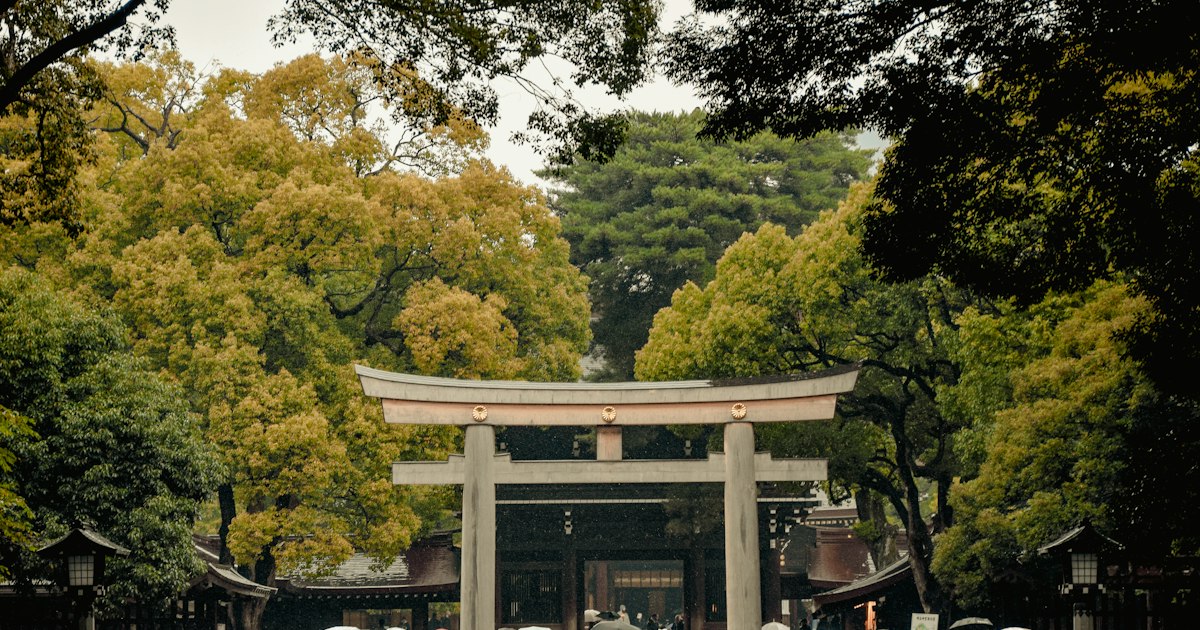
Tucked beside the main hall of almost every shrine in Japan, you’ll spot a row of small coin-operated machines dispensing little paper fortunes rolled up inside plastic capsules. These are omikuji — centuries-old fortune slips — now dispensed the same way you’d buy a gachapon toy. For visitors, they’re one of the cheapest, most photogenic souvenirs in the country, and genuinely fun to use even if you don’t read a word of Japanese. Here’s how they actually work, what they cost, and how to avoid the handful of mistakes that trip up first-timers.
What omikuji actually are
Omikuji are paper fortunes that rank your luck on a sliding scale — typically from daikichi (great blessing) down through kichi, chukichi, shokichi, to kyo (bad luck) and occasionally daikyo (great bad luck). Below the overall ranking, the slip breaks down specific areas of life: health, love, travel, business, and sometimes exam success or lost items. Traditionally these were drawn from numbered sticks shaken out of a hexagonal wooden box, with a priest or shrine attendant matching the number to a drawer of pre-printed slips. The vending-machine version does the same job mechanically — insert a coin, turn a handle or press a button, and a numbered capsule rolls out containing your fortune.
How the capsule machines work and what they cost
Most omikuji capsule machines cost ¥100–¥300 per draw, with ¥100 still common at smaller neighborhood shrines and ¥200 the going rate at busier tourist spots. You’ll usually find one of two formats:
- Stick-and-drawer machines — you shake a hexagonal wooden or metal box until a numbered bamboo stick falls out of a small hole, then open the drawer matching that number to retrieve your printed slip (no capsule involved).
- Gachapon-style capsule machines — a true coin-op dispenser, mechanically identical to the toy vending machines in Akihabara, where turning the crank drops a plastic capsule containing your folded fortune slip.
Both count as omikuji; the capsule version is simply the more modern, more “vending machine” experience, and it’s what most people mean when they ask about this specifically. Payment is almost always coins only — ¥100 and ¥500 coins work in essentially every machine, but don’t expect IC card tap-to-pay here the way you might at a drink machine; these are low-tech coin mechanisms, unlike the station kiosks covered in our guide to Suica and Pasmo at vending machines. Carry a small stash of ¥100 coins before you visit any shrine — convenience stores and station machines will break larger bills if you need change.
Where to find them and when
Omikuji machines are normally set up near the main worship hall (honden) or the shrine’s administration office (shamusho), often right next to the amulet and charm counter. Major shrines in Tokyo and Kyoto keep them out year-round, but availability can be seasonal at smaller rural shrines, where the stand may only be staffed or stocked around New Year and major festival dates. The single busiest window is hatsumode, the first shrine visit of the year, from January 1–3, when millions of people line up nationwide specifically to draw their first omikuji of the year — expect long queues and sold-out stock at famous shrines like Meiji Jingu or Fushimi Inari during this period. Outside of New Year, mornings on weekdays are the quietest time, with no line and the full range of fortunes still available (popular shrines can run low on daikichi slips during busy weekends).
If you’re combining a shrine visit with a hike, Oyama Afuri Shrine’s waterfall pilgrimage route, detailed in our Oyama Afuri Shrine guide, has omikuji available both partway up and at the summit shrine, making for a nice two-draw comparison on one trip.
English-language omikuji: where to actually find them
This is the detail most visitors ask about and the one that’s easiest to get wrong. Most shrines only stock Japanese-language slips, and the kanji can be genuinely difficult even with a translation app, since fortunes use old-fashioned phrasing and poetic classical Japanese. A growing number of shrines popular with foreign tourists now offer dedicated English omikuji, usually in a separate machine or box labeled “ENGLISH” or with a small flag/sticker — look for these specifically rather than assuming any machine will work:
- Meiji Jingu (Tokyo) — English omikuji available near the main hall
- Senso-ji (Tokyo, Asakusa) — the fortune-telling hall near the main gate offers English translations posted nearby, though the drawing process itself is the stick-and-drawer style
- Kasuga Taisha and several shrines in Kyoto and Nara with heavy inbound tourism also post English reference sheets next to Japanese-only machines
If you can’t find an English machine, a photo of the slip run through a translation app will get you a rough reading — just know that idiomatic, classical phrasing sometimes confuses machine translation, so treat the result as a general mood rather than a literal verdict.
What to do with your fortune — and the one common mistake
If you draw a good fortune (daikichi, kichi), the custom is to keep the slip — fold it and put it in your wallet or bag as a good-luck charm. If you draw a bad fortune (kyo or worse), the custom is to tie it to a designated rack or tree branch near the shrine, called an omikuji-musubi stand, essentially leaving the bad luck behind at the shrine rather than carrying it home with you. The common mistake visitors make is tying up a good fortune by habit (you can, but there’s no need to) or — more frequently — tying any fortune to a random tree branch instead of the designated wire rack, which shrines actively discourage since it damages the trees. Always look for the purpose-built rack or frame; if you don’t see one near the machine, ask at the shrine office or simply keep the slip instead.
Budget, mid-range, and splurge versions of the experience
- Budget (¥100–¥200): A standard paper-slip omikuji at any neighborhood shrine. This is the full experience and genuinely all you need.
- Mid-range (¥300–¥500): Some shrines, especially those aimed at tourists, sell omikuji bundled with a small charm, bell, or decorative paper fold already attached to the capsule — a nicer souvenir to bring home than a bare paper slip.
- Splurge (¥800–¥1,500+): A handful of shrines offer novelty omikuji in collectible containers — small ceramic animal figurines, mini sake cups, or seasonal designs sold around New Year — where the fortune slip is secondary to the collectible object itself. These sell out fast and are usually a limited seasonal run, so check early in the day if you want a specific design.
Either way, it’s one of the lowest-cost, highest-charm things you can do at a shrine, and unlike a lot of souvenir shopping in Japan, the “purchase” is also the activity — you’re not just buying an object, you’re taking part in a ritual that’s been running, in one mechanical form or another, for centuries.