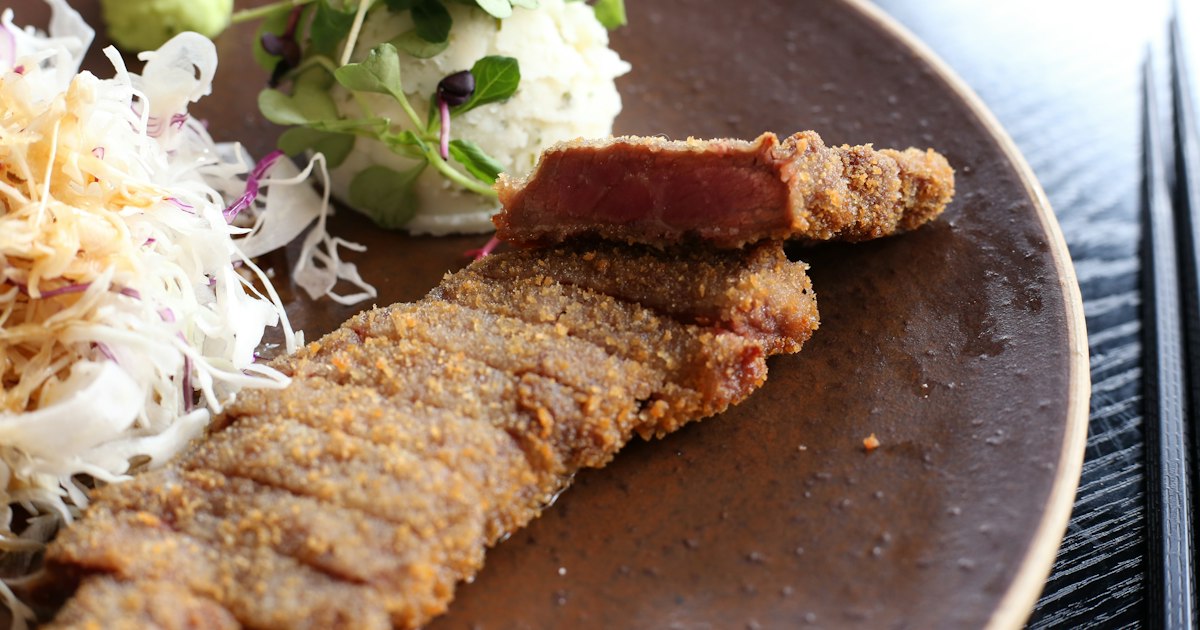
Tonkatsu gets all the attention, but gyukatsu (牛かつ) — the beef version — has quietly become one of Tokyo’s most satisfying lunch stops for visitors who want something fast, filling, and a little bit interactive. The cutlet arrives breaded and golden on the outside, but it’s seared rather than fully fried, so the inside stays rare to medium-rare. You finish the cooking yourself, slice by slice, on a sizzling hot stone or iron plate at your table. It’s part meal, part small ritual, and it’s easy to work into a tight itinerary.
What Makes Gyukatsu Different From Tonkatsu
Tonkatsu (breaded pork cutlet) is deep-fried all the way through. Gyukatsu uses a much shorter fry time — often just 20 to 30 seconds per side — so the panko shell cooks through while the beef inside stays rare. That’s intentional: the beef is usually a leaner cut like rump or sirloin, cut into finger-width strips, and the kitchen hands you a hot stone (yakiishi) or a small iron griddle alongside your tray. You press each piece onto the hot surface for a few seconds per side to bring it to your preferred doneness, then dip it in sauce. No two bites end up cooked exactly the same way, which is part of the appeal.
If you like the idea of cooking your own food tableside, it’s worth knowing this same hot-plate instinct shows up at home in Japan too — see our guide to buying a Japanese teppan griddle plate if you want to recreate something similar once you’re back home.
How to Eat It: Sauces, Rice, and Doneness
Most sets come with rice, miso soup, shredded cabbage, and a small dish of coarse sea salt or wasabi alongside a sweet-savory sauce (often a soy-based “gyukatsu sauce” or a garlic-soy blend). The usual order of operations: sear a slice to your liking on the hot stone, then try it plain with salt first, then with sauce, then with a dab of wasabi or grated garlic if it’s offered. Rice refills (okawari) are frequently free or cheap at the beef-focused chains — always worth asking, since a 1,000–1,500 yen set often comes with unlimited rice and cabbage.
Common mistake: searing every slice to the same doneness right away. Spread it out — eat a couple of pieces rare, then sear a few more medium, so you can actually compare. Also, don’t let the stone go cold; if your plate sits too long, ask staff to reheat it, since lukewarm stone defeats the point.
The Main Chains and What They Cost
Three names come up constantly for gyukatsu in Tokyo and beyond:
- Gyukatsu Motomura (牛かつ もと村) — The chain most credited with popularizing the format, with branches in Shibuya, Shinjuku, Ueno, and elsewhere. Expect lines at peak lunch (12:00–13:30) and dinner hours; sets typically run roughly 1,300–2,000 yen. Some locations are cash-only, so carry yen as a backup even if a branch posts IC card logos.
- Kyoto Katsugyu (京都勝牛) — Started in Kyoto, now with many Tokyo outposts (Shinjuku, Shibuya, Ikebukuro, Akihabara among them). It’s the budget-friendly option, with basic sets often starting around 980–1,400 yen and a faster, more counter-service feel. A good pick if you’re eating solo or on a schedule.
- Gyukatsu Aritsuka — Known for a richer demi-glace style sauce rather than the standard soy-based one; a bit more of a destination choice, especially around Nakameguro, and priced a little higher than Katsugyu.
Prices and hours vary by branch and season, so check the specific location’s signage or Google Maps listing on the day — many shops post updated hours near national holidays.
Timing Your Visit
Lunch sets are almost always the better value: the same cutlet that costs 2,000+ yen at dinner can be 1,300–1,600 yen as a lunch set with rice, soup, and cabbage included, typically available until around 15:00–16:00 depending on the branch. Arrive right at opening (usually 11:00) or slightly after 14:00 to dodge the worst of the lunch rush — the 12:00–13:00 window at popular Shibuya and Shinjuku locations can mean a 20–30 minute wait. Dinner hours generally run until 22:00 or 23:00, and gyukatsu works well as a late, hearty meal after a full day of sightseeing since it’s filling but not as heavy as a full yakiniku spread.
Where to Find It and How to Get There
Tokyo’s gyukatsu density is highest around Shibuya, Shinjuku, and Ikebukuro — all major stations with multiple branches within a short walk of the exits, so it’s easy to slot in between other stops. If you’re in Kyoto, Katsugyu’s home turf, look for branches near Kyoto Station or in the downtown Kawaramachi/Shijo shopping area. Most locations are small, counter-and-table setups rather than large dining rooms, so solo travelers and pairs will have an easier time getting seated than larger groups.
Gyukatsu also pairs naturally with a day spent trying other regional Japanese specialties — if you’re building out a food-focused itinerary, our guides to imo mochi in Hokkaido and botan ebi sashimi cover two other dishes worth seeking out by region.
Budget, Mid-Range, and Splurge Options
Budget (under 1,500 yen): Kyoto Katsugyu’s standard beef cutlet set is the easiest entry point — fast service, no-frills, and genuinely good value for a filling lunch.
Mid-range (1,500–2,500 yen): Gyukatsu Motomura’s standard sets, or ordering a larger cutlet size (many shops offer 120g, 150g, or 200g portions at increasing prices) at either major chain.
Splurge (2,500 yen+): Premium cuts like wagyu-grade gyukatsu, offered as a limited menu item at some Motomura and specialty branches, or a visit to a higher-end standalone gyukatsu restaurant rather than a chain.
Practical Notes Before You Go
Most gyukatsu restaurants are compact, so solo diners often get seated faster than groups of three or four — plan accordingly if you’re traveling with family. Vending-machine ticket ordering is common at the budget chains (pay first, hand the ticket to staff), so have small bills or coins ready, or check whether the machine accepts IC cards like Suica or Pasmo. Portions are hearty enough that skipping a starter is usually fine, and leftovers aren’t really a concept here — the whole point is eating it hot off the stone, slice by slice, the moment it’s seared.