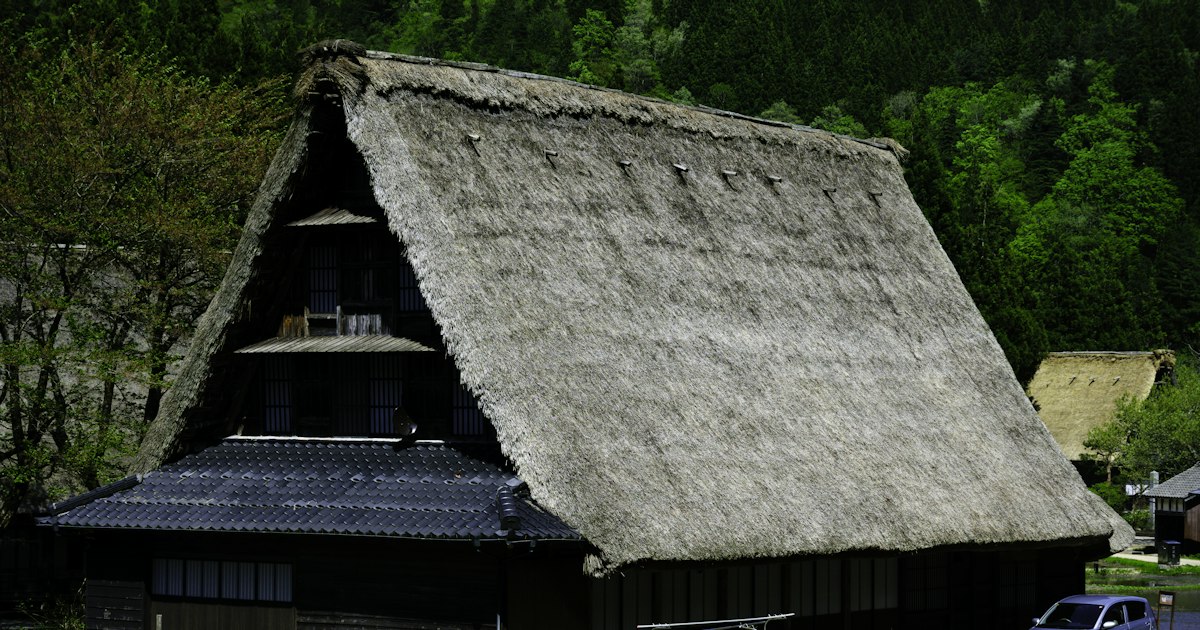
An hour and a half north of Kyoto’s temples and souvenir crowds, the mountain roads narrow, the rice paddies appear, and suddenly you’re looking at a cluster of steep, golden-brown thatched roofs that haven’t changed shape in centuries. Kayabuki-no-Sato, in the Kitamura district of Miyama town, is one of the few places in Japan where you can walk among traditional kayabuki (thatched-roof) farmhouses that are still lived in — not a reconstruction, not a museum village, but an actual neighborhood where around 40 households keep house under roofs made of reed and miscanthus grass. It’s a half-day trip that rewards people willing to deal with limited bus schedules, and this guide covers exactly how to pull it off.
What Kayabuki-no-Sato Actually Is
Kitamura’s 38 or so thatched buildings were designated a nationally protected “Important Preservation District for Groups of Traditional Buildings” in 1993, putting it in the same legal category as Shirakawa-go and Gokayama, though it draws a fraction of the visitors. The roof style here is slightly different from the famous gassho-zukuri farmhouses of Gifu — Miyama’s roofs are built in the local kabuto-zukuri (helmet-shaped) style, with a steep pitch designed to shed heavy mountain snow. Re-thatching a single roof costs a fortune and takes a team of specialists days to complete, which is why the local preservation association charges a small parking fee and runs a gift shop and museum to help fund the upkeep.
Because people actually live here, treat it like a residential street, not a theme park: stay on the paths, don’t peer into windows or gardens, and keep voices down. A handful of houses have turned part of their ground floor into a shop, cafe, or small museum, and those are fair game to enter.
How to Get There
There’s no train station in Miyama itself, so the standard route is train plus bus:
- Train: From Kyoto Station, take the JR San-in (Sagano) Line to Hiyoshi Station — roughly 60-70 minutes depending on whether you catch a rapid service, for around ¥1,140 one-way.
- Bus: From Hiyoshi Station, a Nantan City community bus runs to Kayabuki-no-Sato, taking about 50 minutes for a fare in the ¥700-900 range. These buses are infrequent — often just a handful of departures a day — so check the timetable before you leave your hotel, not after you arrive at the station.
- Direct seasonal buses: During peak periods (cherry blossom season, autumn foliage, and the winter illumination nights) a direct bus sometimes runs straight from Kyoto Station to the village, which saves the transfer but usually requires advance reservation and sells out.
- Driving: If you’ve got an international driving permit and a rental car, it’s about 90 minutes from central Kyoto via Route 162 (the Shuzan Kaido), a scenic but winding mountain road. There’s a pay parking lot at the village entrance, around ¥500 per car, and this is by far the easiest way to combine Miyama with other sights in the area.
Best Time to Visit
Miyama rewards planning around the calendar more than most Kyoto-area day trips:
- Snow season (January-February): the signature experience. Snow-capped thatched roofs are the postcard image of Kayabuki-no-Sato, and on select Saturday evenings in early-to-mid February the village holds a snow illumination night, where the roofs are lit with warm lights and the local volunteer fire brigade runs a dramatic water-cannon test (originally a real fire-prevention drill) that arcs water over the thatch in the dark. It’s genuinely cold up in the mountains, so pack proper layers — a pair of disposable kairo warmers tucked into your gloves and boots makes a two-hour outdoor event much more bearable. Confirm the exact illumination dates for the year you’re traveling, since they shift and sometimes require reserving a shuttle seat.
- Cherry blossoms (early-to-mid April) and fresh green (May): quieter and easier logistically, with the rice paddies just starting to fill.
- Autumn foliage (late October-mid November): the surrounding hillsides turn, and this is probably the second-most-popular season after winter.
- Summer: lush and green but humid, with fewer visitors.
Whatever season, aim to arrive by late morning — the village is small enough that a rushed visit is possible in 90 minutes, but the bus schedule often forces a longer stay, which is fine since there’s enough to fill 2-3 hours comfortably.
What to Do Once You’re There
The village itself costs nothing to walk through, but a couple of small sites charge modest admission:
- Miyama Folklore Museum (美山民俗資料館): a restored thatched house furnished with farming tools and daily-life objects from the Edo and Meiji periods, admission around ¥300.
- The Little Indian Museum: an unexpectedly specific private collection of Native American artifacts housed inside one of the thatched buildings — an odd but memorable stop, also around ¥300.
- Soba and local food: a village restaurant serves handmade soba and seasonal mountain-vegetable sets, generally in the ¥1,000-1,500 range for a meal. Miyama is also known regionally for its milk and bread from the Miyama Kobo bakery nearby, worth a stop if you have a car.
- Shopping: the small craft shop near the parking area sells local pickles, handmade paper, and thatch-roof miniatures as souvenirs — modest prices, mostly ¥500-2,000.
Common Mistakes to Avoid
- Underestimating the bus schedule: the single biggest planning failure is assuming buses run as often as in central Kyoto. Check both the outbound and return times before leaving, and build in buffer — missing the last bus back to the station means a very expensive taxi or an unplanned night in the mountains.
- Treating it like Shirakawa-go: Kayabuki-no-Sato is smaller, quieter, and far less commercialized. Don’t expect a dense strip of shops and restaurants; it’s a village, not a tourist complex.
- Skipping cash: several small shops and the museums are cash-only or cash-preferred, and there’s no convenience store ATM nearby.
- Forgetting warm layers in winter: mountain cold at night is sharper than Kyoto city cold, especially for the illumination event when you’ll be standing outside for an extended period.
If you enjoy offbeat rural Japan destinations that reward a bit of extra transit effort, Kayabuki-no-Sato pairs well conceptually with a trip like Nagoro’s scarecrow village in Tokushima — both are small communities that have found their own way of preserving a vanishing rural identity, just reached by very different routes.
Where to Warm Up or Stay Nearby
Miyama has its own hot spring facility, Springs Miyama, within a short drive of the village, with day-use bathing available for a modest fee — a good way to warm up after a winter visit. If you’d rather not share a bath with strangers, it’s worth checking whether a private onsen room (kashikiri buro) is available, since rural facilities like this sometimes offer one at a reasonable hourly rate. A handful of the thatched houses themselves also operate as guesthouses, letting you sleep under a kayabuki roof — a memorable but limited-capacity option that should be booked well in advance, especially around the February illumination weekends.
Budget Snapshot for a Day Trip
- Budget (train + bus, no museums): roughly ¥4,000-5,000 round-trip per person including transport and a soba lunch.
- Mid-range (train + bus, both museums, souvenirs): around ¥6,000-7,000 per person.
- Splurge (rental car, onsen stop, overnight in a thatched guesthouse): easily ¥20,000+ per person once lodging is included, but it’s the only way to see the village at dawn and dusk without the bus schedule dictating your day.
Kayabuki-no-Sato isn’t a quick add-on to a Kyoto itinerary — it demands a dedicated half-day and a bit of patience with rural transit — but for travelers who’ve already done the temple circuit and want to see a working, living piece of old rural Japan, it’s one of the most rewarding day trips within reach of the city.